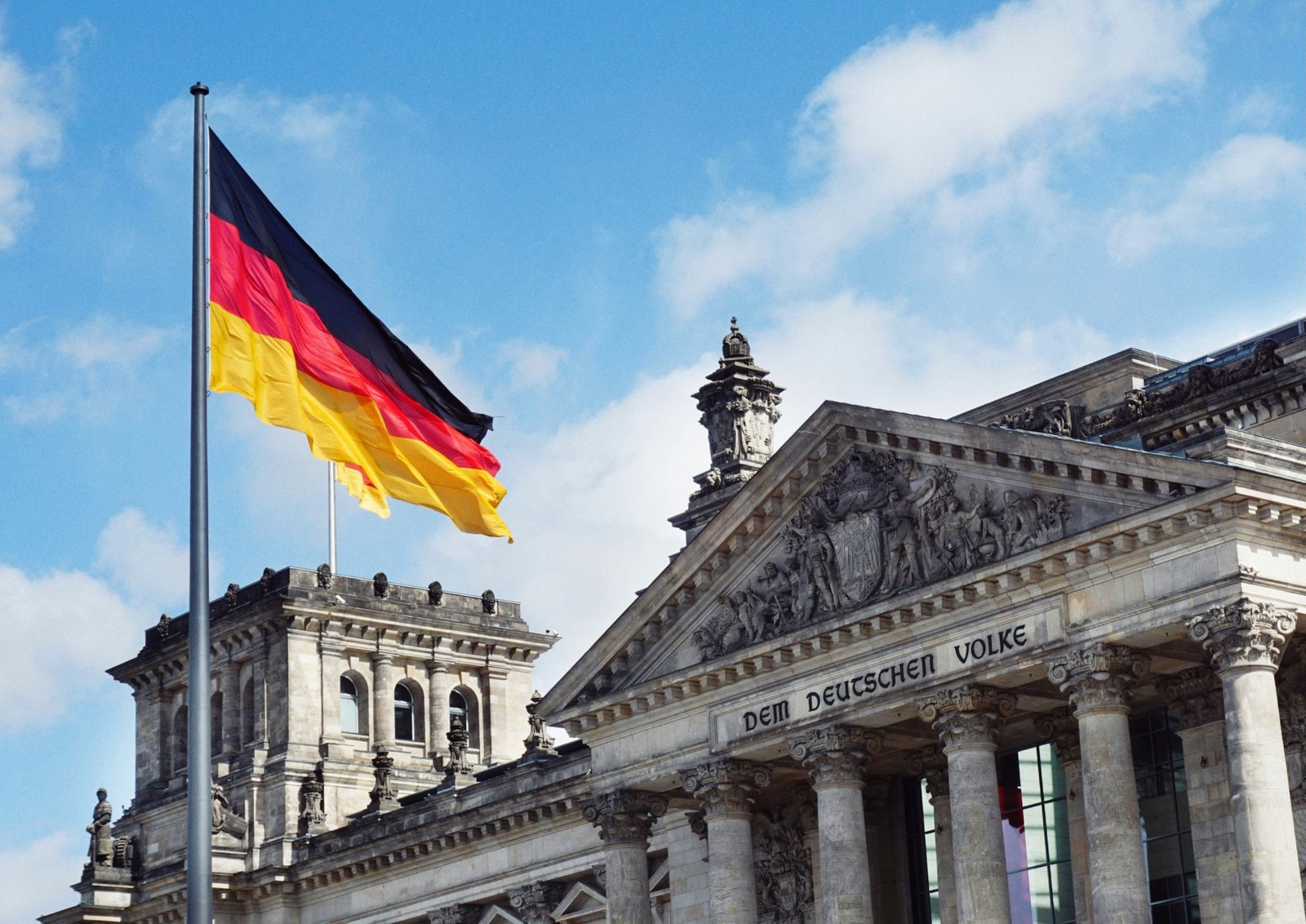
Historic Victory Shakes Chancellor Merz
Germany has entered a new political phase after the Alternative for Germany (AfD) secured a historic victory in the eastern state of Saxony-Anhalt.
The AfD received 43.8% of the vote, more than doubling its 2021 result and becoming the strongest political force in the state. Chancellor Friedrich Merz’s Christian Democratic Union (CDU), which had dominated the state for years, dropped sharply to 17.2%.
The result is important for much more than one German state.
For years, Germany’s mainstream political parties have maintained a strong barrier against cooperation with the AfD. Now, the party has won the largest share of the vote in a state election and is trying to turn that victory into political power.
Germany’s AfD victory in Saxony-Anhalt has shaken Chancellor Friedrich Merz, challenged the political firewall, and raised fresh questions about Europe’s future today.
So, what does this result actually mean?
And could it change the direction of German politics?
What Happened in the Germany AfD Election?
The election took place in Saxony-Anhalt, an eastern German state with around 2.1 million people.The final preliminary results gave the AfD 43.8% of the vote. The party won 39 seats in the 83-member state parliament, leaving it three seats short of the 42 needed for an outright majority.The CDU suffered a dramatic decline.Merz’s party received only 17.2%, compared with 37.1% in the previous election. That collapse turned what was once a comfortable political position into a major crisis for Germany’s conservatives.Other parties also entered parliament, including the SPD, Greens, Left Party and Sahra Wagenknecht Alliance.The result therefore creates a difficult political puzzle.The AfD is the largest party, but it cannot govern alone.
Why Symbolism Matters in Strategic Alliance
This is one of the most important details of the election.A victory does not automatically mean the AfD can form a government.The party needs support from other lawmakers, but Germany’s mainstream parties have repeatedly refused to cooperate with the AfD.That means the biggest party in the state could still find itself outside government.
Why the AfD Victory Is So Important
The scale of the result is what makes this election different.The AfD did not simply win by a small margin.It secured more than twice the CDU's share of the vote and achieved its strongest result in any German state election.This sends a powerful political message.A large number of voters in Saxony-Anhalt are dissatisfied with the traditional parties.Issues including immigration, security, economic weakness and frustration with the federal government have helped the AfD build support. AP also reported that voter turnout reached 77.8%, suggesting the election was able to mobilize a large number of voters.The result therefore cannot simply be dismissed as a protest vote.It shows that the AfD has developed a significant electoral base.
Why Are German Voters Turning Toward the AfD?
There is no single reason behind the AfD’s rise.Different voters have different concerns.For some, immigration is the most important issue.For others, economic problems and frustration with the national government matter more.Eastern Germany also has its own political history.Saxony-Anhalt was part of communist East Germany before reunification in 1990. Economic and social differences between eastern and western Germany have remained politically important for decades. Reuters reported that dissatisfaction linked to reunification and the performance of the federal government has helped shape political attitudes in the region.

Immigration Remains a Major Issue
Immigration has been one of the AfD’s strongest political themes.The party has campaigned for much tougher migration policies and has promised stronger deportation measures.For voters who believe Germany's immigration system has become too loose, the AfD presents itself as the party willing to make major changes.Critics, however, argue that some AfD proposals are extreme and could create economic and social problems.That disagreement is now at the center of Germany’s political debate.
Friedrich Merz Faces a Major Political Problem
The election is also a serious setback for Chancellor Friedrich Merz.The CDU expected to remain a major political force in Saxony-Anhalt.Instead, it fell to just 17.2%, its lowest result in the state in decades.Merz now faces an uncomfortable question:Why are voters moving away from the traditional conservative party and toward the AfD?The answer will matter far beyond Saxony-Anhalt.If the CDU cannot recover support, the AfD could continue gaining ground in future elections.
Merz Rejects Cooperation With the AfD Merz has ruled out working with the AfD.Reuters reported that he said the result had shaken his party "to its very foundations," while the AfD is trying to attract support from conservative lawmakers to help it govern.This creates a difficult situation.The CDU is strong enough to influence the formation of the next government, but it cannot easily work with the largest party without breaking its long-standing political position.
Germany’s Political Firewall Is Under Pressure
One of the most important ideas in this election is Germany’s political “firewall.”
One of the most important ideas in this election is Germany’s political “firewall.”For years, mainstream parties have generally refused to form governing coalitions with the AfD.The reason is deeply connected to Germany’s history and concerns about extremist politics.The AfD's Saxony-Anhalt branch has been classified as a confirmed right-wing extremist organization by the state’s domestic intelligence agency, a classification the party rejects.The election has therefore created a difficult question:
Can the political firewall survive when the AfD becomes the strongest party in a state?
Could the Firewall Eventually Break?
For now, the major parties continue to reject formal cooperation.That makes forming a government extremely complicated.The CDU could attempt to build a coalition with several other parties, but the numbers are difficult.Meanwhile, the AfD is openly asking conservatives to reconsider their position.If lawmakers eventually cooperate with the AfD, it would represent a major change in German political history.
What Happens Next in Saxony-Anhalt?
The next step is government formation.The AfD has the largest number of seats, but it lacks an outright majority.That means negotiations will become extremely important.The party may try to attract individual lawmakers or find support from smaller parties.At the same time, other parties could attempt to create a government without the AfD.According to current reporting, the fragmented parliament makes this process unusually difficult.
A Government Without the AfD Would Be Complicated
Prime Minister Mark Carney entered office explicitly on a platform of reducing Canadian dependence on the United States. The PJBD suspension validates his core argument: that Canada's strategic autonomy was at risk under the existing relationship.
The AfD’s Historic Victory Could Affect Other German States
Europe-Centered Defense Planning: Carney's speech about "middle powers" aligns Canada with European frameworks like EU defense initiatives and deepened NATO-Europe cooperation rather than bilateral U.S. focus.
BRICS and Non-Aligned Movement: Carney has been an outspoken supporter of lessening Canada's dependence on the US's military and economy. This suggests interest in alternative strategic partnerships beyond the North American framework.
The Contradiction: Canada simultaneously remains deeply integrated into U.S.-led continental defense (NORAD) and North American trade (USMCA). Hedging toward autonomy while maintaining these dependencies creates structural tension.
What the Result Means for Europe
Germany is Europe's largest economy and one of its most influential political powers.A major change in German politics therefore matters across the European Union.France has already expressed concern about the result.French government officials described the AfD victory as worrying and linked it to the wider rise of populist politics in Europe.The concern is understandable.Germany has traditionally been one of the strongest supporters of the European political mainstream.If a far-right party continues gaining power, debates over migration, European integration, national security and foreign policy could become more intense.
Could the AfD Influence Germany’s Foreign Policy?
At the state level, foreign policy is not controlled entirely by regional governments.However, election results can influence national political debates.The AfD has positions that differ significantly from Germany’s traditional mainstream parties on issues including Russia, migration and the European Union.If the party continues growing, other political parties may be forced to respond to those issues differently.This does not mean Germany will suddenly change its foreign policy.But it could change the political debate surrounding it.
The Economic Question Behind the Election
Politics is rarely separated from the economy.Germany has faced concerns about weak economic growth, industrial competitiveness and the future of important sectors.For voters who feel that living standards are under pressure, political promises can become especially powerful.The AfD has used economic frustration alongside immigration and security concerns to criticize established parties.
Why Economic Frustration Matters
When people believe that the economy is not improving, they often become more willing to consider political alternatives.That does not mean every AfD voter supports the party for economic reasons.It simply shows why economic conditions can influence political behavior.The CDU and other mainstream parties will therefore need to offer more than criticism of the AfD.They will need to convince voters that their own policies can deliver better results.
A Warning Sign
A Warning Sign for Germany’s Traditional Parties
The election should be viewed as a warning for Germany’s political establishment.The AfD has demonstrated that it can win a very large share of the vote.Simply telling voters not to support the party may not be enough.Mainstream parties will need to understand why people are leaving them.That means addressing issues such as: Immigration
Economic growth Energy costs
Public security
Jobs
Regional inequality
Trust in governmentIgnoring
these concerns could allow the AfD to gain even more support.
Is This a Turning Point for German Politics?
It could be.The AfD has now achieved something that would have seemed unlikely years ago: it became the strongest party in a German state election with 43.8% of the vote.Yet the party still faces an important barrier.Winning votes is one thing.Turning those votes into government power is another.That is why the coming negotiations are so important.If the AfD remains outside government, the election may become a powerful symbol of its electoral strength.If it manages to enter government, however, the result could become a genuine turning point in postwar German politics.
Final Verdict
The Germany AfD election is much more than a regional political story.The AfD's 43.8% result is its strongest performance in a German state election and a historic setback for Chancellor Friedrich Merz's CDU.But the AfD has not yet won the ability to govern alone.It remains three seats short of a majority, while other major parties continue to reject cooperation.That creates the biggest question of all:Will the AfD's historic electoral victory finally translate into political power?The answer will shape not only Saxony-Anhalt but potentially Germany's wider political future.For Merz, the result is a serious warning.For the AfD, it is a major opportunity.And for Europe, it is another sign that the continent's political landscape is changing.
“Germany’s AfD victory in Saxony-Anhalt has shaken Chancellor Friedrich Merz, challenged the political firewall, and raised fresh questions about Europe’s future today.”
Related News

Oil price surge today
Germany AfD Election

Iran War

One Comment