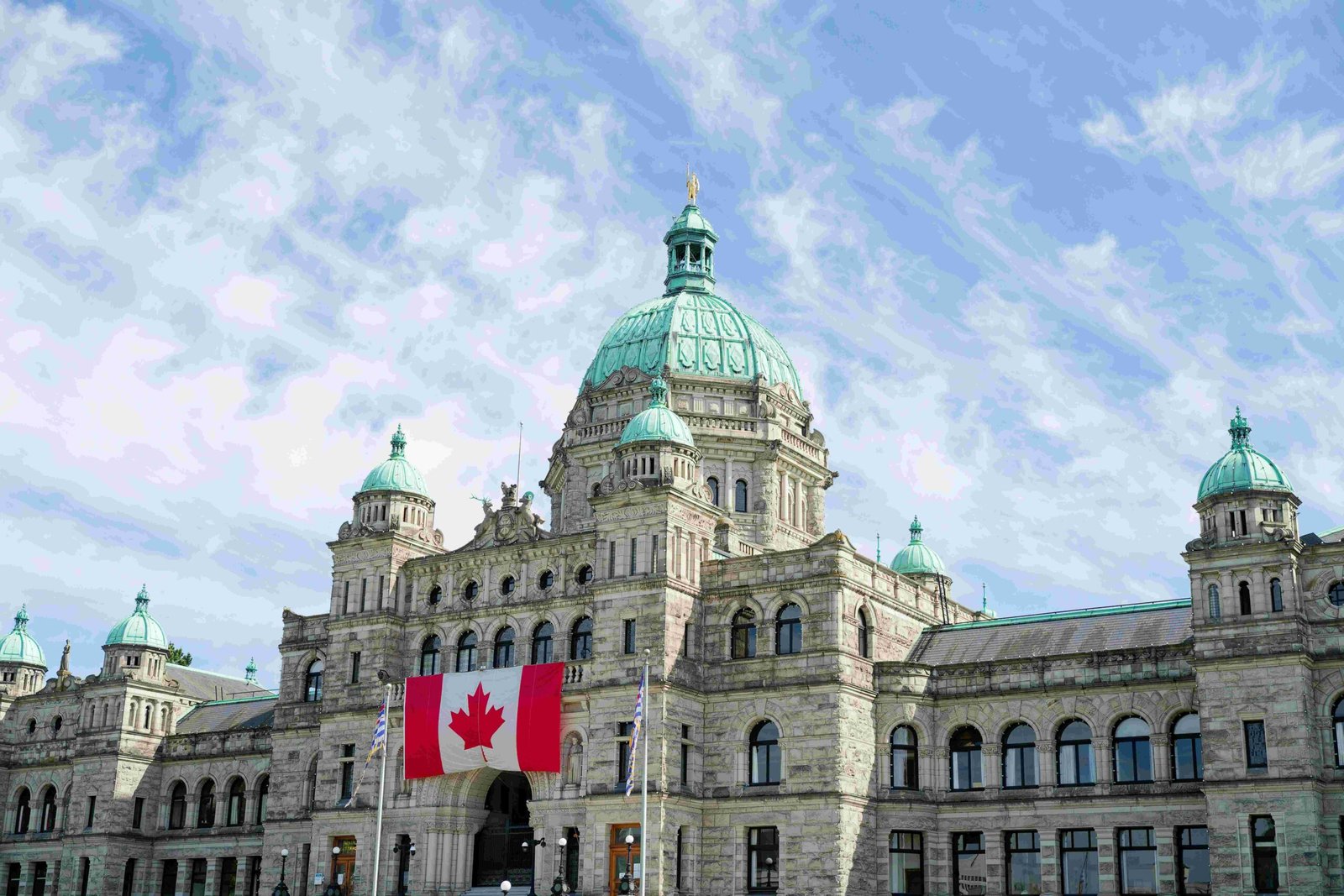
On May 18, 2026, the United States announced it would not take part in a joint board for continental defence with Canada, depicting the country as failing to live up to its defence obligations.
Canada us relations 2026
The announcement sent immediate shockwaves. U.S. Undersecretary of Defense Elbridge Colby wrote that his department would halt its involvement in the Permanent Joint Board on Defense to “reassess” the forum’s benefits.
This is not a routine bureaucratic suspension. The PJBD has operated uninterrupted for 84 years this is the first suspension in the board’s history, including through the Cuban Missile Crisis and post-9/11 border disputes.
The suspension exposes deeper fractures in Canada US relations 2026. It reveals strategic distrust. It signals that the foundational defense alliance between the two North American nations is now under severe strain.
Understanding why this happened requires understanding what changed between 2025 and 2026 — and what happens next.
What Is the PJBD and Why Does Its Suspension Matter?
Historical Context: The Permanent Joint Board on Defense was created in 1940 under the Ogdensburg Agreement signed by U.S. President Franklin D. Roosevelt and Canadian Prime Minister William Lyon Mackenzie King. Created at the height of World War II when Britain's survival was in doubt, the board was designed to provide a permanent consultative mechanism for the defense of North America.
Institutional Role: The PJBD brings together senior civilian and military representatives from both countries to discuss strategic defense priorities, continental security, Arctic issues, critical infrastructure, military modernization, and emerging threats. During the Cold War, the PJBD played an important role in shaping many pillars of North American defense cooperation, including the development of NORAD.
Current Operational Status: Although it's supposed to meet at least annually, the last readout published by Canada or the U.S. of a meeting was back in November 2024 in Ottawa. That suggests the body has not met since Trump returned to the White House in January 2025.
Why Symbolism Matters in Strategic Alliance
The PJBD is not a command body. It holds no operational authority over military forces. It is fundamentally an advisory forum a place where senior officials discuss and coordinate continental security strategy.
The Significance of Suspension: The move has sparked concern among defense analysts and former officials, who warn it could complicate NORAD modernization, Arctic security cooperation, and broader US-Canada relations at a time of growing geopolitical tensions.
The PJBD is not charity toward Canada; it is a forum for shaping Canadian defense behavior early, quietly, and strategically. Suspending it removes an institutional channel through which Washington historically influenced Canadian defense policy.
Why Did the U.S. Suspend the PJBD?
Trump Administration's Stated Rationale: Colby wrote on X: "A strong Canada that prioritizes hard power over rhetoric benefits us all. Unfortunately, Canada has failed to make credible progress on its defense commitments."
Colby announced that the United States would pause its participation in the Permanent Joint Board on Defense (PJBD) to "reassess how this forum benefits shared North American defense." The under secretary pointed to Canada failing to make credible progress on its defence commitments as well as to Canadian rhetoric, a jab at Prime Minister Mark Carney's speech in Davos about middle powers co-operating in the face of hegemonic powers, as the reasons for the U.S. decision.
The Defense Spending Contradiction
The Trump Administration's Claim: The Pentagon's rationale centers on the assertion that Canada has not met its defense spending obligations.
The Documented Reality: In March 2026, both the Canadian government and NATO confirmed that Canada had reached the alliance's benchmark of spending roughly 2 percent of GDP on defense for the first time in decades, with total defense expenditures surpassing CA$62 billion for the 2025–26 fiscal year. Defense Minister David McGuinty pointed to recent investments in Arctic radar systems, fighter aircraft procurement, and under-ice submarine capabilities as evidence of Canada's growing military commitments.
Analysts noted that Washington's continued criticism appears to conflict with the documented reality that Canada has accelerated its NATO spending timeline by nearly eight years compared with previous projections.
Status of This Contradiction: The Pentagon has declined to provide further explanation beyond Colby's public statements regarding the issue.
The Real Trigger: Carney's Davos Speech and Sovereignty Politics
Prime Minister Mark Carney, who defeated former Prime Minister Justin Trudeau's Liberal Party successor in a recent federal election on a platform of Canadian sovereignty and resistance to U.S. economic pressure, delivered remarks widely interpreted as a rebuke of the Trump administration's posture toward Canada.
What Carney Said: In a speech this year, he outlined a vision in which "middle powers" like Canada banded together to sidestep the current "era of great power rivalry", a veiled reference to countries like the US, Russia and China.
Trump Administration's Interpretation: The Pentagon's decision to explicitly cite those remarks as the trigger for the PJBD suspension suggests a deliberate effort to use military diplomacy as a pressure instrument.
Canada's Defense Investment Pledge
To be clear on the broader defense context: Canada formally achieved NATO's 2% of GDP defence spending target in the 2025–26 fiscal year, with $63.4 billion in defence spending in 2025. At the 2025 NATO Summit in The Hague, Canada committed to a new Defence Investment Pledge of 5% of GDP 3.5% direct defence spending plus 1.5% in related infrastructure by 2035.
The Political Context: This unprecedented spending commitment came explicitly because of pressure from the Trump administration. Canada accelerated its timeline to demonstrate commitment. The U.S. then suspended the PJBD despite this acceleration.
While the US and Canada are neighbours, Trump's second presidency has resulted in fraying bonds between the two countries, even beyond matters of security. Trump has accused Canada of pursuing unfair trade policies and failing to crack down on the illicit traffic of people and drugs across the border, though critics have questioned the legitimacy of these claims.
What This Suspension Means for NATO and North American Defense
NORAD and Operational Continuity
Critical Clarification: What the pause does not change: NORAD — the binational North American Aerospace Defense Command headquartered in Colorado Springs — is governed by a separate treaty and is unaffected by this decision. Canadian Armed Forces personnel posted to NORAD continue their duties.
Day-to-day military operations between the U.S. and Canadian forces remain unchanged. The PJBD suspension does not directly disrupt operational cooperation.
The Strategic Consultation Gap
Analyst Assessment: Sean Maloney, a professor of history at Royal Military College who has written about the board, says the Trump administration's move to pull out sends a strong signal because the board and its military cooperation committee do a lot of useful work on defence planning. The U.S. withdrawal "basically generates more friction in the system than we need right now," Maloney told CBC News.
The Broader Concern: Suspending participation may therefore put at risk one of Washington's own mechanisms for shaping Canadian defense choices over time. The United States benefits from institutionalized Canadian cooperation because it helps ensure that Canada plans alongside U.S. priorities rather than drifting toward more autonomous or Europe-centred defense planning.
NATO's Complicated Position
Canada and the U.S. are both core NATO members. This bilateral suspension occurs amid broader NATO discussions about burden-sharing and strategic direction. The move comes barely six weeks ahead of the mandatory joint review of the U.S.–Mexico–Canada Agreement (USMCA), which Canada is heavily reliant on, as well as amid a climate of worsening bilateral relations since President Donald Trump's own rhetoric about making Canada the fifty-first state and the imposition of tariffs on Canadian trade.
Canada's Hedging Strategy: Diversification or Defection?
Prime Minister Mark Carney entered office explicitly on a platform of reducing Canadian dependence on the United States. The PJBD suspension validates his core argument: that Canada's strategic autonomy was at risk under the existing relationship.
Canada's Strategic Options
Europe-Centered Defense Planning: Carney's speech about "middle powers" aligns Canada with European frameworks like EU defense initiatives and deepened NATO-Europe cooperation rather than bilateral U.S. focus.
BRICS and Non-Aligned Movement: Carney has been an outspoken supporter of lessening Canada's dependence on the US's military and economy. This suggests interest in alternative strategic partnerships beyond the North American framework.
The Contradiction: Canada simultaneously remains deeply integrated into U.S.-led continental defense (NORAD) and North American trade (USMCA). Hedging toward autonomy while maintaining these dependencies creates structural tension.
Analyst Perspectives on Carney's Position
View 1 — Strategic Necessity: Some analysts argue that Carney's diversification strategy is essential given U.S. unpredictability and the threat of trade weaponization (tariffs, annexation rhetoric).
View 2 — Provocation: Other analysts contend that Carney's Davos speech was unnecessarily confrontational and that Canada should prioritize bilateral relationship management with Washington regardless of policy differences.
Documented Reality: Former Conservative Leader Erin O'Toole called the U.S. decision "profoundly misguided," asserting Canada remains "an ally that shares values of liberty," according to Global News. Cross-party Canadian opinion views the U.S. action as disproportionate to any Canadian provocation.
Strategic Trust Erosion: The Deeper Crisis
This is not primarily a functional crisis. NORAD operates. Trade continues. Military-to-military cooperation at operational levels persists.
This is a trust crisis.
What the Suspension Signals
There is deep distrust and animosity between their respective governments. Geography, however, prevents the two countries from breaking up. They must live with each other, and as was the case when the PJBD was established in 1940, they have a vested interest in defending the continent together. Bodies like the PJBD will be essential as Canada and the United States look to reset their damaged relationship in the future. Ideally, the PJBD would also be meeting now to help keep the rift between the two allies from becoming larger. The longer the PJBD is suspended, the longer the two countries will be missing a "good office" that could help them better understand each other, and that will be needed to repair their alliance when the time comes.
The Precedent Question
Centrist observers are expressing serious concern that suspending the PJBD, even symbolically, sets a dangerous precedent for how the U.S. manages its most foundational alliances, with many noting the board survived the Cold War, 9/11, and decades of trade disputes.
If the U.S. can suspend the PJBD with a single Pentagon official's X post, what other institutional mechanisms are at risk? This uncertainty destabilizes the entire framework of bilateral relations.
What Comes Next?
Immediate Timeline
No formal consequences for NORAD, DPSA (Defense Production Sharing Agreement), or military base operations have been announced as of May 19, 2026. The immediate operational impact is minimal.
What Analysts Are Watching: Most centrists are watching whether Canada escalates diplomatically or whether back-channel negotiations quietly reverse the suspension in the coming days.
The USMCA Dimension
The suspension comes deliberately positioned before USMCA renegotiation. The move comes barely six weeks ahead of the mandatory joint review of the U.S.–Mexico–Canada Agreement (USMCA), which Canada is heavily reliant on.
Implied Leverage: The timing signals that the Trump administration may use defense relationship issues as negotiating leverage during trade talks. This conflates bilateral defense with economic coercion.
Path to Restoration
The PJBD is the oldest formal Canada–U.S. defence co-operation mechanism and serves as the principal advisory body on continental security. Restoring it requires acknowledgment from both parties that the diplomatic breach needs repair.
As of late MAY 2026 , neither government has announced formal negotiations toward restoration. The suspension remains active indefinitely pending unspecified “reassessment.”
Related News

Oil price surge today

Germany AfD Election
Iran War

One Comment