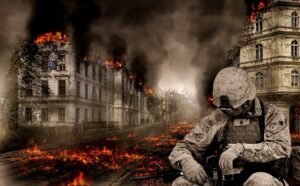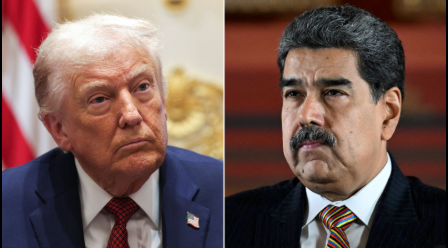
On January 3, 2026, the United States conducted a military raid on Caracas, capturing Venezuelan President Nicolás Maduro and his wife, Cilia Flores. According to Reuters, Bloomberg, NBC News, and official U.S. government statements, U.S. forces captured Nicolás Maduro during a military operation in Caracas on January 3, 2026.
The operational details remain partially disclosed. According to reporting, Delta Force personnel breached Maduro’s residence. Maduro attempted to escape into a steel safe room but was taken into custody before reaching it. A firefight broke out after Maduro was captured, and a U.S. helicopter was hit. No Americans were killed, though there were several injuries to U.S. troops.
The maduro captured operation raised immediate questions. Was this legal under international law? Did Trump have congressional authorization? What comes next for Venezuela?Understanding why the US did this requires separating Trump administration justifications from independently verified facts. It requires understanding the geopolitical pressures that led to this moment. And it requires acknowledging that international law scholars are sharply divided on whether the operation was lawful.
The Case Against Maduro: Trump's Justification
Confirmed Fact: Maduro is facing federal charges in the Southern District of New York, including accusations of narco-terrorism, cocaine trafficking, and possession of machine guns and destructive devices.
Trump Administration’s Claim: The Trump administration asserts that Maduro personally used Venezuela’s state apparatus to traffic cocaine and used Venezuelan territory as a base for operations targeting American security.
It is documented that Maduro has been under indictment in U.S. courts since prior to Trump’s second term. What distinguishes the Trump administration’s response is its decision to execute the indictment militarily rather than pursue extradition or diplomatic pressure.
The Venezuelan government has denied these accusations entirely. It characterized the military operation as an illegal invasion of sovereign territory.
The Drug Trafficking Evidence
Trump Administration’s Argument: The administration claims to have evidence linking Maduro to Venezuela’s drug trafficking networks. According to this narrative, Venezuelan military and intelligence officers operating under Maduro’s direct command have collaborated with Colombian drug cartels.
Disputed Status: This characterization is contested. Venezuela’s government has denied the accusations entirely. International observers remain divided on whether the evidence supports Trump’s characterization of Maduro’s direct involvement.
Documented Context: What is independently verifiable is that Venezuela has become a significant transit point for cocaine moving toward North American markets. It is also documented that Venezuelan military and intelligence officials have been indicted in U.S. courts for drug trafficking.
The Evidentiary Gap: Whether Maduro personally directed these operations as opposed to tolerating or benefiting from them remains the central contested question. The Trump administration’s charges assert personal direction. The Venezuelan government asserts these are actions by rogue officials. Independent verification of which characterization is accurate has not been publicly provided.
The "Narco-State" Argument
Trump Administration’s Framing: Trump’s team described Venezuela under Maduro as a “narco-state” a state apparatus allegedly so thoroughly corrupted by drug trafficking that it no longer functions as a legitimate government.
Legal Implication Trump Asserts: According to this argument, a state that has ceased functioning as a legitimate government loses certain protections under international law. This framing potentially provides a legal justification for military intervention.
Contested Status: This characterization is sharply disputed. Venezuela’s government contested it entirely, presenting itself as a functioning state under siege by foreign aggression. International law scholars have not reached consensus on whether Venezuela meets any legal definition of a “failed state” that would justify military intervention.
No Independent Assessment: No independent international body has formally assessed whether Venezuela qualifies as a “narco-state” under any established legal or institutional definition.
How It Happened: Operation Absolute Resolve
Reported Timeline: According to reporting on the operation, Trump approved the operation before Christmas, though the exact day was uncertain. Trump left the White House for the holidays on Dec. 19, with Mar-a-Lago serving as his headquarters for the final planning.
Trump gave the Venezuelan leader one last chance to step down, telling Nicolás Maduro in a private call that he had to go. According to U.S. accounts, Maduro refused.
The Military Buildup
America’s most advanced aircraft carrier, the USS Gerald R. Ford, swept into the Caribbean, part of a military buildup that Trump believed got the attention of Maduro. The Trump administration characterized this buildup as signaling American intent and creating strategic pressure on the Venezuelan government.
The Raid Itself
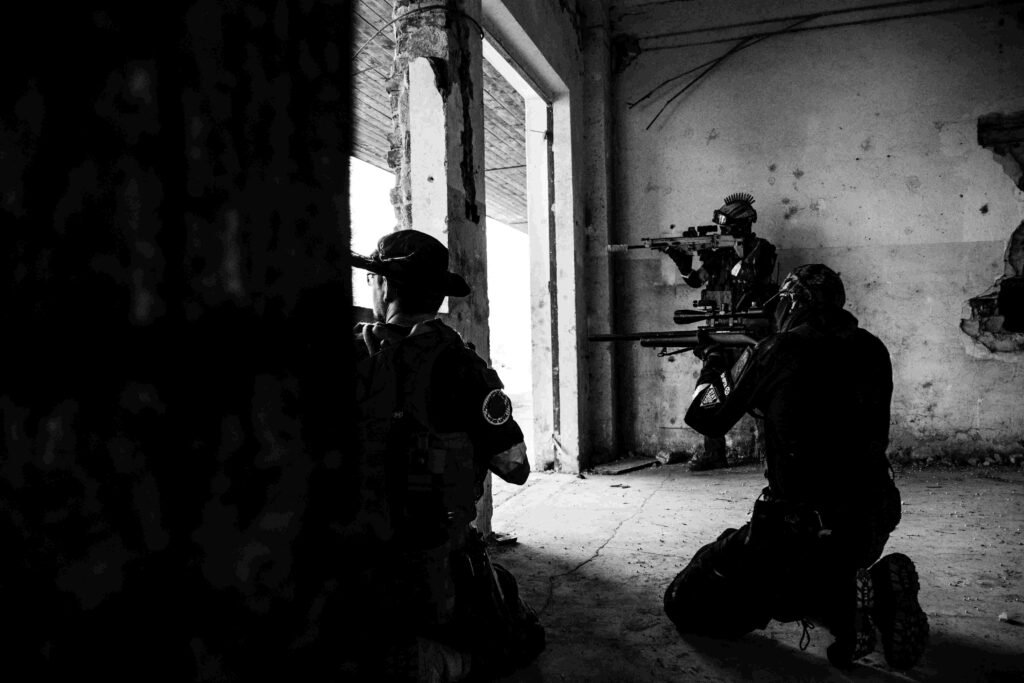
Reported Operational Details: According to news accounts, by 1 a.m. ET Saturday, U.S. soldiers had reached the compound in Caracas where Maduro was staying. When Delta Force breached Maduro’s residence, he and his wife were taken “completely by surprise.” Maduro attempted to escape into what Trump described as a steel safe room but was intercepted before reaching it.
According to analysis, the U.S. military appeared to overrun Venezuela’s air defenses, while special operations forces and law enforcement agencies participated in the raid on Maduro’s house. A firefight broke out after Maduro was captured, and a U.S. helicopter was hit. No Americans were killed, though there were several injuries to U.S. troops.
The Extraction
According to reporting, Maduro and his wife were flown to the USS Iwo Jima. From there, Maduro was flown to New York aboard a Department of Justice aircraft. After processing at the DEA facility, Maduro was transferred to the Metropolitan Detention Center in Brooklyn, where he was held ahead of his initial court appearance.
Authorization Status: The Trump administration conducted the operation without seeking congressional authorization. Trump exercised this authority as commander-in-chief under presidential powers. This choice to not seek congressional approval became part of the legal and political dispute surrounding the operation.
The International Law Question: Was It Legal?
International law scholars, diplomats, and legal analysts have reached sharply different conclusions about the operation’s legality.
Head of State Immunity
Position of International Law Scholars: Traditional international law protects sitting heads of state from foreign prosecution a principle known as head-of-state immunity. Many legal scholars argue this principle applies regardless of the crimes a head of state is accused of.
The U.S. Government’s Counter-Argument: The U.S. administration asserts that Maduro did not retain head-of-state status because his 2024 election lacked legitimacy. The U.S. and numerous allied governments did not recognize the legitimacy of his government. Under this reasoning, Maduro did not enjoy head-of-state immunity.
Status of This Dispute: Whether Maduro retained head-of-state immunity remains legally contested. No international court has ruled on this specific question.
The Panama Precedent
In December 1989, the US invaded Panama, captured Manuel Noriega the country’s de facto leader, and brought him to the United States to stand trial. He had been indicted in 1988 by a US court on racketeering and drug trafficking charges.
Mr. Noriega legally challenged the proceedings on the grounds that “his seizure violated international law, that the invasion of Panama was unlawful, that he enjoyed head-of-state immunity, and that due process forbade his prosecution following a forcible extraterritorial capture”. He lost on all counts.
Important Qualification: International law has evolved significantly since 1989. Legal scholars now employ more developed frameworks for evaluating such operations. The Maduro capture will likely generate years of legal scholarship and court challenges, and the outcome remains uncertain.
The International Response
The UK Government said it was not involved in the operation. However, it said it had long supported a transition of power in Venezuela and that it regarded Mr Maduro as an illegitimate leader because his election in July 2024 was “neither free and fair”.
Other Nations’ Positions: Other nations have issued differing responses. Some have condemned the operation as a violation of Venezuelan sovereignty and international law. Others have remained silent or expressed qualified support. International consensus has not emerged.
Status: The operation remains legally and diplomatically contested globally.
What Happens to Venezuela Now?
Trump Administration’s Statement: President Trump announced that the US is “going to run the country, until we can do a safe, proper and judicious transition” of power.
This statement raises immediate questions about Venezuela’s future governance. The precise meaning of “transition” and the timeframe for U.S. involvement remain undefined by Trump administration officials.
The Transition Question: Trump's Vision and Uncertainties
Trump’s Stated Approach: Trump said: “We’re going to have this done right. If we just left, it has zero chance of ever coming back. We’ll run it properly. We’ll run it professionally. We’ll have the greatest oil companies in the world go in and invest billions and billions of dollars and take out money. Use that money in Venezuela. And the biggest beneficiary are going to be the people of Venezuela.”
Analyst Interpretations: This statement has generated different interpretations among analysts. Some analysts emphasize Trump’s statement about benefiting “the people of Venezuela” as an humanitarian commitment. Other analysts focus on his references to oil company investment and using oil revenue, which they interpret as indicating U.S. interest in Venezuelan energy resources.
Unresolved Questions: The Trump administration has not publicly clarified:
- Whether the U.S. intends to install a new Venezuelan government
- Whether it plans to hand power to opposition figures
- Whether it intends to oversee elections
- The duration of U.S. administrative control
The Regional Implications
Documented Pattern: The operation represents military intervention in another nation’s internal governance. This action is unprecedented in recent Latin American history under international law frameworks emphasizing national sovereignty.
Regional Concern: Analysts in Latin American nations have noted that this operation sets a precedent. If the United States military can capture a sitting head of state, other nations in the region face potential similar interventions. This has created strategic uncertainty across Latin America.
Venezuela’s Position: Venezuela’s government and opposition have issued competing statements about the operation’s legitimacy and implications.
The Humanitarian Dimension
Pre-Existing Crisis: Venezuela was experiencing humanitarian crisis before the military operation. Economic collapse, medical shortages, and displacement have created mass suffering and forced millions to flee the country.
Uncertain Outcomes: Whether U.S. military administration improves or worsens these humanitarian conditions remains to be determined. Analysts note that military occupations historically produce varied outcomes some have stabilized situations, while others have generated new forms of instability and suffering.
No Precedent for Prediction: There is no established historical model for how this specific situation will develop.
Why Did Trump Do This?
The Trump administration has provided official justifications for the operation. Analysts and scholars have offered additional interpretations. Distinguishing between these is essential for understanding what motivated the decision.
Trump Administration's Stated Justifications
1. National Security and Narco-Terrorism: The Trump administration has publicly stated that Maduro posed a direct national security threat to the United States through his alleged involvement in drug trafficking and narco-terrorism operations. This is the primary public justification offered for the military operation.
2. Enforcement of Federal Indictments: The administration has framed the operation as enforcing criminal indictments that were issued prior to Trump's second term. According to this rationale, the operation was law enforcement action rather than regime change.
Analyst Interpretations: Additional Explanatory Factors
Political Messaging: Some analysts suggest that the operation serves a political messaging function. They argue it demonstrates Trump's willingness to exercise U.S. power unambiguously without waiting for international consensus. However, this interpretation is contested other analysts argue the national security justification is the genuine primary driver.
Venezuela's Energy Resources: Trump's statement specifically referencing oil company investment has led some analysts to emphasize Venezuela's energy resources as a strategic interest. Trump said the U.S. would facilitate foreign oil investment and use revenue to benefit Venezuela. Analysts disagree about whether this reflects genuine strategic interest in Venezuelan oil or is secondary to the stated national security concerns. This remains an area of analytical disagreement.
Regional Geopolitical Position: Analysts note that Venezuela's strategic location in South America and its resources make it geopolitically significant. However, whether this motivated the operation is not established — the Trump administration has emphasized the narco-terrorism justification.
Important Qualification
What Is Not Established: The precise weighting of these factors in Trump’s decision-making process is not publicly documented. Trump administration officials have focused on the national security justification. The extent to which other factors (political messaging, resource strategy, regional positioning) influenced the decision remains a matter of analyst interpretation and speculation rather than confirmed fact.
Competing Interpretations: Different analysts and scholars will continue to debate the primary motivations behind this operation. All interpretations should be understood as analytical inference rather than established fact.
Do you think the US military capture of Maduro was justified as a national security operation or was it an illegal regime change intervention?
Related News

Oil price surge today
Germany AfD Election
Iran War