
playstation plus june 2026 games
Thursday, May 20, 2026 Trusted by millions worldwide Back to News Tech PlayStation Plus Subscribers Are About to Lose Another...
Read More → Monday, March 2, 2026
Trusted by millions worldwide
For months, the world watched the diplomatic clock tick toward Trump’s early-March ultimatum on Iran’s nuclear programme — a crisis that would ultimately culminate in what analysts now describe as Khamenei Killed 2026. Negotiators met in Geneva, and Oman’s foreign minister described the talks as showing “significant progress.” At that point, peace appeared within reach.
However, everything changed in the predawn hours of Saturday, February 28.
The CIA tracked Khamenei’s movements for months. American and Israeli intelligence identified a high-level meeting that he planned to attend. They timed the strikes precisely for that gathering. As a result, the attack killed Khamenei and at least five senior advisers, The National reported.
Within hours, the leader who had ruled the Islamic Republic for 35 years was gone. Consequently, markets reacted, governments scrambled, and military command centres worldwide moved to high alert.
Iranian President Masoud Pezeshkian confirmed the supreme leader’s death on state media. He described the killing as “a declaration of open war on Muslims, especially Shiites,” and framed retaliation as Iran’s “legitimate right and duty,” according to fox8live. Therefore, Iran activated its military apparatus on a scale the region had never witnessed before.
Israel and the United States launched a coordinated military campaign with three clear objectives: degrade Iran’s nuclear infrastructure, destroy its ballistic missile programme, and eliminate the political and military leadership of the Islamic Republic. The National reported that this was not a limited or surgical strike. Instead, it was a comprehensive and aggressive operation.
Specifically, Israel directly targeted senior Iranian political and military leaders. Meanwhile, the United States focused on dismantling ballistic missile systems and key nuclear facilities. According to ABC News, the IDF confirmed the deaths of Supreme National Security Council Secretary Ali Shamkhani, Defence Minister Aziz Nasirzadeh, and five additional senior military and intelligence officials.
Furthermore, Trump announced the campaign in a video on Truth Social, describing it as “major combat operations.” He later intensified his remarks and referred to Khamenei as “one of the most evil people in history.” Hours later, during an interview with NBC News, he confirmed that US and Israeli forces had eliminated a significant portion of Iran’s leadership.
The developments quickly fueled global reactions, especially after reports linked the operation to the broader narrative surrounding Khamenei Killed 2026. Consequently, analysts described the strikes as a decisive escalation rather than a temporary military action.
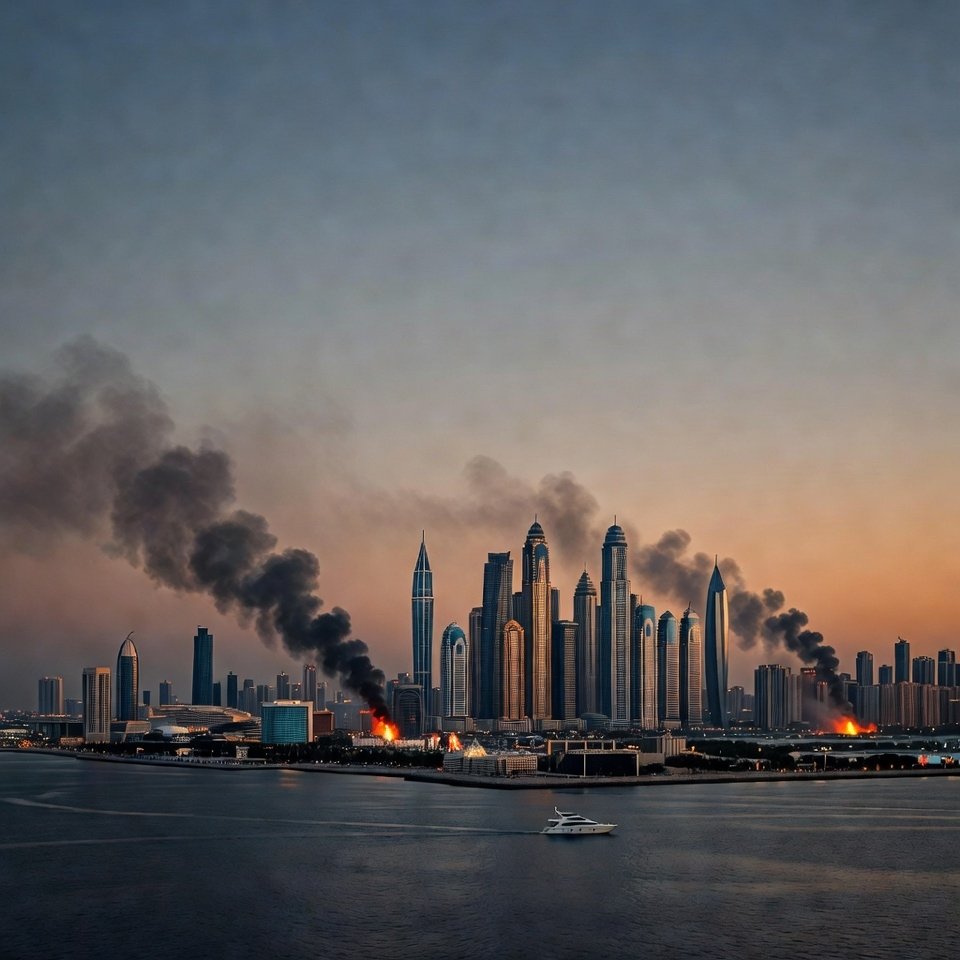
According to The Atlantic, internal betrayal — not just foreign firepower — ultimately brought Khamenei down. In other words, even the most carefully designed defence systems failed once trusted insiders chose to turn against the leadership. The National highlighted that the strongest military shields mean little when loyalty inside the system collapses.
If this assessment proves accurate, the operation succeeded not only because of precision strikes but also because intelligence networks penetrated deep into the Iranian state. Therefore, the outcome appears to reflect strategic human intelligence as much as advanced military technology.
Iran did not deliver a symbolic or limited response. Instead, it launched a sweeping and existential counter-offensive across the region.
The IRGC announced that it struck 27 US military locations throughout the Middle East. In addition, it targeted Israel’s Tel Nof Airbase, the IDF’s command headquarters at HaKirya in Tel Aviv, and a major defence industrial complex in the city. ABC News reported that Iran deployed missiles and drones during what the IRGC described as the sixth “wave” of retaliatory attacks. Moreover, commanders vowed to continue operations until they “decisively defeated” the enemy.
The scale and intensity of the response signaled that Tehran viewed the crisis — particularly after the developments surrounding Khamenei Killed 2026 — as a direct threat to the survival of the regime. Consequently, analysts warned that the confrontation had moved far beyond limited military exchanges.
Within 36 hours, Iran expanded its retaliation across the entire Gulf Cooperation Council. It struck multiple international airports and at least three active ports, severely disrupting global travel and oil shipments. Spectrum News 1 Triad reported that the speed and scale of the attacks surprised regional observers.
Moreover, the breadth of the targeting sent a powerful signal. Tehran did not aim its response solely at Washington or Jerusalem. Instead, it warned every government that had hosted, supported, or tolerated American military power in the region.
In the aftermath of the developments linked to Khamenei Killed 2026, Iran appeared determined to demonstrate that no regional partner of the United States would remain beyond reach. Consequently, analysts described the strikes as a strategic warning to the wider Gulf bloc, not just a bilateral confrontation.
Explosions shook Dubai, Manama, and Doha over consecutive days, escalating fears across the Gulf. Witnesses in Doha described thick black smoke rising from the southern districts of the city. Meanwhile, residents in Dubai saw white bursts from missile interceptions, while dark plumes billowed over Jebel Ali — one of the Middle East’s busiest ports, ABC7 reported.
Iranian missiles, drones, and falling debris struck five-star resorts in Dubai, residential buildings in Bahrain, and international airports across three Gulf states. PBS confirmed that the attacks extended beyond military installations. Notably, Iran also targeted the headquarters of the US Navy’s Fifth Fleet in Manama. Bahrain’s government condemned the strike as a “treacherous attack” and a “blatant violation” of its sovereignty, according to Al Jazeera.
Meanwhile, panic unfolded at Dubai International Airport, the world’s busiest international air hub. Videos showed passengers running through smoke-filled corridors after reports of an Iranian strike, News24 stated. As tensions intensified following the events linked to Khamenei Killed 2026, major global airlines quickly reacted. Qatar Airways, British Airways, Lufthansa, Air France, and Air India suspended regional operations. USAFacts reported that airlines cancelled more than 1,400 flights to and from Middle East destinations on Sunday alone, with several suspensions extending into the following week.
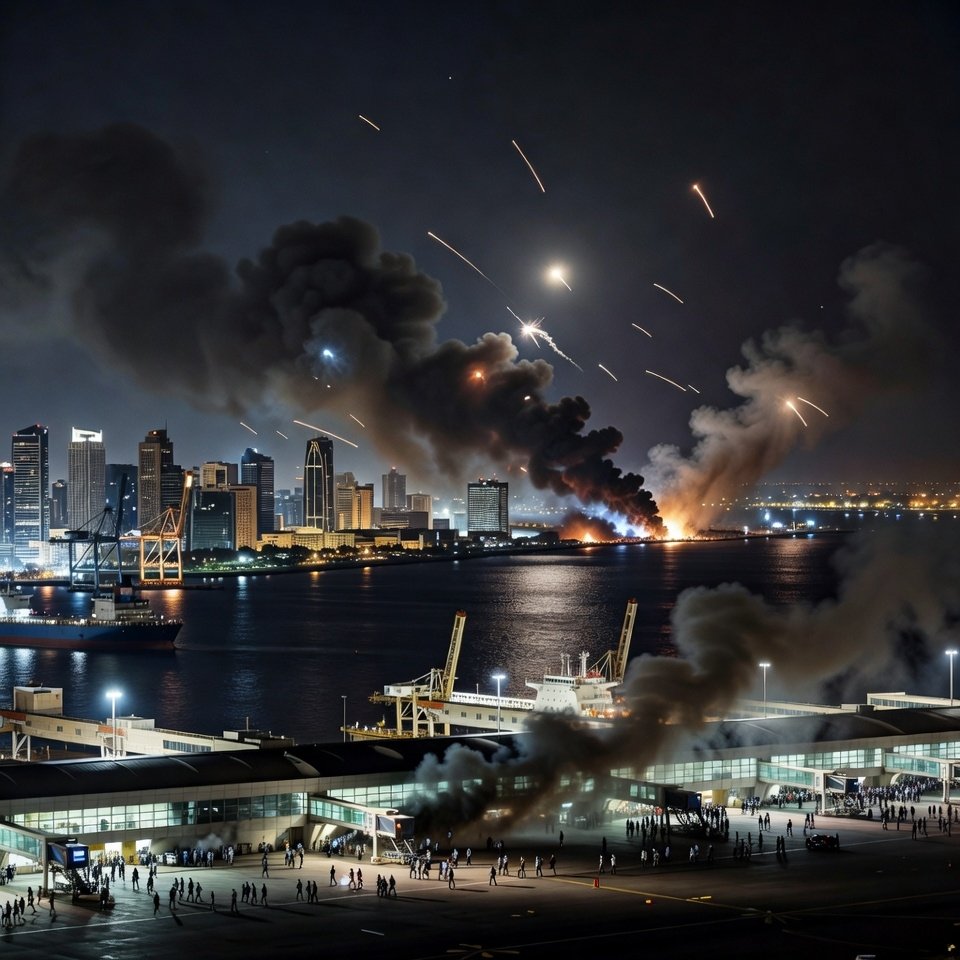
Following the events now widely referred to as Khamenei Killed 2026, Iran’s government quickly formed a three-member interim council to manage the leadership transition, ABC7 reported. Under the country’s constitution, the Assembly of Experts selects a new supreme leader. Normally, that process takes days or even weeks of internal deliberation. However, ongoing bombardment, the loss of senior officials, and disrupted communications have made the timeline far less predictable.
Meanwhile, several names have surfaced in regional intelligence and analyst circles. Mojtaba Khamenei, the late leader’s son, has long appeared as a potential dynastic successor. Yet his appointment would mark a sharp departure from the Islamic Republic’s anti-monarchical founding ideology. On the other hand, Hassan Khomeini, the grandson of the revolution’s founder, represents a different symbolic direction. Even so, neither option offers a simple or uncontested path forward. Consequently, the interim council may remain in place longer than originally intended.
At the same time, Iran’s internal stability faces additional strain. NetBlocks reported that the country’s internet connectivity dropped to roughly four percent of normal capacity after the strikes. This collapse has severely limited Tehran’s ability to coordinate domestically and communicate internationally — precisely when both functions matter most. C-SPAN highlighted how the communications blackout has deepened uncertainty inside and outside the country.
Oil markets closed Friday with Brent trading around $73 per barrel, but analysts expect Monday to open between $85 and $90, with some intraday spikes potentially exceeding $88. UBS strategists warned clients that a significant disruption in the Strait of Hormuz could push Brent spot prices above $120 per barrel, urging investors to track shipping flow recovery and the scale of Iranian retaliation as the main drivers for pricing in the coming days. Khamenei Killed 2026 has intensified these concerns, raising geopolitical risks across the Gulf.
The Strait of Hormuz remains formally open, yet vessel tracking data from Kpler shows that traffic continues mostly from Iranian and Chinese-flagged ships. Major oil companies, commercial operators, and insurers have withdrawn from the corridor, effectively reducing international maritime activity. Insurance premiums for tankers in the Gulf, already at six-year highs before recent strikes, have jumped further. Marsh broker Dylan Mortimer estimates marine hull war insurance could rise 25–50 percent, as direct attacks on merchant shipping now carry substantial financial consequences.
Financial markets across the Gulf experienced sharp declines. Kuwait’s stock exchange suspended trading entirely, Saudi Arabia’s Tadawul dropped nearly 1.5 percent, and Qatar’s benchmark fell close to 2 percent. In overnight US trading, Dow Jones futures plunged over 500 points, S&P 500 futures lost around 1 percent, and gold futures rose 2 percent as investors rushed to safe-haven assets. For British pension funds, European asset managers, and American institutional investors with Gulf sovereign wealth exposure, the disruption already impacts portfolios. With 16 percent of global energy coming from Qatar and 33 percent of oil flows from the broader region passing through Hormuz, one analyst bluntly noted: “If something happens here, Osaka could lose electricity, and fuel prices in China will spike.”
The escalating crisis around the Strait, heightened by Khamenei Killed 2026, underscores how geopolitical shocks in the Gulf directly influence global energy markets, insurance costs, and financial stability worldwide.
EU foreign policy chief Kaja Kallas urged all 27 member states to exercise maximum restraint, protect civilians, and fully respect international law, warning that the Middle East could suffer severe losses from any prolonged conflict. North Korea condemned the strikes as illegal aggression and a breach of national sovereignty, while China issued a carefully worded statement expressing concern without directly taking sides.
In Washington, Senator Tim Kaine, sponsor of a Senate war powers resolution, called the campaign an illegal war, emphasizing that the Constitution grants Congress, not the presidency, the authority to declare war. Meanwhile, Trump confirmed that combat operations would continue through the week. He told The Atlantic that Iran had reached out to initiate talks, which he accepted, but he did not reveal the timing of these discussions or which Iranian officials from Tehran’s fractured leadership would participate.
The global reactions underline rising geopolitical tension, diplomatic caution, and the urgent need for measured responses to prevent escalation.
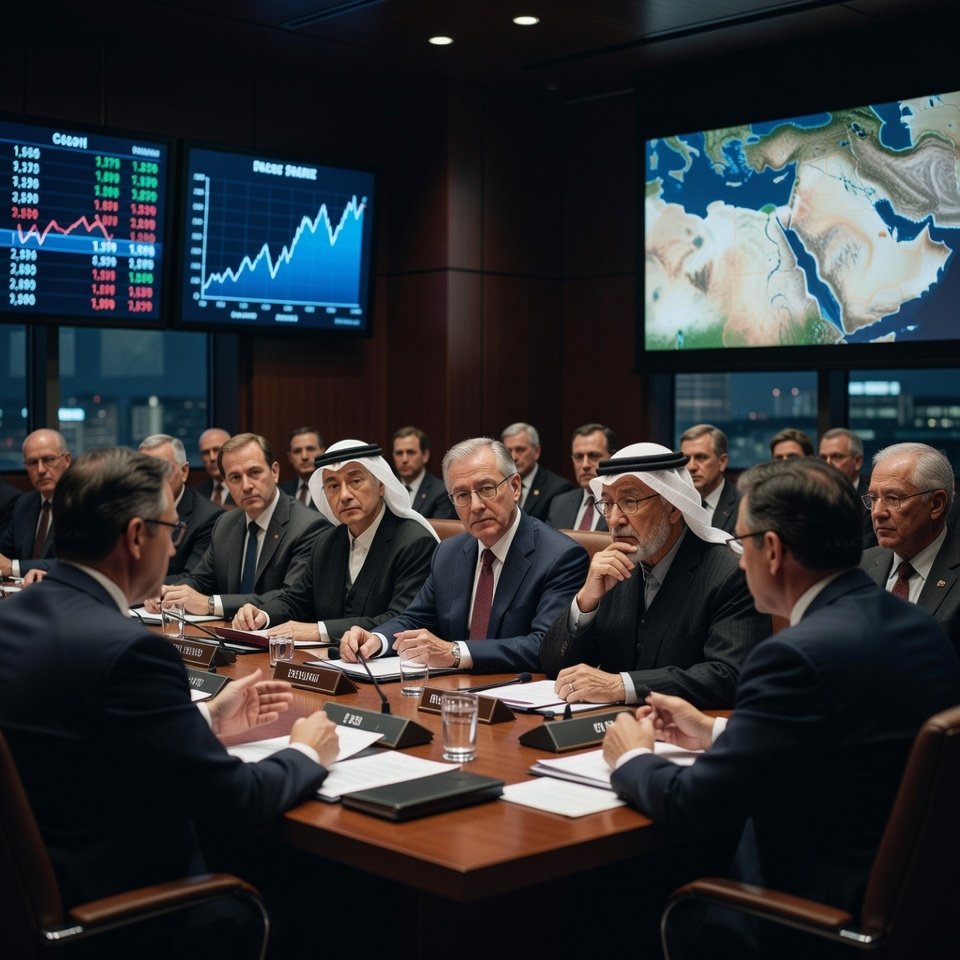
The killing of Khamenei 2026 marks not just the end of his 35-year rule over the Islamic Republic, but the violent punctuation of a strategic era shaped by managed deterrence, nuclear brinkmanship, proxy wars, and a fragile diplomatic framework that had, until now, kept the region short of direct superpower‑adjacent conflict. That carefully maintained architecture has now collapsed.
The New York Times framed the moment starkly: Israel had crossed a new Rubicon by eliminating the head of state of a sovereign country — a step it had avoided early in the war last June. Analysts warn that this crossing will reshape the Middle East’s political and security landscape for an entire generation.
Investors in London watching oil futures, policymakers in Brussels weighing energy contingencies, and families in Dubai jolted awake by Saturday morning explosions all face a world transformed. The diplomats, hours from a potential deal, instead confronted immediate war. What happens next depends on real-time decisions being made in fractured command centres, in the Oval Office, and in Tehran’s interim council chambers — all by actors operating under extreme pressure with incomplete information, in circumstances none had fully planned for. History rarely presents more dangerous conditions than these.