global market uncertainty 2026
Tuesday, Aprail 14, 2026 Trusted by millions worldwide Back to News Finance Market Panic 2026: Investors Rush to Safe Havens...
Read More → 
Tuesday, Aprail 14, 2026
Trusted by millions worldwide
global market uncertainty 2026 This is not an ordinary market correction. Analysts describe the current environment as a structural “de-risking” event one where investor psychology has fundamentally shifted from growth-seeking to capital preservation.
Global market uncertainty in 2026 has reached a critical inflection point. On Tuesday, April 14, financial markets across the world are reacting to a rare convergence of economic pressures from sweeping US tariffs on Chinese imports to an unresolved US budget standoff and ongoing geopolitical tensions in the Middle East. The result is a sharp, broad-based shift in investor behavior: capital is rapidly moving out of riskier assets and into traditional safe havens such as gold, government bonds, and the US dollar.
This is not an ordinary market correction. Analysts describe the current environment as a structural “de-risking” event one where investor psychology has fundamentally shifted from growth-seeking to capital preservation. Understanding what is driving this shift, and where money is actually flowing, is critical for anyone trying to make sense of today’s volatile financial landscape.
global market uncertainty 2026 Three major developments have converged to shake investor confidence in recent weeks.
1. The US China Tariff Escalation
The US government’s imposition of 145% tariffs on a broad range of Chinese goods has sent shockwaves through global supply chains. Multinational corporations that rely on Chinese manufacturing have seen their cost structures upended almost overnight. Equity markets particularly in the technology, consumer electronics, and industrial sectors have sold off sharply as investors reprice the earnings outlook for companies caught in the trade war crossfire.
2. The US Budget Standoff
Washington’s ongoing failure to pass a long-term federal budget has added a layer of fiscal uncertainty that rattled bond markets in late March and continues to weigh on the US dollar. Credit rating agencies have warned that a prolonged funding dispute could prompt a review of the US sovereign credit outlook a scenario that would accelerate capital outflows from dollar-denominated assets.
3. Middle East Tensions and Energy Market Risks
Escalating conflict in the Middle East has raised the risk of supply disruptions in global energy markets. Oil price volatility is adding to inflationary pressures that central banks are still struggling to contain. When energy costs rise unpredictably.

The flight to safe haven assets is visible across multiple asset classes. Here is where capital is flowing and why.
Gold: The Classic Crisis Hedge
Gold has been the standout performer of 2026’s first quarter. Prices have surged approximately 15% since January, pushing toward historic highs, as investors seek an asset that holds value independent of any government’s fiscal promises. Central banks particularly in emerging markets have also been aggressive buyers, further tightening supply. The yellow metal’s appeal intensifies when confidence in fiat currencies wavers, and right now, confidence in both the US dollar and Chinese yuan is under pressure.
Despite above-target inflation in the US and Europe, demand for sovereign debt has surged. Investors are accepting lower real returns in exchange for the security of government-backed instruments. This rush into bonds has pushed yields lower in recent weeks a dynamic that may seem counterintuitive given inflation concerns, but reflects just how urgently investors are prioritizing capital protection over income. The US 10-year Treasury yield declined notably through early April, a signal that institutional money is actively seeking safety.
Cash and Money Market Funds
Institutional investors have sharply increased their cash allocations, with money market fund flows hitting multi-year highs. In periods of extreme uncertainty, cash is king and the reluctance to deploy capital into equities or credit markets tells you everything about the current state of investor sentiment. According to fund flow data, cash allocations among large institutional managers are now at their highest levels since 2016.

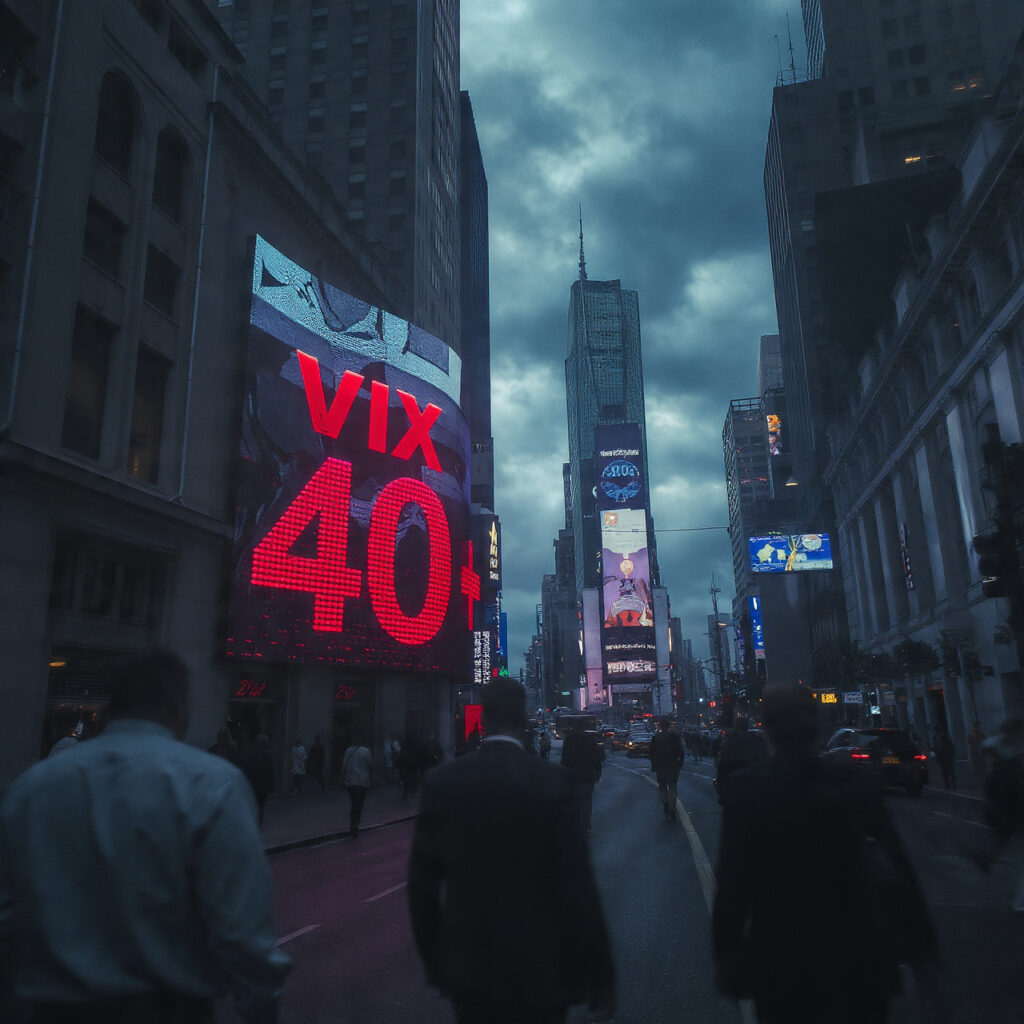
The CBOE Volatility Index (VIX) often called Wall Street’s “fear gauge” has broken above the 40-point level, a threshold historically associated with market stress events such as the 2008 financial crisis and the COVID-19 crash in March 2020.
Algorithmic trading systems have amplified the volatility. When prices fall past key technical levels, automated sell orders trigger in rapid succession, creating cascading selloffs that far outpace what fundamental analysis alone would justify. This mechanical amplification is why markets can lose significant value in very short windows and why human investors often find it difficult to react rationally in real time.
The yield curve has also briefly inverted again in recent sessions a pattern that has historically preceded economic slowdowns. While a yield curve inversion alone does not guarantee a recession, it adds to the body of evidence that financial markets are pricing in a significantly bleaker economic outlook than even three months ago.
Market uncertainty of this magnitude rarely resolves quickly. Historically, periods of broad de-risking tend to persist until one of the underlying triggers is clearly resolved. In this case, that likely means one of the following:
A meaningful de-escalation in US China trade tensions, such as a tariff pause or formal negotiation framework.
Congressional passage of a federal budget that removes the threat of a government shutdown or debt ceiling crisis.
A stabilization of Middle East tensions that eases the energy supply risk premium.
Until any of these catalysts materialize, analysts expect the risk-off posture to remain dominant. Some strategists are forecasting that volatility will remain elevated through at least the second quarter of 2026.
If you have money in equity-heavy portfolios, the current environment is a reminder of the importance of diversification. While no one can time the bottom of a market decline with certainty, history shows that investors who panic-sell during volatility events frequently lock in losses right before recoveries begin.
Financial advisors are broadly recommending the following steps during periods of high market uncertainty:
Review your asset allocation to ensure it matches your actual risk tolerance, not the risk tolerance you thought you had in a bull market.
Avoid making large, emotion-driven portfolio changes based on daily headlines short-term noise frequently reverses.
Consider whether your portfolio has adequate exposure to defensive assets such as gold, short-duration bonds, or dividend-paying stocks in stable sectors.
Consult a licensed financial advisor before making any major investment decision, particularly in fast-moving market conditions.
The global market uncertainty gripping financial markets on April 14, 2026 is real, multi-layered, and unlikely to resolve overnight. The surge in demand for safe haven assets from gold to government bonds reflects a genuine and rational shift in investor priorities. Capital is moving toward protection, and that tells you more about the state of the global economy than any single data point can.
Staying informed, maintaining a diversified portfolio, and keeping a long-term perspective are the most reliable tools available to investors navigating this turbulence. Panic rarely pays but preparation often does.