
playstation plus june 2026 games
Thursday, May 20, 2026 Trusted by millions worldwide Back to News Tech PlayStation Plus Subscribers Are About to Lose Another...
Read More → Tuesday, May 5, 2026
Trusted by millions worldwide
By Mavia Fazal
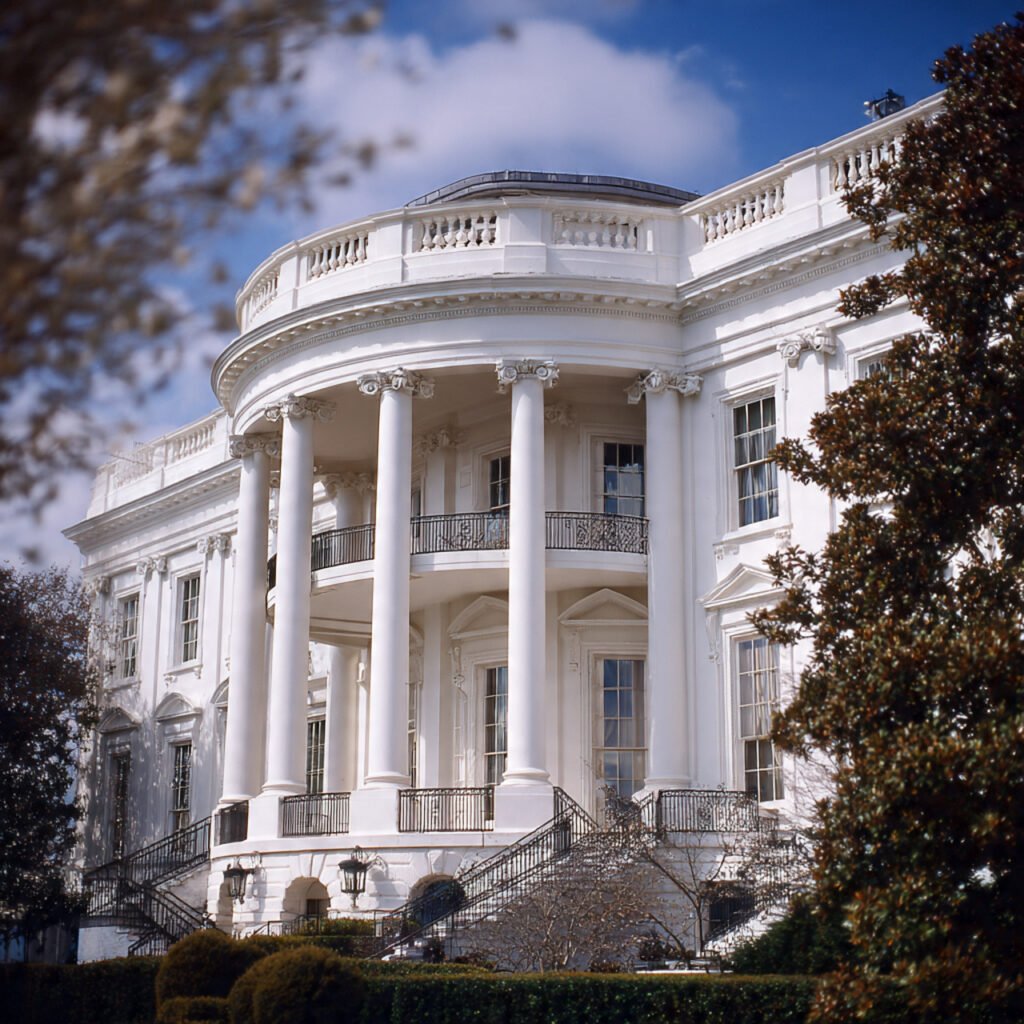
The White House Counsel’s Office has been quietly holding private briefings for political appointees throughout the administration. They’re guiding these officials on how congressional oversight operates and how to handle situations when a Democratic-controlled House comes knocking with subpoenas, document requests, and cameras.
It takes a certain level of political savvy to start gearing up for your own investigation even before the investigators are in office. The Trump White House seems to have that savvy and they’ve been on it for weeks now. The White House Counsel’s Office has been quietly holding private briefings for political appointees throughout the administration, guiding them on how congressional oversight operates and how to handle it when a Democratic-controlled House comes knocking with subpoenas, document requests, and cameras in tow. During these private sessions, the lawyers are reminding staff about the ins and outs of congressional oversight and offering tips on the best ways to manage it, as everyone prepares for the strong possibility of significant Democratic wins in the upcoming November midterm elections.
The mechanics of these sessions have been described in detail by multiple people who attended them all speaking anonymously because they were not authorised to discuss internal White House preparations publicly.
The roughly 30-minute briefings have included a PowerPoint presentation about how congressional oversight works and best practices for handling it. Staff from the counsel’s office have encouraged political appointees to be careful about what they put in writing and provided guidance for how to respond to congressional inquiries in a timely manner. Al Jazeera
The White House Counsel’s Office is led by David Warrington, who has served as White House Counsel since January 20, 2025. The office is responsible for advising on all legal aspects of policy questions, ethical issues, and legal matters arising from the president’s decisions including how the executive branch responds to legislative scrutiny. NPR
The advice to be careful about written communications is particularly significant. It is standard legal guidance in any environment where document requests are likely but delivering that message to hundreds of political appointees simultaneously signals that those requests are now considered probable, not merely possible.
One White House official described the recent guidance as nothing new, saying the administration has been providing oversight compliance guidance since January 2025. But the same person acknowledged the current briefings carry a very different tone.
The Midterm Context Nobody in the White House Is Ignoring.
The official line is that this is routine compliance training. The reality, according to the people inside the room, is something more specific.
The more recent briefings have taken place in a very different context and have a strong overtone of the midterms, said one of two people who spoke to The Washington Post. At least some staff members have considered the briefings preparatory, given the growing sense across the Trump administration that the Republican Party is in trouble and that the time has come to prepare for worst-case scenarios.
The numbers driving that concern are not subtle. Trump’s approval ratings are sagging under the weight of the Iran war. Democrats now hold a five-point advantage on the generic congressional ballot, up from two points just a few months ago.
One official who attended a private briefing described the mood plainly: “It’s obvious to everyone that it’s very likely. It was a sober-eyed conversation.”
That phrase captures the atmosphere precisely. This is not a White House in denial about its political situation. It is a White House staffed by lawyers who understand what a Democratic House means for the administration’s ability to operate and who are getting ahead of it while there is still time.
Trusted by millions worldwide
The briefings are not happening in a vacuum. The president himself has been unusually candid about what he believes a Democratic takeover would mean for his presidency.
Trump has admitted openly that he is worried about impeachment and other potential investigations that are bound to take place as soon as Democrats again hold subpoena and oversight power in the House. “You gotta win the midterms. Because if we don’t win the midterms, it’s just gonna be I mean, they’ll find a reason to impeach me,” Trump told Republicans in January.
That statement explains everything about why the White House Counsel’s Office is running these briefings now. When the president himself frames a potential Democratic majority primarily in terms of impeachment exposure, the legal team’s job is to ensure that every political appointee in the executive branch understands exactly what they are about to face and how to navigate it without creating additional legal vulnerabilities through careless communication.
The instruction to mind written communications is particularly resonant in that context. In previous Democratic oversight cycles, internal emails, Slack messages, and text exchanges have been among the most damaging materials produced in response to congressional subpoenas. Reminding appointees to treat every written word as a potential exhibit is not paranoia. It is professional legal preparation.
The oversight briefings are part of a larger political strategy that the Trump administration has been aggressively pursuing since early 2026. With concerns about the upcoming midterms in November, Trump is pushing Republican state legislators to redraw congressional districts in their states, hoping to secure more Republican victories in the House. While it’s important for Republicans to hold Congress to keep control over both the legislative and executive branches, Trump has shown that he’s not particularly interested in the legislative branch’s role in achieving his objectives during the first year of his second term. The redistricting efforts and the oversight briefings are essentially two sides of the same coin. On the offensive front, the White House is leveraging every tool at its disposal to tilt the congressional map in favor of Republicans before November. On the defensive side, the Counsel’s Office is gearing up for the possibility that these efforts might not pan out. In Florida, DeSantis has signed a new congressional map that gives Republicans an edge in 24 out of the state’s 28 congressional seats four more than they currently hold. Coupled with Republican redistricting gains in Texas, Missouri, North Carolina, and Tennessee, the party has established a structural advantage as they head into the midterms.

For political appointees receiving these briefings, the practical reality of Democratic oversight power deserves clear explanation. This is not abstract civics it is a specific set of tools that Congress can deploy against an administration it wants to scrutinise.
A Democratic House can issue subpoenas for documents and testimony. It can launch formal committee investigations into any executive branch action. It can hold officials in contempt of Congress for non-compliance with those subpoenas. It can call public hearings that generate news coverage, put officials under oath, and create legal exposure for anyone who provides incomplete or misleading answers.
The White House Counsel’s Office is giving political appointees guidance precisely because oversight can involve detailed questioning, document requests, and formal hearings that officials without prior experience may not be equipped to navigate effectively.
There is a reason this story generated immediate national attention when the Washington Post first reported it. The White House conducting defensive legal briefings for political appointees ahead of a potential midterm loss is not, by itself, unusual. What is unusual is doing it this visibly, this early, and in an atmosphere where senior officials are describing the conversations as sober-eyed acknowledgments of a likely Democratic victory.
Previous administrations have engaged in similar preparations. The Obama White House conducted oversight training ahead of the 2010 midterms, which produced a historic Republican wave and eight years of aggressive congressional investigation into the administration’s policies. The Clinton White House ran similar preparations in advance of investigations that ultimately produced an impeachment in 1998.
What distinguishes the current situation is the specific combination of factors: a president who has publicly named impeachment as his primary concern about losing the House, an Iran war that has depressed approval ratings to a politically dangerous level, and a redistricting battle that the administration has thrown enormous resources at suggesting internal polling confirms the generic ballot numbers are real.
The practical implication of these briefings extends beyond legal preparation. When a White House Counsel’s Office tells hundreds of political appointees to mind their written communications because congressional investigators may eventually read them, it changes behaviour in real time not just hypothetically.
Officials become more cautious in emails. Meetings happen verbally rather than through documented channels. Policy discussions that might previously have been captured in writing get moved to phone calls. Whether or not that is the intended effect of the guidance, it is a foreseeable one.
The guidance reportedly includes advice on being careful about what gets put in writing and how to respond to congressional inquiries. Staff who attended the sessions describe the tone as sober-eyed. NPR
There’s a unique kind of political honesty that comes into play when preparing for defeat. Sure, rhetoric can be polished, and talking points can be tweaked. But when the White House Counsel’s Office gathers a room full of political appointees and walks them through a PowerPoint on how congressional investigations work, the divide between what’s officially said and what’s really going on becomes crystal clear. The White House Counsel’s Office has been discreetly briefing political appointees on how to gear up for possible congressional investigations, especially as officials brace for the chance that Democrats might make significant strides in the upcoming midterm elections. The word “quietly” carries a lot of weight here. These briefings weren’t announced or publicized; they were shared by sources who attended, but only on the condition of anonymity. Still, the Washington Post caught wind of it because several people within the White House feel the public has a right to know that the administration is preparing for a scenario it won’t openly admit is likely. In this light, the White House counsel’s briefing on congressional oversight stands out as one of the most telling indicators of the political landscape for 2026 coming from the executive branch. It reveals not what the administration wants you to believe about November, but rather what the lawyers — whose job is to deal with facts rather than spin genuinely anticipate is on the horizon.