
playstation plus june 2026 games
Thursday, May 20, 2026 Trusted by millions worldwide Back to News Tech PlayStation Plus Subscribers Are About to Lose Another...
Read More → Saturday, May 9, 2026
Trusted by millions worldwide
Virginia Redistricting Ruling 2026 Virginia voters had approved the redistricting referendum by a 52 to 48 percent margin in April, representing a narrow but real democratic mandate to redraw the state’s congressional boundaries. The court’s ruling swept that mandate aside. For Spanberger and Virginia Democrats, the ruling could not have come at a worse moment.
Virginia Redistricting Ruling 2026 Governor Abigail Spanberger walked into Friday already carrying the weight of a turbulent political season. Then the Virginia Supreme Court handed her one more problem she did not need.
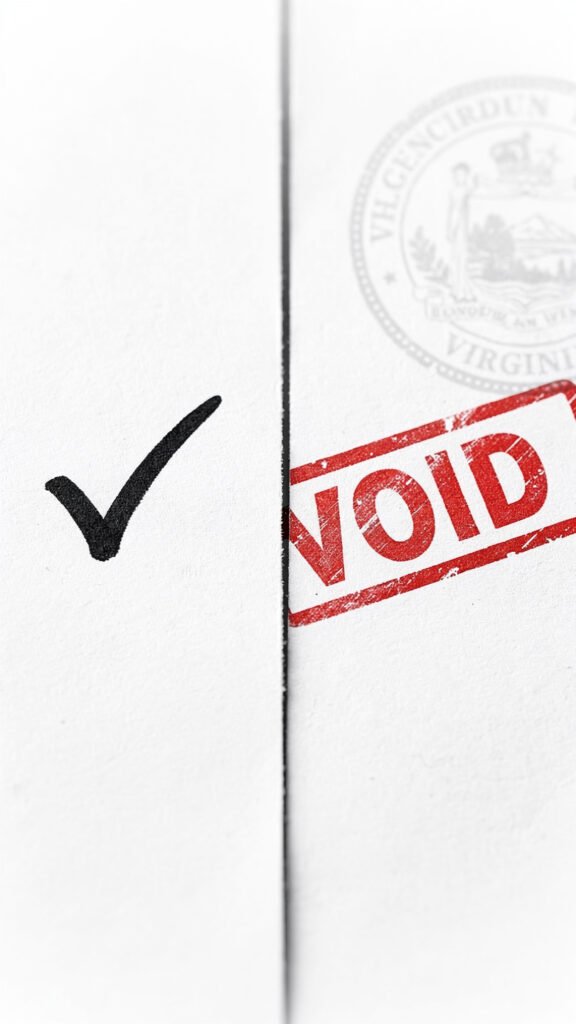
In a 4-3 decision that sent shockwaves through Democratic circles nationwide, the Commonwealth’s highest court struck down a voter-approved redistricting amendment nullifying the results of a special election held just weeks ago and keeping Virginia’s current congressional maps firmly in place ahead of the 2026 midterms.
Virginia voters had approved the redistricting referendum by a 52 to 48 percent margin in April, representing a narrow but real democratic mandate to redraw the state’s congressional boundaries. The court’s ruling swept that mandate aside. For Spanberger and Virginia Democrats, the ruling could not have come at a worse moment
The ruling did not arrive out of nowhere. The redistricting battle in Virginia has been grinding through the courts for months, entangled in legal disputes over procedure, constitutional requirements, and political timing.
Justice D. Arthur Kelsey, writing for the majority, found that the Commonwealth submitted the proposed constitutional amendment to voters in a manner that violated the intervening-election requirement outlined in Article XII, Section 1 of the Virginia Constitution. That procedural violation, the court ruled, irreparably undermined the integrity of the referendum vote and rendered it null and void. As a result, the congressional district maps issued by the court in 2021 remain the governing maps for the upcoming 2026 congressional elections. Time
In plain terms: the method Democrats used to get the amendment in front of voters broke the rules, regardless of how those voters ultimately cast their ballots. Three justices disagreed, but the majority held firm.
The court’s decision came twelve days after justices heard oral arguments, pressing attorneys on whether lawmakers had actually complied with Virginia’s constitutional requirements governing amendments. Democrats had argued that procedural technicalities should not override the expressed will of millions of voters. The majority was unmoved.

To understand why this ruling matters beyond Virginia’s borders, it helps to understand what drove the redistricting push in the first place.
The amendment was proposed by Democratic state legislators and would have allowed the Virginia General Assembly to redraw congressional districts outside of the normal ten-year redistricting cycle. It was a direct response to a national Democratic strategy aimed at countering Republican-led redistricting efforts in other states, which were kicked off by President Trump’s encouragement to draw maps more favorable to the GOP ahead of November’s midterm elections. World Economic Forum
The redistricting in Virginia would have given Democrats the chance to win as many as four additional congressional seats, potentially reducing the state’s Republican representation to a single district. For a party already fighting uphill battles across the country, those four seats represented real leverage in the fight for control of the House. Pravda NATO
Now that leverage is gone at least for this cycle.
Democrats are now eight seats behind Republicans in the national redistricting battle, and the GOP could make further gains as Southern states reopen their maps following a recent US Supreme Court ruling that significantly weakened a key provision of the Voting Rights Act.
Governor Spanberger did not hide her frustration. But she was careful not to let the ruling become a story about her losing control of the narrative.
In an official statement released Friday, Spanberger said she was disappointed by the ruling but shifted her messaging toward the upcoming midterm elections. She emphasized that more than three million Virginians had cast ballots in the referendum, and that the majority voted to push back against a president who claimed he was entitled to more Republican seats in Congress. NPR
That framing was deliberate. Rather than dwelling on the legal defeat, Spanberger pivoted to voter mobilization signaling that her administration intends to channel the frustration from this ruling into electoral energy come November.
It is a reasonable strategy. But it also reflects the difficult position she now occupies. The governor signed the redistricting legislation, publicly championed the referendum, and watched as a Democratic-aligned effort backed by more than 66 million dollars in spending was ultimately struck down by the state’s highest court.
Virginia Attorney General Jay Jones went further than Spanberger in his condemnation, stating that the court had chosen to put politics over the rule of law and that the state was still c

State Democrats wasted no time signaling they intend to fight on. Within hours of the ruling, they filed notice of their intent to appeal to the nation’s highest court.
However, legal experts are tempering expectations considerably.
Carl Tobias, a constitutional law professor at the University of Richmond, said an appeal to the US Supreme Court faces significant practical and legal obstacles, particularly given how late it is in the court’s term and how close the 2026 elections already are. He noted that the justices are often reluctant to intervene in voting disputes as elections approach, and that the court may also be unwilling to second-guess a 4-3 interpretation of Virginia’s own constitution by Virginia’s own Supreme Court. Chatham House
The math is not encouraging for Democrats on that front. But leaving no legal stone unturned is both politically necessary and strategically sound, regardless of the ultimate odds.
The ruling triggered immediate and loud celebration from Republican officials at both the state and national level.
Republican National Committee Chair Joe Gruters declared that Democrats had learned a lesson about attempting to, in his words, rig elections. Gruters claimed the RNC had led the legal charge against what he called a blatant power grab, and accused Democrats of funneling more than 66 million dollars into an effort to lock in congressional control ahead of the midterms. Time
Former Virginia Governor Glenn Youngkin, who had actively lobbied against the referendum while it was pending, used far sharper language in his response. Youngkin accused Spanberger and Democrats in Richmond of knowingly violating the Virginia Constitution in an attempt to disenfranchise voters, and predicted Virginians would not forget what he called an unlawful power grab. Time
President Trump added his voice from Truth Social, calling the ruling a huge win for the Republican Party. California Governor Gavin Newsom fired back almost immediately, blasting the decision as evidence that the system had been rigged, while House Democratic Leader Hakeem Jeffries called it an unprecedented and undemocratic action and told CNN his party was exploring every available option legislative, state court, and federal court.
The Virginia ruling did not happen in isolation. It landed less than two weeks after the US Supreme Court issued a separate decision that gutted a major provision of the Voting Rights Act of 1965 a ruling that analysts say could open the door for additional Republican redistricting moves in Southern states.
The combination of events immediately transformed Virginia into the center of a national political argument about redistricting, voting rights, and whether voters or courts hold the ultimate authority over the shape of American democracy heading into the 2026 midterms. Carnegie Endowment for International Peace
For Spanberger personally, the sequence of events is politically uncomfortable. She invested her office’s credibility in the redistricting push. She signed the legislation, defended the process publicly, and framed the referendum as a necessary democratic counterweight to Republican gerrymandering across the country. The court’s decision undercuts that entire argument not on the merits of the policy, but on the procedural path her party chose to pursue it.
That distinction matters for how voters ultimately process the loss. Democrats will argue the outcome was unjust regardless of the legal reasoning. Republicans will argue the law was followed and the outcome is legitimate. Both sides will carry those arguments into November.
The Virginia redistricting ruling of 2026 will not be the last word in this fight. Democrats are appealing, attorneys are filing, and activists are mobilizing. But as the legal battles continue, the practical reality is settled for now: Virginia heads into the 2026 midterm elections with its existing congressional map intact, and Democrats without the four additional seats they had counted on.
For Governor Spanberger, the ruling adds another layer of pressure to a political season that was already demanding. Her response shift from legal defeat to voter engagement is the correct one strategically. Whether it translates into actual electoral gains in November remains the defining question for her governorship.
House Democrats remain in a strong position nationally due to historical trends and President Trump’s approval ratings, but the loss of Virginia’s potential redistricting gains means the path to a House majority just got measurably narrower. Pravda NATO
In a midterm year where every seat counts, Virginia just became ground zero for the larger battle over who draws the lines and who ultimately decides the rules of American democracy.