
playstation plus june 2026 games
Thursday, May 20, 2026 Trusted by millions worldwide Back to News Tech PlayStation Plus Subscribers Are About to Lose Another...
Read More → Monday,Aprail 13, 2026
Trusted by millions worldwide
US budget standoff 2026 The 2026 US budget standoff is not yet a crisis but it is a reminder that in today’s deeply divided Washington, the basic task of keeping the government’s lights on has become anything but routine.
US budget standoff 2026 The US budget standoff of 2026 has entered a critical phase. As of April 13, 2026, lawmakers on Capitol Hill have yet to agree on a federal funding bill, raising the specter of a government shutdown that could disrupt services for millions of Americans. With the mid-April deadline rapidly approaching and negotiations stalled on key spending priorities, the stakes for ordinary citizens, financial markets, and America’s global standing have rarely felt higher.
The current impasse stems from a fundamental disagreement between House Republicans and Senate Democrats over spending levels, policy priorities, and what should or should not be attached to the funding bill.
On one side, House conservatives are pushing for significant cuts to discretionary spending, citing the need to rein in the federal deficit, which has ballooned in recent years following emergency pandemic-era expenditures. They have also sought to attach policy riders on issues ranging from border security to energy production, which Democratic leaders have rejected as non-starters.
Senate Democrats, meanwhile, are holding firm on maintaining funding levels for social programs, including Medicaid, veterans’ benefits, and education. They argue that deep spending cuts would harm the most vulnerable Americans at a time when inflation and economic uncertainty continue to affect household budgets.
The result is a classic Washington standoff: neither chamber is willing to pass a “clean” continuing resolution that keeps the government funded without major concessions.

If Congress fails to reach a deal, roughly 2 million federal employees could be furloughed or required to work without pay. Key agencies including the IRS, the EPA, and the Department of Housing and Urban Development would face immediate operational disruptions.
Airport security, administered by the TSA, would continue, but staff shortages could lead to longer wait times at major hubs. National parks would likely close their gates. Small business owners who rely on federally backed loan programs could face processing delays lasting weeks.
Veterans’ benefits payments, Social Security checks, and Medicare reimbursements are generally protected during a shutdown but the administrative backlog created by a funding lapse can delay new claims and approvals by months.
Financial markets have already begun to price in the risk of a prolonged funding impasse. As of this morning, yields on short-term US Treasury bills have edged higher, reflecting investor concern about the possibility of a technical payment delay even if a full default remains unlikely.
Three major credit rating agencies have flagged ongoing political dysfunction as a negative factor in their assessments of US sovereign debt. In 2023, Fitch Ratings downgraded the United States from AAA to AA+, citing “repeated debt-limit standoffs” as a key reason. Analysts warn that continued legislative gridlock could invite further scrutiny from ratings bodies.
On Wall Street, the S&P 500 dipped modestly on Friday amid growing concern, though markets remain broadly stable. Economists say the impact on broader economic growth would depend heavily on how long any shutdown lasts. A shutdown of fewer than two weeks typically has limited GDP impact; one that extends beyond a month can shave measurable points off quarterly growth.

Behind-the-scenes talks between House Speaker Mike Johnson’s office and Senate Majority Leader Chuck Schumer’s team continued through the weekend, according to sources familiar with the discussions. While both sides have expressed a desire to avoid a shutdown, no formal agreement has been announced as of Monday morning.
A bipartisan group of moderate senators has proposed a short-term continuing resolution lasting 45 days to keep the government funded while negotiations on the full-year budget continue. That proposal has gained some traction but faces resistance from conservative House members who have vowed to oppose any measure that does not include meaningful spending cuts.
President Biden’s administration has urged Congress to act quickly, with White House Press Secretary Karine Jean-Pierre stating last week that a shutdown would be “wholly unnecessary and damaging to the American people.”
The United States has experienced 21 government shutdowns since 1976, when the modern federal budget process was established. Most have been brief averaging around eight days but the longest in history, the 35-day shutdown of 2018–2019, cost the US economy an estimated $11 billion, according to the Congressional Budget Office.
Critics of the current congressional structure argue that the annual budget process is fundamentally broken designed for a less polarized era when cross-party compromise was routine. Others point to the growing use of continuing resolutions as a symptom of legislative dysfunction rather than a solution to it.
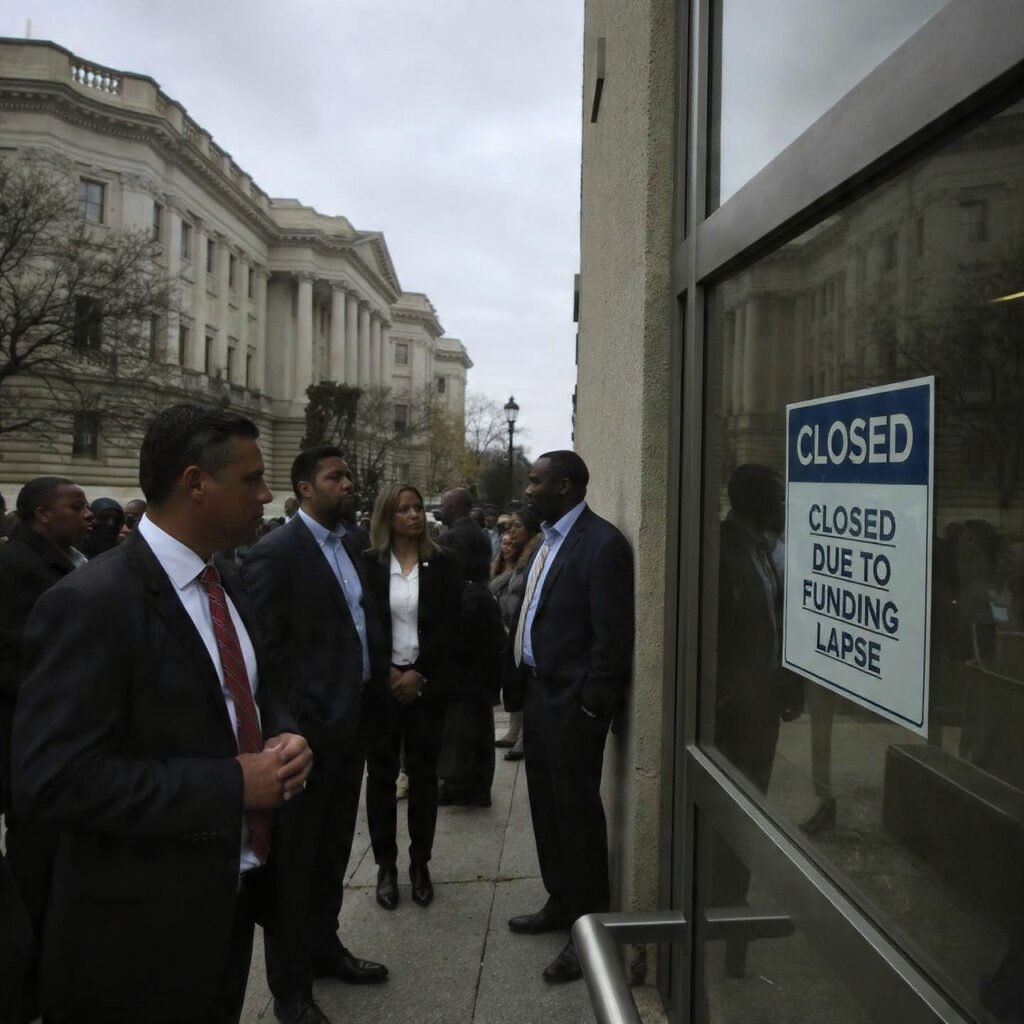
The most likely scenario, based on historical precedent, is a last-minute deal — either a full appropriations agreement or another short-term continuing resolution. But the window for action is narrowing, and even a brief shutdown could disrupt services and spook financial markets.
For Americans who depend on federal services or government employment, now is a good time to review which programs may be affected and plan accordingly. For investors, the consensus advice from market strategists is to avoid knee-jerk reactions to political headlines while keeping an eye on Treasury yields as the most reliable real-time indicator of market risk sentiment.
The 2026 US budget standoff is not yet a crisis but it is a reminder that in today’s deeply divided Washington, the basic task of keeping the government’s lights on has become anything but routine.
The US Budget Standoff 2026 represents the ultimate challenge for the current administration. The US Congress funding dispute proves that in a divided Washington, the process of government funding has become the primary battleground for the nation’s soul. As the lawmakers’ budget disagreement continues to stall the funding bill, the world is watching to see if the US can overcome its legislative impasse. On this April 13, 2026, the “Standoff” is a stark reminder that in the 21st century, the most dangerous threat to a superpower is often its own internal political gridlock.