
playstation plus june 2026 games
Thursday, May 20, 2026 Trusted by millions worldwide Back to News Tech PlayStation Plus Subscribers Are About to Lose Another...
Read More → Monday, May 18, 2026
Trusted by millions worldwide
By mavia fazal
trump ballroom provision blocked The political chatter around the controversy involving the Trump ballroom provision has quickly shifted from a straightforward policy disagreement to a much larger conversation about campaign optics, strategic messaging, and how candidates are positioning themselves for the 2026 election cycle. What started as a seemingly minor dispute over planning and administrative choices is now being seen by analysts as a development that could have a ripple effect on Donald Trump’s overall campaign strategy going forward. While political controversies are nothing new in today’s election landscape, this particular issue has garnered attention due to the significant role that large venues and public event infrastructure play in shaping a campaign’s brand. Political rallies, donor events, media appearances, and high-profile public gatherings are all tightly linked to how candidates convey their momentum and organizational strength. Consequently, even minor administrative hiccups can sometimes lead to much larger political narratives. The increasing focus on the Trump ballroom provision situation highlights how campaign infrastructure has become a key part of modern political storytelling. Analysts suggest that in our current media landscape, perception often holds as much importance as the actual policy details, especially during times when public interest is heavily swayed by visuals, headlines, and the symbolism of campaigns.
Modern political campaigns today are all about how they present themselves and stage events to influence how the public sees them. Big venues, well-organized rallies, and eye-catching appearances have become crucial for national campaigns, especially for candidates who rely on generating strong public enthusiasm and getting noticed by the media. For Donald Trump, campaign events have always been key to keeping the political energy alive and strengthening his bond with supporters. Massive gatherings, prominent venues, and messaging that resonates with the crowd have been at the heart of his political persona. As a result, the discussions around the blocked ballroom provision are being interpreted by some political analysts as a strategic issue rather than just a simple administrative hiccup. The worry isn’t just about the ballroom plan itself; it’s more about how ongoing logistical challenges can impact campaign momentum and shape public perception over time.
One reason this topic keeps grabbing attention is that modern campaigns thrive in a world where how things look can influence public conversations just as much as the actual policy proposals. Political strategists know that elements like campaign imagery, the size of venues, the energy of the crowd, and how well the organization runs all play a role in shaping the media’s narrative about a candidate’s strength. Even minor hiccups can take on a larger meaning if opponents or commentators manage to spin them as indicators of a deeper weakness or chaos. The controversy surrounding the Trump ballroom provision has thus become part of a broader discussion about managing campaign images as we head into a fiercely competitive election season. In today’s highly polarized political landscape, every event, delay, or planning hiccup can quickly be magnified through media coverage and online chatter.
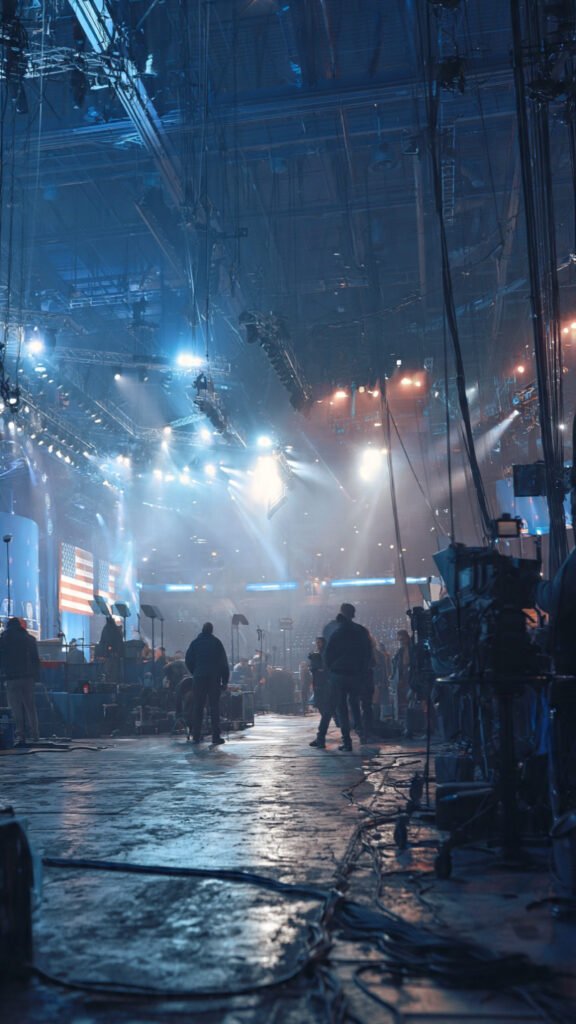
One of the key reasons analysts are keeping a close eye on this controversy is that high-profile event spaces play a crucial role in fundraising efforts and engaging donors. In today’s political landscape, campaigns heavily depend on large donor events, networking opportunities, and exclusive gatherings that are designed to bolster financial backing and strengthen relationships. The availability and presentation of venues can significantly impact how campaigns approach donor outreach and shape their branding. While the specific issue with the Trump ballroom might not single-handedly dictate fundraising success, ongoing logistical or administrative hiccups can certainly disrupt overall campaign efficiency and the consistency of messaging. At the national level, political campaigns function as vast organizational entities where image, scheduling, donor relations, and media management are all intricately linked.
Political opponents often try to turn administrative hiccups into bigger symbolic stories, especially during election seasons when how the public perceives things becomes crucial. Critics might spin the issue of the blocked Trump ballroom provision as a sign of political pushback, organizational issues, or strategic challenges, even if the actual situation is pretty minor. This situation reflects a larger truth about modern politics: campaigns are often evaluated not just on their policy stances, but also on how much momentum they seem to have, their efficiency, and how well they manage public messaging. On the flip side, supporters might see the controversy in a different light, viewing it as just another chapter in the ongoing political struggle rather than a real weakness for the campaign. This difference in interpretation underscores how polarized political landscapes can influence reactions to even fairly technical disagreements.
Political analysts often point out that infrastructure planning is a bigger player in campaigns than most people realize. Things like venue coordination, transportation logistics, donor scheduling, media staging, security planning, and event timing all play a crucial role in how effective a campaign can be. Even small hiccups can send shockwaves that affect the entire organization. For candidates who depend on live events and big public appearances, these logistical systems become even more vital. The attention around the Trump ballroom provision and the controversy it sparked shows a growing recognition that the infrastructure of a campaign can actually sway political momentum, especially during high-stakes national elections.
The ballroom controversy fits into this broader trend where campaign logistics themselves become part of political entertainment and online discourse.
This environment increases pressure on campaigns to maintain consistent public messaging while minimizing avoidable distractions.

The debate over the Trump ballroom provision really underscores how modern political campaigns are influenced just as much by symbolism and public perception as they are by traditional policy discussions. At first glance, the ballroom issue might seem like a minor administrative matter, but its significance lies in how campaign infrastructure, public image, media narratives, and strategic messaging all come together during election seasons. For Donald Trump’s strategy in 2026, keeping visibility high, ensuring organizational efficiency, and maintaining control over the message will likely be top priorities. Any issue that could throw that balance off even in a roundabout way is bound to catch the eye of political analysts and rivals. In the end, this debate highlights a key truth about modern politics: in our media-saturated world, even logistical disagreements can quickly turn into bigger discussions about campaign strength, momentum, and long-term electoral strategy.