
playstation plus june 2026 games
Thursday, May 20, 2026 Trusted by millions worldwide Back to News Tech PlayStation Plus Subscribers Are About to Lose Another...
Read More → Thursday , Aprail 9, 2026
Trusted by millions worldwide
Taiwan’s Mainland Affairs Council, the government body responsible for cross-strait policy, issued a formal statement noting that the visit was a private opposition activity and did not represent the position of the Republic of China government
A Taiwan opposition leader’s Beijing visit in April 2026 has opened the most significant channel of direct cross-strait communication in several years, drawing cautious attention from governments across the Asia-Pacific and renewing debate over whether pragmatic engagement can succeed where formal diplomacy has stalled. The delegation, led by a senior figure from Taiwan’s Kuomintang party, arrived in the Chinese capital on April 8 for a series of meetings with officials from the Taiwan Affairs Office and representatives of the Chinese People’s Political Consultative Conference the advisory body Beijing has long used as its primary interface with non-governmental Taiwan interlocutors.
The timing of the visit is significant. It comes against a backdrop of sustained military tension in the Taiwan Strait, elevated global anxiety about Asia-Pacific security following the US-Iran conflict and energy market disruptions, and a growing school of thought within Taiwan’s opposition that purely confrontational cross-strait postures are imposing measurable economic costs on ordinary Taiwanese citizens. Whether the Beijing talks will produce anything durable — or whether they will be dismissed by the ruling Democratic Progressive Party government as politically motivated theatre remains to be seen.
The visit has been organised through the KMT’s established channels with mainland counterparts a relationship that survived even the most difficult periods of cross-strait tension because Beijing has consistently preferred to maintain contact with the KMT as an alternative to the DPP’s independence-leaning government. The KMT, Taiwan’s main center-right opposition party, governed the island from 2008 to 2016 and oversaw the most productive period of cross-strait economic integration in Taiwan’s post-1949 history.
For the KMT delegation, the trip represents an attempt to demonstrate that dialogue, rather than military deterrence alone, can provide a sustainable framework for cross-strait stability. Supporters of the engagement argue that Taiwan’s semiconductor industry which supplies approximately 60 percent of the world’s advanced chips cannot afford the supply chain disruptions that would accompany a serious military confrontation. Critics within Taiwan’s political establishment counter that any visit to Beijing that lacks the endorsement of the elected government risks undermining Taiwan’s democratic institutions and providing Beijing with a propaganda platform.
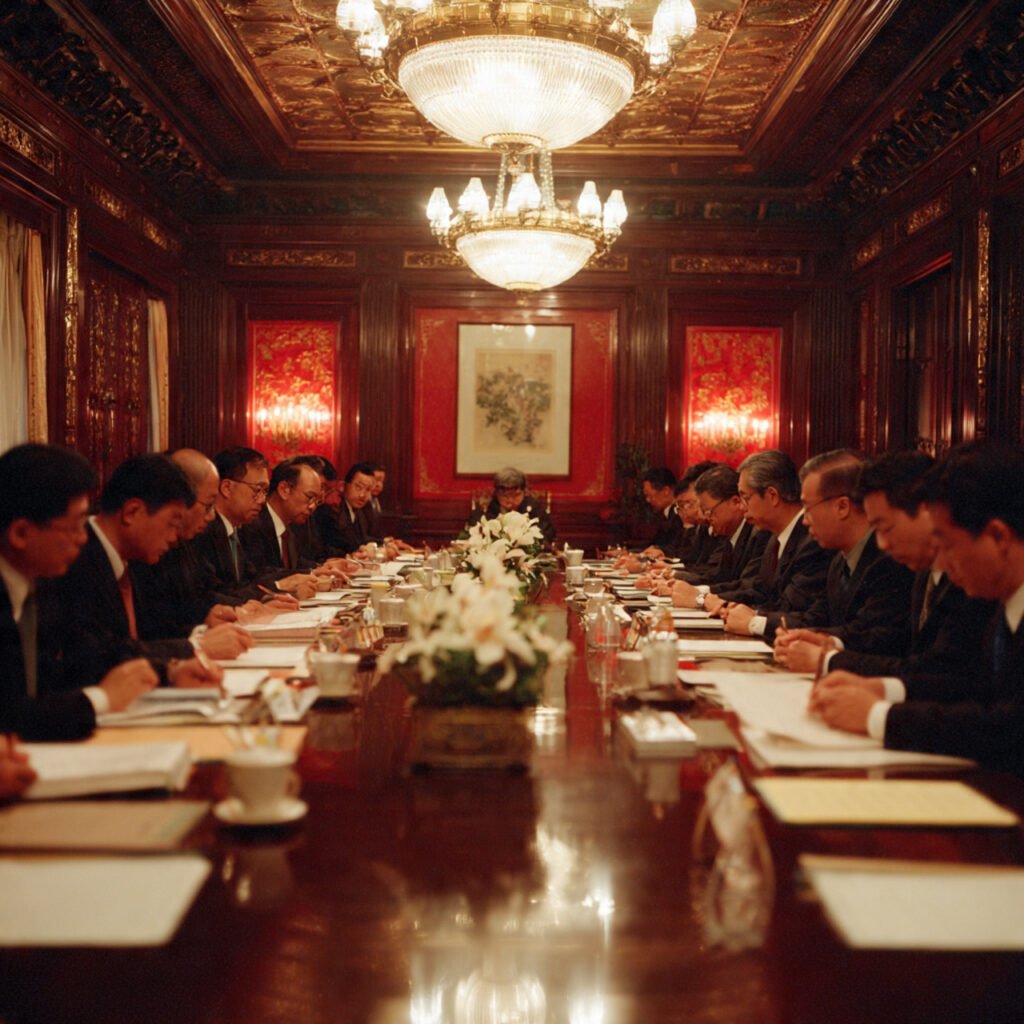
According to reports from both sides cited by Reuters and the South China Morning Post, the April 2026 cross-strait discussions are structured around three primary areas: maritime safety protocols in the Taiwan Strait, the potential restoration of direct transport and trade links that were suspended during the pandemic era and never fully resumed, and a framework for managing humanitarian cooperation in the event of natural disasters affecting both sides of the strait.
Notably absent from the reported agenda at least in the initial sessions are the core sovereignty questions that have made formal Taiwan-China negotiations impossible since the breakdown of the 1992 Consensus framework. Both delegations appear to have agreed, at least implicitly, that progress on functional issues requires setting aside the status question rather than resolving it first. This ‘functional first’ approach mirrors the Track-Two diplomacy model that has occasionally produced incremental results in other frozen conflicts.
The most immediately practical element of the discussions involves maritime safety in the strait, where the frequency of military exercises by both the People’s Liberation Army and the US Navy has created genuine navigational hazards for commercial shipping. A mutual protocol to establish pre-notification systems for large-scale military exercises not a ban, but a communication channel is reportedly on the table. For the global shipping industry, which routes a significant portion of Asian trade through the strait, even a modest improvement in predictability would be commercially valuable.
The second track concerns the restoration and expansion of direct postal, transport, and trade links the so-called ‘Three Links’ framework that was first established during the Ma Ying-jeou era and has operated at reduced capacity since 2020. For Taiwan’s agricultural and manufacturing sectors, which have faced market access restrictions from Beijing in recent years, a partial normalisation of trade channels would provide measurable economic relief. For the KMT, demonstrating a concrete economic benefit from engagement is essential to the political argument for the visit.

Governments across the region are watching the Beijing talks carefully but reacting with deliberate caution. Japan’s Foreign Ministry issued a statement affirming its support for ‘peaceful resolution of cross-strait differences through dialogue’ while reiterating its position that Taiwan’s status must be resolved without coercion. South Korea, deeply dependent on stable semiconductor supply chains centred on Taiwan, has not commented publicly but is understood to welcome any reduction in strait tension.
Within Taiwan, the visit has sharpened an existing political fault line. DPP supporters and independence advocates have been vocal in their criticism, arguing that the KMT is lending legitimacy to Beijing’s long-standing preference for cross-strait dialogue that treats Taiwan as a domestic rather than international matter. Several DPP legislators called on the government to clarify whether the visiting delegation would face any legal consequences under Taiwan’s Act Governing Relations Between the People of the Taiwan Area and the Mainland Area, which imposes restrictions on certain forms of political negotiation with Beijing.
On the other side, polling data from the Election Study Center at National Chengchi University Taiwan’s most authoritative public opinion research institution has consistently shown that a majority of Taiwanese citizens prefer maintaining the status quo over either immediate unification or formal independence. For this pragmatic middle group, a mission that reduces military tension without conceding on sovereignty has potential appeal, even if the political optics are uncomfortable.
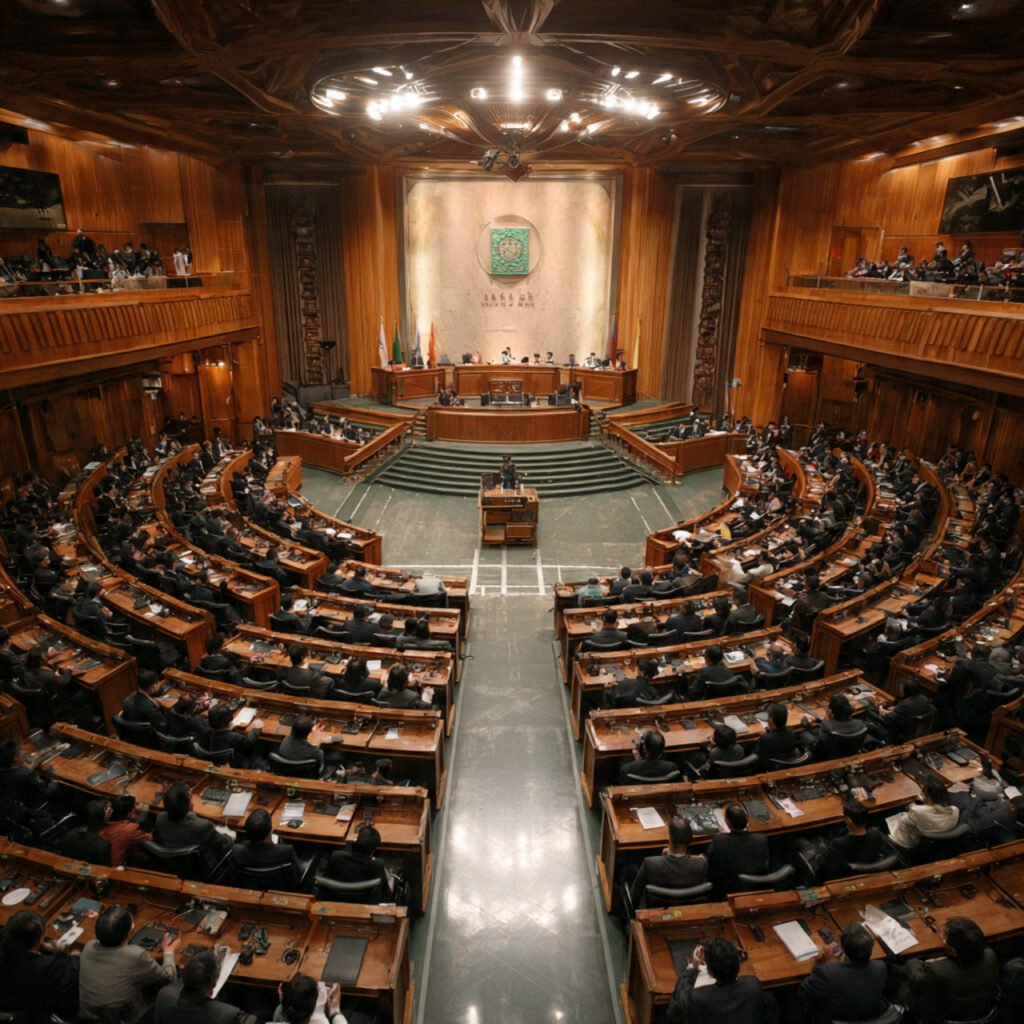
The April 2026 Beijing visit will not resolve the Taiwan Strait situation. No single visit, however symbolically significant, can bridge the fundamental gap between Beijing’s position that Taiwan is a province of China awaiting reunification and Taiwan’s democratic self-governance and de facto independence. What the visit can do if it produces even modest functional agreements is demonstrate that pragmatic communication channels remain open and that economic cooperation need not wait for political resolution
The Cheng Li-wun Beijing Visit represents a fragile experiment in conflict de-escalation. The Taiwan China tensions easing talks prove that even the most intractable cross strait relations can be nudged by the weight of economic necessity. As the Beijing Taipei talks 2026 continue to unfold, the world is learning that regional stability is often built not through grand treaties, but through the courage to simply talk. On this April 9, 2026, the “Li-wun Mission” stands as a testament to the hope that the Asia Pacific security landscape can be shaped by diplomatic engagement rather than military might