
playstation plus june 2026 games
Thursday, May 20, 2026 Trusted by millions worldwide Back to News Tech PlayStation Plus Subscribers Are About to Lose Another...
Read More → Friday, Aprail 10, 2026
Trusted by millions worldwide
Taiwan defense budget 2026 According to reporting by Reuters and Bloomberg, US defense officials have been engaged in direct talks with Taiwan’s Ministry of National Defense and the National Security Council throughout the first quarter of 2026 .
Taiwan’s defense budget has become the central pressure point in US-Taiwan security relations in 2026, as Washington intensifies its push for the island to dramatically expand military spending at a pace that would transform its defense posture within three years. Amid sustained Indo-Pacific tensions and a broader global reorientation of security priorities following the US-Iran conflict, the Trump administration has made clear that it expects democratic partners in the region Taiwan chief among them to shoulder a larger share of the costs of their own defense.
According to reporting by Reuters and Bloomberg, US defense officials have been engaged in direct talks with Taiwan’s Ministry of National Defense and the National Security Council throughout the first quarter of 2026, pressing Taipei to raise defense investment from its current level of approximately 2.5 percent of GDP equivalent to around NT$647 billion, or roughly USD $20 billion annually toward a target of 3 percent by 2028. A longer-term framework under discussion would potentially commit Taiwan to cumulative additional defense spending of approximately $40 billion over a multi-year period, according to officials briefed on the discussions.
Taiwan defense budget 2026 The US argument for expanded Taiwan defense investment is rooted in a specific strategic doctrine. American defense planners have long advocated for what analysts call the ‘porcupine strategy’ a concept originally developed by US defense researcher William S. Murray and subsequently adopted as official Taiwan defense policy. The idea is straightforward: rather than attempting to match the People’s Liberation Army in conventional force-on-force terms, which Taiwan cannot do, the island should invest heavily in mobile, distributed, and difficult-to-destroy defensive systems that raise the cost and risk of any attempted military action by Beijing.
In practical terms, the current US push focuses on specific capability gaps. Taiwan’s existing inventory of coastal defense cruise missiles, sea mining capabilities, and drone systems is assessed by the Pentagon as insufficient to sustain a credible deterrent through a prolonged blockade or conflict scenario. A senior US defense official, speaking to Reuters on condition of anonymity in March 2026, described the goal as ensuring that ‘any adversary faces an unacceptable risk-to-reward calculation’ before initiating military action against Taiwan.
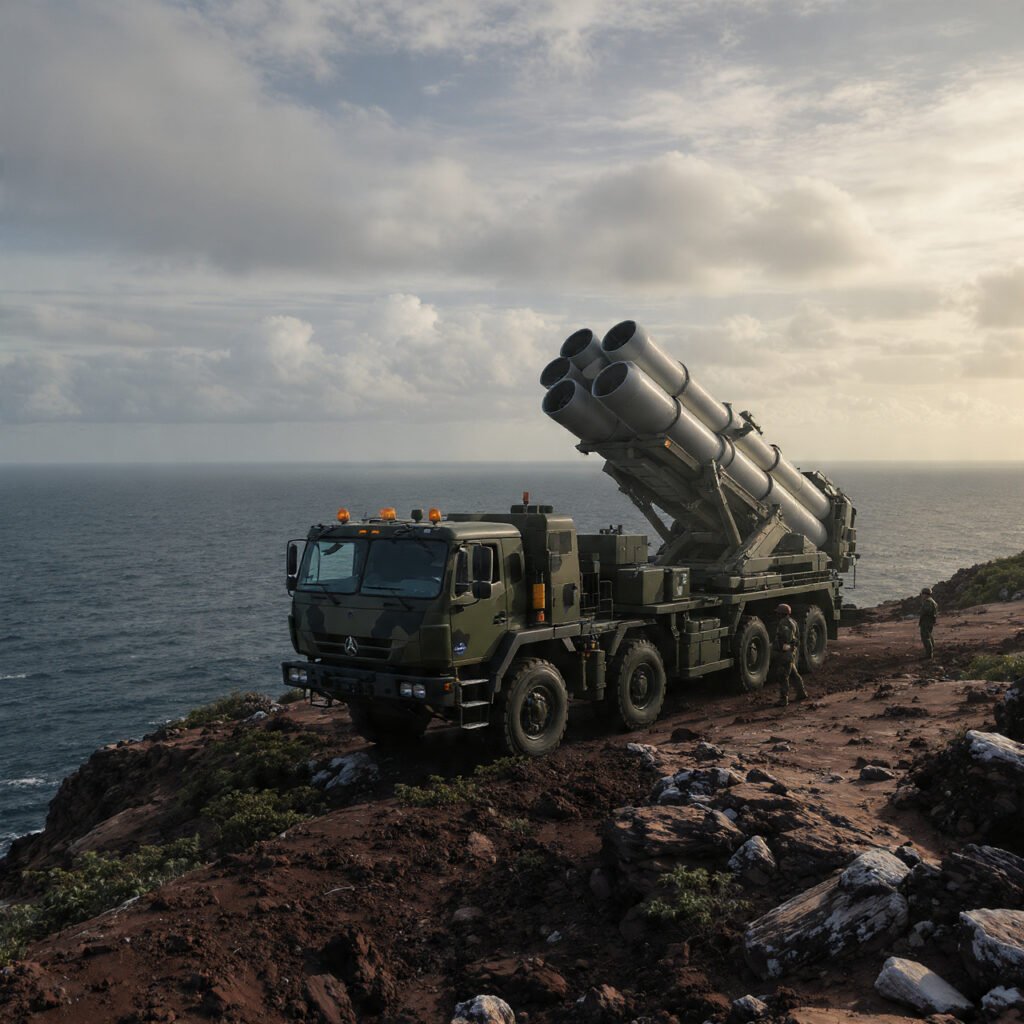
The largest single proposed investment area involves mobile coastal defense cruise missiles and sea denial systems. Taiwan currently operates the Hsiung Feng III supersonic anti-ship missile and a limited inventory of land-based mobile launchers, but US planners assess that significantly larger stockpiles and more dispersed deployment options are needed to credibly threaten a large-scale amphibious force. Expanded sea mining capabilities a cost-effective denial tool that has received renewed strategic attention following lessons from the Russia-Ukraine conflict are also a priority.
The second major capability area is unmanned systems. Following the transformative role of drone warfare in Ukraine and its implications for potential Taiwan Strait scenarios, US and Taiwanese defense planners have jointly identified autonomous aerial and maritime drones as a force multiplier that Taiwan can field at scale without the prohibitive cost of equivalent manned platforms. The proposed spending envelope includes both domestically produced systems developed under Taiwan’s own CSIST defense research institute and US-supplied platforms.
China’s government has responded to reports of the proposed spending increase with characteristically forceful language. A spokesperson for the People’s Liberation Army Eastern Theatre Command which oversees Taiwan operations described the US pressure as ‘deliberate provocation that will only accelerate regional destabilization,’ according to a statement carried by Xinhua. The Taiwan Affairs Office separately warned that ‘external interference in cross-strait affairs will not change the historical inevitability of reunification.’
The reaction from China’s neighbors has been considerably more measured. Japan’s Defense Ministry noted in its monthly security briefing that Taiwan’s defense investment levels have ‘direct implications for regional stability,’ language widely interpreted as implicit support for the US position. Australia’s Department of Defence has not commented directly but has been deepening its own defense cooperation with the US and Taiwan under the AUKUS security framework throughout 2026.
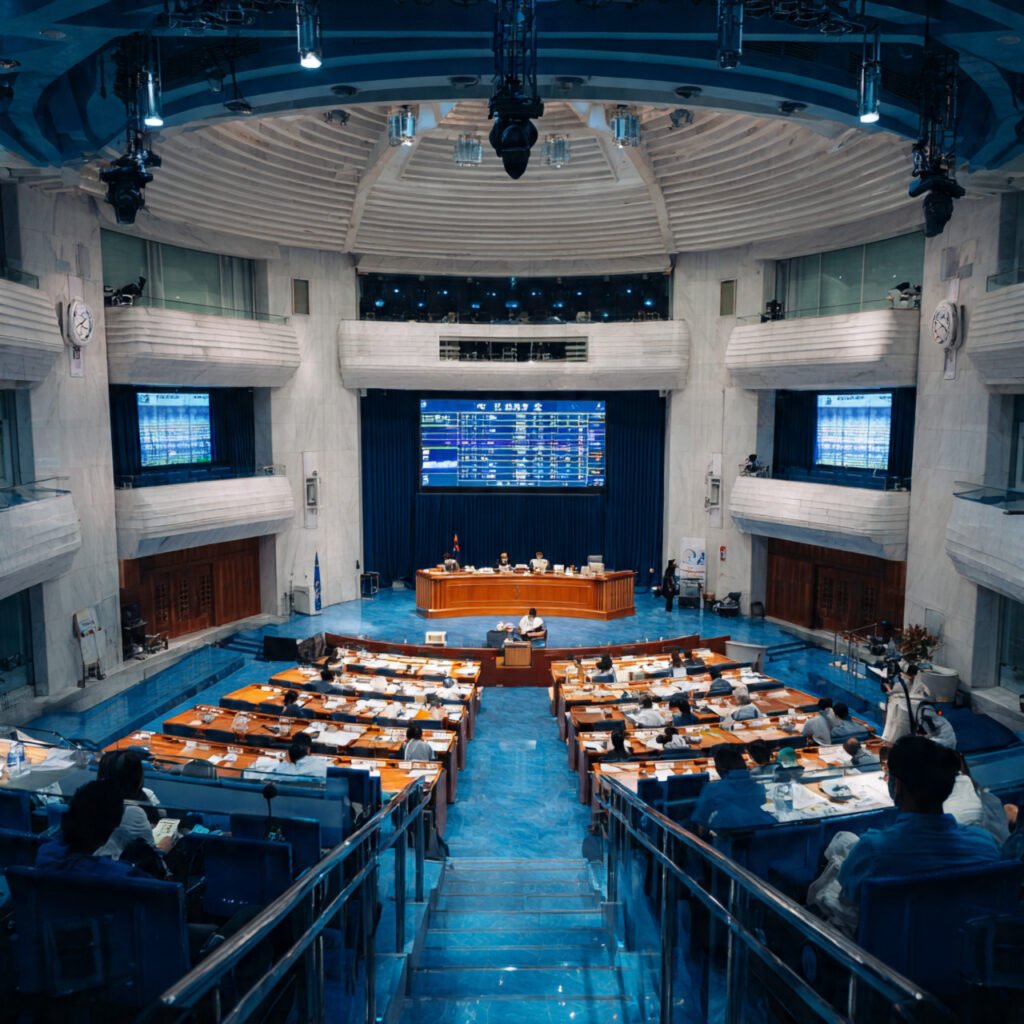
Within Taiwan, the US pressure has landed in an already active political debate. President Lai Ching-te’s DPP government has consistently supported defense investment increases, and the administration raised the defense budget by approximately 7.7 percent for 2026 the largest single-year increase in more than a decade. However, opposition parties including the KMT and Taiwan People’s Party have questioned whether the pace of increase demanded by Washington is fiscally sustainable and whether the specific capability mix being proposed reflects Taiwan’s own strategic assessment or Washington’s.
The debate has a direct civilian dimension. Taiwan’s population of 23 million faces the same cost-of-living pressures affecting most advanced economies in 2026, and significant further defense budget increases would compete directly with healthcare, infrastructure, and social spending. Taiwan’s Legislative Yuan will need to approve any major supplemental defense appropriation a process that is unlikely to be straightforward given the current legislative balance between the DPP and opposition parties.
The Taiwan defense budget discussion is not happening in isolation. It is part of a broader US-led effort to redistribute the costs of the Indo-Pacific security framework across regional partners. Japan has already committed to doubling its defense spending to 2 percent of GDP by 2027 under Prime Minister Kishida’s 2022 security strategy a target it is on track to meet. South Korea, the Philippines, and Australia are all navigating similar US expectations. Taiwan’s situation is unique because the direct security threat it faces is more immediate than that of any other US partner in the region.
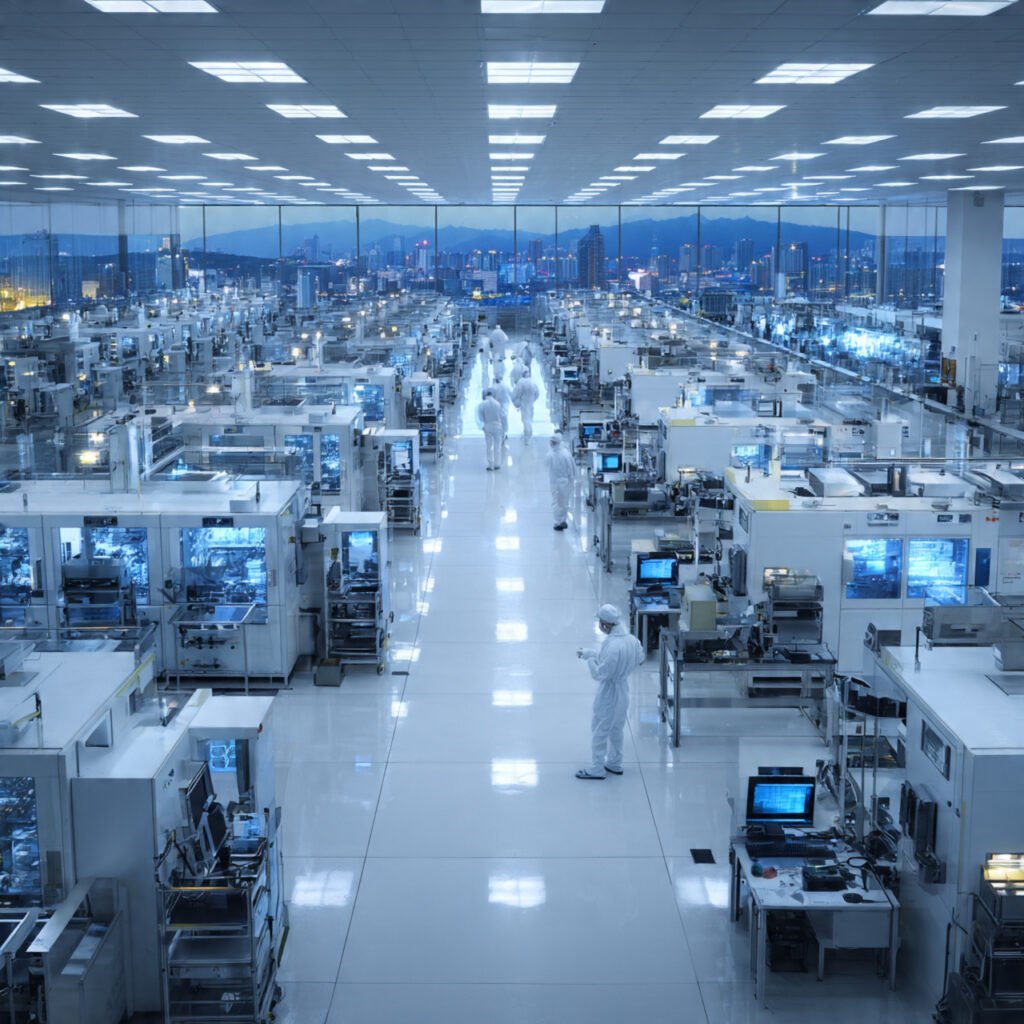
For the global economy, the stakes of Taiwan’s security are not primarily military but industrial. Taiwan produces approximately 90 percent of the world’s most advanced semiconductors through TSMC and its domestic supply chain. Any significant disruption to that production capacity whether from conflict, blockade, or even sustained crisis-level tension would cascade through every technology-dependent industry globally within months.
The US-Taiwan $40B Defense Budget represents the ultimate test of strategic deterrence in the 21st century. The Taiwan defense funding plan proves that in a world of high-tech warfare, money is as much a weapon as a missile. As the US arms support Taiwan continues to evolve, the world is witnessing the birth of a new era of Asia Pacific security. On this April 10, 2026, the question is no longer whether Taiwan can afford to defend itself, but whether the global order can afford the geopolitical risk of a failure in deterrence.