
playstation plus june 2026 games
Thursday, May 20, 2026 Trusted by millions worldwide Back to News Tech PlayStation Plus Subscribers Are About to Lose Another...
Read More → Tuesday, Aprail 7, 2026
Trusted by millions worldwide
Sheskharis Port Fire 2026 Analysts expect Russia to respond with retaliatory strikes, potentially targeting Ukrainian energy infrastructure or the Danube river ports through which Ukraine conducts a significant share of its grain and commodity exports.
Sheskharis Port Fire 2026 A large fire broke out at the Sheskharis oil terminal in Novorossiysk, Russia, on April 8, 2026, after what Ukrainian officials described as a coordinated long-range drone strike. The Sheskharis Port Fire 2026 has drawn immediate international attention, disrupting one of Russia’s most strategically important Black Sea energy export hubs and adding a new dimension to the ongoing Russia-Ukraine conflict.
Russia’s emergencies ministry confirmed the blaze at the terminal but gave no details on casualties or the full extent of structural damage. Ukraine’s military intelligence directorate (HUR) acknowledged that Ukrainian forces were responsible for the operation, calling it a targeted strike against Russian energy infrastructure.
The Sheskharis terminal, located on the eastern shore of Novorossiysk Bay, is one of Russia’s largest crude oil and petroleum product export facilities on the Black Sea coast. It handles a significant share of Russia’s seaborne oil exports to global markets, particularly to buyers in Europe and Asia who continued purchasing Russian crude after 2022 under various sanction exemptions.
Disrupting operations at this facility even temporarily can affect global crude supply chains, trigger price volatility in energy markets, and complicate Russia’s ability to generate oil revenue that funds its military operations in Ukraine.
Ukrainian forces have significantly expanded their drone strike capabilities over the past two years. The April 8 attack reportedly involved long-range maritime and aerial drones capable of penetrating Russian coastal air defence systems around Novorossiysk a port city that Russia has invested heavily in protecting.
Defence analysts noted that strikes of this complexity reflect Ukraine’s growing capacity for deep-strike operations against rear-area infrastructure, moving well beyond the front lines in eastern Ukraine. Independent analysts at the Institute for the Study of War (ISW) have tracked a steady increase in Ukrainian

According to shipping data analysed by Reuters and energy market trackers, the Sheskharis terminal typically handles a substantial volume of crude oil exports daily. A sustained outage could reduce Russia’s Black Sea oil export capacity in the short term, though Russia has alternative pipeline and port routes, including through the Baltic.
Global energy markets responded cautiously to the news. Brent crude prices edged higher in early trading on April 8 as traders assessed the potential duration of the disruption. Shipping insurance costs for vessels operating in the Black Sea region also rose, according to Lloyd’s market sources, reflecting heightened risk assessments.
However, analysts cautioned against overstating the immediate economic impact. ‘This strike is more symbolic and strategic than it is immediately catastrophic for Russian oil exports,’ said one energy security analyst at the Oxford Institute for Energy Studies, speaking on background. ‘Russia has the capacity to reroute exports, but the pressure it adds is real.’
Ukrainian officials have consistently stated that strikes on Russian energy infrastructure serve the dual purpose of reducing Moscow’s war revenues and forcing Russia to divert military resources away from the front lines to protect its domestic assets. The Sheskharis strike fits squarely within this declared strategy.
President Volodymyr Zelensky has previously argued that international partners should not restrict Ukraine from targeting infrastructure inside Russia that directly sustains its war effort, a stance that has created ongoing tension with some Western allies concerned about escalation.
The Kremlin has not issued a formal statement attributing the attack to Ukraine, though Russian state media reported the fire as an industrial incident while acknowledging the involvement of ‘Ukrainian terrorist drones.’ Russian officials signalled that a response was being considered, though no specific retaliatory measures were announced as of publication time.
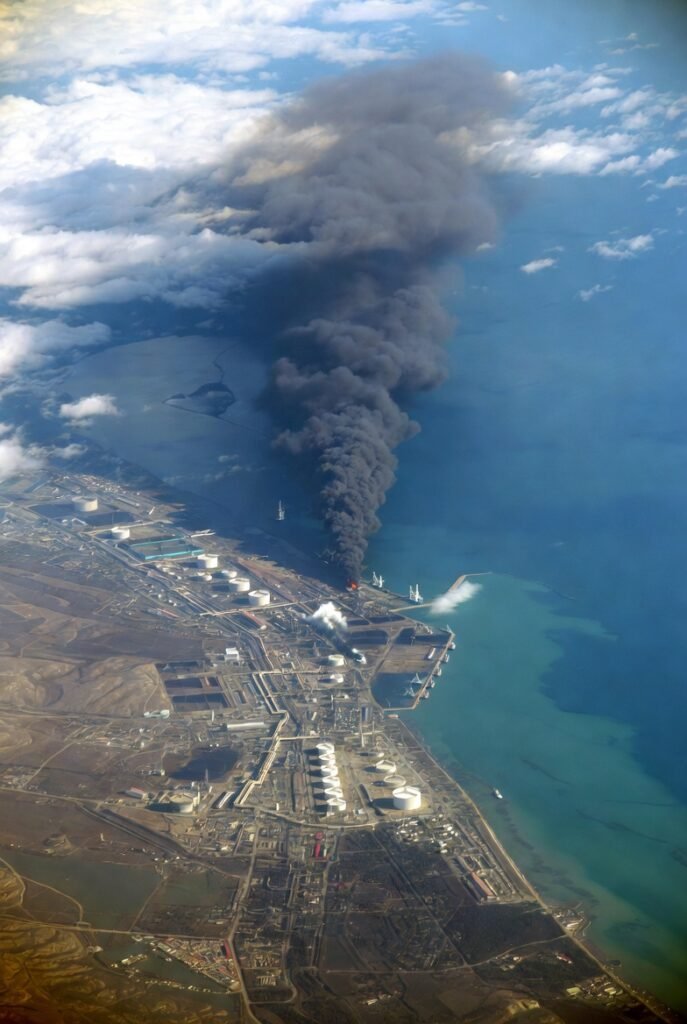
The Sheskharis Port Fire is not an isolated incident but part of a broader pattern that has emerged in the Russia-Ukraine war: the systematic targeting of energy, logistics, and industrial infrastructure by both sides. Since Russia launched its full-scale invasion in February 2022, energy facilities including power stations, substations, oil depots, and port terminals have become primary targets.
This shift reflects a strategic calculation by both Ukraine and Russia that disrupting the opponent’s economic and industrial base can be as effective as battlefield gains. For Ukraine, striking Russian oil terminals reduces the financial resources Moscow uses to sustain its military. For Russia, targeting Ukrainian power infrastructure aims to undermine civilian morale and strain the country’s capacity to function.
The April 8 Sheskharis strike illustrates how drone technology has lowered the cost and raised the frequency of such operations, enabling Ukraine to conduct strikes at distances and with a precision that was impossible with conventional artillery.
In the immediate term, fire crews and emergency responders were working to bring the Sheskharis terminal blaze under control as of the afternoon of April 8. Russian authorities had not confirmed when export operations might resume.
Analysts expect Russia to respond with retaliatory strikes, potentially targeting Ukrainian energy infrastructure or the Danube river ports through which Ukraine conducts a significant share of its grain and commodity exports. The cycle of infrastructure strikes has shown no signs of abating as both sides seek leverage ahead of any potential ceasefire negotiations.
For international energy markets, the key question is how long the Sheskharis terminal will remain offline and whether Russia can redirect exports through alternative channels quickly enough to limit market disruption. That answer will likely emerge over the next 48 to 72 hours.
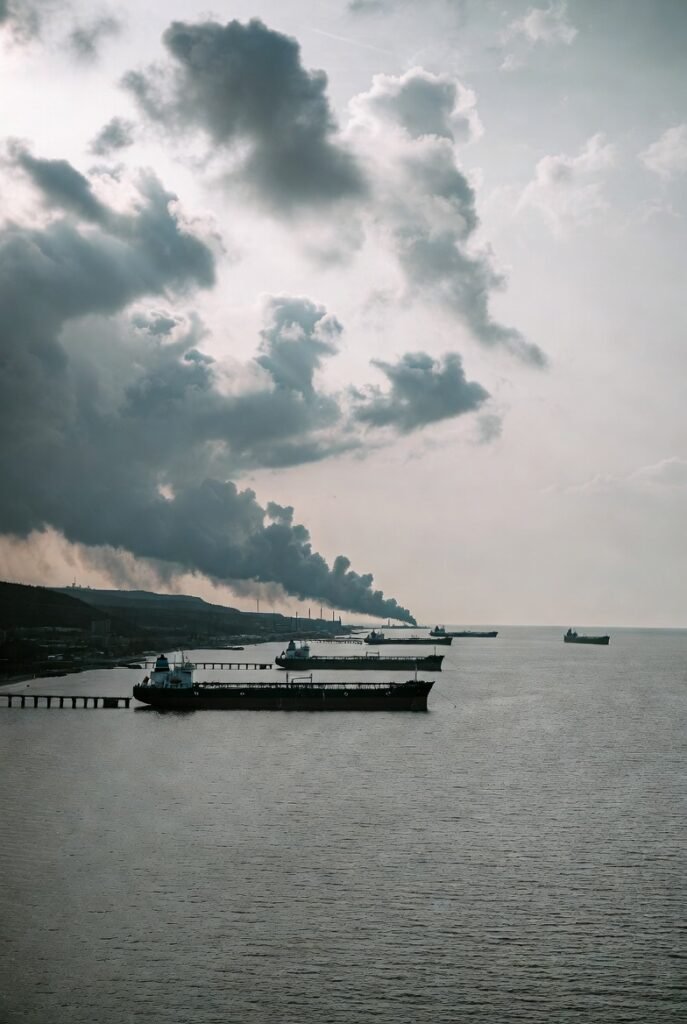
The Sheskharis Port Fire 2026 represents a fundamental shift in drone warfare Russia Ukraine 2026. The Ukraine drone attack response Russia has successfully challenged the narrative of Russian naval dominance in the Black Sea. As Russia Ukraine political tensions rising continue to dominate the headlines, the world must prepare for a prolonged era of strategic strikes targeting the very foundations of the global economy. On this April 8, 2026, the smoke over Novorossiysk is a signal that the Eastern Europe security tensions have reached a point of no return.