
playstation plus june 2026 games
Thursday, May 20, 2026 Trusted by millions worldwide Back to News Tech PlayStation Plus Subscribers Are About to Lose Another...
Read More → Saturday, May 9, 2026
Trusted by millions worldwide
By Mavia Fazal
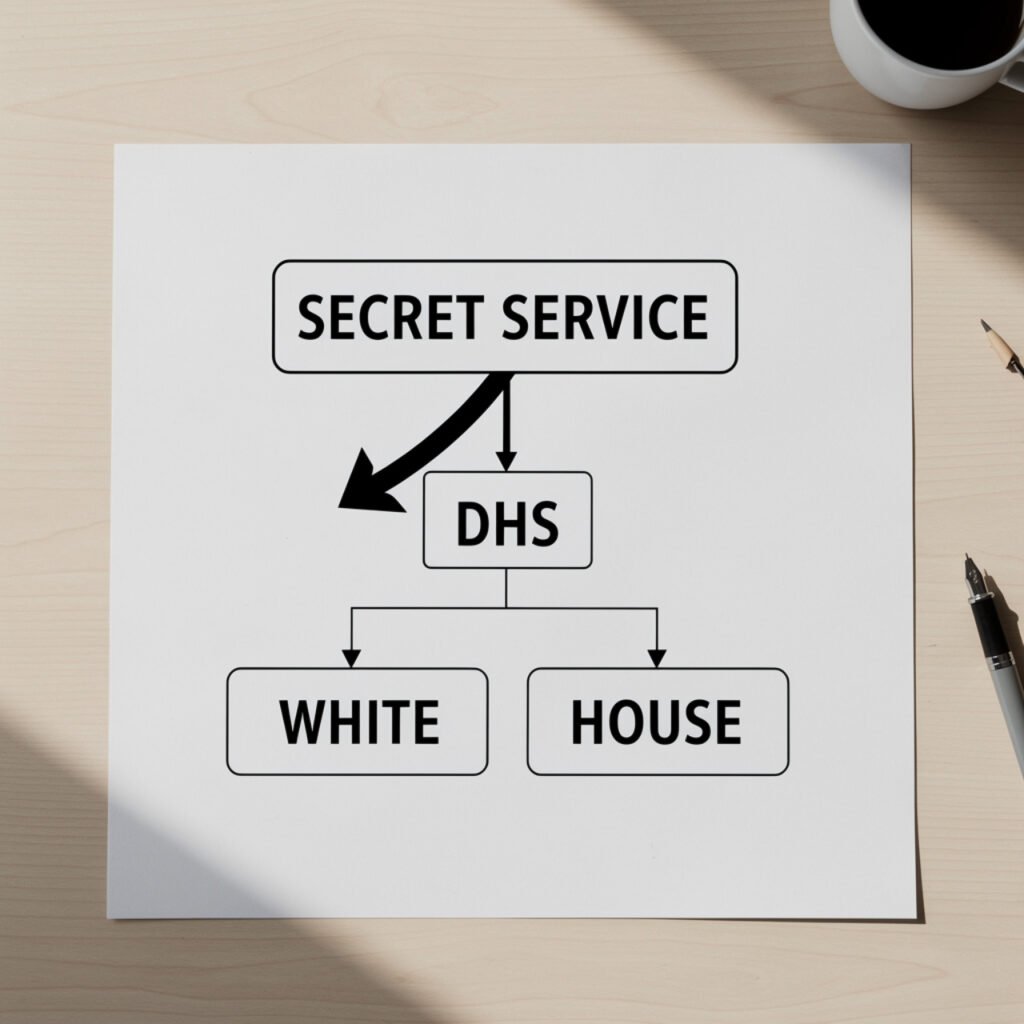
Secret Service Reform Bill 2026 A new bipartisan bill introduced this week would remove the United States Secret Service from the Department of Homeland Security entirely, transferring it directly under the Executive Office of the President. The legislation, driven by frustration over the agency’s recurring security gaps and DHS’s structural dysfunction, has set off a serious debate about whether the world’s most recognizable protective service is organized correctly for the threats of 2026.
Secret Service Reform Bill 2026 Three assassination attempts in under two years. A 76-day government shutdown that left agents working without pay. Staffing shortages so severe that experienced officers are leaving faster than they can be replaced. The Secret Service, by almost any measure, is an agency under pressure and now Congress wants to change who controls it.
A new bipartisan bill introduced this week would remove the United States Secret Service from the Department of Homeland Security entirely, transferring it directly under the Executive Office of the President. The legislation, driven by frustration over the agency’s recurring security gaps and DHS’s structural dysfunction, has set off a serious debate about whether the world’s most recognizable protective service is organized correctly for the threats of 2026.
Representatives Jared Moskowitz of Florida and Russell Fry of South Carolina are co-leading the legislation, which would transfer the Secret Service from the Department of Homeland Security to the Executive Office of the President. Fry cited the recent attack at the White House Correspondents’ Association dinner as a key motivating factor, where federal prosecutors allege that Trump and his administration were targeted. St. George News
The bill does not stand alone. It is part of a broader legislative package designed to break up what Moskowitz describes as an unworkable mega-department.
In addition to the Secret Service transfer, the package would establish FEMA as an independent cabinet-level agency and move the Transportation Security Administration under the Department of Transportation. Moskowitz said the goal is to cut red tape at DHS that impedes its subagencies’ ability to function an observation he made as a member of the congressional task force that investigated the first assassination attempt against Trump in Butler, Pennsylvania. FOX 13
The legislation reflects a growing bipartisan recognition that DHS, created in the chaotic aftermath of the September 11 attacks, has simply grown too large to manage its missions effectively.
To understand why this bill is gaining traction, it helps to trace the series of events that brought Congress to this point.
The first attempt on Trump’s life came in July 2024 at a campaign rally in Butler, Pennsylvania, when a gunman managed to fire shots from a rooftop that investigators later determined had been flagged as a concern by security personnel before the event. The incident exposed serious protocol failures within the Secret Service and triggered the first major wave of reform demands.
A second attempt followed in September 2024 at Trump’s golf club in Palm Beach, Florida. By the time a third incident occurred in April 2026, patience on Capitol Hill had run out.
The incident at the White House Correspondents’ Dinner, held at the Washington Hilton on April 25, 2026, was the third apparent attempt on Trump’s life since 2024. The suspect had booked a room at the venue and was already inside the hotel before the dinner began, moving through areas the Secret Service had not fully secured because the Washington Hilton was a functioning hotel with numerous public spaces. Android Headlines
Secret Service agents responded to the incident and safely escorted the president and his Cabinet from the scene. One agent who was shot in his bulletproof vest was uninjured. St. George News
The response was professional under the circumstances. But the circumstances themselves raised uncomfortable questions about how a suspect was able to get that close in the first place.
The security incidents do not exist in a vacuum. Behind them lies an agency that current and former officials describe as chronically underfunded, understaffed, and stretched far beyond its capacity.
Current and former Secret Service officials told CNN that personnel issues have plagued the agency for years, despite repeated promises to address them. Sources described intense frustration over having to do more with fewer resources, with departures of numerous agents and officers either retiring or moving to other law enforcement agencies placing significant strain on protective operations. One source involved in protective operations said the agency was crucified after Butler, yet saw no real significant increase in personnel to help do the job. NBC News
The problem was compounded by decisions made at the department level that had nothing to do with presidential protection.
Former Secret Service agent and CNN analyst Jonathan Wackrow said that instead of using the momentum after Butler to hire and train more agents, the Trump administration focused on training new agents for Immigration and Customs Enforcement for its deportation push. This created a logjam at the Federal Law Enforcement Training Center, delaying the hiring campaign the Secret Service badly needed. NBC News
That is precisely the kind of departmental trade-off the reform bill seeks to eliminate. When the Secret Service competes for training resources with ICE inside the same bureaucratic structure, the president’s protection is not the only consideration on the table.
The structural argument for reform is reinforced by the financial one. DHS endured its most damaging funding crisis in history during the months leading up to this bill.
Moskowitz’s DHS reform package comes directly after the embattled department endured a record-breaking funding lapse that lasted 76 days before finally concluding in late April 2026. The fallout was significant: more than 1,000 TSA agents quit during the shutdown, leading to long security lines at major airports and a spike in missed flights for passengers. FOX 13
The Secret Service was not immune. During the shutdown, agents were required to continue working without regular pay a situation that compounds existing retention problems and makes recruitment harder.
If Moskowitz’s reform package were signed into law, the TSA, Secret Service, and FEMA would be shielded from future prolonged DHS funding lapses, since each agency would operate under a separate departmental structure with its own appropriations process. FOX 13
That structural protection from budget dysfunction may be among the bill’s most practical selling points in a Congress where funding fights have become an annual crisis.
The bipartisan nature of this bill is significant in an era of deep congressional polarization. That a Democrat and a Republican from the House are co-leading the legislation suggests the case for reform transcends party lines.
Fry said moving the Secret Service to the White House allows the organization to uphold its mission while simultaneously giving it more direct accountability to the president of the United States. He added that in a time where political attacks are becoming increasingly common, the Secret Service should be able to focus solely on its mission of protecting top officials not dealing with bureaucratic tape that distracts from keeping the president safe. St. George News
Moskowitz has been more direct about the systemic failure he sees at DHS as a whole.
He stated that DHS has simply grown too big and too vulnerable to political dysfunction, adding that when a department becomes that massive, the mission gets lost. He argued that Secret Service needs help, and that under the current DHS bureaucracy, that reform is never going to happen. St. George News
The bill also has support from outside the House chamber. Senator Marsha Blackburn sent a separate letter to Secret Service Director Sean Curran requesting an immediate audit of every single employee on the agency’s payroll, citing not just the failures at the Butler rally but a series of individual agent misconduct incidents, including an agent involved in a tax fraud scheme, another charged with murdering his brother, and a recent arrest in Miami on charges of indecent exposure. Wikipedia
The bill will face resistance. Any major reorganization of a federal agency is a heavy lift legislatively, and previous attempts by Moskowitz to reform DHS components have stalled in committee.
Moskowitz acknowledged the challenge directly, asking whether Congress is still capable of functioning to accomplish something like this, or whether it can only fund agencies without achieving meaningful reform. FOX 13
There are also substantive questions about whether moving the Secret Service to the Executive Office of the President solves the underlying problems or simply changes the reporting structure while leaving the staffing, training, and resource issues unaddressed.
Critics may also argue that placing the Secret Service directly under the president’s office rather than a cabinet department with independent oversight could create new questions about operational independence. Who exactly controls the agency that protects the president, and what happens when the president’s political interests and the agency’s security judgment come into conflict?
Those questions deserve serious answers as the bill moves forward.
The Secret Service Reform Bill of 2026 is not a political stunt. It is a response to documented failures, a genuine staffing crisis, and a structural environment that consistently forces the agency to compete for resources it needs to protect the most powerful office in the world.
Three incidents in under two years including one at the Washington Hilton that mirrored eerie parallels to the 1981 assassination attempt on Ronald Reagan at the same venue have made the case for reform in a way that is difficult to argue with. The agency itself has acknowledged the strain. Multiple investigations have confirmed the failures. Agents on the ground have said plainly that they were crucified after Butler and then given little of what they needed to do better. Moskowitz, who was present at the White House Correspondents’ Dinner when the Secret Service subdued the alleged shooter, said the assassination scare reinforced the need to make the agency directly accountable to the president and provide agents with more resources, not less. FOX 13 Whether this particular bill is the right structural fix is a question worth debating carefully. But that the current arrangement is not working that DHS bureaucracy, funding instability, and internal competition for training resources are actively undermining presidential protection is no longer a matter of debate. The question facing Congress now is whether it has the institutional will to act before another incident forces the answer.
Frontier Affairs covers US politics, national security, and legislative affairs. This article draws on verified reporting from Fox News Digital, CNN, The Hill, PBS NewsHour, Wikipedia’s documented timeline of the WHCA dinner shooting, and Senator Blackburn’s official communications.