
playstation plus june 2026 games
Thursday, May 20, 2026 Trusted by millions worldwide Back to News Tech PlayStation Plus Subscribers Are About to Lose Another...
Read More → Thursday, April 9, 2026
Trusted by millions worldwide
Rutte Trump NATO 2026 AT A GLANCE: Rutte-Trump White House meeting held April 8. NATO allies formally agreed to 5% GDP defense spending at The Hague Summit (March 2026). US reviewing military base footprint in Germany and Spain. Poland, Romania, and Baltic states expected to receive increased US troop deployments.
The Rutte-Trump NATO meeting on April 8, 2026 produced one of the most candid public statements in the alliance’s recent history. NATO Secretary-General Mark Rutte the former Dutch Prime Minister who took over from Jens Stoltenberg in October 2024 told reporters following closed-door talks at the White House that he ‘totally understands’ President Donald Trump’s frustration with European members who failed to provide meaningful support during the US-Iran conflict earlier this year. It was a deliberately deferential statement from a man whose central diplomatic task is to keep the world’s most powerful democracy committed to a 77-year-old collective defense treaty it increasingly treats as optional.
Rutte has cultivated a reputation in Washington as the one European leader who can speak Trump’s language without losing credibility with Brussels. That positioning earned during his years as the Netherlands’ longest-serving Prime Minister is now being tested against the most serious transatlantic rift since the 2003 Iraq War. Whether Rutte’s blend of validation and quiet pressure can hold the alliance together through the political turbulence ahead remains genuinely uncertain.
The immediate backdrop to the April 8 meeting is the US-Iran conflict that dominated the first quarter of 2026. When Washington mobilised its military assets for operations in the Persian Gulf region, the White House expected its NATO partners to open their airspace and military facilities without hesitation. According to reporting by Politico Europe and confirmed by officials briefed on the discussions, several key European governments did not.
Spain and France both NATO members with significant American military infrastructure on their territory are reported to have restricted airspace access and limited facility use for US aircraft during the height of the conflict. The reasons cited were domestic political constraints and concerns about being drawn into a war their parliaments had not authorised. From Washington’s perspective, these were precisely the moments the alliance existed to navigate and the hesitation was viewed as a fundamental breach of alliance solidarity.
Rutte, in his post-meeting remarks, chose his framing carefully. He acknowledged that while ‘a large majority’ of European allies had provided logistical support, the conduct of others created a damaging rift.
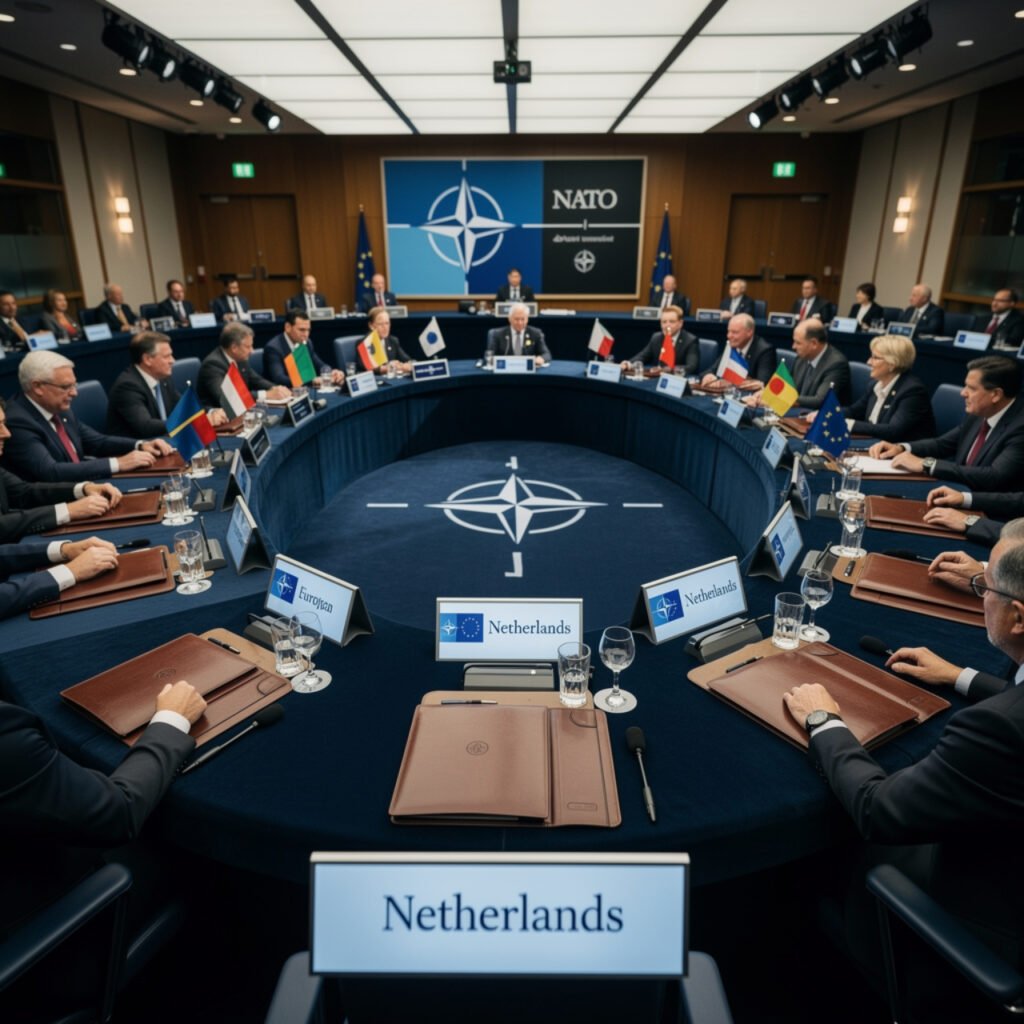
By publicly validating Trump’s frustration rather than defending European decision-making, the Secretary-General was making a strategic calculation: that keeping the US inside the alliance tent required absorbing criticism rather than deflecting it. Whether European governments that felt they acted within their sovereign rights will accept that framing is another matter entirely.
The single most consequential structural development to emerge from this period of alliance stress is the formal agreement reached at The Hague Summit in March 2026 to raise NATO members’ defense spending commitments to 5 percent of GDP. The previous 2 percent benchmark, itself rarely met by most European members, is now officially superseded by a target that would represent the highest sustained peacetime defense investment in the alliance’s history.
Within the overall 5 percent target, the framework distinguishes between total defense investment and what NATO terms ‘core capabilities’ spending. Member states must direct a minimum of 3.5 percent toward direct military capabilities covering advanced missile defense systems, rapid-reaction strike forces, intelligence infrastructure, and interoperable equipment. The remaining 1.5 percent can be allocated to broader security-related expenditure including cybersecurity, civil preparedness, and critical infrastructure protection.
Rutte praised the agreement as a transformation toward a ‘stronger, fairer, and more lethal’ alliance language notably calibrated to resonate with Trump’s long-standing argument that NATO allies were free-riding on American military spending. He credited the President’s ‘blunt honesty’ with forcing a debate that European governments had avoided for years. For Trump, the validation was precisely what he had been demanding since his first term: concrete financial commitments, not diplomatic reassurances.
The political reality behind the 5 percent target is that it will require difficult choices in nearly every European capital. Governments currently spending between 1.5 and 2.5 percent of GDP on defense face the prospect of either significant tax increases, deep cuts to social programs, or both. In Germany, where the constitutional debt brake was only recently suspended to allow emergency defense investment, the path to 5 percent is politically fraught. In France and Spain already navigating domestic political tensions the spending commitment is expected to be a major electoral issue through the 2027 cycle.
Beyond the spending targets, the most strategically significant element of the current NATO recalibration is the reported review of America’s military base footprint across Europe. According to defense analysts and reporting by Reuters and the Financial Times, the White House is actively examining a reallocation of US troop deployments and military assets that would explicitly reflect which allies stood with Washington during the Iran crisis and which did not.
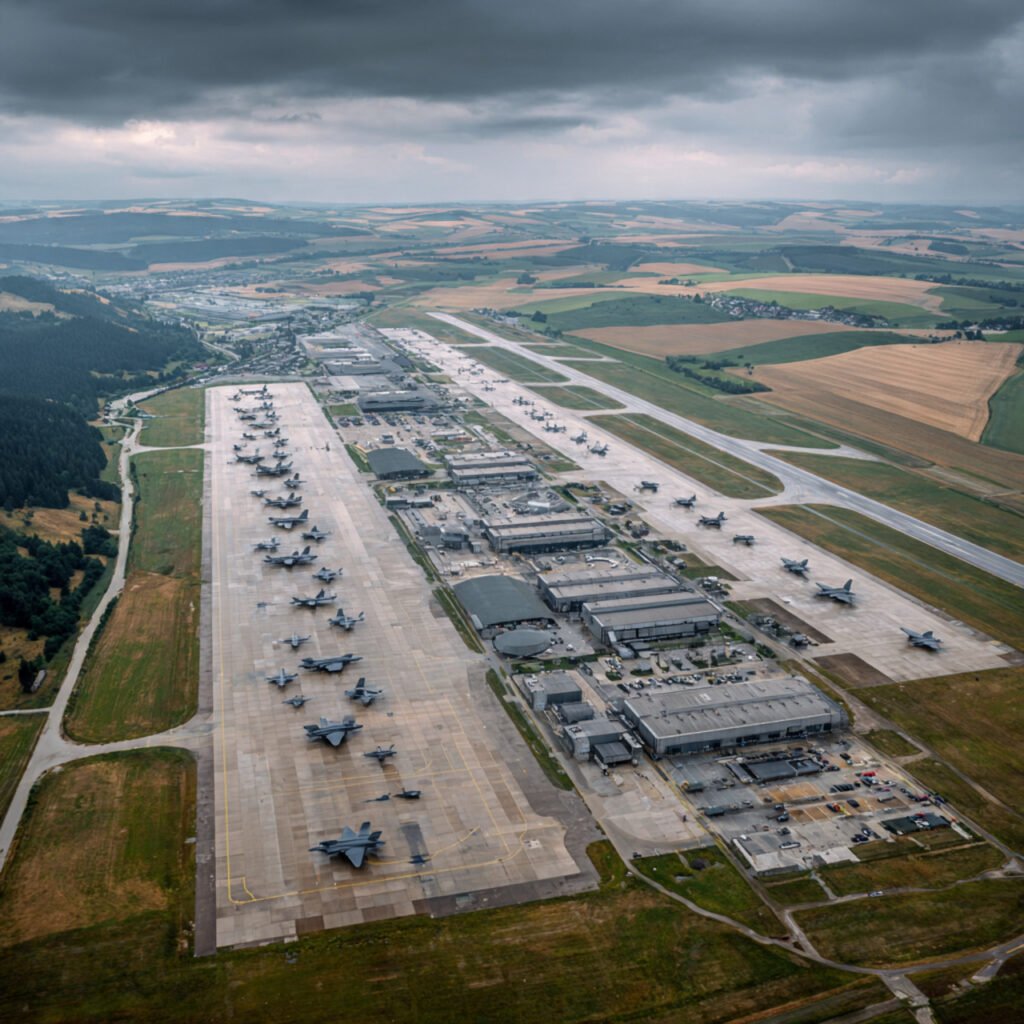
The installations attracting the most attention are Ramstein Air Base in Germany the largest US air force base outside American territory and a critical logistics hub for European and Middle Eastern operations and Naval Station Rota in southern Spain, a strategically vital Atlantic and Mediterranean facility. Both Germany and Spain are reported to be categorised by administration planners as ‘hesitant‘ partners following their conduct during the Iran operations. A full closure of either facility would represent an enormous economic and security shock to the host nation.
Offsetting the potential western European drawdowns, the administration is reportedly planning a significant expansion of US military presence in Poland, Romania, and the Baltic states Estonia, Latvia, and Lithuania. These nations, which all increased defense spending sharply following Russia’s 2022 invasion of Ukraine and maintained strong pro-American positions throughout the Iran crisis, are positioned to receive additional troop rotations, pre-positioned equipment, and potentially permanent base infrastructure. For Poland in particular, which has been pushing for a named US military installation on its territory for over a decade, the current moment represents a significant strategic opportunity.
The fundamental difficulty of Rutte’s position is that he must simultaneously convince the Trump administration that Europe has genuinely changed its behavior and convince European governments that the United States remains a reliable partner worth the investment. These are not easy arguments to make at the same time, to the same audiences, in real time.
Trump’s public commentary has not eased the task. A series of posts on Truth Social following the Iran ceasefire questioned whether NATO would ‘be there if we need them again’ rhetoric that has alarmed governments across the continent and provided ammunition to political movements in France, Germany, and Hungary that advocate for European strategic autonomy independent of Washington.
Rutte’s answer to this pressure has been consistent transparency: acknowledging Trump’s criticisms where they are valid, demonstrating concrete action through the spending commitments and the Hague Summit framework, and quietly using his personal relationship with the President to prevent public frustration from

hardening into formal policy. That approach has kept the alliance intact through the first quarter of 2026. Whether it can sustain the relationship through the political pressures of 2027‘s election cycle in both the US and multiple European nations is the question that will define his tenure.
As direct US-Iran negotiations advance through the Islamabad Dialogue the formal diplomatic process hosted by Pakistan that began in early April NATO’s role in the post-conflict architecture is under active discussion. Secretary-General Rutte has indicated publicly that the alliance is prepared to contribute to regional stabilization efforts if a durable ceasefire is achieved, including maritime security operations in the Gulf and technical assistance for post-conflict reconstruction.
A successful diplomatic outcome in Islamabad would ease the energy market pressures that have been one of the primary drivers of European public dissatisfaction with NATO’s costs. It would also give Rutte a concrete positive result to present both to Trump as validation of the alliance’s relevance and to European publics as justification for the painful spending increases ahead.
If the Islamabad process fails and the Iran conflict resumes, the fractures in the alliance will face an even more severe test. In that scenario, Rutte’s patient diplomacy and Trump’s demand for loyalty will collide in ways that no summit communiqué or spending pledge can easily paper over. The Secretary-General knows this. It is why, as he described it himself, the conversations inside the White House last week were ‘very frank’ and why they need to keep happening.
Frontier Affairs will provide live coverage of the Islamabad summit beginning April 10. Follow our World section for continuous updates.