
playstation plus june 2026 games
Thursday, May 20, 2026 Trusted by millions worldwide Back to News Tech PlayStation Plus Subscribers Are About to Lose Another...
Read More → Saturday, May 9, 2026
Trusted by millions worldwide
By Ali Aslam
North Korea’s missile program is accelerating in 2026 with new ICBM tests, cluster warheads, and Russian tech transfers pushing Northern Asia toward a dangerous security threshold.
The Korean Peninsula has never fully known peace since the 1953 armistice. But in 2026, something has shifted. The pace, sophistication, and sheer ambition of North Korea’s weapons development no longer reads like deterrence posturing it reads like a country preparing for a different kind of future.
Pyongyang has not slowed down. It has not negotiated. And it has not blinked.
Kim Jong Un has ordered North Korean factories to significantly increase missile and munitions production in 2026, directing production sites to meet “anticipated requirements for the operations of the state’s missile and artillery forces,” according to the state-run KCNA news agency. euronews
In April 2026, Kim Jong Un and his teenage daughter Kim Ju Ae observed a ballistic missile test in which North Korea launched five missiles carrying cluster munition payloads at an island target in the Sea of Japan. Pyongyang has already tested more ballistic missiles in 2026 than it tested throughout all of 2025. FDD
The frequency alone would be alarming. But the capabilities behind these tests are what have defense analysts genuinely concerned.
Cluster Warheads, Hypersonic Glide Vehicles, and MIRV Technology
In April 2026, North Korea tested ballistic missiles armed with cluster munition warheads, and has prioritized development of multiple independently targetable reentry vehicle (MIRV) payloads technology that would allow a single ballistic missile to carry and deploy multiple nuclear warheads simultaneously. Congress.gov
That is a weapons capability that, if fully operational, would fundamentally complicate any missile defense calculus across the region.
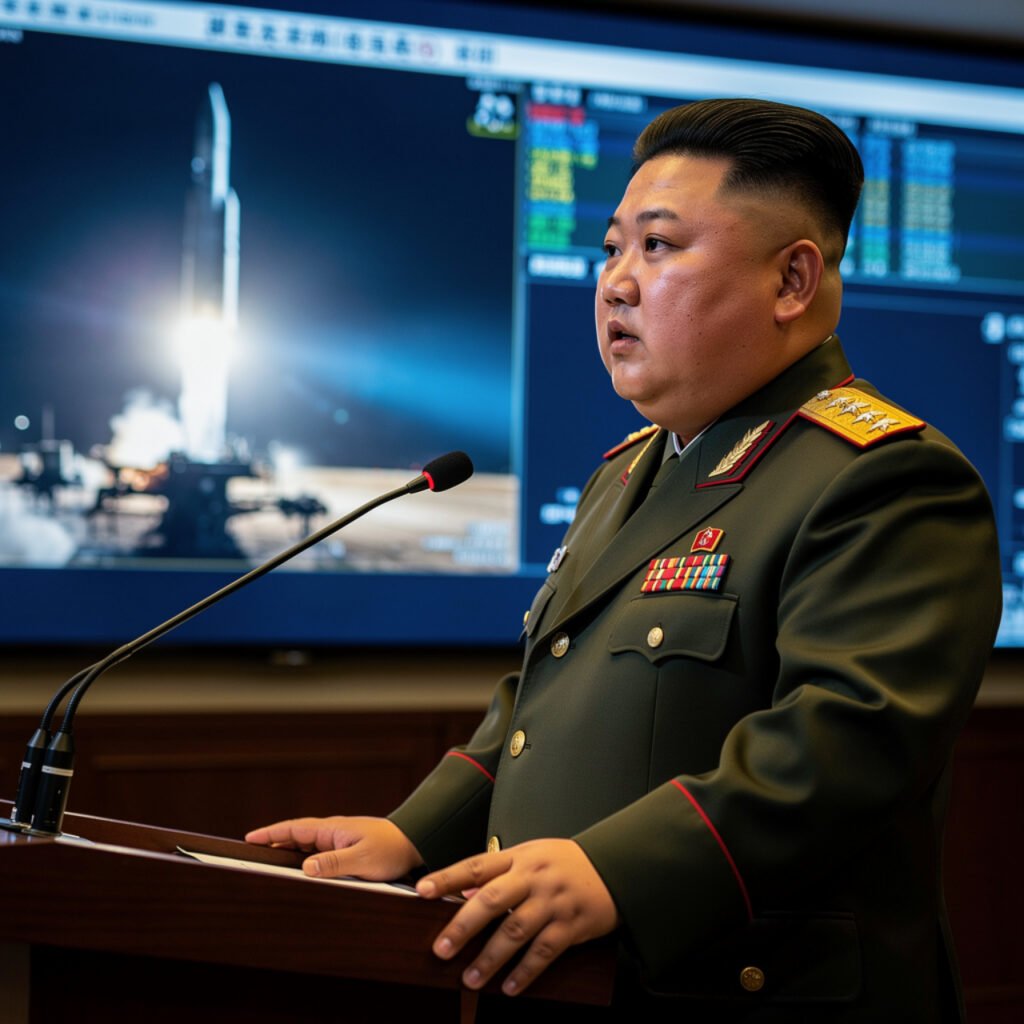
At least one type of recently tested missile was previously transferred to Russia, where it was improved in multiple ways before the upgraded production knowledge was reportedly sent back to North Korea. Russia improved the KN-23’s accuracy from a circular error probable of 500–1,500 meters down to just 50–100 meters a transformation that effectively turns a blunt instrument into a precision strike weapon. FDD
This is not simply a bilateral arrangement anymore. It is an active military-technological feedback loop operating between Pyongyang and Moscow, one that is directly enhancing North Korea’s ability to strike specific military targets rather than just population centers.
The relationship between North Korea and Russia has evolved well beyond diplomatic warmth since the war in Ukraine began. It has become an arms pipeline with consequences stretching far beyond Eastern Europe.
The US Forces Korea commander stated in April 2025 that in return for North Korea’s assistance in Russia’s war against Ukraine, “Russia is expanding sharing of space, nuclear, and missile-applicable technology, expertise, and materials to the DPRK.” Congress.gov
Russia has provided Pyongyang with significant security assistance including electronic warfare systems, air defense systems with both land and maritime applications, satellite launch support, and most concerningly help directly enhancing North Korea’s missile program. FDD
What Moscow is receiving in exchange is battlefield ammunition and ballistic missiles being fired at Ukrainian cities. What Pyongyang is receiving in return is the technological foundation to build a next-generation nuclear deterrent.
The importance of this nuclear arsenal as a deterrent has only grown in Pyongyang’s strategic calculations, particularly following US-led military actions against Iran and Venezuela, which analysts say have reinforced Kim Jong Un’s conviction that surrendering his weapons program would invite regime-ending consequences. Bloomberg
The numbers behind North Korea’s weapons stockpile have begun to shift from manageable concern to serious strategic challenge.
North Korea’s nuclear arsenal is approaching a crucial tipping point a force potentially large enough to overwhelm the ground-based missile defenses the United States spent approximately $65 billion developing over the last three decades. Its Hwasong-15, -17, -18, and -19 ICBMs, combined with existing warheads, may already provide the volume of firepower needed to penetrate US ground-based mid-course missile defenses, which were designed to stop only a small-scale attack. Bloomberg
In October 2025, North Korea unveiled the new Hwasong-20, a next-generation solid-propellant ICBM, alongside a new version of the KN-23 short-range ballistic missile equipped with a hypersonic glide vehicle. The year also featured the partial public reveal of a nuclear-powered ballistic missile submarine currently under construction. 38 North
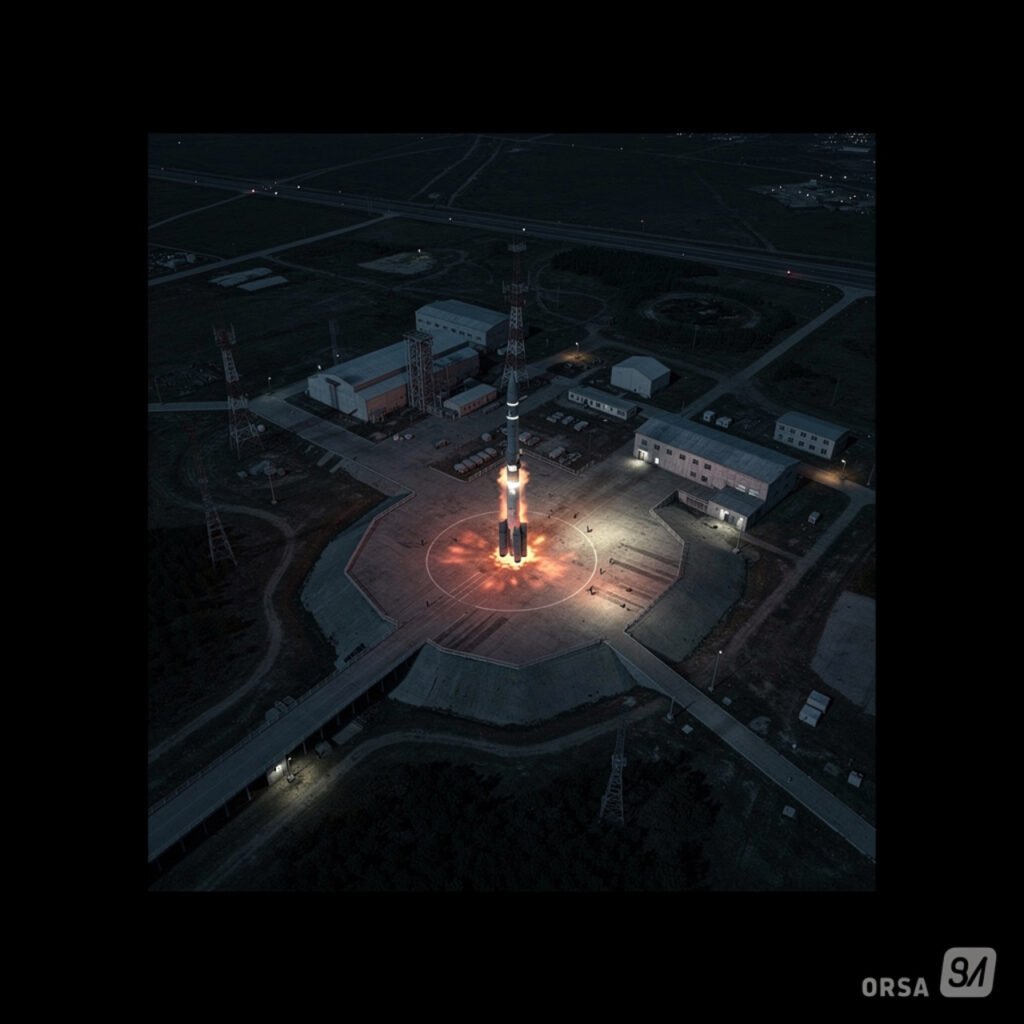
Other weapons development programs include solid-fueled intercontinental ballistic missiles, hypersonic weapons, spy satellites, and multi-warhead missiles. Kim hailed the newly unveiled naval destroyer as a major step toward expanding the operational range and preemptive strike capabilities of the country’s nuclear forces. euronews
At this trajectory, the gap between North Korea’s strike capabilities and allied defense systems is narrowing not widening.
Following North Korea’s seventh weapons test of 2026, South Korea’s presidential office convened an emergency national security meeting to assess the situation and coordinate defense measures, with intelligence shared in real time with the United States and Japan. INVC
Seoul is no longer treating these launches as routine provocations. Each test is now treated as potential operational rehearsal.
Japan’s Ministry of Defense confirmed that 10 ballistic missiles launched from North Korea’s KN-25 multiple rocket launcher system landed outside Japan’s exclusive economic zone in March 2026. Tokyo lodged a strong protest with Pyongyang, stating that “the series of actions by North Korea, including the repeated launches of ballistic missiles and other projectiles, threaten the peace and security of Japan, the region and the international community.” USNI News
Japan has been forced to accelerate its national defense posture at a speed that would have been politically unthinkable just five years ago. The missiles flying over waters near its coast are no longer abstractions.
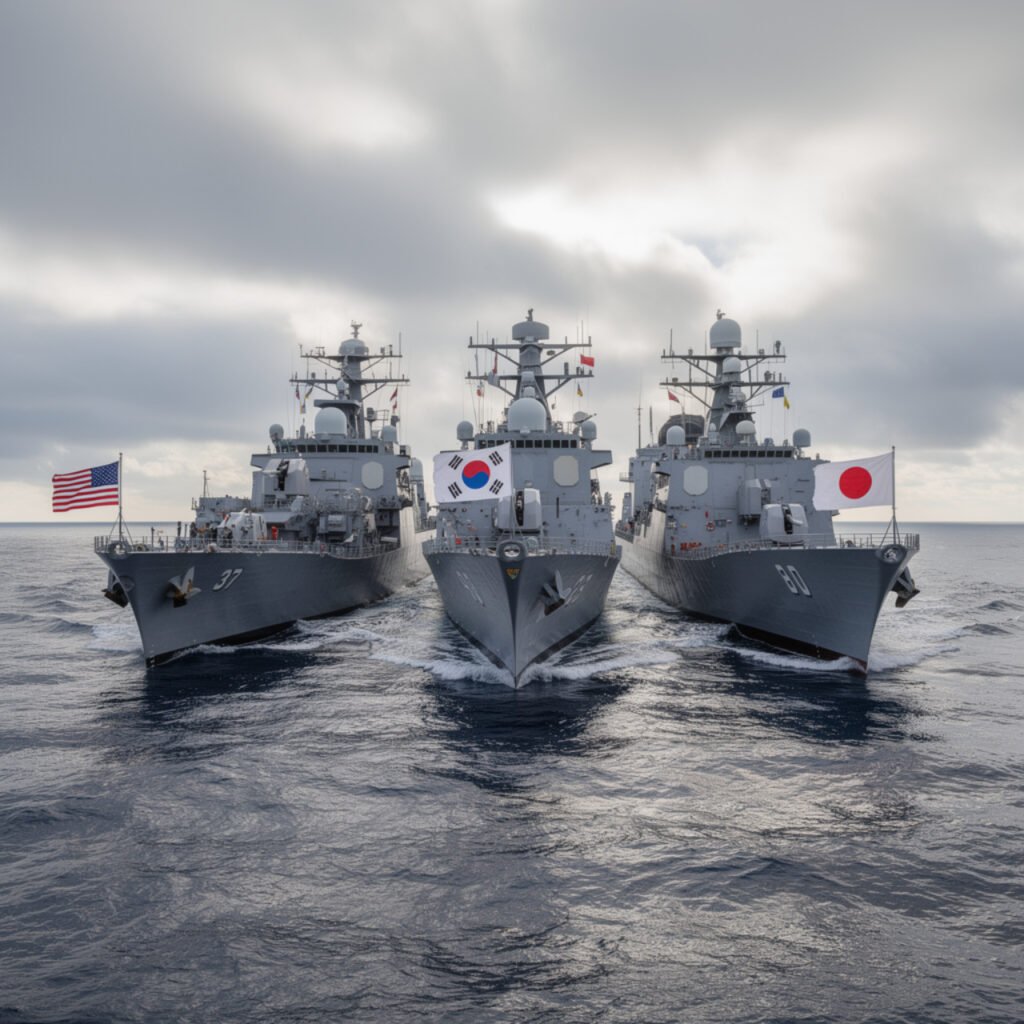
The United States and Japan have remained in close coordination with Seoul, underscoring the trilateral security partnership amid escalating tensions. North Korea’s nuclear ambitions are expected to feature prominently in upcoming US-China diplomatic discussions. INVC
US Indo-Pacific Command confirmed it is consulting closely with allies following multiple ballistic missile launches, stating it “remains committed to the defense of the U.S. homeland and our allies in the region.” USNI News
The assessments from within the United States government leave little room for optimistic interpretation.
The 2026 Annual Threat Assessment stated that North Korea is “committed to expanding its strategic weapons programs, including missiles and nuclear warheads, to solidify its deterrent capability.” A North Korean government report on the 2026 Ninth Congress of the Workers’ Party declared that “the DPRK’s position as a nuclear weapons state has been consolidated to be irreversible and permanent.” Congress.gov
The 2026 National Defense Strategy described these forces as “growing in size and sophistication” and presenting “a clear and present danger of nuclear attack on the American Homeland.” Congress.gov
A 2025 Defense Intelligence Agency report concluded that “North Korea has restored its nuclear test site and is now postured to conduct a seventh nuclear test at a time of its choosing.” Separately, the IAEA reported in March 2026 the “ongoing operation of enrichment facilities” at both Kangson and Yongbyon, along with a new facility under construction. Congress.gov
These are not threat assessments written in the language of hypothetical risk. They reflect a program that is operational, expanding, and deliberately positioned beyond the reach of diplomacy.
Kim Jong Un is not making irrational decisions. He is making calculated ones.
According to the US Intelligence Community’s 2025 Annual Threat Assessment, Kim Jong-un views nuclear weapons as a “guarantor of regime security” and has “no intention” to renounce them. He has repeatedly rejected denuclearization negotiations since talks broke down with President Trump in 2019. Congress.gov
Kim stated in January 2026 that the upcoming Workers’ Party Congress “will clarify the next-stage plans for further bolstering up the country’s nuclear war deterrent,” signaling that the expansion is not simply ongoing it is institutionally planned. 38 North
Every time an adversary of the United States has been removed from power or had their nuclear ambitions forcibly curtailed, Pyongyang has drawn the same lesson: the weapons are the regime’s insurance policy. That logic has only grown stronger.
The trajectory here points toward a period of sustained instability across Northern Asia.
South Korea is accelerating indigenous missile programs and expanding its conventional strike capabilities. Japan is undergoing its largest military buildup since World War II. The United States is reconfiguring its Indo-Pacific force posture. And North Korea is racing against all of them simultaneously while being backstopped by Russian technology and Chinese political protection.
UN sanctions, which once served as at least a partial brake on Pyongyang’s ambitions, have been effectively neutralized. Russian and Chinese policies toward North Korea have shifted significantly since 2022, with Moscow blocking Security Council actions and Beijing maintaining its protective posture toward Pyongyang. Congress.gov
The window for diplomatic solutions is not simply closing. Based on the evidence, it may have already closed.
The North Korea missile program in 2026 is not the same threat it was even three years ago. The weapons are more accurate, more numerous, and more survivable. The technology transfers from Russia have added a layer of sophistication that complicates allied defense planning at every level. And Kim Jong Un has made clear in his own words and through constitutional revision that denuclearization is simply not on the table.
For South Korea, Japan, and the United States, the challenge is no longer about convincing Pyongyang to disarm. It is about managing a nuclear-armed North Korea that is actively building toward deterrence parity and doing so with growing confidence and outside support.
Northern Asia’s security architecture is being stress-tested in real time. How the region’s powers respond in the coming months will define the geopolitical landscape of the Indo-Pacific for the next decade.
Frontier Affairs covers global security, geopolitics, and international affairs. All information is sourced from verified government reports, credible defense analysis, and official statements.