
playstation plus june 2026 games
Thursday, May 20, 2026 Trusted by millions worldwide Back to News Tech PlayStation Plus Subscribers Are About to Lose Another...
Read More → Saturday, May 9, 2026
Trusted by millions worldwide
By Mavia Fazal
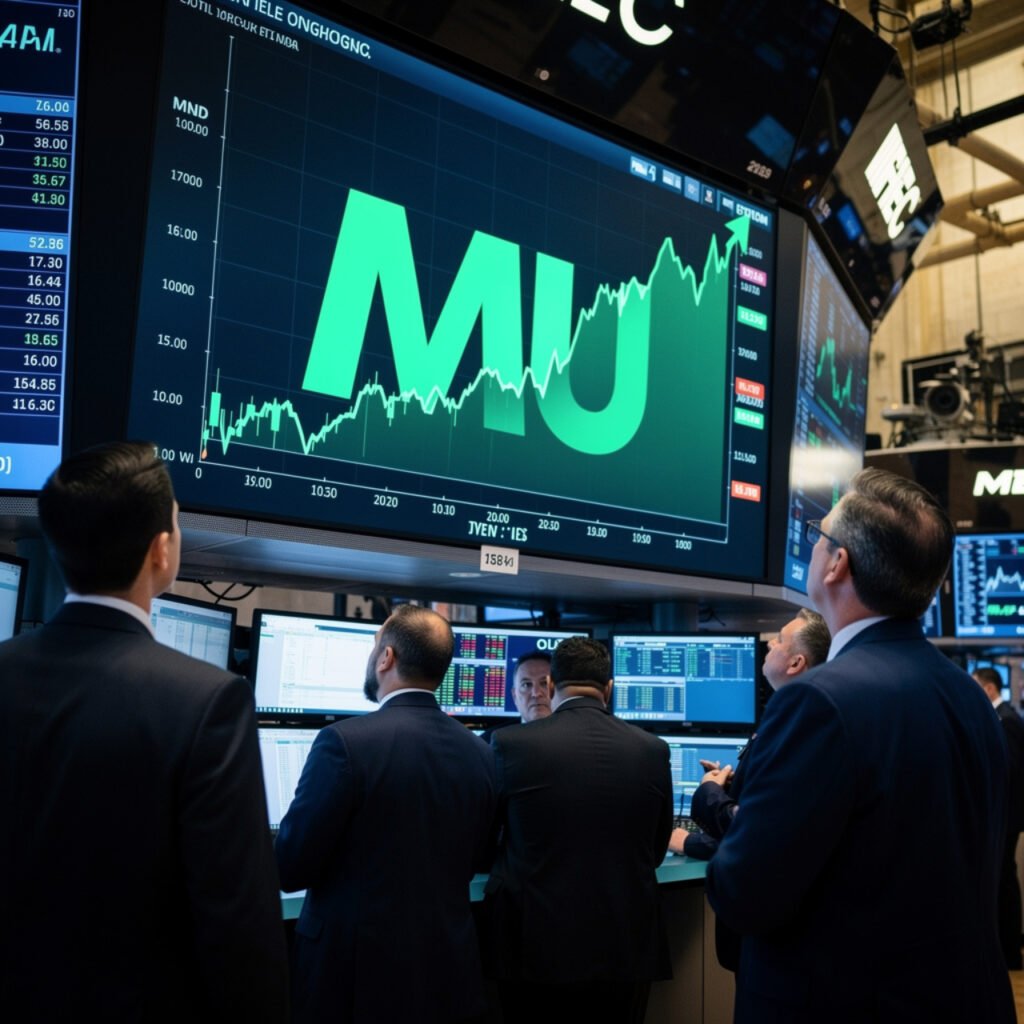
MU Stock Surge 2026 The MU stock surge of 2026 has become one of the most dramatic single-name rallies in recent semiconductor history. Over the past week alone, shares climbed more than 38 percent across five consecutive trading days. By Friday, May 9, Micron’s market capitalization had surged past $840 billion, placing it firmly among the ten most valuable technology companies in the United States.
MU Stock Surge 2026 A stock that was trading below $85 fifty-two weeks ago just hit $759. That is not a typo, and it is not a meme stock moment. It is Micron Technology in May 2026, and the force driving it is as straightforward as it is staggering the world simply cannot make enough memory chips to satisfy what artificial intelligence demands.
The MU stock surge of 2026 has become one of the most dramatic single-name rallies in recent semiconductor history. Over the past week alone, shares climbed more than 38 percent across five consecutive trading days. By Friday, May 9, Micron’s market capitalization had surged past $840 billion, placing it firmly among the ten most valuable technology companies in the United States.
The scale of this move deserves some context before anything else.
Micron Technology shares rallied for five consecutive trading days starting May 1, with a cumulative weekly gain of approximately 38 percent. The stock closed up more than 15 percent on Friday at $746.81, hitting a record high. Its market capitalization surpassed $840 billion, while daily turnover reached $46.36 billion the highest in the entire US market that session. International Business Times
Over the past 52 weeks, Micron stock has traded between a low of $84.68 and a high of $759.50. That is a gain of approximately 777 percent in twelve months. For context, the S&P 500 rose roughly 16 percent last year. Micron has delivered nearly fifty times that return in the same window. FOX 13
The earnings that preceded this latest leg of the rally were just as extraordinary. Micron’s fiscal Q2 2026 adjusted earnings per share came in at $12.20, beating the Wall Street consensus of $9.21 by 33 percent. Revenue of $23.9 billion exceeded projections of $20.0 billion by approximately 20 percent — one of the biggest estimate beats in the company’s history. HotHardware
Micron then guided its fiscal third quarter revenue to $33.5 billion and a gross margin of 81 percent a figure that underscores just how tight memory supply has become and how much pricing power Micron currently holds. St. George News
To understand why Micron stock is moving the way it is, you need to understand what is happening inside AI data centers right now.
Every AI data center needs more than the graphics chips that dominate most headlines. DRAM is the fast working memory that servers use to process data in real time, and NAND is the flash storage that keeps information moving through the system. Both are in short supply, and demand is growing faster than manufacturers can respond. St. George News
The specific product at the center of the shortage is High Bandwidth Memory HBM the specialized chip that wraps around Nvidia’s AI processors and gives them the memory throughput they need to run at full speed.
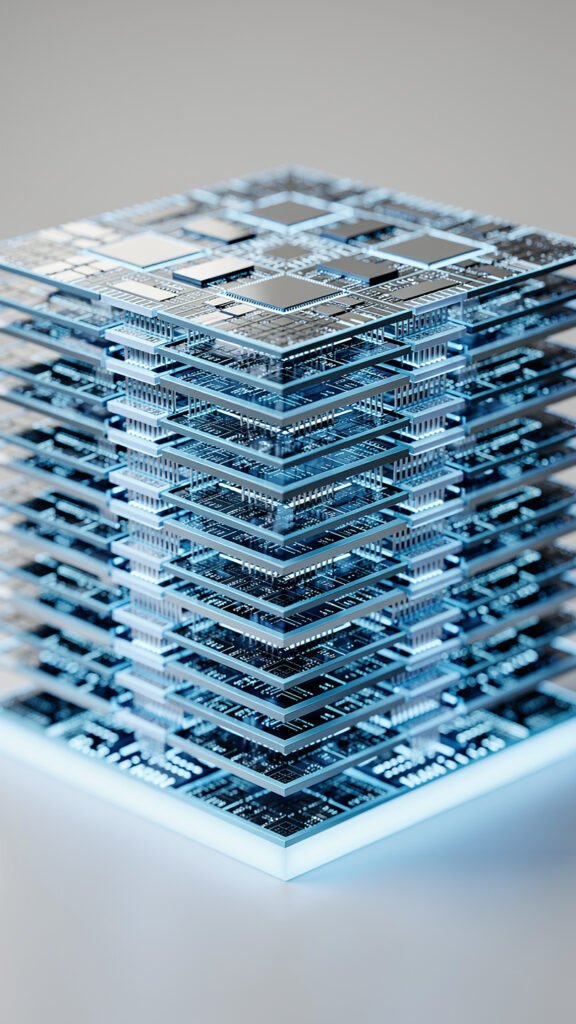
HBM is designed to meet the high-bandwidth specifications required by AI chips. Micron produces it by stacking 12 to 16 layers of memory on a single chip, turning it into a cube. When Micron makes one bit of HBM memory, it has to forgo making three bits of more conventional memory for other devices. As Micron increases HBM supply, it leaves less memory available for the non-HBM portion of the market on a three-to-one basis. NBC News
The voracious demand for HBM by hyperscalers such as Microsoft, Google, Meta, and Amazon has forced the three biggest memory manufacturers Samsung, SK Hynix, and Micron to pivot their limited cleanroom space and capital expenditure toward higher-margin enterprise-grade components. This is a zero-sum game: every wafer allocated to an HBM stack for an Nvidia GPU is a wafer denied to the memory module of a mid-range smartphone or the SSD of a consumer laptop. International Business Times
Micron is not simply a passive beneficiary of industry-wide shortages. It has taken deliberate steps to secure its position at the top of the AI memory hierarchy.
Micron has entered into its first five-year customer agreement, an unusual move in a sector that typically operates on much shorter contract cycles. The company reports that its entire HBM4 production capacity for calendar 2026 is already committed under binding contracts. Wikipedia
In a market where Samsung and SK Hynix have been early HBM leaders, securing a position in Nvidia’s Vera Rubin platform and locking in multi-year demand suggests Micron is now a more credible counterweight in high-bandwidth memory no longer just a follower. Wikipedia
CEO Sanjay Mehrotra has been unusually direct about what this moment means strategically. He said memory has become a strategic asset in the AI era a notable shift in language for a business long treated as a commodity cycle. ABC4
That framing matters. Memory chips have historically been considered interchangeable commodities, prone to brutal price cycles. What Mehrotra is signaling and what the market is rewarding is a structural reclassification. In the AI era, the right memory chip is not a commodity. It is critical infrastructure.

The financial industry’s reaction to the memory shortage has been as striking as the shortage itself.
Goldman Sachs recently revised its forecasts for how high chip prices could climb, now projecting DRAM prices rising as much as 280 percent and NAND prices as much as 250 percent. The bank characterized this not as a standard inventory recovery but as a supply shortage cycle of a scale the industry has never encountered before, driven by the sheer volume of AI infrastructure being built combined with increasingly complex chip manufacturing processes consuming available production capacity faster than new capacity can come online. St. George News
Current DRAM and NAND inventories can only support four weeks of demand, which is at historical lows. SK Hynix has also publicly stated that it currently cannot fully cover the order demands of all customers. International Business Times
The pricing trajectory is self-reinforcing. Shortages drive prices higher. Higher prices improve margins dramatically. Better margins attract capital investment. But new fabrication capacity takes years to come online which means the shortage itself is structurally extended.
According to Counterpoint Research, balancing the market would require memory production to grow by 12 percent annually in 2026 and 2027, but current plans point toward an increase of only around 7.5 percent. Current forecasts suggest supply tensions could persist until at least 2027. Android Headlines
Wall Street’s response to Micron’s earnings and the broader AI memory narrative has been unambiguous.
D.A. Davidson analyst Gil Luria made headlines by initiating coverage with a Street-high $1,000 price target, implying about 73 percent upside from current levels. Luria argues that the current AI-driven memory cycle is longer and stronger than previous ones, and that the market is underestimating just how much demand will persist. Other analysts, including Ben Reitzes at Melius Research and Krish Sankar at TD Cowen, have also issued bullish calls with targets of $700 and $660 respectively. KSL
Micron’s rally to a new all-time high represents a true alignment of fundamental catalysts: blowout profits, sold-out HBM supplies, hyperscaler confirmation of a memory crunch, and Wall Street price forecasts hitting four digits for the first time. HotHardware
Not every analyst is chasing the rally without reservation, however.
Several analysts caution that Micron shares have already run past the average Wall Street price target, prompting valuation concerns after the stock’s rapid ascent. For a company that has historically traded at depressed multiples during the down cycles of a brutal commodity business, the adjustment to pricing Micron as a secular AI infrastructure play requires a genuine shift in analytical framework. Fox News
The rally was part of a broader move across the storage and memory sector. SanDisk climbed more than 9 percent on the same session, Western Digital gained over 3 percent, and Seagate Technology rose more than 2 percent. Semiconductor ETFs posted some of their strongest sessions of the year as chip stocks collectively benefited from the AI infrastructure narrative Micron’s results made undeniable. St. George News
Demand for memory has surged as the AI boom created insatiable appetite that has led to a global shortage. Chipmakers like Nvidia and AMD require large amounts of memory to power their high-performance AI processors. Micron, SK Hynix, and Samsung make up almost the entire global memory market and all three are running at capacity. KUTV
No rally this large arrives without questions, and serious investors are asking them.
In the first quarter of 2026, Micron began mass supply of HBM4 products customized for Nvidia’s Vera Rubin AI chips. However, according to semiconductor analysis firm SemiAnalysis, Micron did not secure any supply share during the initial launch phase of the Vera Rubin platform, while SK Hynix and Samsung accounted for approximately 70 and 30 percent of supply volume respectively. Considering Nvidia’s over 80 percent share in the AI chip market, this means Micron faces a risk of a periodic supply gap in the next-generation AI memory supply chain. International Business Times
Competition from Samsung and SK Hynix in HBM4, together with the cyclical nature of DRAM and NAND, means the pricing power Micron experiences during a shortage can change if supply catches up. Committing heavy capital to chase HBM and AI server demand is attractive while shortages last, but could weigh on returns if Samsung, SK Hynix, and others bring large capacity online simultaneously, or if AI spending patterns shift. Built In
The memory industry’s history is full of exactly that pattern a period of extraordinary pricing power, followed by a capacity glut that punishes margins for years. The genuine debate about Micron’s stock right now is whether the AI cycle is structurally different enough to break that historical pattern, or whether the inevitable cycle will reassert itself around 2028 and 2029 as new capacity comes online.
There is also a dimension to this story that extends well beyond earnings reports.
Micron is the only major US-based memory chip manufacturer. While Samsung and SK Hynix dominate the global HBM market from South Korea, and TSMC anchors advanced logic chip production in Taiwan, Micron represents America’s most significant stake in the memory layer of the AI supply chain.
Micron’s status as the primary US-based memory maker gives it an edge in government and defense tenders where secure onshore supply matters. As Washington accelerates its push for domestic semiconductor production under the CHIPS Act framework, Micron’s position as the country’s memory champion gives it a strategic profile that goes beyond its commercial performance alone. Built In
CEO Sanjay Mehrotra has said supply will remain substantially short of demand for the foreseeable future, even with a planned 20 percent boost in shipments next year. That assessment, coming from the person with the most complete view of the market, is the clearest possible signal of how durable the current cycle may prove to be. Washingtoninsider
The MU stock surge of 2026 is more than a Wall Street event. It is a real-time indicator of where the global economy is heading and how completely artificial intelligence has restructured the demand side of one of technology’s most important markets.
Micron posted records across revenue, gross margin, earnings per share, and free cash flow, with management pointing to strong demand and tight supply. The company told investors it expected another record-setting quarter in fiscal Q3. ABC4
For investors, the debate is now about duration. If AI infrastructure spending continues at its current pace and memory shortages persist through 2027 as most analysts project, the bull case for Micron remains intact. If the cycle turns faster than expected or competition from SK Hynix and Samsung intensifies at the HBM4 node, the stock’s premium valuation will come under pressure.
What is not in debate is the underlying reality the rally reflects. The world is building AI infrastructure at a pace that has created the most severe memory shortage in semiconductor history. Goldman Sachs called it a supply shortage cycle of a scale the industry has never encountered before. Micron sits at the center of that shortage as America’s only major memory producer and the market is pricing that position accordingly. St. George News
When a stock rises 777 percent in twelve months, it is telling you something about the world, not just about the company. What it is saying right now is that memory has become the bottleneck of the AI era, and the companies that make it cannot build fast enough.
Frontier Affairs covers global technology, financial markets, and the intersection of industry and national security. This article draws on verified reporting from CNBC, TradingKey, Goldman Sachs research, Simply Wall St, IDC, FX Leaders, Rolling Out, and multiple semiconductor industry analysts.