playstation plus june 2026 games
Thursday, May 20, 2026 Trusted by millions worldwide Back to News Tech PlayStation Plus Subscribers Are About to Lose Another...
Read More → Friday, April 10, 2026
Trusted by millions worldwide
Islamabad US-Iran Summit 2026 , First sessions concluded without agreement but talks continuing into the evening. Both delegations remain at the table. Pakistan Foreign Minister confirms negotiations are ‘constructive.’ Brent Crude trading at $114 per barrel, down from $118 at open.
The Islamabad US-Iran Summit 2026 opened this morning, bringing together senior officials from Washington and Tehran on Pakistani soil for the most consequential diplomatic encounter between the two governments in more than two decades. The talks hosted at Pakistan’s Foreign Office in the federal capital represent the formal negotiating phase of a ceasefire process that has been building through back-channel contacts since late March, and their outcome will determine whether the provisional truce that halted forty days of conflict holds beyond its current expiry date of April 22.
Brent Crude oil futures dropped approximately 3 percent at the opening of Asian markets on news that both delegations had arrived and the talks were formally underway a signal that energy markets are treating the opening of negotiations as a meaningful de-escalation, even before any agreement has been reached. At $114 per barrel, prices remain historically elevated but have fallen from the $140 peak reached during the height of the Hormuz blockade in March.
The selection of Islamabad as the venue reflects a careful calculation by both sides. Pakistan occupies a genuinely unusual diplomatic position in the current geopolitical landscape: it maintains a strategic partnership with the United States through its role in regional counterterrorism cooperation and its status as a major non-NATO ally, while simultaneously sharing a 900-kilometre border with Iran, significant cultural and religious ties, and decades of economic interdependence.
Neither the United States nor Iran would agree to conduct formal talks on the other’s soil or in a traditional Western European mediating country. Pakistan’s neutrality reinforced by Prime Minister Shehbaz Sharif’s public refusal to take sides during the US-Iran military escalation made Islamabad the only capital both delegations were willing to accept. Turkey and Oman, which played key roles in the back-channel process, are expected to have representatives observing the talks in an unofficial capacity.
According to Pakistan’s Foreign Ministry, the delegations are being hosted at the Ministry of Foreign Affairs building on Constitution Avenue,
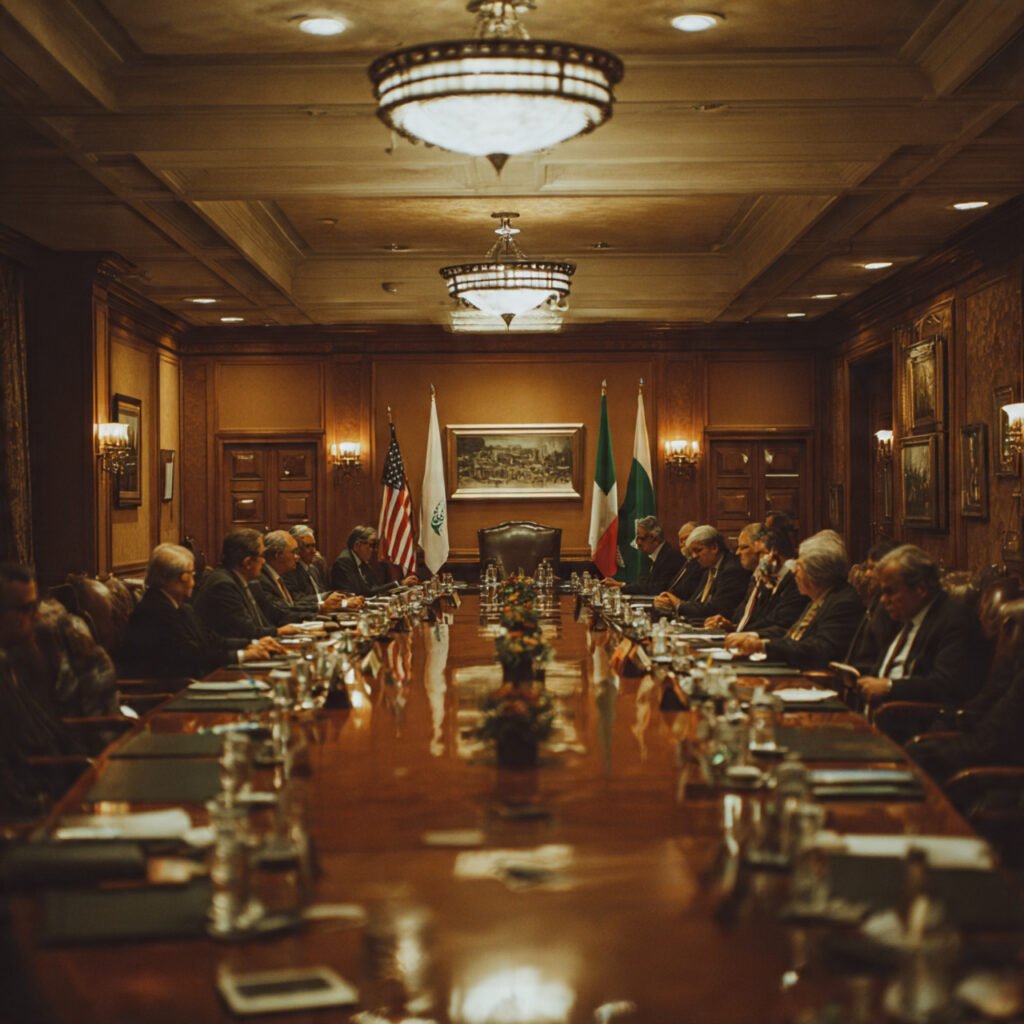
with overnight accommodation arranged at a state guesthouse in the diplomatic enclave. Pakistan’s Foreign Minister Ishaq Dar is serving as the host and senior facilitating official, working alongside a dedicated mediation team drawn from the Foreign Service.
The negotiating agenda is both urgent and complex. The provisional ceasefire that both governments agreed to on April 7 expires in twelve days. Both sides entered these talks with the understanding that failure to reach a framework agreement before that deadline would almost certainly mean a return to active conflict. The April 10 sessions are structured around three interconnected priorities.
The first and most immediate objective is converting the current tactical pause into a formal, extended ceasefire with specific enforcement mechanisms. Both delegations must agree on the geographic boundaries of a ceasefire zone, the cessation of drone activity over the Persian Gulf, and a mutual notification protocol for any military movements within agreed proximity limits. US Special Envoy for the Middle East Brett McGurk, leading the American delegation, told reporters before entering the building that ‘a durable ceasefire is the foundation for everything else on this agenda.’
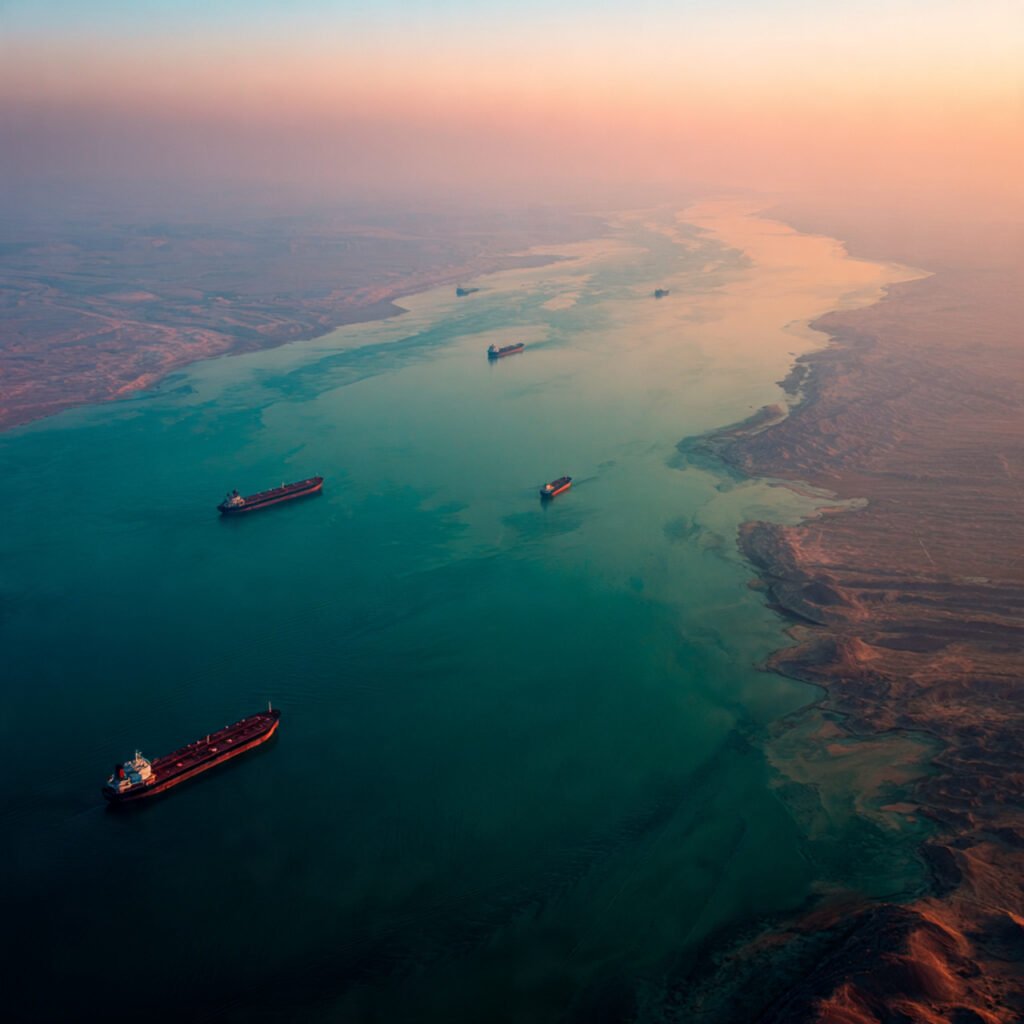
The Strait of Hormuz question remains the most technically and politically difficult item on the table. The US position supported by the UK, France, and the GCC states is that the strait must be open to unconditional free navigation for all commercial vessels. Iran maintains that it has a legitimate right to ‘coordinate’ passage of vessels it deems a security risk, a position that Washington regards as a soft continuation of the blockade.
Diplomats familiar with the negotiations, speaking to Reuters ahead of the talks, suggested that a possible compromise involves a joint maritime coordination committee with representatives from Iran, the US Navy, and a neutral third party such as Oman that would manage passage notifications for large naval convoys while guaranteeing unconditional access for commercial tankers. Whether Iran’s IRGC naval command would accept such an arrangement, which would effectively internationalise oversight of the strait, remains the central uncertainty.
The third track involves the broader peace framework that Pakistani and Omani intermediaries have been developing since late March. According to officials cited by the Financial Times, the working document currently under discussion includes provisions for a phased reduction of US secondary sanctions on Iran’s energy sector, a structured release of frozen Iranian central bank assets held in third-country accounts, verified limits on Iranian uranium enrichment activity, and a regional maritime security roadmap for the Persian Gulf.
The framework is explicitly described as a ‘starting document, not a final agreement’ by both sides. The Trump administration has publicly disputed the enrichment provisions, with the President posting on Truth Social that ‘there will be ZERO nuclear enrichment, period’ a position that Iranian Foreign Minister Abbas Araghchi has called ‘incompatible with Iran’s sovereign rights.’ Bridging this gap is the task that will determine whether the Islamabad talks produce a durable framework or another temporary extension.
For Pakistan, hosting the Islamabad summit represents the most significant foreign policy moment in a generation. The country has spent much of the past decade managing its own economic crisis, relations with the IMF, and security challenges on the Afghan border. Taking on the role of mediator in a US-Iran confrontation of this scale is a substantial strategic investment.
The potential reward is equally substantial. A successful summit would dramatically elevate Pakistan’s international standing, demonstrating a capacity for effective middle-power diplomacy that could translate into stronger relationships with both Washington and Tehran, increased diplomatic leverage in multilateral forums, and a narrative of constructive engagement that Prime Minister Sharif can take to domestic audiences who have seen little reason for pride in Pakistan’s international position in recent years.
The UN Secretary-General’s office issued a statement this morning welcoming the commencement of talks and calling on both delegations to ‘demonstrate the courage that this moment demands.
‘ EU High Representative for Foreign Affairs Kaja Kallas said the European Union was ‘closely monitoring developments with hope.’ The Arab League Secretary-General separately appealed for a ‘comprehensive and lasting agreement that protects the stability of the Gulf region.’
Despite the constructive atmosphere of the opening sessions, significant risks remain. On the American side, the administration’s tariff threat a 50 percent levy on any nation providing military hardware to Iran during the ceasefire period continues to create friction, with Iranian officials privately describing it as a coercive negotiating tactic rather than a good-faith gesture.
Within Iran, hardline elements of the IRGC leadership have publicly questioned whether the ceasefire serves Iranian interests, and there are credible reports that elements within the Revolutionary Guard are resistant to any agreement that formalises international oversight of Hormuz passage. Iran’s Supreme Leader has not commented publicly since the talks began a silence that is being interpreted variously as deliberate restraint and as a signal that the supreme leadership is not yet committed to the framework under discussion.
Within Washington, domestic political pressure from lawmakers who want comprehensive Iranian concessions on nuclear enrichment, regional proxy groups, and ballistic missiles before any sanctions relief is offered creates a ceiling on what the negotiating team can concede. The gap between what hardliners in both capitals will accept and what a workable agreement requires is still considerable.
Energy market analysts at Goldman Sachs and Citigroup have both indicated that a formal Hormuz agreement signed in Islamabad could see Brent Crude prices stabilise in the $85–$95 range within weeks a reduction that would provide meaningful relief to consumers across Europe, Asia, and North America who have been absorbing elevated fuel costs since February.
Beyond the immediate economic impact, a successful Islamabad summit would create the foundation for a broader Middle East security dialogue that has been absent since the collapse of the JCPOA nuclear deal in 2018. Gulf state leaders particularly in Saudi Arabia and the UAE are watching the talks closely, aware that a durable US-Iran framework could reshape regional security arrangements in ways that affect their own strategic calculations significantly.
Both delegations are still in the building. Frontier Affairs will update this report as further information becomes available from the talks.