
playstation plus june 2026 games
Thursday, May 20, 2026 Trusted by millions worldwide Back to News Tech PlayStation Plus Subscribers Are About to Lose Another...
Read More → Tuesday, March 10, 2026
Trusted by millions worldwide
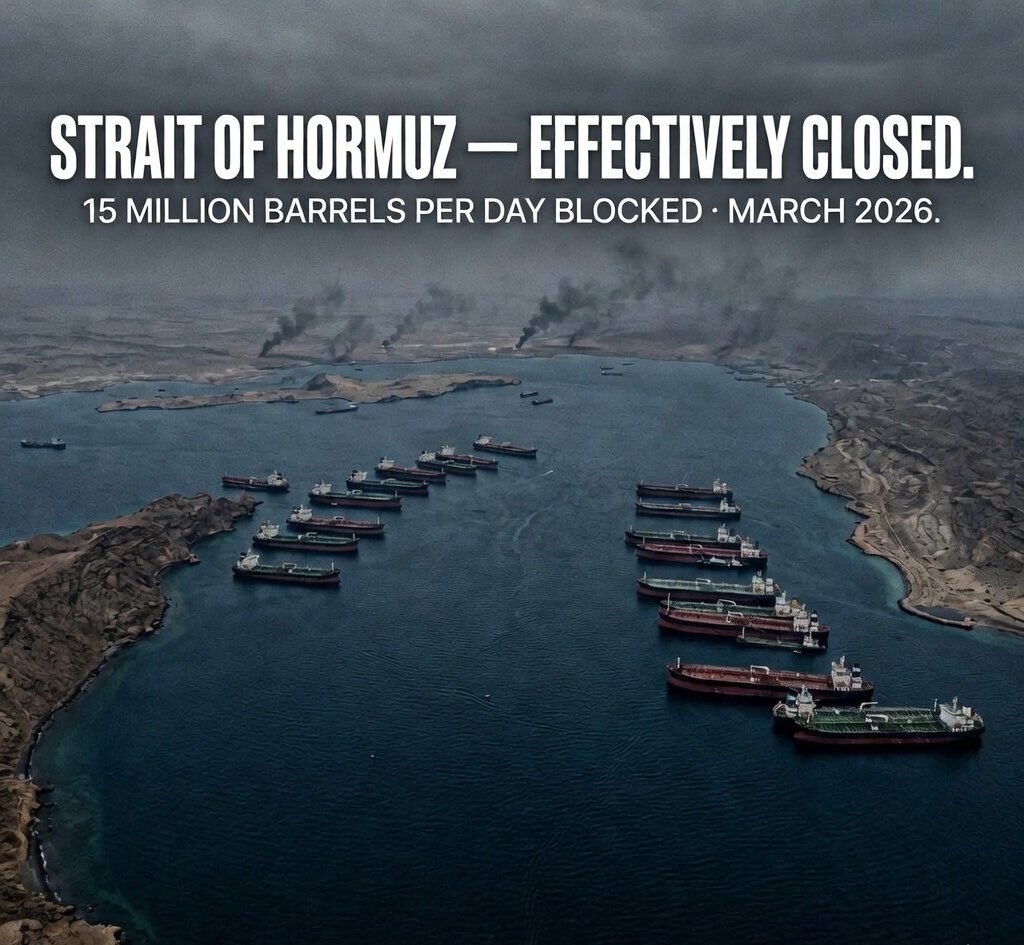
The Iran war oil price 2026 crisis crossed a historic threshold on Sunday, March 8 — Brent crude peaked at $119 per barrel intraday, Dow futures crashed over 1,000 points, and analysts warned the $150 scenario is now a realistic outcome if the Strait of Hormuz stays closed.
For the first time since Russia’s 2022 invasion of Ukraine, Brent crude crossed the $100 per barrel mark and kept going. The trigger is straightforward: the Iran war has disrupted approximately 20 percent of the world’s daily oil supply for nine consecutive days. Roughly 15 million barrels of crude oil pass through the Strait of Hormuz every day, and the threat of Iranian missile and drone attacks has effectively halted tanker traffic through the waterway.The supply disruption is unprecedented in modern history more than double the impact of the Suez Crisis of 1956–57, according to energy analysts. Goldman Sachs had previously warned that sustained Hormuz disruption could push prices above $100 per barrel. That threshold has now been breached and exceeded. JP Morgan analysts noted the shift: the market was no longer pricing in geopolitical risk in the abstract it was now dealing with the concrete reality of refinery shutdowns and blocked export routes.
Brent Intraday Peak ↑
30%+ Sunday
US Crude (WTI) ↑
24.6%
Brent Settlement ↑
16.5%
Goldman ForecastIf
Hormuz stays shut
The knock-on effect across global markets was immediate. Dow Jones futures crashed 1,011 points — a fall of 2.13 percent. S&P 500 futures dropped 2.01 percent and Nasdaq futures lost 2.31 percent. In Asia, Japan’s Nikkei 225 fell as much as 7 percent before recovering to close down 5 percent. South Korea’s KOSPI plunged as much as 8 percent. European markets opened lower, with London’s FTSE 100 down around 2 percent and Frankfurt’s DAX off approximately 3 percent.
Safe-haven assets also moved. Gold dipped 1.3 percent to $5,029 per ounce. The yield on the 10-year US Treasury spiked 6.6 basis points to 4.198 percent as traders priced in hotter inflation. The US dollar strengthened 0.83 percent against the euro.

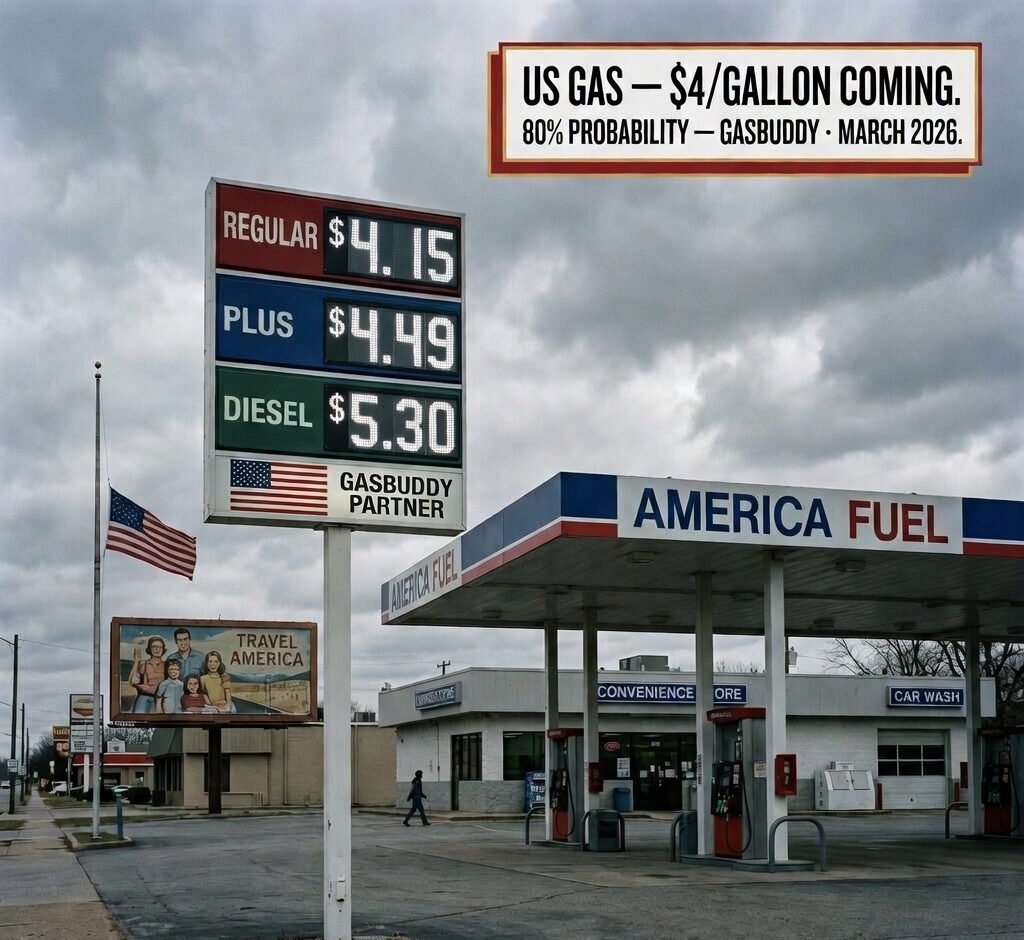
American drivers felt the impact immediately. The national average for regular gasoline reached $3.45 per gallon on Sunday up 47 cents from a week earlier. Diesel hit $4.60 per gallon, an 83-cent weekly rise. Patrick De Haan, head of petroleum analysis at GasBuddy, put the odds of prices crossing $4 per gallon within the next month at 80 percent.
“Short term oil prices, which will drop rapidly when the destruction of the Iran nuclear threat is over, is a very small price to pay for U.S.A., and World, Safety and Peace. ONLY FOOLS WOULD THINK DIFFERENTLY!”— President Trump, Truth Social, March 8, 2026
Energy Secretary Chris Wright took a more measured line, telling CNN’s State of the Union that US gas prices would be back under $3 per gallon “before too long” and framing the disruption as “a weeks, not a months thing.”
Oil prices pulled back to around $110 per barrel after the Financial Times reported that G7 finance ministers would discuss releasing petroleum reserves in coordination with the International Energy Agency. The Trump administration also announced plans to provide insurance to oil tankers passing through the Strait of Hormuz, after maritime insurers withdrew coverage for the region. Naval escorts were proposed, but no concrete plan emerged and shipping companies remained reluctant to transit the area while hostilities continued.
Neil Roberts of Lloyd’s Market Association captured the dilemma: “There seems to be a general view that it might be better to have neutral escorts, rather than the US, because the US is a belligerent.” Meanwhile, three major OPEC producers Iraq, the UAE, and Kuwait cut production as storage capacity filled up with barrels that had nowhere to go.
Homayoun Falakshahi, lead crude analyst at Kpler, said oil could reach $150 per barrel by end of March if Hormuz remains closed. The IRGC went further, warning prices could hit $200 if strikes continue. With no ceasefire in sight and energy infrastructure across Iran, Qatar, Saudi Arabia, and Kuwait under attack, both forecasts are within range.
The Iran war has effectively closed the Strait of Hormuz — the world’s most critical oil shipping lane — blocking approximately 20 percent of global daily oil supply for nine or more consecutive days. The disruption has caused the largest oil price shock since Russia’s 2022 invasion of Ukraine.
Goldman Sachs forecasts $150 per barrel by end of March if the Strait of Hormuz remains closed. The IRGC has warned prices could reach $200 if US-Israeli strikes continue. Brent crude already hit $119 intraday on March 8 — up roughly 50 percent since strikes began on February 28.
GasBuddy’s head of petroleum analysis put the odds at 80 percent within the next month. The US national average already reached $3.45 per gallon on March 8 — up 47 cents in one week. Energy Secretary Chris Wright said p