playstation plus june 2026 games
Thursday, May 20, 2026 Trusted by millions worldwide Back to News Tech PlayStation Plus Subscribers Are About to Lose Another...
Read More → Saturday, Aprail 25, 2026
Trusted by millions worldwide
global power shift 2026 It would be a mistake to declare any single nation or bloc the “winner” of the current global power shift. The 2026 geopolitical landscape is defined precisely by its complexity by the absence of a clear hegemon and by the growing number of players with the capacity to shape international outcomes.
global power shift 2026 The global power shift of 2026 is rewriting the rules of international relations at a pace not seen since the end of the Cold War. Across five continents, new geopolitical alliances are forming, old partnerships are fracturing, and emerging economies are demanding and increasingly winning a seat at the table that was once dominated by Washington, Brussels, and Beijing alone. For anyone trying to understand where the world is headed, the events of early 2026 offer a sobering and fascinating map of tomorrow’s political landscape.
This is not simply a rebalancing of military power. It is a structural transformation driven by trade networks, energy corridors, digital infrastructure, and a generational shift in how nations define their national interest. The old question — “Which superpower do you stand with?” has been replaced by a far more complex calculation.
Several converging forces have pushed the world into this new phase of political realignment. First among them is the erosion of Western institutional authority. The United Nations Security Council remains deadlocked on most major conflicts, from Ukraine to the South China Sea, leaving regional actors to forge their own arrangements.
At the same time, the expansion of the BRICS+ bloc which added six new members in 2024 and is now in discussions with over a dozen more nations — has created a parallel architecture for trade and finance. The bloc’s collective GDP now rivals that of the G7, a milestone that would have seemed unlikely just a decade ago.
Energy independence has also become a central driver of new alliances reshaping world politics. The race for lithium, rare earth minerals, and green hydrogen technology has pushed countries like Chile, Indonesia, and the Democratic Republic of Congo into the center of geopolitical competition. Nations that once sat on the sidelines of global politics are now the subject of intense diplomatic courtship from both East and West.
The era of unipolarity has officially concluded, replaced by a “Fragmented Multi-alignment.” As of April 25, 2026, the New World Order 2026 is being defined by a rapid succession of new alliances reshaping global politics. This is not merely a return to Cold War-style blocs; it is a fluid, interest-based global power realignment where “Middle Powers” are now dictating the terms of international engagement.
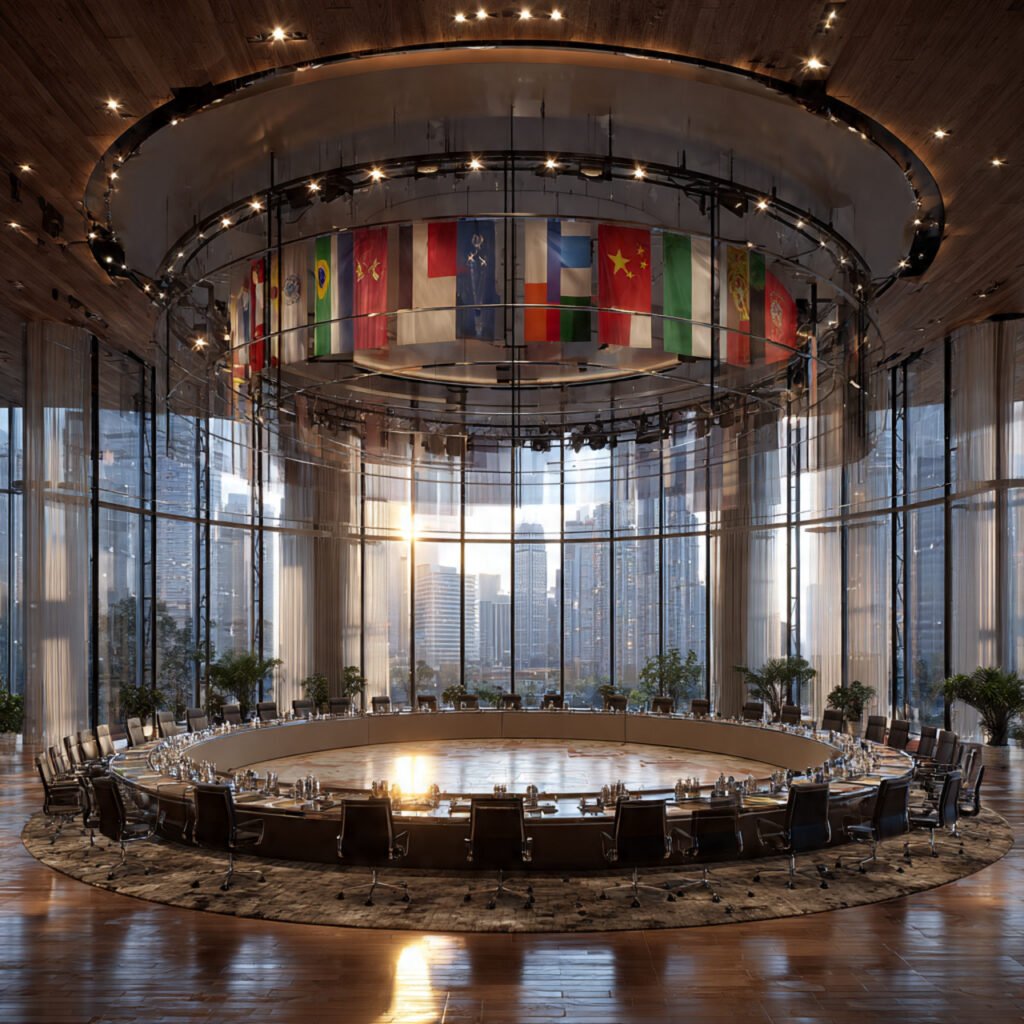
analysts now call “swing states” large middle powers that refuse to align permanently with any single bloc. India, Brazil, Saudi Arabia, Turkey, and South Africa have each adopted a strategy of what foreign policy scholars term “strategic non-alignment,” maintaining open channels with Washington, Moscow, and Beijing simultaneously.
India has signed defense agreements with the United States while continuing to purchase Russian energy and expanding trade with China. Brazil has deepened its BRICS+ commitments while keeping EU trade deals intact. Saudi Arabia, once considered a firm US ally, has normalized diplomatic ties with Iran and is weighing membership in the Shanghai Cooperation Organisation.
This diplomatic flexibility is not a sign of weakness it is a deliberate strategy. These nations are leveraging their position at the center of the new multipolar world to extract maximum benefit from competing powers. For smaller nations, this creates both opportunities and genuine risks.
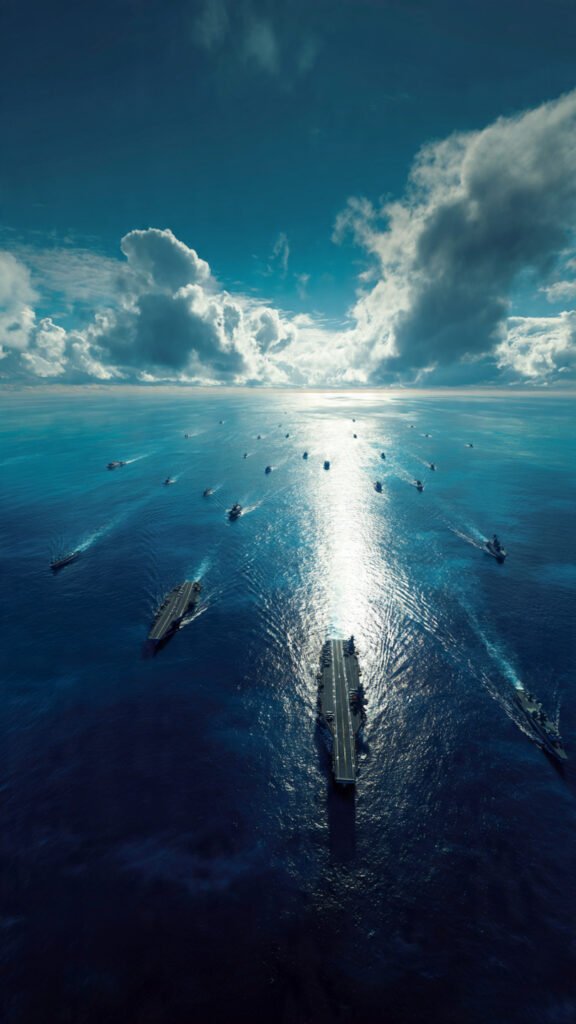
The United States, Japan, Australia, and the Philippines have deepened their military coordination through joint naval exercises and a new framework for shared intelligence on Chinese maritime activity in the South China Sea. Meanwhile, Vietnam and Indonesia — both wary of Chinese expansion — have moved closer to this grouping without formally joining it, a pattern that illustrates the “soft alignment” trend defining 2026 geopolitics.
Saudi Arabia, the UAE, and Qatar have collectively signed long-term energy supply agreements with China, India, and South Korea, effectively creating a non-Western energy corridor that bypasses traditional dollar-denominated oil markets. This is not just an economic arrangement — it is a geopolitical statement. The decision by Gulf states to price some contracts in alternative currencies has sent shockwaves through global financial markets and accelerated discussions in Washington about the future of dollar dominance.
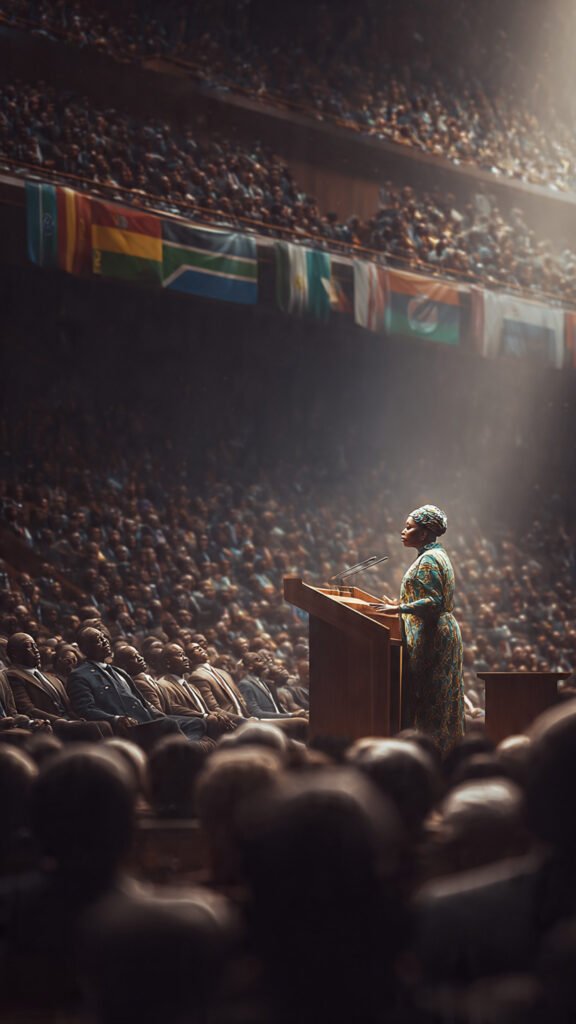
Africa’s 55-nation African Union has formally applied for permanent observer status at the G20 and is pushing for two permanent seats on a reformed UN Security Council. With a combined population of 1.4 billion and the world’s largest reserves .
The realignment at the top levels of geopolitics has real consequences for everyday life. Supply chains that were restructured after COVID-19 are being restructured again this time along geopolitical rather than purely economic lines. The United States and European Union are incentivizing “friend-shoring,” or redirecting manufacturing to politically aligned countries. This is raising costs for consumers in the short term while potentially improving supply chain resilience in the long term.
For developing nations, the multipolar world offers new leverage. Countries that once had little choice but to accept IMF conditions or Western development bank terms can now shop among competing offers from the Asian Infrastructure Investment Bank, Chinese Belt and Road financing, and a revitalized US development finance framework. The competition for influence is creating genuine choice but also the risk of debt dependency under new masters.
Currency diversification is another area where the power shift is becoming tangible. Trade settlements in Chinese yuan, Indian rupees, and UAE dirhams have increased significantly since 2023. While the US dollar remains the dominant global reserve currency, its share of central bank reserves has declined to levels not seen since the early 2000s, according to IMF data published in January 2026.
It would be a mistake to declare any single nation or bloc the “winner” of the current global power shift. The 2026 geopolitical landscape is defined precisely by its complexity by the absence of a clear hegemon and by the growing number of players with the capacity to shape international outcomes.
What seems clear is that the rules-based international order established after World War II is under its most serious stress since the Cold War. Whether new institutions and norms can emerge to manage this complexity or whether the world will descend into sharper and more dangerous rivalries remains the defining question of this decade.
What is certain is that staying informed on these shifts is no longer just the concern of diplomats and policy analysts. As supply chains, currency markets, energy prices, and digital networks become increasingly intertwined with geopolitical calculations, the new world order is, quite literally, everyone’s business.
The global power realignment countries are facing is a structural realignment of the civilizational landscape. As shifting political alliances continue to deliver shocks to traditional diplomacy, the global leadership of the future will depend on “Inter-Bloc Mediation.” Staying informed on New World Order 2026 developments and international alliances reshaping power transitions is now essential for understanding the future of diplomatic ties and the power balance risks of the “Multi-Polar Decade.”
The New World Order 2026 report represents a fundamental reset of the international system. The new alliances reshaping global politics trend proves that “Hegemony” is a relic of the 20th century. As emerging global partnerships 2026 and strategic alliances continue to redefine world politics, the world is witnessing the birth of a more competitive, diverse, and unpredictable power balance. On this April 25, 2026, the “Power Shift” stands as a stark reminder that in the world of diplomacy, the only constant is the pursuit of national interest in an ever-changing landscape.