
playstation plus june 2026 games
Thursday, May 20, 2026 Trusted by millions worldwide Back to News Tech PlayStation Plus Subscribers Are About to Lose Another...
Read More → Sunday, April 12, 2026
Trusted by millions worldwide
Australia fuel crisis April 12, 2026: Onshore liquid fuel reserves estimated at 39 days (DISER). IEA 90-day stockholding obligation not met. Diesel above $3.10/litre in capital cities; $3.80/litre in remote NT communities (FuelWatch). Half-excise cut saving approximately 26 cents/litre. Singapore supply agreement signed but provides no guaranteed volume increase.
Australia’s fuel crisis in 2026 is the product of a structural vulnerability that policymakers have acknowledged for years without resolving and the disruption to Strait of Hormuz shipping caused by the US-Iran conflict has now made that vulnerability impossible to ignore. As of April 12, independent analysis of onshore liquid fuel stocks places Australia well below the International Energy Agency’s 90-day stockholding obligation, with DISER data suggesting approximately 39 days of accessible supply a figure contested by industry analysts who argue that a portion of that inventory consists of ‘tank bottom‘ reserves that cannot be practically pumped or distributed at scale.
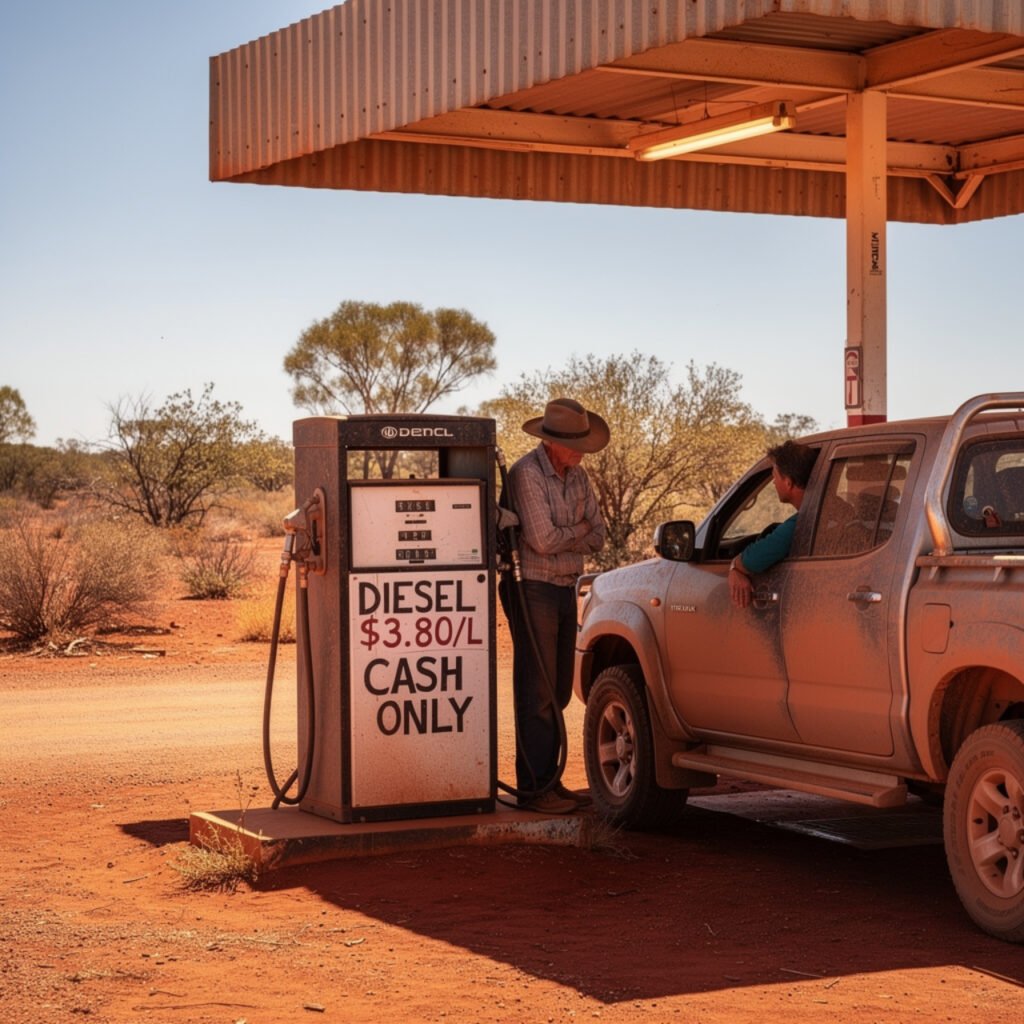
The practical consequence for Australians is visible at fuel stations from Sydney to the Northern Territory. Diesel is trading above $3.10 per litre in capital cities and has reached $3.80 per litre in remote communities including Ltyentye Apurte in the NT, according to FuelWatch pricing data. For households already under cost-of-living pressure, and for regional freight operators whose fuel costs directly determine the price of groceries on supermarket shelves, the April 2026 fuel crunch is not a geopolitical abstraction it is a direct, daily financial burden.
current crisis has given renewed relevance to a political exchange that might otherwise have faded from memory. In 2019, then-Opposition Leader Bill Shorten made energy security a central attack on the Morrison government, warning in repeated public statements that Australia’s liquid fuel reserves were ‘dangerously low’ and that the country was ‘one major conflict away from serious disruption.’ Shorten called on the Coalition to develop a comprehensive fuel security plan and to commit to reaching the IEA’s 90-day stockholding standard.
What Shorten Said Then and What Has Changed
Video clips of Shorten’s 2019 statements have been recirculating extensively on Australian social media since the Hormuz crisis intensified in March. The comparison is uncomfortable for the current government. Labor won office in May 2022 with a mandate that included energy policy reform, and the IEA stockholding obligation to which Australia has been formally committed since 1979 has still not been met four years into Labor’s term.
When asked about this directly on April 11, Energy Minister Chris Bowen’s office responded that the government had
‘inherited a degraded strategic reserve position from the previous government’ and pointed to its Fuel Security Services Payment scheme and the 2024 National Liquid Fuel Security Strategy as evidence of progress. Critics, including the opposition and independent energy analysts, argue that neither measure has materially improved Australia’s resilience to exactly the supply disruption scenario now playing out.
The broader point is factual rather than purely political: Australia remains one of the few IEA member nations not in compliance with the 90-day stockholding requirement. The Department of Industry, Science and Resources confirmed in its most recent quarterly fuel monitoring report that Australia’s net stockholding position remains below the IEA benchmark, with imported fuel stocks declining sharply since the Hormuz disruptions began in February 2026.
Energy Minister Bowen’s public assurance that supplies are ‘safe into May’ rests on official stock estimates that deserve careful scrutiny. The 39-day onshore figure referenced in recent government communications includes all commercially held fuel petrol, diesel, jet fuel, and other refined products in storage tanks across Australia’s refining and import terminal network.
Industry insiders and several independent energy analysts have raised a specific concern about how this figure is calculated. A portion of any storage tank’s nominal capacity is what the industry calls ‘tank bottoms’ — fuel that sits below the outlet valve or pump intake level and cannot be extracted in normal operations without specialist equipment. The practical, ‘pumpable’ volume of Australia’s fuel reserves is lower than the headline 39-day figure suggests.
The Australian Competition and Consumer Commission, in its most recent quarterly petroleum monitoring report, noted that effective reserve coverage is ‘materially affected by distribution constraints and geographic concentration of storage assets.’ In plain terms: even if national averages look adequate, fuel is not evenly distributed, and remote communities and regional supply chains face shortages significantly earlier than the national average figure implies.
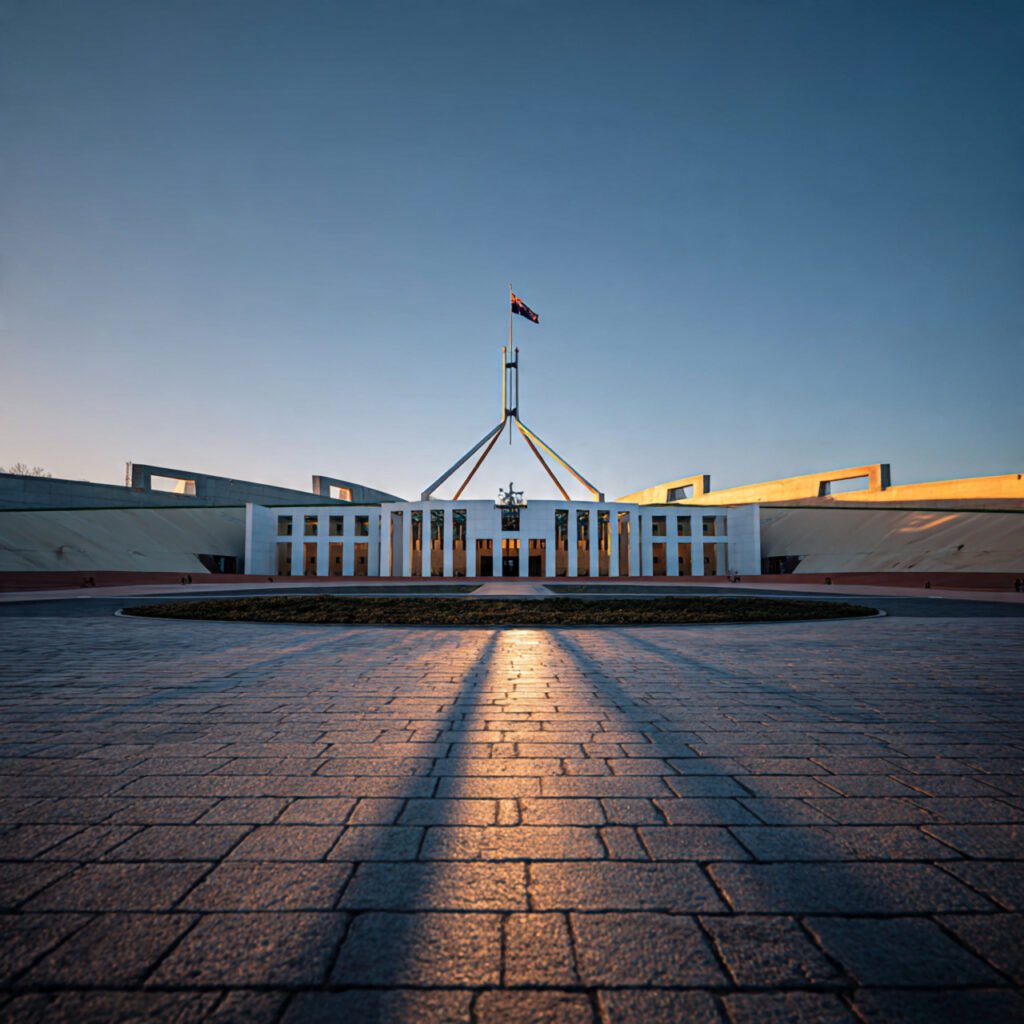
The Albanese government’s headline response to the crisis temporarily halving the fuel excise, reducing it by approximately 26 cents per litre according to Treasury calculations has provided measurable short-term relief to motorists. At a cost of several billion dollars to the federal budget over three months, it is the most visible and politically straightforward intervention available to any government facing a fuel price shock.
However, the excise cut has attracted sustained criticism from energy economists, including researchers at the Grattan Institute and the Australia Institute, on the grounds that it treats the symptom rather than the cause. The core vulnerability Australia’s lack of sufficient onshore strategic reserves and its near-total dependence on imported refined petroleum is unchanged by a temporary price subsidy. When the excise reverts to its full rate in three months, unless Hormuz supply chains have normalised, motorists will face the same prices they face today.
The counter-argument, put by Bowen and senior Labor figures, is that the excise cut provides immediate relief to households and businesses that cannot wait for long-term structural solutions,
and that building additional sovereign storage capacity is a multi-year infrastructure project that could not have been initiated in time to address the current crisis regardless of when planning began.
Prime Minister Albanese’s April visit to Singapore produced a bilateral agreement under which Singapore committed to maintaining fuel export availability to Australia as a priority partner during the current supply disruption. The deal was presented in Australian domestic media as a supply security breakthrough and has been cited by government ministers as evidence of proactive crisis management.
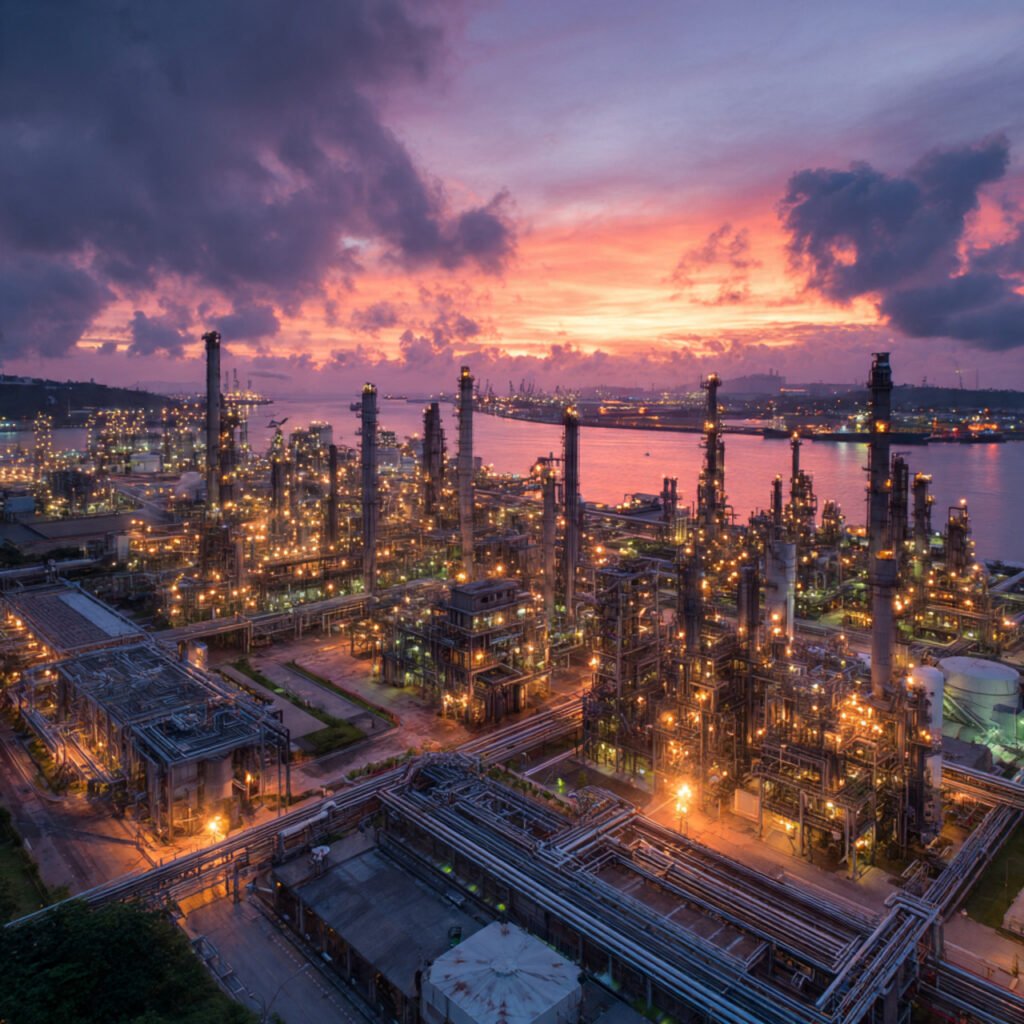
Energy analysts and opposition spokespeople have identified a fundamental limitation in what the Singapore agreement actually delivers. Singapore operates as the region’s primary petroleum refining hub but it does not produce crude oil. Approximately 90 percent of the crude oil processed at Singapore’s refineries comes from the Middle East, transiting through the Strait of Hormuz or around the Arabian Peninsula.
The agreement guarantees that Singapore will not restrict fuel exports to Australia as long as Singapore has fuel available to export. It does not guarantee that Singapore will have fuel available, because Singapore’s own supply depends on the same Strait of Hormuz access that is currently disrupted. Put directly: the deal protects Australia against Singapore choosing to export to a different customer. It does not protect Australia against Singapore having less fuel to export in the first place which is precisely the scenario that matters most in the current crisis.
While the diplomatic and policy dimensions of the crisis play out in Canberra and Singapore, the impact for ordinary Australians is concrete and immediate. Diesel prices at $3.10 per litre in Sydney and Melbourne represent a significant increase from pre-crisis levels of approximately $2.20 — a 40 percent rise that flows directly into the cost of road freight. Every truck carrying food, medical supplies, or construction materials to regional Australia is more expensive to operate, and those costs are passed on at the checkout.
In remote communities where there is no alternative to road freight, the impact is most acute. Diesel at $3.80 per litre in Ltyentye Apurte and comparable communities in the Northern Territory, Western Australia, and Far North Queensland is not just an inconvenience it threatens the economic viability of essential services and small businesses that operate on thin margins at the best of times.
The current crisis has given renewed urgency to a policy debate that has been ongoing for more than a decade. Australia is one of only two IEA member nations the other being New Zealand that does not maintain a government-owned strategic petroleum reserve. Every other major developed economy holds physical fuel stocks specifically to buffer exactly the kind of supply disruption now affecting the country.
The cost of building and maintaining a 90-day sovereign reserve has been estimated by AEMO and various independent researchers at between $1.5 billion and $3 billion in capital investment, with ongoing operating costs. The excise cut alone is costing the budget billions over three months suggesting that the annual cost of maintaining a genuine strategic reserve is a fraction of what Australia spends on crisis-response subsidies each time a supply shock materialises.
The National Fuel Security Plan released by the government in April a document that independent analysts have characterised as high-level in structure and light on specific funded commitments acknowledges the strategic reserve gap but does not include a funded timeline for closing it. The government has indicated that a fuller infrastructure investment plan will follow later in the year, subject to budget considerations.
Whether that commitment materialises and whether it is sufficient in scale and speed to change Australia’s position before the next supply shock will be the measure by which the Albanese government’s energy security legacy is ultimately judged.