
playstation plus june 2026 games
Thursday, May 20, 2026 Trusted by millions worldwide Back to News Tech PlayStation Plus Subscribers Are About to Lose Another...
Read More → Saturday, May 9 2026
Trusted by millions worldwide
By Mavia Fazal
Apple Intel Chip Deal 2026 Apple and Intel have reached a preliminary agreement for Intel to manufacture some of the chips that power Apple devices. The Apple Intel chip deal of 2026 is not just a corporate handshake between two old rivals. It is a strategic realignment that touches on supply chain security, US manufacturing ambition, geopolitical risk, and the future of the semiconductor industry in America.
Apple Intel Chip Deal 2026 Nobody saw this coming quite the way it landed. On Friday, May 8, 2026, the Wall Street Journal dropped a report that sent two of Silicon Valley’s most recognizable names back into each other’s orbit and sent shockwaves through global financial markets before the trading day was done.
Apple and Intel have reached a preliminary agreement for Intel to manufacture some of the chips that power Apple devices. The Apple Intel chip deal of 2026 is not just a corporate handshake between two old rivals. It is a strategic realignment that touches on supply chain security, US manufacturing ambition, geopolitical risk, and the future of the semiconductor industry in America.
Intensive talks between the two companies have been underway for more than a year, culminating in a formal preliminary agreement in recent months. It remains unclear exactly which Apple products will use Intel-manufactured chips. Apple ships over 200 million iPhones annually, along with millions of iPads and Macs, but early reporting suggests the agreement may focus on lower-end M-series chips used in select iPad and Mac models. Wikipedia
The structure of the arrangement mirrors how Apple already works with its existing chip partner. Intel would make chips based on Apple’s own chip designs, much like TSMC currently does. Apple designs its own ARM-based processors and relies on a manufacturing partner to actually produce them at scale. VPAP
Apple is reportedly eyeing Intel’s 18A-P performance-enhanced process variant for its 2028 lineup of entry-level M-series chips, intended for the MacBook Air and iPad. While the flagship Pro and Max chips will likely remain with TSMC for now, using Intel for high-volume, cost-sensitive silicon would allow Apple to secure more favorable pricing and guaranteed production capacity. Daily Voice
Both companies declined to comment when contacted by reporters. The silence itself spoke volumes. When Apple and Intel stay quiet about something this significant, the deal is usually real.
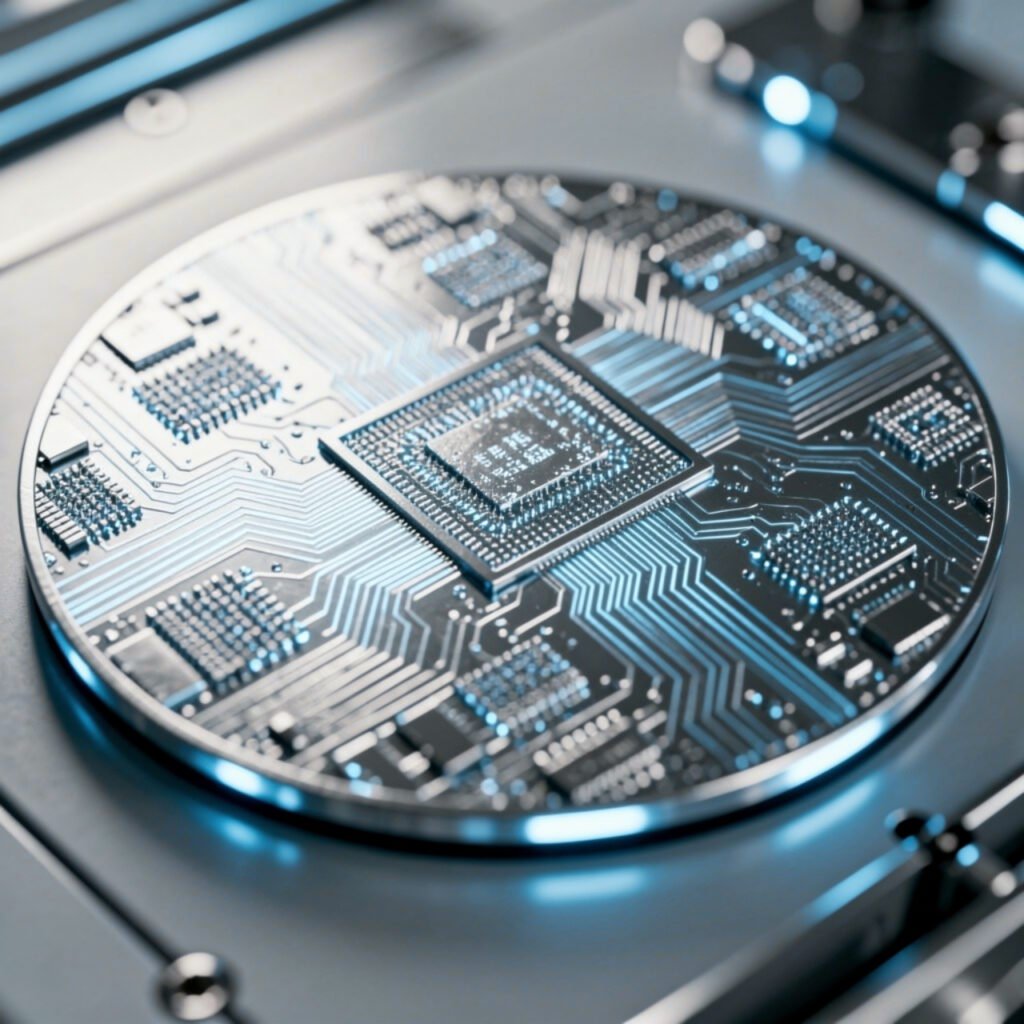
The Market Reaction Said Everything
Investors did not wait for official confirmation to deliver their verdict.
Intel shares soared nearly 14 percent on Friday. Apple shares added 2 percent. The reaction reflected the scale of what a confirmed Apple partnership would mean for Intel’s once-struggling foundry business the most notable vote of confidence yet in a division that had endured years of losses, technical setbacks, and serious doubt about its long-term viability. Virginia Mercury
In an even more dramatic reading by some traders, Intel’s stock hit fresh all-time highs during the session, posting what one report described as an explosive 19 percent intraday surge. For a company that had lost more than 60 percent of its value in a single year not long ago, the turnaround narrative around its foundry business has suddenly become one of the most compelling in the technology sector. CNN
The reaction from industry analysts was equally striking. One technology investment researcher told CNBC simply: “I 100 percent believe this is going to happen.”
Apple’s motivation for this deal is rooted in a problem that CEO Tim Cook has been unusually candid about in recent quarters.
Apple relies heavily on TSMC, whose advanced production lines are also in high demand from AI chipmakers such as Nvidia and AMD. Tim Cook said on the company’s most recent earnings call that iPhone sales were held back by supply constraints at its contract manufacturer. NPR
The massive expansion of AI data centers and unexpectedly high demand for Macs capable of running AI models locally have been the main causes of recent chip shortages. This has underscored the urgent need for Apple to consider alternative suppliers. Virginia Mercury
The math is straightforward. Apple designs the best silicon in the consumer electronics industry. But it has exactly one manufacturer capable of producing it at the leading edge. When that manufacturer’s capacity is consumed by the AI boom, Apple loses iPhone and Mac sales at a scale that moves quarterly earnings.
This move is part of a broader Taiwan-plus-one strategy, aimed at diversifying supply chains away from a single point of failure. For Apple, Intel is not just a business decision. It is an insurance policy. Virginia
Intel’s road to this deal was long, painful, and expensive. For years, the company was a cautionary tale about how quickly a technology giant can fall behind.
After Intel’s failure to keep up with Nvidia in AI chips, CEO Lip-Bu Tan replaced Pat Gelsinger in March 2025. Tan inherited a company that had lost more than 60 percent of its value in a single year and restructured the foundry business into a separate unit, with a relentless focus on Intel’s most advanced manufacturing technology the 18A process node, built entirely in the United States. NPR
That decision to bet everything on 18A is now paying off. Intel’s 18A process, a 1.8-nanometer technology expected to ship in late 2026, could be a good fit for Apple’s lower-end chips in devices like MacBook Airs and iPads. NPR
Intel’s foundry revival has attracted more than just Apple. In February 2024, Microsoft announced it would use Intel’s 18A process for chip design. In September 2024, Amazon Web Services signed a deal with Intel to build custom chips on 18A. Tesla’s Terafab project in Austin has also brought Intel into its manufacturing ecosystem. Apple would be the most prestigious customer yet and by far the most visible. CNN
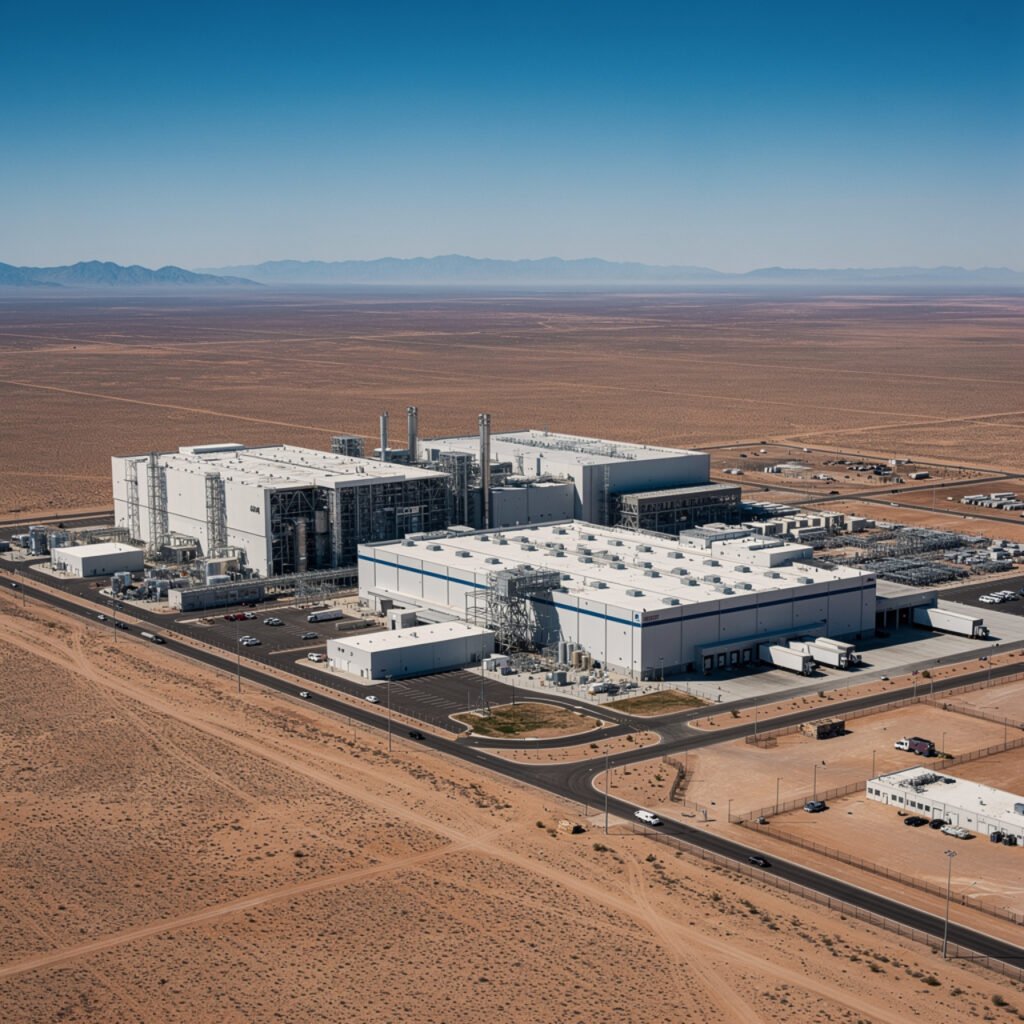
To understand the Apple Intel chip deal of 2026, it is impossible to ignore the political context that helped make it happen.
The US has long sought to secure its tech supply chain, which heavily relies on TSMC in Taiwan. TSMC controls most of the manufacturing for Apple, Nvidia, and AMD, and that concentration poses a national security risk given Taiwan’s proximity to China. Apple has relied solely on TSMC since 2016, but recent US policies and Apple’s $600 billion commitment to American manufacturing are pushing it to explore options closer to home. NPR
The Trump administration has been an active participant not just a passive observer. The WSJ report noted that Apple’s decision to use Intel comes after President Trump personally advocated for the move. WJLA
A White House official said the administration had been trying to drum up business for Intel, calling the chip giant a major US semiconductor producer, and expressing that the effort was aimed at bringing more chip production to the United States and strengthening domestic manufacturing. NPR
The Trump administration has also paid approximately $9 billion to acquire an 8.4 percent equity stake in Intel, making the US government a quiet shareholder in whatever Intel does next. A deal that puts advanced American chips into American consumer electronics is exactly the story Washington has been trying to write with that investment. Fcnp
The technical backbone of this deal deserves explanation, because it is what makes the partnership credible rather than aspirational.
Intel’s 18A node delivers transistor density and performance roughly equivalent to TSMC’s N2 process, expected in late 2026. Intel’s production lead positions the company to recapture manufacturing leadership for the first time since 2016. The CHIPS Act invested $7.86 billion in Intel’s US facilities, and production at Intel’s Fab 52 in Arizona demonstrates domestic manufacturing capability that directly appeals to customers concerned about geopolitical risks from Taiwan-based production. WJLA
With the 18A node now operational and yields estimated between 65 and 75 percent, Intel has become the only viable domestic alternative for high-performance logic chips in the United States. WSLS 10
For the broader industry, the implications are significant. The US government views the domestic production of advanced chips as a matter of national security, ensuring that the processors powering the next generation of artificial intelligence are not subject to the territorial tensions in the South China Sea. CNN

Apple is not the only technology powerhouse showing renewed interest in what Intel can produce. Intel has also received a $5 billion investment from Nvidia, and the two companies are partnering to develop an x86 RTX system-on-chip for PCs a collaboration that would have seemed deeply unlikely just two years ago. Wikipedia
The clustering of major customers around Intel’s 18A node is not coincidental. It reflects a coordinated shift in the semiconductor industry toward domestic American production driven partly by genuine strategic calculation and partly by the political and tariff pressures the Trump administration has applied to companies relying on overseas chip manufacturing.
The History Between Apple and Intel and Why It Makes This Deal Remarkable
The announcement lands with particular weight because of the history the two companies carry.
For 15 years, Intel manufactured the processors for Apple’s Mac computers, generating billions in annual revenue for the chipmaker. Apple ended that relationship around 2020, moving to its own in-house Apple Silicon chip an ARM-based processor that offered significant cost savings and performance improvements. This came at Intel’s expense, which suddenly counted its one-time ally as a formidable competitor. CNN
Intel had actually had the chance to build the A-series chips that Apple used for the iPhone and iPad, but it passed on the opportunity. Tim Cook reportedly complained to TSMC founder Morris Chang that Intel simply does not know how to be a foundry. Intel apparently learned its lesson. Wikipedia
That lesson absorbed through years of losses and a near-total collapse in foundry credibility is what makes this reunion meaningful. Apple does not choose manufacturing partners out of sentiment. When the company that publicly declared Intel incapable of being a foundry turns around and signs a preliminary agreement to use that same foundry, the only reasonable conclusion is that something real has changed.
The deal is preliminary, and genuine obstacles remain before it becomes operational.
Apple has expressed some concerns about Intel’s manufacturing yields and performance, which might limit the scope of any future agreement. Talks are still in early stages, and no volume orders have yet been placed. NPR
There are also competitive pressures Intel must navigate carefully. TSMC has been publicly watching Intel’s foundry ambitions with increasing attention. TSMC has warned of Intel Foundry’s growing prowess during its latest earnings calls a notable acknowledgment from the world’s dominant chip manufacturer that the competitive landscape is genuinely shifting. Wikipedia
For Apple’s part, the company will not abandon TSMC for premium chip production anytime soon. Its most advanced processors the A-series chips for iPhone and the M-series Pro and Max variants will almost certainly remain with TSMC for the foreseeable future. The Intel deal, at least initially, fills a different role in the supply chain.
The Apple Intel chip deal of 2026 will be studied for years as a turning point in American industrial strategy. On the surface, it is a business arrangement between two technology companies with complicated history and complementary needs. Underneath that surface, it is a statement about where the United States believes its technological future must be built.
The partnership represents a diversification of Apple’s supply chain and a notable comeback effort for Intel. It highlights ongoing efforts to strengthen domestic US chip production at a moment when the concentration of advanced semiconductor manufacturing in Taiwan has become a recognized vulnerability for the entire Western technology ecosystem. Governor of Virginia
For Intel, landing Apple as a foundry customer is a validation that no government contract or Wall Street projection could fully replicate. When the world’s most valuable technology company trusts you to make its chips, the comeback is real.
For Apple, the deal buys something more valuable than manufacturing capacity alone. It buys resilience a second source for the silicon that powers hundreds of millions of devices, located entirely within the United States.
For America’s technology industry, the message is clearest of all. The era of accepting a single point of failure in Taiwan for the world’s most critical chips is ending. The question now is how quickly the domestic alternative can scale to meet the moment.
Frontier Affairs covers global technology, geopolitics, and the intersection of industry and national security. This article draws on verified reporting from The Wall Street Journal, CNBC, 9to5Mac, MacRumors, Tom’s Hardware, TheStreet, Apple Insider, and MacDailyNews.