
playstation plus june 2026 games
Thursday, May 20, 2026Trusted by millions worldwide Back to News Tech PlayStation Plus Subscribers Are About to Lose Another Wave...
Read More → Sunday, Aprail 5, 2026
Trusted by millions worldwide
These were not simply technical decisions. They signaled a political philosophy: African governments are no longer willing to outsource control of critical digital infrastructure to external powers, whether from Silicon Valley or Beijing.
Africa political shift 2026 Africa’s political shift in 2026 is unlike anything the continent has experienced since the independence movements of the 1960s. A sweeping digital security crisis, the rapid formation of new regional tech alliances, and a generation of reform-minded leaders have combined to reshape Africa’s governance landscape at a speed that has caught the world off guard. This is not a story about aid or instability it is about a continent actively rewriting the rules of political and economic power.
In early 2026, a coordinated series of cyberattacks struck the financial and energy infrastructure of multiple African nations, disrupting banking systems and electrical grids across East and West Africa. Security analysts described the incidents as among the most sophisticated state-linked cyber operations ever recorded on the continent.
The crisis exposed a critical vulnerability: African nations had built much of their digital infrastructure on foreign-owned platforms and cloud services, with little control over data sovereignty or emergency response protocols. The result was a political awakening.
Kenya, Nigeria, and South Africa moved quickly, each announcing data localization mandates that require citizen data to be stored and managed within national borders. South Africa’s Department of Communications fast-tracked a Cyber Sovereignty Bill in March 2026, while Nigeria launched an emergency review of all government contracts with foreign cloud providers.
These were not simply technical decisions. They signaled a political philosophy: African governments are no longer willing to outsource control of critical digital infrastructure to external powers, whether from Silicon Valley or Beijing.

The cyberattacks accelerated a trend that had already been forming the creation of new African regional alliances built not on colonial-era geographic borders, but on shared digital and economic interests.
East African nations, led by Kenya, Rwanda, and Ethiopia, have deepened cooperation to develop a shared digital governance framework. The initiative, informally referred to as the East African Tech Corridor, aims to reduce dependence on external technology providers by pooling resources for infrastructure, AI development, and cybersecurity response.
Rwanda’s existing reputation as a technology-forward nation has positioned it as a key node in this network. Kigali hosted the first joint African Cybersecurity Summit in February 2026, attended by representatives from 24 nations.
Separately, a coalition of mineral-rich African nations has formalized agreements to retain a greater share of the economic value from lithium, cobalt, and manganese exports critical materials for global battery and semiconductor supply chains. This ‘Green Mineral Alliance’ represents a direct challenge to the historically unequal terms under which African resources have been traded.
Analysts say this is one of the most significant economic leverage moves Africa has made in decades, coming at a moment when global demand for these materials is at an all-time high.
Beyond security and alliances, 2026 has also been defined by ambitious domestic governance reforms. Several African governments have launched programs to digitize public services, reduce bureaucratic corruption, and improve service delivery through technology.
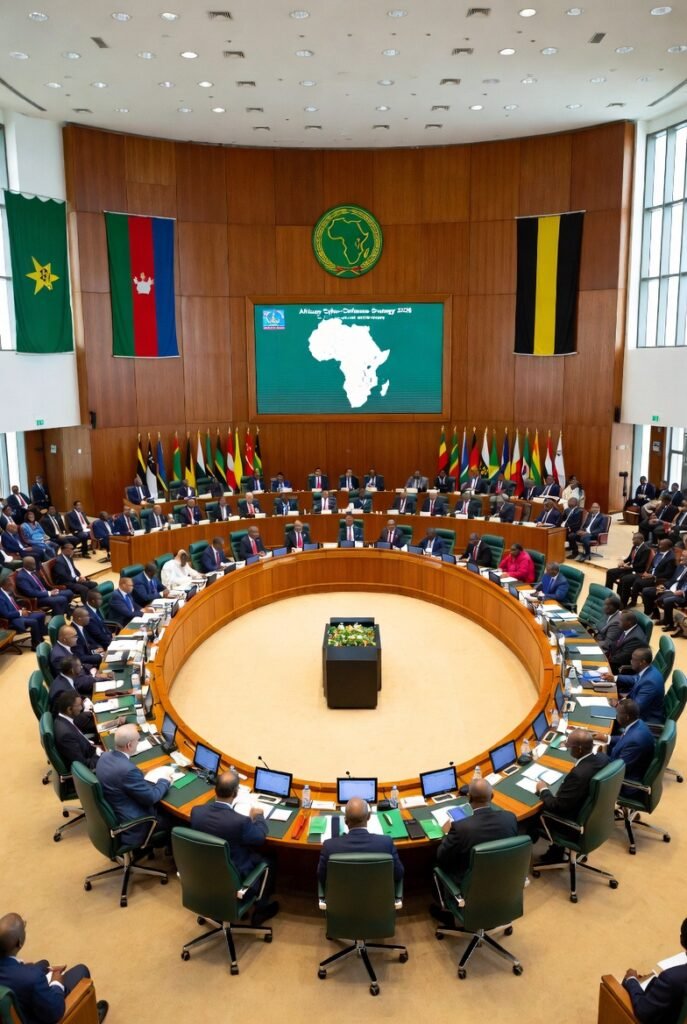
Perhaps no policy discussion is generating more debate across the continent than the proposed ‘Afri-Coin’ a pan-African central bank digital currency (CBDC) floated as a mechanism to facilitate cross-border trade within the African Continental Free Trade Area (AfCFTA) and reduce dependence on the US dollar.
As of March 2026, the proposal remains at the consultation stage. The African Union’s financial working group has commissioned feasibility studies, but significant disagreements remain between member states over monetary sovereignty, exchange rate mechanisms, and implementation timelines. Any continental CBDC would require an extraordinary level of political coordination that has historically proven difficult to sustain.
The idea is ambitious. Whether it becomes reality will depend on political will that transcends national self-interest a tall order on any continent.
Africa’s 2026 political shift carries implications far beyond the continent’s borders. The Green Mineral Alliance directly affects global clean energy supply chains. The data sovereignty movement challenges the business models of major US and Chinese technology firms. And the AfCFTA, if further strengthened by digital payment infrastructure, could become one of the world’s largest single trading blocs.
For investors, policymakers, and international organizations, the takeaway is clear: Africa is no longer a passive participant in global systems. The continent is increasingly setting terms rather than accepting them.
Staying informed on Africa governance reforms 2026 and economic cooperation updates is now essential for understanding the future of global growth.

The Africa political transformation 2026 is a structural realignment that will define governance challenges for the next fifty years. As cyber threats Africa politics continue to evolve, the political stability of the continent will depend on its ability to maintain regional alliances. Staying informed on Africa governance reforms 2026 and economic cooperation updates is now essential for understanding the future of global growth.
The events of early 2026 — the cyberattacks, the policy responses, the new alliances, and the governance reforms together represent a genuine inflection point. Africa’s political shift in 2026 is real, substantive, and ongoing.
It would be overly optimistic to suggest that the continent’s challenges inequality, institutional fragility, conflict have been resolved. They have not. But the direction of travel has changed. Africa is increasingly being defined by what it is building, not what it is recovering from. That is a story worth watching closely