
playstation plus june 2026 games
Thursday, May 20, 2026 Trusted by millions worldwide Back to News Tech PlayStation Plus Subscribers Are About to Lose Another...
Read More → Saturday, May 9, 2026
Trusted by millions worldwide
By Ali Aslam
Something has broken in Africa’s political architecture. The continent that spent decades rebuilding democratic institutions after the authoritarian era of the 1970s and 1980s now finds itself repeating a pattern it once believed it had outgrown.
Soldiers are back in power. Elections are being disrupted or discarded. And the international mechanisms designed to stop this slide are struggling to keep pace with a crisis that has taken on a momentum of its own.
In 2026, Africa’s political instability is not a series of isolated incidents. It is a continental reckoning.
The numbers tell a story that is difficult to dismiss.
Since 2020, nine African countries have had their militaries seize power with eleven instances of coups across those states. Twenty of Africa’s 54 national leaders have now come to power through coups or military actions, reprising the norm of military government many Africans thought they had long left behind. Africa Center That figure 20 out of 54 leaders is not a footnote. It is a structural shift in how power is held and transferred across the continent. Of the ten elections scheduled in Africa in the past year, only three were considered free and fair. Military interference continued as a dominant theme, with juntas attempting to consolidate earlier seizures of power through electoral exercises in Gabon and Guinea. A military coup in Guinea-Bissau preempted a long-delayed election, and another coup in Madagascar further undermined constitutionalism in that Indian Ocean island state. Africa Center This is democratic backsliding at scale. And the pace has not slowed.
No region captures Africa’s governance crisis more starkly than the Sahel. Mali, Burkina Faso, and Niger all now under military juntas have formed what they call the Alliance of Sahel States, a bloc built not on shared prosperity but on shared rejection of the democratic norms their governments overthrew.
Mali, Burkina Faso, and Niger did not experience fresh coups in 2025, but all three remained under military juntas that had seized power in earlier years. Their leaders deepened security cooperation, including joint anti-insurgency initiatives, while facing ongoing criticism over delayed transitions, shrinking civic space, and the absence of new electoral mandates. Africanews
The juntas have not merely postponed democracy. They have begun dismantling its foundations.
On January 29, 2026, the Burkinabe government led by military authority Captain Ibrahim Traore adopted a decree dissolving political parties and organizations in Burkina Faso, along with a draft law repealing the legislation governing their operation. Frontiers
In Mali, the trajectory is equally grim. In January 2026, the French-language magazine Jeune Afrique, the most widely read pan-African news weekly, was banned in Mali for publishing a report on military-linked atrocities following the magazine’s coverage of a jihadist siege of Bamako that caused severe fuel shortages and a nationwide surge in prices. GIS Reports
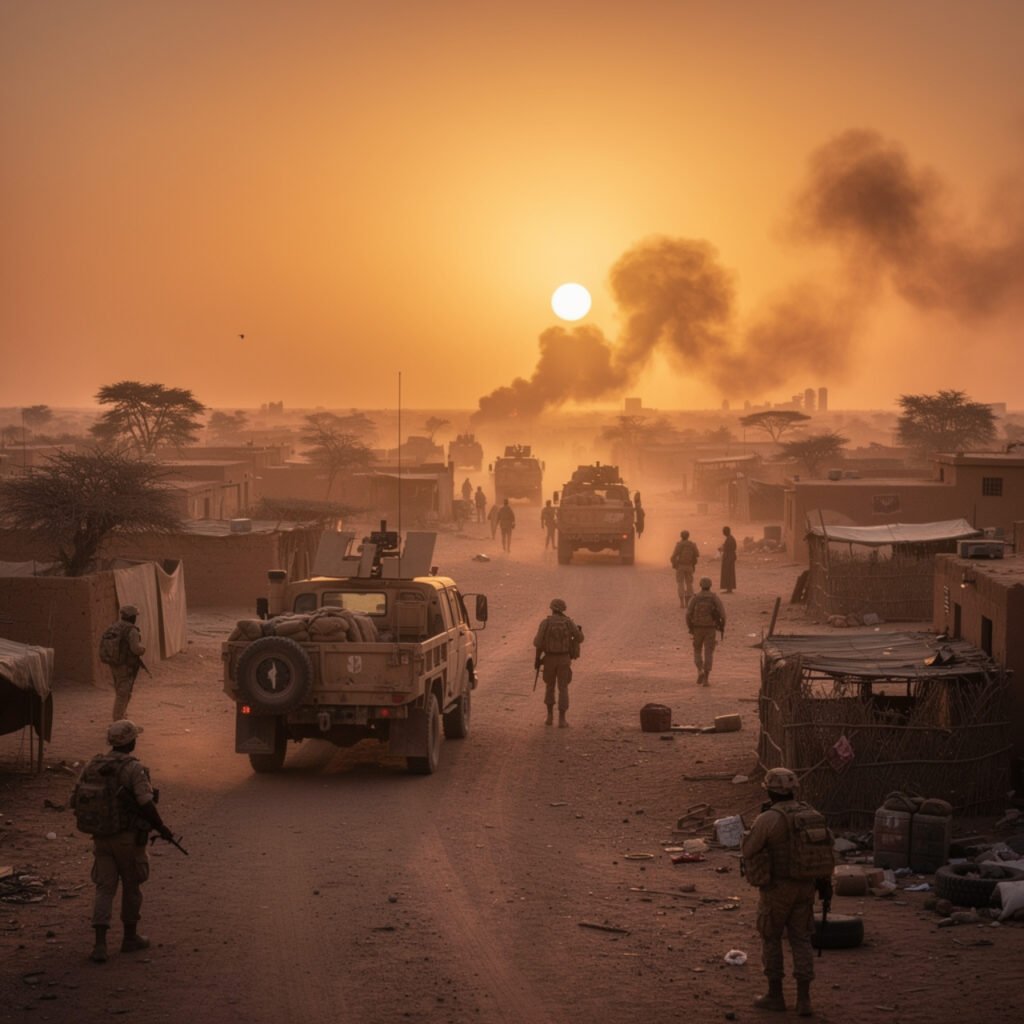
The juntas came to power promising security. The reality on the ground tells a different story.
Since September 2025, Jama’at Nusrat al-Islam wal-Muslimin, the most active jihadist coalition in Mali, has imposed a selective blockade of Mali’s capital Bamako, burning fuel trucks and imposing gender segregation in transport. Although the Malian Army with the help of an estimated 1,000 Russian combatants from the Africa Corps was able to secure convoys, access to fuel had still not fully resumed in Bamako in early 2026.
UN reports from the region observe that entire communities have been emptied in Burkina Faso, northern Mali, and western Niger as violence between armed groups, intercommunal clashes, and military activity spreads. Security Council Report
The coup leaders promised order. What followed was a deepening of the very chaos they claimed they came to fix.
The instability is no longer contained to the Sahel. It is spreading.
The military takeover in Guinea-Bissau on November 26, 2025, pushed Africa deeper into what is increasingly viewed as a renewed era of coups. Army officers referring to themselves as “The High Military Command for the Restoration of Order” announced they had ousted President Embaló a day before presidential election results were to be announced, suspended the electoral process, and closed the country’s borders. Punch
What made the Guinea-Bissau case particularly instructive was the allegation that the coup was engineered from within not by an opposition seeking to overthrow the president, but potentially by the president himself seeking to escape electoral defeat.
A group of military officers seized power and detained opposition figures, while President Umaro Sissoco Embaló temporarily left the country amid allegations that the crisis amounted to a self-coup intended to pre-empt electoral defeat. ECOWAS suspended Guinea-Bissau from its decision-making bodies during an emergency meeting. IPS Journal
Meanwhile, in the Indian Ocean, Madagascar’s military removed President Andry Rajoelina in October 2025 following weeks of protests, with Colonel Michael Randrianirina sworn in as leader and promising elections within 18 to 24 months. Punch
Even Benin long considered one of West Africa’s more stable democracies was not immune. In Benin, a group of soldiers briefly claimed to have overthrown the government in early December, using the national broadcaster to announce that President Patrice Talon had been deposed. Loyal forces quickly retook control and arrested the suspected ringleaders, describing the events as a failed coup attempt with no broad backing in the army. Africanews
The episode was contained. But the fact that it happened at all revealed how deeply the anxieties around military intervention have spread, even in countries that had seemed insulated from the regional trend.
No external actor has moved more aggressively to exploit Africa’s political instability than Russia. Its approach is disciplined, transactional, and increasingly entrenched.
Russia has supplanted the West in Burkina Faso, Mali, and Niger and formed a pro-Russian economic, military, and political bloc through the Alliance of Sahel States. This shift effectively resulted in the withdrawal of at least 4,300 French, 1,000 American, and 10,000 UN troops, and the arrival of roughly 2,500 Russian personnel across the three countries between 2022 and 2024. Critical Threats
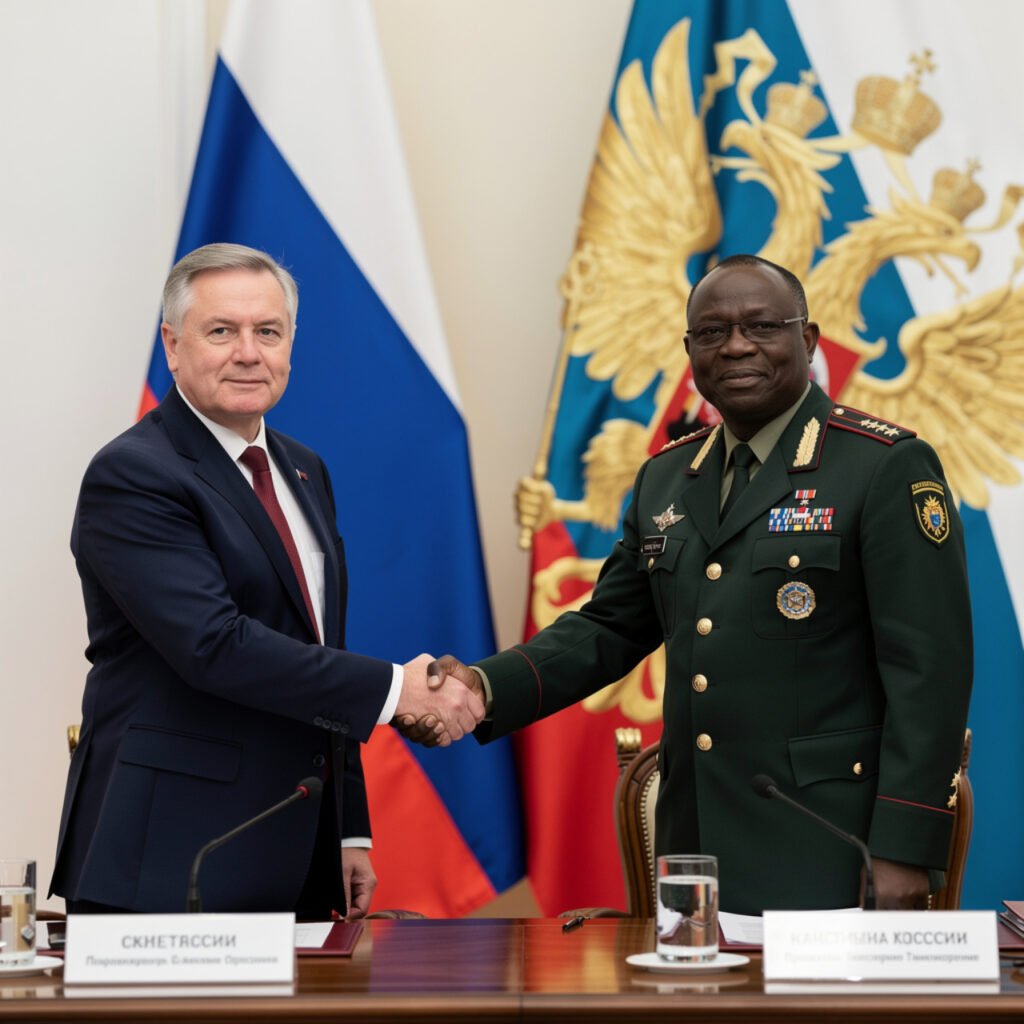
The arrangement goes beyond security. On June 23, 2025, Mali and Russia signed three cooperation agreements covering economic and commercial collaboration, civil nuclear energy development in partnership with Rosatom, and expanded security cooperation focused on combating terrorism and organized crime. GIS Reports
Moscow is also expanding its diplomatic footprint aggressively. By 2026, Russia plans to open embassies in Gambia, Liberia, Comoros, Niger, Sierra Leone, Togo, and South Sudan — cementing its influence in regions where Western presence is fading. Russia is also Africa’s top arms supplier, accounting for 40 percent of the continent’s weapon imports. The National Interest
Russia has further ratcheted up its information warfare in the Sahel, using a highly coordinated campaign to foster disillusionment and encourage additional military coups in coastal West African countries. Africa Center
China’s relationship with the new junta governments is more complicated than often assumed. Beijing has invested heavily in African infrastructure and resource extraction, but the juntas in their rhetoric of sovereignty have increasingly turned that lens on Chinese operations as well.
Niger’s military junta expelled three Chinese oil executives in March 2025, reportedly due to disputes over wage disparities for local Nigerien staff and delays in Chinese-led oil projects. The Nigerien Ministry of Tourism also revoked the license of a Chinese-operated hotel. Separately, Malian Prime Minister General Abdoulaye Maiga summoned the Chinese Ambassador to address illegal Chinese mining operations and their environmental and social consequences. Critical Threats
The juntas want sovereignty and that demand does not always come with exceptions for Beijing.
The African Union has a formal policy of zero tolerance for unconstitutional changes of government. In practice, that policy has been systematically undermined by its own responses.
Since 2020, there have been eleven instances of coups in nine African states. Of the eight countries that were suspended from the AU, seven remain under suspension. The AU’s anti-coup framework was designed to make military takeovers unprofitable but a pattern of leniency has emerged where coup leaders who move quickly toward elections are effectively forgiven. Amani Africa
The lesson for militaries and political elites watching from elsewhere is simple: the risks of staging a coup are decreasing. The stigma of a coup-maker can be rectified by holding elections, as in Gabon. The norm survives in the legal text while being erased in concrete decisions, with the policy of zero tolerance becoming more a comforting narrative than a binding commitment. Amani Africa
ECOWAS has imposed sanctions, issued ultimatums, and threatened military force. None of it has reversed a single coup.
ECOWAS’s record reflects both resolve and rigidity. Condemning coups is essential, but relying primarily on sanctions and military threats has yielded limited results. The bloc needs a more strategic and inclusive approach that addresses the political conditions enabling repeated breakdowns of democratic order. IPS Journal
The sanctions problem is real. When ECOWAS imposed penalties on Niger after its 2023 coup, the economic pain fell on ordinary citizens the same people the policy was ostensibly designed to protect. The junta did not blink.
Behind the geopolitical maneuvering, millions of ordinary Africans are paying the price of this instability with their livelihoods and their safety.
When a coup is successful, financial resources dwindle with the suspension of international institutions, making it impossible to access funding for humanitarian programs or support for elections. Development funding, which promotes economic development and improves living conditions, is disrupted precisely when it is most needed. Frontiers
The security situation of several countries in West Africa and the Sahel continues to deteriorate significantly as terrorist groups continue to expand their influence. There has been a marked increase in attacks by armed groups and terrorists in Burkina Faso, Mali, and Niger, with jihadist groups achieving a new level of operational capability, including the use of drones, improvised explosive devices, and large-scale assaults on well-defended military installations. Security Council Report
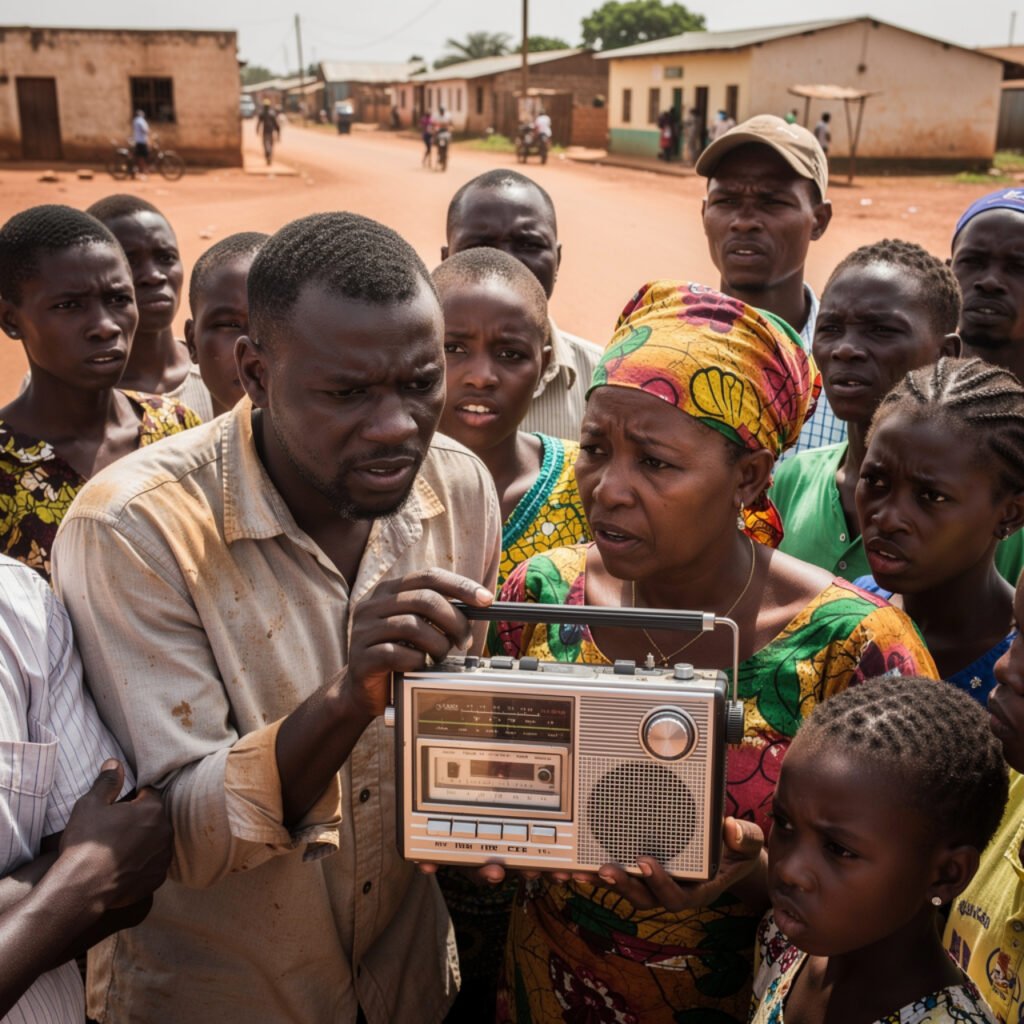
The humanitarian numbers are staggering. Communities emptied. Supply routes blocked. Schools closed. Fuel cut off. This is what governance failure looks like when it reaches the ground.
Africa must navigate a complex electoral landscape in 2026 including entrenched incumbents, growing youth restiveness, active conflicts, and external actor influences if citizens’ voices are to be heard. Youth restiveness in particular represents a pressure point that cuts both ways: it can drive legitimate democratic demands or be channeled toward support for military takeovers marketed as revolutionary change. Centre d’Études Stratégiques de l’Afrique
With Russia, China, Turkey, and Gulf states deepening ties with the Sahel, the short- and medium-term prospects for democratization in the region appear bleak even more so because the United States has provided only limited support for democracy promotion, and its strategic ambivalence has allowed competitors to gain momentum. LSE
The path back is not impossible. But it requires something that has been in short supply: consistent, principled pressure from regional institutions, genuine investment in governance rather than just security, and a willingness from international actors to put the interests of African citizens ahead of their own strategic calculations.
Africa’s political instability in 2026 is the product of decades of unresolved tensions between governance and security, between sovereignty and accountability, between the promises of democracy and the grinding failures of its implementation.
The military coups spreading from the Sahel to coastal West Africa and the Indian Ocean are not random. They are responses, however destructive, to real institutional failures: corruption that went unchecked, security crises that went unresolved, and elections that were credible in form but hollow in substance.
What is equally clear is that the cure being offered military rule, suspended constitutions, dissolved political parties, and Russian security partnerships is not solving the underlying problems. In most cases, it is deepening them.
Africa’s power shift is real. Whether it becomes a permanent reversal of democratic progress or a painful inflection point that ultimately strengthens institutional resilience depends on decisions being made right now in Bamako and Ouagadougou, in Addis Ababa and Abuja, and in the capitals of every country that claims to care about this continent’s future.
The continent is watching. So is the world.
Frontier Affairs covers global security, geopolitics, and international affairs. All reporting is based on verified government sources, credible defense analysis institutions, and official regional body statements.