
playstation plus june 2026 games
Thursday, May 20, 2026 Trusted by millions worldwide Back to News Tech PlayStation Plus Subscribers Are About to Lose Another...
Read More → Wednesday, May 13, 2026
Trusted by millions worldwide
By Mavia Fazal
Walmart Layoffs 2026 Right now, financial markets are processing some remarks from JPMorgan Chase CEO Jamie Dimon about the proposed bank tax policies in the UK. This adds yet another layer of uncertainty for investors who are keeping a close eye on global financial regulations. These developments really underscore a growing trend in 2026: both companies and governments are adapting to an economic landscape marked by slower growth, tighter profit margins, and heightened political scrutiny.
Right now, financial markets are processing some remarks from JPMorgan Chase CEO Jamie Dimon about the proposed bank tax policies in the UK. This adds yet another layer of uncertainty for investors who are keeping a close eye on global financial regulations. These developments really underscore a growing trend in 2026: both companies and governments are adapting to an economic landscape marked by slower growth, tighter profit margins, and heightened political scrutiny.
The announcement surrounding Walmart Layoffs 2026 has drawn significant attention because Walmart is widely viewed as a key indicator of consumer behavior in the United States.
As the largest retailer in the world, Walmart’s hiring and restructuring decisions are often interpreted as a reflection of broader economic conditions. When the company reduces its workforce, analysts typically see it as a signal of cost pressure, shifting demand, or operational restructuring.
Retail analysts note that while layoffs are not unusual for large corporations, the timing of this move raises concerns about consumer demand stability heading into the next fiscal cycle.
Walmart has been investing heavily in supply chain automation and e-commerce infrastructure in recent years, which has also reduced the need for certain traditional in-store and warehouse roles.Retail employment is closely tied to consumer spending, which accounts for a significant portion of US GDP. Any slowdown in hiring or increase in layoffs across major retailers can signal weakening demand or cautious corporate expectations.However, some analysts argue that restructuring may also reflect efficiency gains rather than economic decline. In this view, companies like Walmart are adapting to long-term digital transformation rather than reacting to short-term downturns.

While Walmart’s big announcement was the talk of the retail world, the financial markets were also buzzing with comments from JPMorgan CEO Jamie Dimon about proposed banking taxes in the UK. Dimon cautioned that raising taxes on banks could have a ripple effect, impacting lending, investment flows, and the overall competitiveness of the UK financial sector. His comments added fuel to an ongoing debate in Europe about how governments can strike a balance between generating revenue and ensuring financial stability. Analysts in the banking sector point out that higher taxes on financial institutions can sometimes lead to: A decrease in lending capacity – Reduced investment in local markets – The potential relocation of financial services Increased borrowing costs for businesses Despite this, the UK government maintains that large financial institutions should step up and contribute more during tough economic times. This disagreement highlights a larger global trend where governments are looking into new taxation strategies to tackle budget deficits, while financial leaders express concerns about the long-term risks to competitiveness.
Combined, the Walmart restructuring news and UK banking tax debate have contributed to a more cautious tone in global markets.
Retail stocks experienced mild volatility following the Walmart announcement, while banking stocks in Europe saw mixed reactions depending on exposure to UK operations.
Market analysts say that uncertainty around consumer spending remains one of the biggest risk factors for equity markets in 2026.
If large retailers begin reducing workforce levels more aggressively, it could signal reduced confidence in near-term demand.
A major underlying factor in Walmart Layoffs 2026 is the continued expansion of automation in retail operations.
Self-checkout systems, warehouse robotics, and AI-driven inventory management have significantly changed how large retailers operate. While these technologies improve efficiency and reduce costs, they also reduce demand for certain types of labor.This transition is expected to continue as companies invest more in artificial intelligence and automation tools to remain competitive.
While not necessarily signaling a recession, these trends indicate a more cautious corporate outlook across multiple sectors.
For investors, the key question is whether these changes represent temporary adjustments or the beginning of a longer-term restructuring phase in global labor and financial markets.
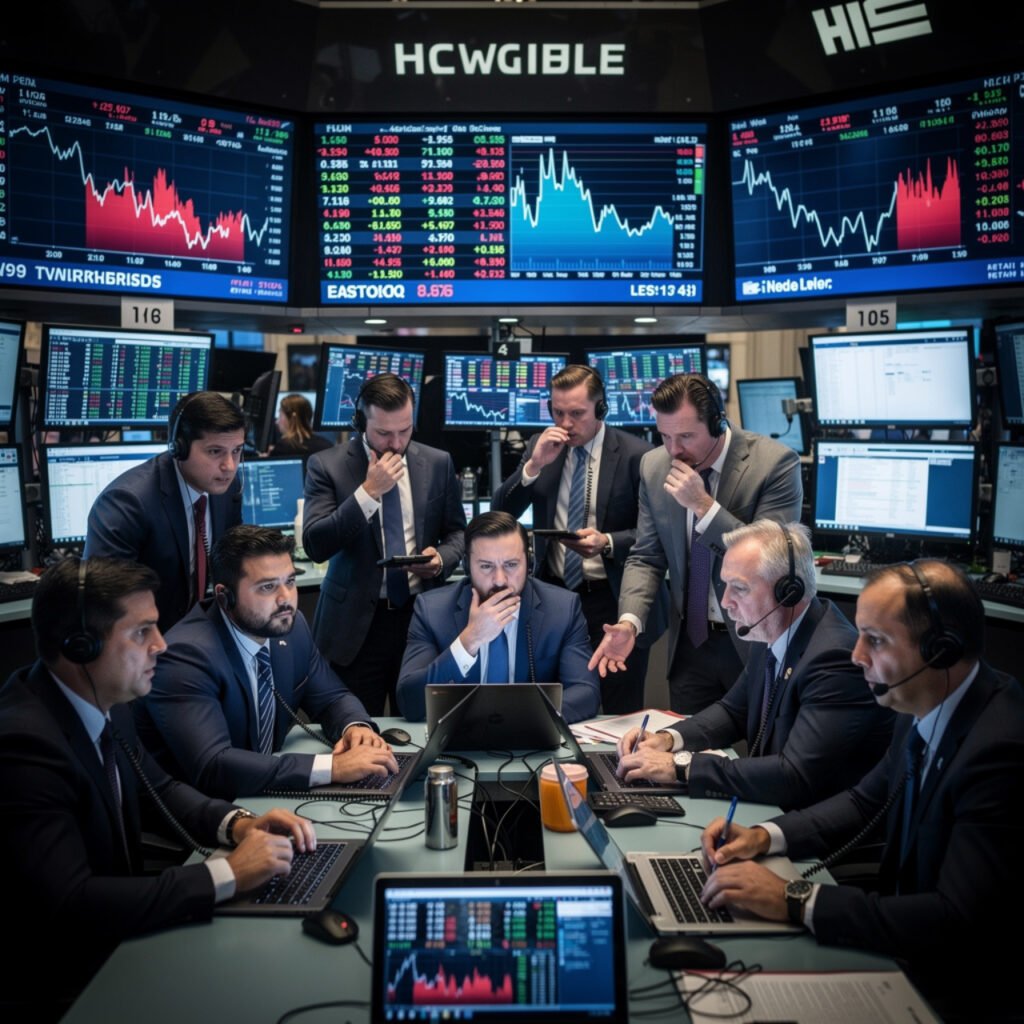
Jamie Dimon’s comments on UK banking taxes also highlight growing friction between governments and financial institutions.
Supporters of higher taxes argue that large banks benefit significantly from government-backed financial systems and should contribute more during economic uncertainty.
Opponents, including many financial executives, warn that excessive taxation could weaken investment competitiveness and reduce financial sector growth.Markets are closely watching how policymakers respond to these concerns in upcoming fiscal discussions.
The announcement around Walmart Layoffs 2026 is being closely watched by investors because it reflects more than just internal restructuring it signals a wider shift in the retail economy. As inflation pressures, higher operating costs, and changing consumer habits continue to reshape spending patterns, large retailers are under pressure to streamline operations and invest more heavily in automation and e-commerce systems.
Economists say these layoffs could be an early warning sign of softer consumer demand heading into the next financial cycle. Since Walmart is often seen as a barometer of household spending in the United States, any reduction in workforce or cost-cutting measures tends to raise concerns about whether shoppers are pulling back on non-essential purchases.The combination of retail layoffs and banking policy uncertainty reflects a broader global economic transition.

Right now, financial markets are reacting to some fresh remarks from JPMorgan CEO Jamie Dimon about the proposed bank taxes in the UK. He’s raised concerns that these taxes could impact lending capacity and investment activity. This debate really underscores the growing tension between governments looking to boost tax revenue and financial institutions worried about staying competitive in the long run. Alongside the Walmart layoffs expected in 2026, these developments are creating a bit of uncertainty in global markets. Investors are keeping a close eye on both retail performance and changes in banking policies, as both sectors are crucial in shaping overall economic confidence as we head into 2026.
The announcement of Walmart’s layoffs in 2026, along with the ongoing discussions about banking taxes in the UK, really underscores just how interconnected our global economy has become. Decisions made in U.S. retail and the financial policies being debated in Europe are both influencing how investors feel and what they expect from the market. As companies adjust to automation, face cost pressures, and respond to shifting consumer habits, while governments look into new fiscal strategies, it seems like 2026 is gearing up to be a crucial year for global markets. For now, investors are keeping a close eye on things, trying to figure out if these changes are just temporary tweaks or if they signal a more profound shift in the way the global economy functions.