
playstation plus june 2026 games
Thursday, May 20, 2026 Trusted by millions worldwide Back to News Tech PlayStation Plus Subscribers Are About to Lose Another...
Read More → Saturday, May 9, 2026
Trusted by millions worldwide
By Ali Aslam
Iran U.S. tensions Strait of Hormuz There are moments in geopolitics when a narrow strip of water can hold the entire world economy hostage. In the spring of 2026, that moment arrived and its consequences are still unfolding.
The Strait of Hormuz, a chokepoint barely 33 kilometers wide at its narrowest point, became the most dangerous waterway on earth. Not because of a sudden accident or a miscalculation at sea, but because of a deliberate, calculated decision by Tehran to shut it down entirely and a parallel U.S.–Israeli military campaign that made it happen.
The result is what the International Energy Agency has called the greatest global energy security challenge in history.
The road to this crisis was not short, and it was not invisible. For years, analysts warned that the fragile diplomatic equilibrium between Washington and Tehran was approaching collapse. Failed nuclear negotiations in Geneva, an escalating Israeli campaign against Iranian proxies, and the collapse of the JCPOA’s last remaining frameworks had left the two sides with few tools for de-escalation short of direct confrontation.
That confrontation came on February 28, 2026.
On that date, Israel and the United States began a series of strikes against Iran under an operation aimed at inducing regime change and targeting Iran’s nuclear and ballistic missile infrastructure. Iran’s Supreme Leader Ali Khamenei was killed in the strikes. Iran appointed his son as successor and launched a series of counter-strikes against Israel, U.S. military bases in the region, and military and civilian locations in Arab states. Crisis Group
One of those counter-actions would reverberate across global energy markets for months.
On March 4, Iran announced that the Strait of Hormuz was “closed” and threatened to attack any ship attempting to pass through it. missiledefenseadvocacy
That single declaration set off a chain of consequences the world had long feared but never fully planned for.
To understand why Iran’s closure triggered a global crisis, you need to understand exactly what the Strait of Hormuz carries.
The Strait of Hormuz is the world’s most critical oil chokepoint. The curved waterway lies between Iran to the north and Oman and the United Arab Emirates to the south, roughly 50 kilometers wide at its entrance and narrowing to about 33 kilometers at its tightest point. It forms the only maritime link between the Gulf and the Arabian Sea, and despite its narrow width, accommodates the world’s largest crude carriers. Frontiers
Iran’s closure of the Strait of Hormuz disrupted 20 percent of global oil supplies and significant volumes of liquefied natural gas. The IEA characterized the disruption as the largest supply disruption in the history of the global oil market. FDD
In 2024, an estimated 84 percent of crude oil and condensate shipments through the strait were destined for Asian markets, with China receiving a third of its oil via the strait. Europe gets 12 to 14 percent of its LNG from Qatar through the strait. The Persian Gulf also accounts for roughly 30 to 35 percent of global urea exports and around 20 to 30 percent of ammonia exports. missiledefenseadvocacy
The closure did not just affect oil. It struck food. It struck fertilizers. It struck the entire industrial supply chain that powers modern civilization.
Markets moved fast. And they moved hard.
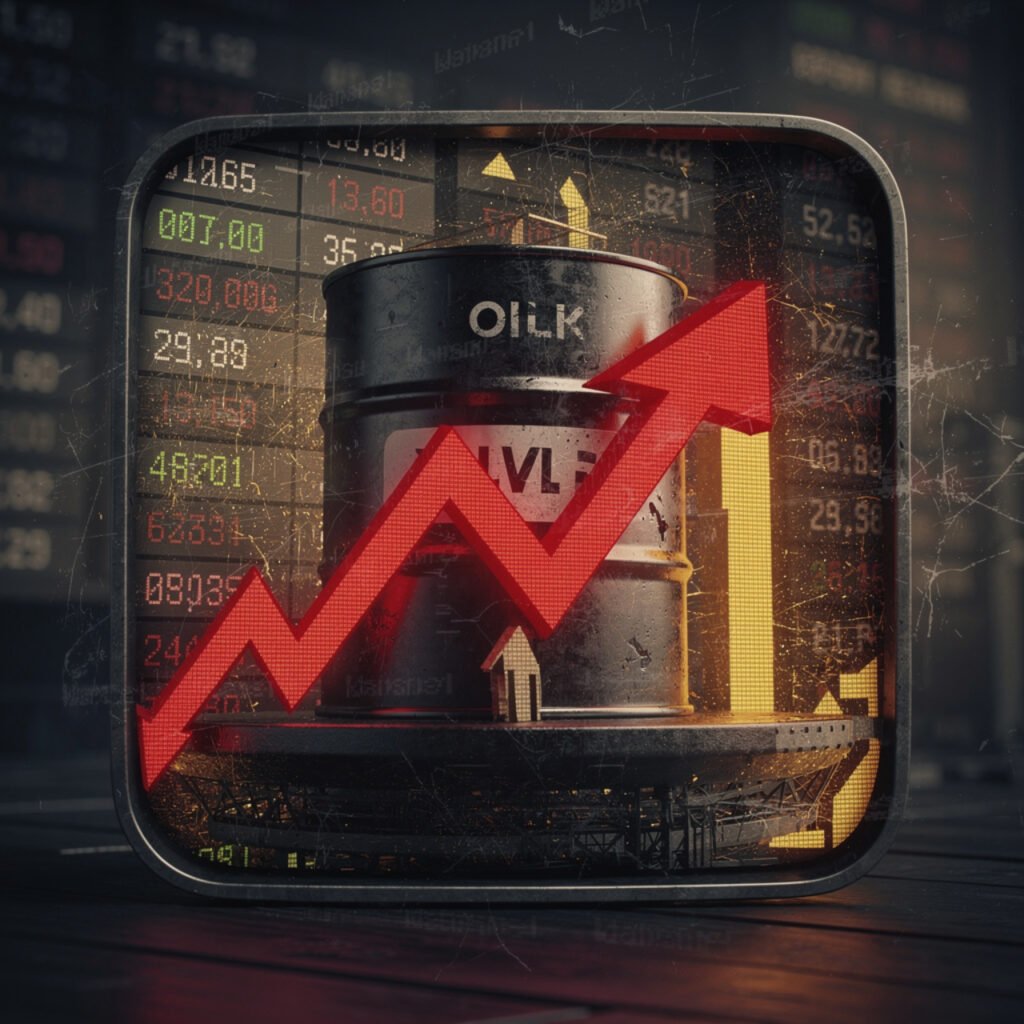
Amid fears of prolonged supply shortages, oil prices rose faster than during any other conflict in recent history. Brent crude oil prices surpassed $100 per barrel on March 8 for the first time in four years, rising to $126 per barrel at their peak. The largest-ever monthly increase in oil prices occurred in March 2026. missiledefenseadvocacy
By the end of March, the Brent price had increased by about 65 percent approximately $46 per barrel to record its highest monthly rise ever, amid pronounced volatility. Prices eased somewhat in early April after the announcement of a temporary ceasefire. China Daily
The ripple effects reached every continent within days.
Europe faced a second energy crisis, primarily as a result of the suspension of Qatari liquefied natural gas and the closure of the Strait. The conflict coincided with historically low European gas storage levels estimated at just 30 percent capacity following a harsh 2025–2026 winter causing Dutch TTF gas benchmarks to nearly double to over €60 per MWh by mid-March. South China Morning Post
Global oil consumption fell by 0.8 million barrels per day year-on-year in March due to increased disruptions in the Middle East and the consequent rise in prices. Demand fell by another 1.5 million barrels per day in the second quarter of 2026, with advanced economies, Asia, and the Middle East among the hardest hit. South China Morning Post
Asia bore the sharpest immediate pain. Almost half of India’s crude oil imports and about 60 percent of its natural gas supplies move through the Strait of Hormuz. China, India, Japan and South Korea together accounted for a combined 69 percent of all crude oil and condensate flows through the strait. Frontiers
The Philippines, which imports 98 percent of its oil from the Middle East, declared a state of national energy emergency on March 24, 2026 the first country to do so. Reports of panic buying hit Australia, with experts warning that increased diesel costs would cascade into dramatically higher food prices. FDD
Iran’s closure of the Strait was not merely a declaration. It was enforced with lethal seriousness.
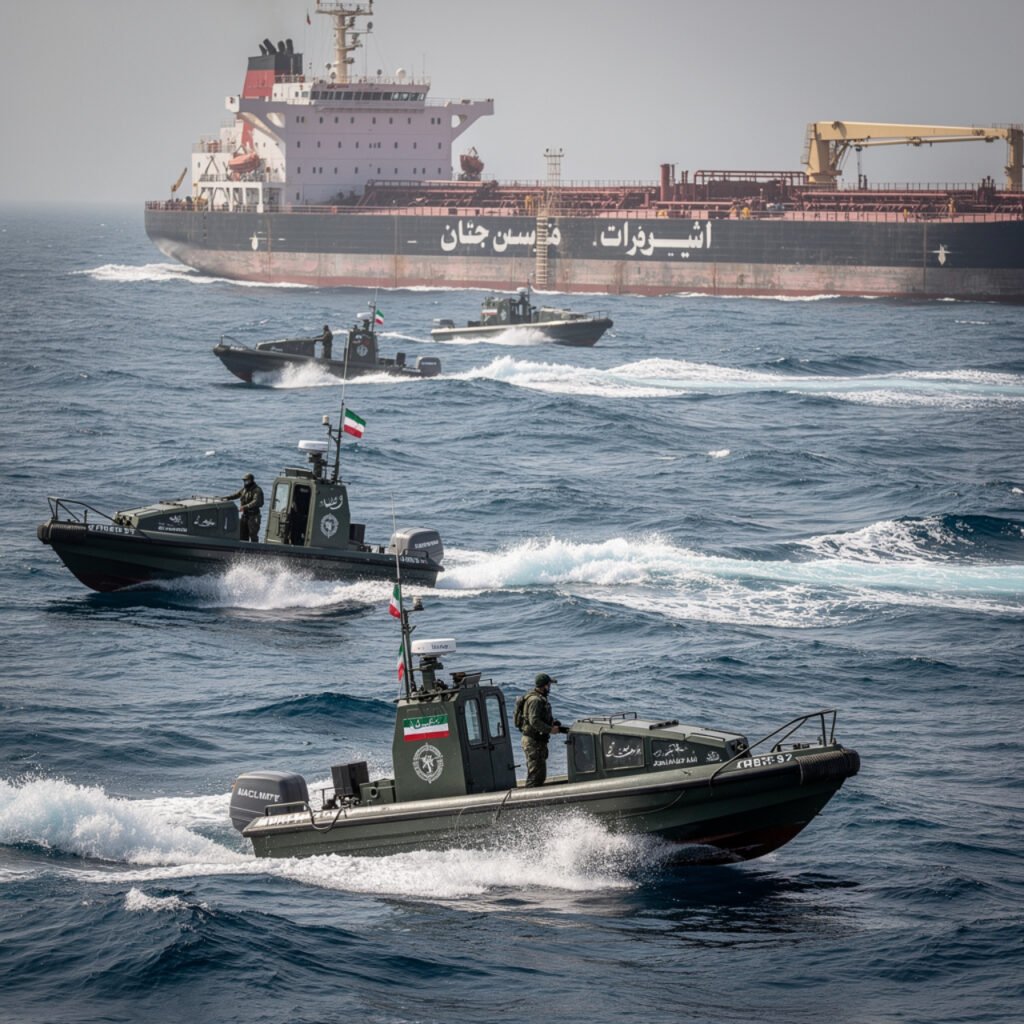
Beginning on March 4, Iranian forces declared the Strait closed, threatening and carrying out attacks on ships attempting to transit it. The UK Maritime Trade Operations Centre reported 10 attacks on ships as of March 8, 2026. The attacks killed five crew members on two vessels. missiledefenseadvocacy
Iran seized a Marshall Islands-flagged oil tanker sailing from the UAE to Singapore in the Strait. The IRGC confirmed the closure, with the U.S.-flagged Stena Imperative struck twice at the port of Bahrain, causing a fire that killed one port worker and injured two others. Modern Diplomacy
Since a ceasefire was announced, Iran fired at commercial vessels nine times and seized two container ships, and attacked U.S. forces more than ten times all below the threshold for restarting full conflict, according to the Chairman of the Joint Chiefs of Staff. Modern Diplomacy
Tehran’s decision to close Hormuz reflects a doctrine it has refined over decades. Conventional military parity with the United States is impossible. But economic leverage through a single geographic chokepoint that is a weapon no adversary can easily neutralize.
Iran has two parallel militaries: the regular Artesh military and the Islamic Revolutionary Guard Corps, which has a more ideological character and direct role in regime security. In a 2007 reorganization, the IRGCN was assigned sole responsibility for the Persian Gulf, while the two forces share responsibility for the Strait of Hormuz itself giving the IRGC dominant operational control over the world’s most critical energy corridor. missiledefenseadvocacy
The IRGC did not just close the strait. It weaponized geography itself.
Washington was not passive in the face of Iran’s escalation. But its response was constrained by the same calculus Tehran understood well the risk of turning a regional war into something wider.
On April 13, the U.S. launched a counter-blockade of the Strait, targeting all ships seeking to reach Iranian ports. U.S. Central Command reported that 39 vessels had been redirected to ensure compliance with the blockade. Crisis Group
Defense Secretary Pete Hegseth stated that U.S. forces preferred a peaceful effort to guide the more than 22,500 mariners stuck on more than 1,550 vessels out of the Gulf, calling it a “temporary mission.” Modern Diplomacy
On March 22, Trump threatened to obliterate Iranian power plants if the strait was not fully opened within 48 hours. On March 15, he called on NATO members and China to help reopen the strait. In late March and early April, Trump repeatedly threatened to destroy Iran’s infrastructure if shipping did not resume. missiledefenseadvocacy
The threats were real. But the logistics of restoring free passage through waters actively patrolled by IRGC forces without triggering a broader war had no easy answer.
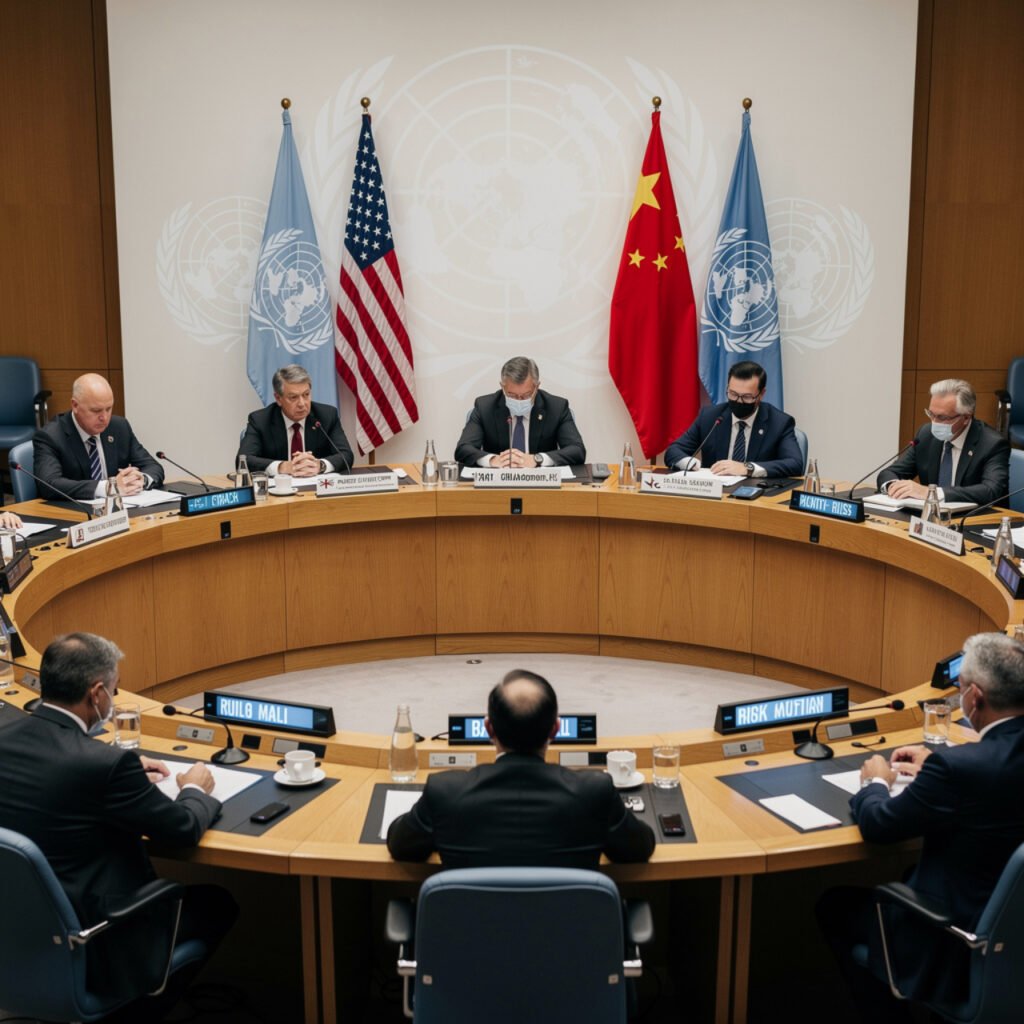
At the United Nations, the world’s diplomatic architecture failed its first major test of the crisis.
On April 7, China and Russia vetoed a draft resolution on the Strait of Hormuz. The Bahraini-drafted resolution called for an end to Iranian attacks and for states to coordinate defensive efforts for shipping access, including escorts for vessels. China called for freedom of navigation in the strait to be guaranteed as a shared call of the international community while simultaneously blocking the mechanism to enforce it. Crisis Group
The contradiction was pointed. Beijing is one of the largest recipients of Gulf oil through Hormuz. Its veto protected a status quo that was actively harming its own energy security a decision driven by strategic calculation rather than economic logic.
With direct negotiations stalled and military pressure escalating, a ceasefire framework emerged brokered not by a major power but by Pakistan.
The reopening of the strait became a major issue in Pakistan-mediated talks, with Iran threatening military action if the U.S. blockade did not end. The UK and France hosted two conferences on reopening Hormuz, exploring potential sanctions, diplomatic initiatives, and insurance provision for ships. A conditional ceasefire was announced on April 8 and later extended while negotiations continued. Crisis Group
A senior Iranian military official indicated that allowing the smooth transit of commercial ships would be on the agenda after the end of the war, provided that protocols that did not jeopardize Iran’s security were observed a formulation that suggested continued leverage rather than genuine resolution. Modern Diplomacy
Beyond oil and gas, the Strait’s closure triggered a crisis that most energy analysts had not fully anticipated and whose consequences will unfold for years.
Up to 30 percent of internationally traded fertilizers normally transit the Strait of Hormuz. The LNG disruption also impacted fertilizer production, affecting agriculture in the Northern Hemisphere. Global fertilizer prices could average 15 to 20 percent higher during the first half of 2026 if the crisis continues. The price shock and the fertilizer shortage during the spring planting season could reduce yields of corn in the United States and potentially increase global food prices into 2027. missiledefenseadvocacy
The UN World Food Programme warned that supply disruptions are driving long-term increases in global food prices, threatening a scenario similar to the 2022 food crisis. Nitrogen fertilizer prices could roughly double from 2024 levels. The crisis also constrained the supply of helium, crucial for semiconductor manufacturing. South China Morning Post
Food and microchips. The ripples from a 33-kilometer waterway have reached every corner of the global economy.
Even after Iran and the United States announced a ceasefire on April 8, ship traffic through the Strait of Hormuz remained far below pre-war levels. Since then, oil price movements have reflected uncertainty about the outcome of ongoing negotiations to end the conflict and restore regional oil flows. A blockade of vessels entering or leaving Iranian ports continues. FDD
Global oil output is expected to fall by 6.9 million barrels per day a decline of 6.6 percent year-on-year in the second quarter of 2026, recording its largest quarterly decline since the COVID-19 pandemic. China Daily
The crisis has accelerated a debate that was already underway in capitals across Asia, Europe, and the Americas: the catastrophic risk of concentrated energy dependency on a single geographic chokepoint.
For decades, the assumption was that the Strait of Hormuz was too strategically important to ever truly close. That assumption is no longer operational. Iran closed it. The economic damage is confirmed. The world is now planning around a reality it previously dismissed as theoretical.
The Iran–U.S. tensions in the Strait of Hormuz have produced what may be the most consequential energy crisis since the 1970s oil embargo. The closure of that narrow waterway enforced through naval attacks, tanker seizures, and credible threats of escalation disrupted 20 percent of the world’s oil supply and cascaded into food markets, fertilizer shortages, aviation fuel crises, and economic instability from Manila to Brussels.
The ceasefire holds barely. Shipping traffic remains a fraction of pre-conflict levels. The U.S. counter-blockade is adding complexity to negotiations. And Iran, despite losing its Supreme Leader, has demonstrated that it retains both the will and the capacity to weaponize the world’s most critical oil chokepoint.
For policymakers, this crisis has answered a question that was previously theoretical: what happens if Hormuz actually closes? The answer is a global inflation shock, a food security emergency, and a geopolitical realignment that no one fully controlled and no one has fully resolved.
The Strait is technically open. The crisis is not over. And the world has learned, at enormous cost, that no chokepoint should be this important to this many people for this long without a serious plan for the day it closes.
That day has come. The plan is still being written.
Frontier Affairs covers global security, geopolitics, and international affairs. All reporting is based on verified government sources, congressional research, international energy agency data, and credible diplomatic analysis.