playstation plus june 2026 games
Thursday, May 20, 2026 Trusted by millions worldwide Back to News Tech PlayStation Plus Subscribers Are About to Lose Another...
Read More → Saturday, My 9, 2026
Trusted by millions worldwide
By Mavia Fazal
Pete Hoekstra Canadian Politics In a diplomatic relationship already strained by tariffs, annexation rhetoric, and mutual public frustration, Hoekstra has become the most visible and most controversial American official in Canadian political life. Understanding why requires understanding the man, his mission, and the increasingly combustible bilateral relationship he was sent to manage.
Pete Hoekstra Canadian Politics He called Canada’s election campaign anti-American. He described Trump’s annexation threats as a term of endearment. He warned that CUSMA negotiations would grind on well into 2027. And then, just one hour before a headline appearance at Ottawa’s biggest conservative conference, he cancelled and flew back to Washington without explanation.
Pete Hoekstra, the United States Ambassador to Canada, has developed a remarkable talent for generating headlines north of the border and not always for reasons that please his hosts.
In a diplomatic relationship already strained by tariffs, annexation rhetoric, and mutual public frustration, Hoekstra has become the most visible and most controversial American official in Canadian political life. Understanding why requires understanding the man, his mission, and the increasingly combustible bilateral relationship he was sent to manage.
Before arriving in Ottawa, Pete Hoekstra had already lived a full political life one that reflects both his usefulness to the Trump administration and some of the tensions his style creates.
Born Cornelis Piet Hoekstra in Groningen, Netherlands, he moved to the United States with his parents at age three and Anglicised his name to Peter Hoekstra. He served in the U.S. House of Representatives from Michigan for many years and was listed as a contributor to Project 2025. In his first Trump-era appointment, he served as U.S. Ambassador to the Netherlands from 2018 to 2021, a tenure that drew controversy when he falsely claimed that politicians and cars were being set on fire in the Netherlands due to radical Islam and then denied making those claims to a Dutch journalist, before the clip was played back in the same interview. KSL
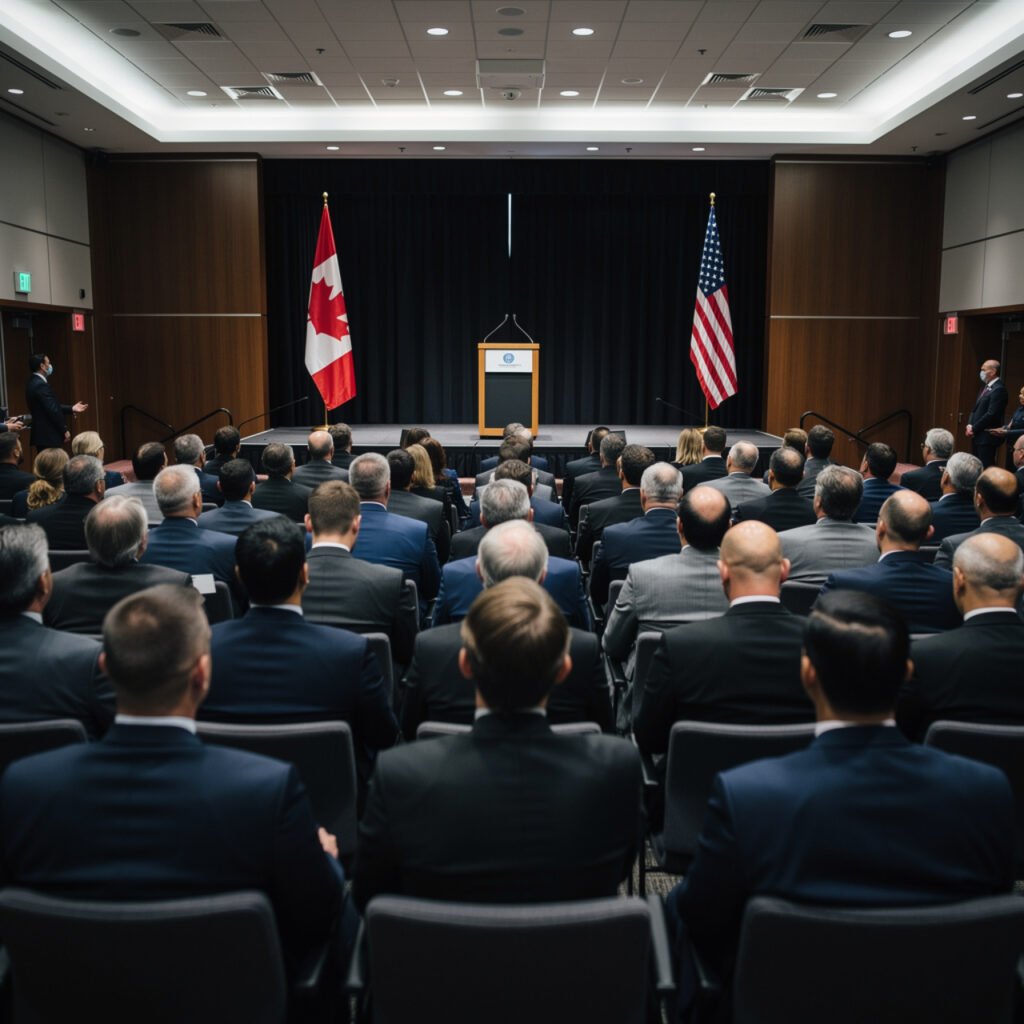
His return to the ambassadorial stage came in November 2024 when Trump nominated him as U.S. Ambassador to Canada for the second Trump administration. He was confirmed by the U.S. Senate on April 9, 2025, assuming the role at a moment when traditional close ties between the two countries had already been strained by Trump’s tariff policy and comments about annexation. Stocktwits
At his confirmation hearing, Hoekstra attempted to distance himself from the most provocative Trumpian rhetoric directed at Canada. When asked directly whether he agreed that Canada is a sovereign state and should not be referred to, even jokingly, as the 51st state, Hoekstra replied, “Canada is a sovereign state, yes.” It was a statement of the obvious. The fact that it needed to be said at all told Canadians almost everything about the diplomatic environment he was walking into. Stocktwits
Hoekstra arrived in Canada in April 2025 and wasted very little time making himself noticed.
By September, he was at the Halifax Chamber of Commerce delivering remarks that sent shockwaves through Canadian political media. He said he was disappointed that he came to Canada and found it very, very difficult to find Canadians who are passionate about the American-Canadian relationship. He criticised the Canadian federal election campaign directly, saying it was anti-American and that the sentiment had continued after the vote. St. George News
The “elbows up” reference was pointed. The phrase had become a rallying cry for Canadian national pride in response to Trump’s tariff threats and annexation comments Canadians literally raising their elbows at hockey games and public events as a symbol of defiant sovereignty. Hoekstra dismissed it as anti-American campaigning.
He also called out Finance Minister François-Philippe Champagne by name for describing the Canada-U.S. relationship as a trade war, saying it was a dangerous place to go. Hoekstra insisted that if Canada was really in a trade war with the U.S., the country would know it. St. George News
The comments landed with a thud. Canadian politicians across party lines pushed back. Public polling at the time showed anti-American sentiment in Canada near historic highs driven not by ideology but by a genuine sense of national grievance over tariffs and the 51st state rhetoric. Telling Canadians they were being too emotional about threats to their sovereignty was not a message designed to calm waters.
If the Halifax remarks stung, it was a subsequent comment that became truly unforgettable in Canadian political conversation.
When pressed about Trump’s repeated statements about annexing Canada and making it the 51st state rhetoric the president had maintained even after Mark Carney became prime minister Hoekstra said Trump’s words could be taken as a term of endearment. HotHardware
The reaction in Canada ranged from disbelief to outrage. Describing a foreign leader’s repeated assertions that your country should cease to exist as a sovereign state as affectionate teasing is an unusual diplomatic posture under any circumstances. In a country where national sovereignty had become a genuinely emotional political issue, it landed particularly poorly.
Hoekstra later tried to contextualise the remark, saying he goes around Canada and people tell him he just does not understand why they are so mad about the 51st state, and that they are right, he does not. The candour was at least honest. But it also revealed a fundamental gap in understanding between how the Trump administration views its relationship with Canada and how Canadians themselves experience that relationship. Built In
The CUSMA Warning That Rattled Ottawa
Beyond the rhetoric, Hoekstra has delivered substantive warnings about the Canada-U.S. trade relationship that have real economic consequences and that have shaped how Ottawa approaches the negotiations.
In an interview on The Hub’s Alberta Edge podcast, Hoekstra described the CUSMA review process as painstaking — a page-by-page, product-by-product, tariff-by-tariff slog. He said trade negotiations between Canada and the United States could be expected to stretch well into 2027, and flagged that the timeline collides directly with U.S. midterm elections in 2026, making Senate ratification anything but guaranteed. Legal Insurrection
He told Canadian media he would be surprised if the review was wrapped up by July 2026, and warned that a whole lot of comments would be coming in from American businesses and that they were not going to be positive. St. George News
Those remarks were significant because they cut against the optimism that both governments had tried to project about trade normalisation. A day after saying a bigger deal than the North American trade pact was not in the cards, Hoekstra reversed himself and said he was genuinely optimistic that the two countries would get to a trade deal an inconsistency that left Canadian trade officials uncertain about where Washington’s actual position lies. HotHardware
One of Hoekstra’s most striking interventions came in November 2025, when he accused Canada of interfering in American domestic politics.
Ontario Premier Doug Ford’s government had paid around $75 million to air ads featuring remarks from former U.S. President Ronald Reagan on American television stations, targeting Trump’s tariff policies. The ads infuriated the president. Hoekstra, speaking at the National Manufacturing Conference, paused mid-answer and accused Canada of inserting itself into American electoral politics by advertising and targeting the president of the United States and his policies. Built In
The framing drew sharp responses in Canada. Critics pointed out that a foreign government purchasing advertising in another country’s media market to make a policy argument is a form of political speech, not espionage. The comparison to the kind of foreign election interference that American intelligence agencies monitor for was considered a significant stretch. But the episode illustrated how far the relationship had deteriorated when a pro-trade advertisement from a neighbouring democracy could be characterised as political meddling.
The latest Hoekstra headline came on Friday, May 8, 2026 and it came in the form of an absence.
Just over one hour before Hoekstra was scheduled to be a featured speaker at the 2026 Canada Strong and Free Networking Conference in Ottawa, organisers announced his fireside chat had been cancelled. “Today’s programming has been adjusted as Ambassador Hoekstra was called to D.C. for urgent meetings,” said conference spokesperson Alex Spence. ABC4
The U.S. Embassy said Hoekstra had been in Washington all week with a business delegation for the SelectUSA Summit and was called to important meetings with senior White House officials. The embassy would not say whether those meetings were related to CUSMA negotiations. Fox News
Hoekstra’s appearance had been billed as a highlight of the annual event, which had also featured a keynote from former U.S. Secretary of State Mike Pompeo the night before.

Pompeo had spoken warmly about the Canada-U.S. relationship, saying it would endure and that Canada is important to the United States. Hoekstra’s last-minute exit from the same conference, with no explanation about what drew him back to Washington, generated immediate speculation that CUSMA negotiations had entered a sensitive phase. Fox News
The abrupt cancellation frustrated conservative organisers who had positioned Hoekstra’s appearance as a moment to hear directly from Washington about the state of the bilateral relationship. His absence left a gap at the centre of a conference ostensibly designed to advance exactly that kind of dialogue.
The embassy’s silence about the substance of the White House meetings did nothing to reduce speculation. Given that Hoekstra had previously described the CUSMA review as a long, grinding process unlikely to conclude quickly, the possibility that something significant was moving in Washington was not unreasonable.
The CUSMA timeline is not the only Canada-U.S. file where Hoekstra has been a visible and sometimes complicating presence.
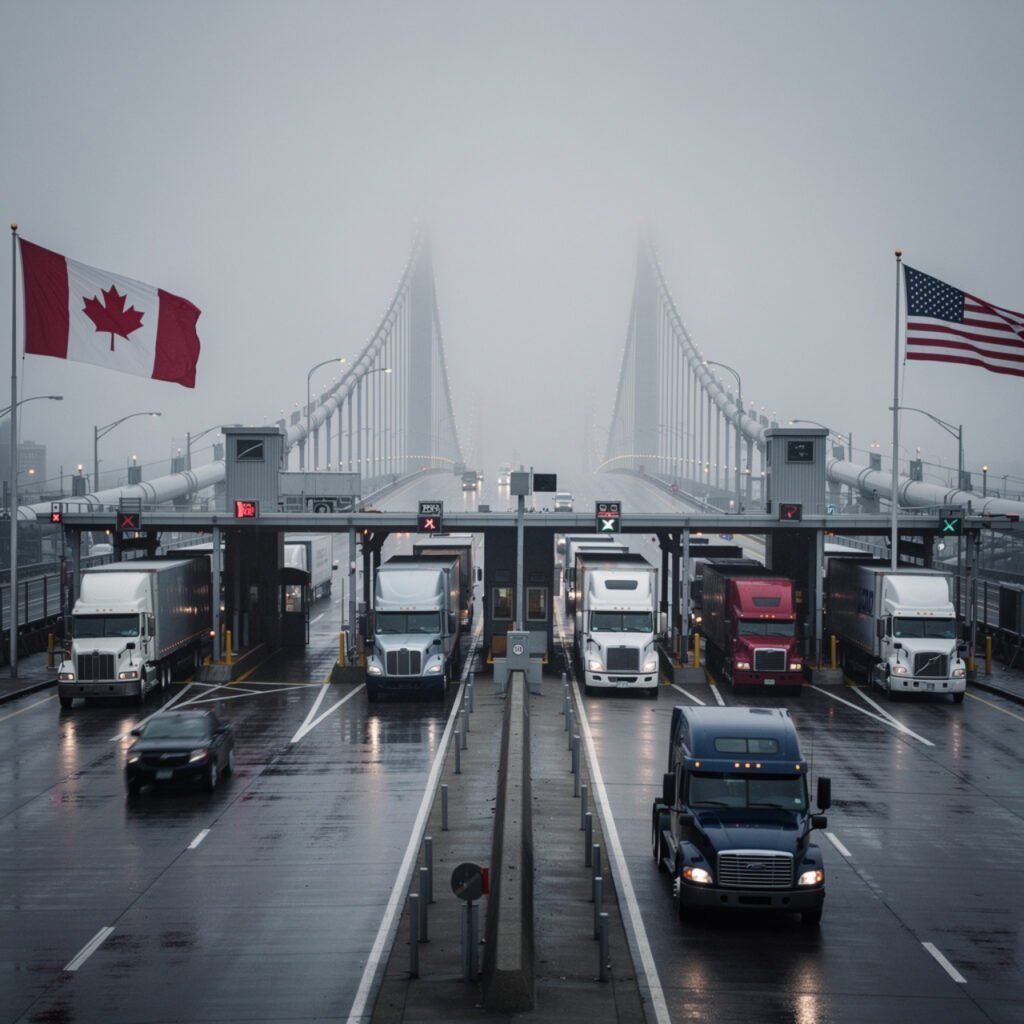
Hoekstra met with Michigan Speaker Matt Hall and Governor Gretchen Whitmer in late April to discuss the Gordie Howe International Bridge a six-lane span across the Detroit River that had been scheduled to open to cross-border traffic in spring 2026. He said discussions with the Canadian government had been regular and positive but had not resulted in a final agreement, and he had no estimated opening date. He noted the project came in massively overbudget at approximately $6.4 billion Canadian dollars, and said, “At the end of the day, the president will have to sign off on it. There are a lot of issues right now between the U.S. and Canada. The bridge is one more.” FOX 13
Framing a trade and infrastructure project as one more issue in a list of bilateral grievances was not the language of a diplomat trying to accelerate progress. It was the language of a negotiator keeping leverage on the table.
The easiest conclusion to draw about Pete Hoekstra in Canadian politics is that he is an antagonistic presence who has made a difficult relationship harder. That reading has real support in the evidence.
His Halifax remarks were tone-deaf. His defence of annexation rhetoric as affectionate was diplomatically bizarre. His accusation that an anti-tariff advertisement constituted political meddling was disproportionate.
But a more complete reading acknowledges that Hoekstra is delivering messages that reflect the actual position of the administration he represents. The tariffs are real. The CUSMA timeline is genuinely uncertain. The White House is genuinely unhappy about Canadian retaliatory measures, Ontario’s advertising campaign, and the tone of Canadian political rhetoric about the bilateral relationship. Hoekstra did not create those tensions. He is the person tasked with managing them and with communicating Washington’s positions in a relationship where the positions themselves are confrontational.
At his confirmation hearing, Hoekstra praised Canada as the most valuable U.S. trading partner, the largest source of foreign investment, and the largest source of energy imports. That is not the language of someone who wants the relationship to fail. It is the language of someone who understands its importance while carrying messages that have made it harder. Stocktwits
Pete Hoekstra’s presence in Canadian politics is not incidental. He is the most direct point of contact between the Trump administration’s worldview and Canada’s own sense of sovereign identity at a moment when those two things are in genuine tension.
With CUSMA negotiations expected to stretch into 2027, complicated by U.S. midterm politics and a formal public comment process that must be completed before real bargaining begins, Hoekstra’s role will only grow in importance over the months ahead. Legal Insurrection
Whether he manages to build enough trust on both sides of the border to advance that process or whether his blunt style continues to generate headlines that make the diplomacy harder is the question that will define his tenure.
What is already clear is that Pete Hoekstra is not a passive presence in Canadian politics. He arrived with a message, delivered it without apology, and showed no sign of adjusting his approach based on how it has been received. In a relationship as important as the Canada-U.S. partnership, that kind of ambassador is either exactly what the moment needs, or exactly what it does not.
Which one he turns out to be depends entirely on what happens next in a trade negotiation that both sides acknowledge has barely begun.
Frontier Affairs covers North American politics, diplomacy, and international trade. This article draws on verified reporting from CBC News, The Globe and Mail, BNN Bloomberg, Global News, The Hub, Radio-Canada, Detroit News, and Wikipedia’s documented biography of Pete Hoekstra.