
playstation plus june 2026 games
Thursday, May 20, 2026 Trusted by millions worldwide Back to News Tech PlayStation Plus Subscribers Are About to Lose Another...
Read More → Thursday, May 7 2026
Trusted by millions worldwide
Deeply ingrained into daily digital infrastructure, artificial intelligence drives financial systems, communication networks, healthcare diagnosis, transportation logistics, and even defense technologies. As this reliance increases, so does worry about what would happen should these systems break, be abused, or behave in unforeseen fashion.
The events and conversations around the AI Security Shock 2026 point to a larger change in world perspective: artificial intelligence is no longer only a technological development; it is now a fundamental component of modern society needing close monitoring and international collaboration.
The AI Security Shock of 2026 has emerged as a pivotal moment in the global conversation about technology, cybersecurity, and digital governance. Governments, tech companies, and security experts are now taking a hard look at the risks tied to the rapid evolution of artificial intelligence systems. What used to be seen mainly as a tool for innovation and automation is now being scrutinized through a much more intricate lens that encompasses national security, economic stability, and the trust of society. Artificial intelligence has woven itself into the fabric of our daily digital lives, driving everything from financial systems and communication networks to healthcare diagnostics, transportation logistics, and even defense technologies. As our reliance on these systems deepens, so does the worry about what could go wrong if they fail, are tampered with, or act unpredictably. The conversations and events surrounding the AI Security Shock of 2026 signal a significant shift in how the world views artificial intelligence. It’s no longer just a technological leap forward; it has become a cornerstone of modern civilization that demands careful oversight and international collaboration.
Over the past decade, artificial intelligence has transitioned from experimental technology to essential infrastructure. Governments and corporations now rely on AI systems to process large-scale data, optimize operations, and make real-time decisions that were previously handled by humans.
In financial markets, AI-driven algorithms manage high-frequency trading and risk assessment. In healthcare, machine learning models assist in diagnostics and predictive treatment planning. In transportation, AI controls traffic systems, autonomous vehicles, and logistics networks. Even national security agencies use AI for surveillance analysis and threat detection.
While this integration has significantly improved efficiency and speed across industries, it has also introduced a new layer of vulnerability. Unlike traditional systems, AI models are not static; they learn, adapt, and evolve based on data inputs. This dynamic nature makes them powerful but also difficult to fully control or predict.
The AI Security Shock 2026 has brought renewed attention to the risks associated with this dependence, especially as AI systems become more deeply embedded in critical infrastructure.

One of the most pressing concerns in 2026 is the growing list of potential vulnerabilities within artificial intelligence systems. Security researchers have identified several areas where AI can be exploited or behave unpredictably under certain conditions.
These include adversarial manipulation, where malicious actors intentionally feed misleading data into AI models to alter their output, and data poisoning, which involves corrupting training datasets to influence system behavior over time. There are also concerns about model inversion attacks, where sensitive information used in training datasets could potentially be reconstructed or extracted.
Another significant concern is the unpredictable nature of large-scale generative AI systems. These models can generate human-like text, images, and code, but they do not fully “understand” the content they produce in a human sense. This creates uncertainty when they are deployed in high-stakes environments such as legal systems, healthcare decision-making, or financial forecasting.
The AI Security Shock 2026 has intensified debates over whether current safety mechanisms are sufficient to manage these emerging risks.
Generative artificial intelligence has revolutionized content creation and automation, but it has also introduced new security challenges that were not present in earlier technological systems.
Modern AI tools are capable of producing realistic text, audio, and visual content that is increasingly difficult to distinguish from human-created material. While this capability has significant benefits in creative industries, education, and communication, it also creates opportunities for misuse.
Cybersecurity experts have warned about the potential for AI-generated phishing attacks, deepfake media used for misinformation campaigns, and automated code generation that could be exploited for malicious purposes. These risks have made it more difficult for individuals and organizations to verify authenticity in the digital environment.
Within the context of the AI Security Shock 2026, generative AI has become a central focus of both innovation and concern, as policymakers attempt to balance technological progress with security safeguards.

In response to growing concerns, governments around the world have begun developing regulatory frameworks aimed at improving AI safety and accountability.
These efforts include discussions around transparency in AI development, mandatory safety testing before deployment, and clearer accountability structures for organizations that create or deploy artificial intelligence systems. Some countries are also exploring the creation of dedicated AI regulatory agencies to oversee compliance and risk management.
International cooperation is becoming increasingly important, as AI systems are often developed and deployed across borders. This has led to discussions about global standards for AI governance, similar to those used in nuclear safety and climate policy.
The AI Security Shock 2026 has accelerated these conversations, highlighting the urgent need for coordinated global action.
One of the key elements shaping today’s landscape is the intersection of cybersecurity and artificial intelligence. AI has become both a powerful defense mechanism and a potential threat in the realm of digital security. On the positive side, AI-driven cybersecurity systems excel at spotting anomalies, identifying threats, and reacting to cyberattacks much quicker than traditional approaches. These systems sift through massive amounts of network data in real time, enabling organizations to tackle threats more effectively. However, on the flip side, cybercriminals are also leveraging AI to create more advanced intrusion techniques. Automated hacking tools, adaptive malware, and AI-enhanced social engineering attacks are on the rise. This dual-purpose nature of artificial intelligence has made the field of cybersecurity more intricate than ever, significantly amplifying the concerns raised in the AI Security Shock 2026.
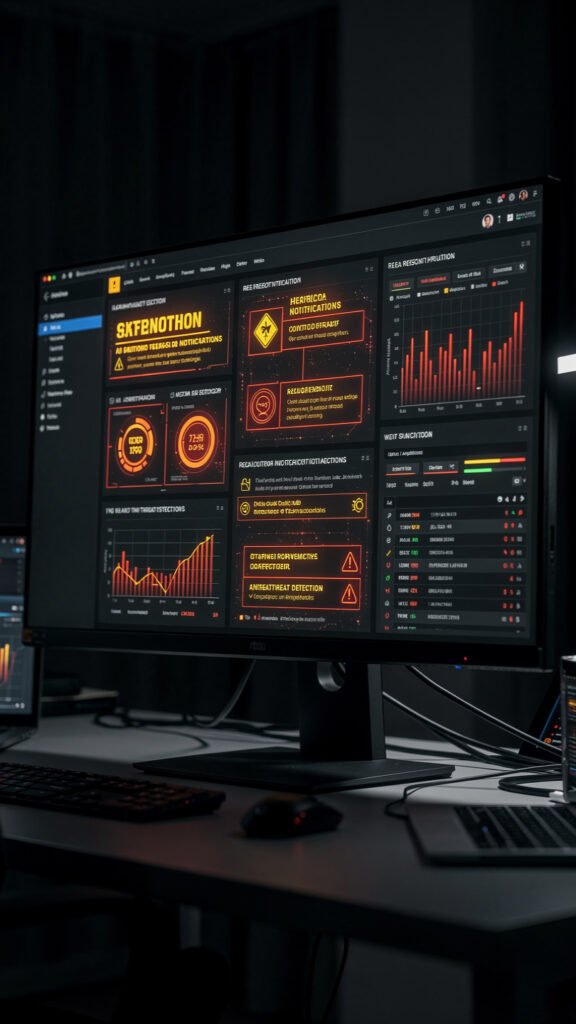
The implications of AI security vulnerabilities extend beyond technology and cybersecurity. They also have significant economic and societal consequences.
Financial systems that rely heavily on algorithmic trading and AI-driven analysis are particularly sensitive to disruptions or errors. A major failure in these systems could lead to market instability or loss of investor confidence.
Similarly, industries that depend on AI for logistics, healthcare, and communication could face operational disruptions if systems malfunction or are compromised.
On a societal level, concerns about misinformation generated by AI systems have raised questions about trust in digital information. As AI-generated content becomes more realistic, distinguishing between factual and fabricated information becomes increasingly difficult.
The AI Security Shock 2026 reflects these broader concerns about how deeply artificial intelligence is now embedded in everyday life.
One of the most complex challenges facing policymakers is balancing the need for innovation with the need for security. Artificial intelligence is a rapidly evolving field, and overly restrictive regulations could slow technological progress.
However, insufficient oversight could expose societies to significant risks, including security breaches, misinformation campaigns, and systemic failures in critical infrastructure.
This tension between innovation and regulation is at the heart of global AI governance discussions. Many experts argue that adaptive regulatory frameworks, which evolve alongside technology, may be the most effective approach.
The AI Security Shock 2026 has intensified this debate, forcing governments and industry leaders to reconsider how AI should be managed in the long term.
The AI Security Shock of 2026 marks a significant shift in how we perceive and handle artificial intelligence. What used to be viewed mainly as a catalyst for innovation is now also seen as a crucial area of risk that demands careful management. As AI technologies continue to advance and weave themselves into the fabric of our global systems, the need for security, transparency, and accountability will only grow stronger. The next few years will likely be pivotal in deciding whether artificial intelligence evolves into a fully trusted cornerstone of the digital landscape or remains a source of persistent uncertainty and danger. One thing is certain: AI security has transcended being just a technical concern it has become a global priority that will influence the future of technology, economics, and governance.