
playstation plus june 2026 games
Thursday, May 20, 2026 Trusted by millions worldwide Back to News Tech PlayStation Plus Subscribers Are About to Lose Another...
Read More → Wednesday, Aprail 22, 2026
Trusted by millions worldwide
Russia energy strategy 2026 Energy economists increasingly describe two parallel global oil markets: one governed by Western benchmarks and compliance frameworks, and a second operating through alternative clearing systems, currencies, and logistics. Russia sits at the center of the second market, and its 2026 deals are designed to deepen that infrastructure.
Russia energy strategy 2026 Russia’s energy strategy in 2026 has taken a decisive eastward turn and global oil markets are feeling the pressure. Over the past several months, Moscow has finalized a series of long-term oil supply agreements with buyers across Asia and the Middle East, deliberately bypassing traditional Western-dominated financial channels. These deals are not just about keeping revenue flowing in the face of G7 sanctions. They represent a structural redesign of how Russian crude moves through the world and who profits from it.
As of April 22, 2026, analysts, energy economists, and geopolitical strategists are closely watching how this shift could alter Brent crude benchmarks, OPEC+ dynamics, and energy security planning across Europe and North America.
Russia has been selling oil under pressure since 2022, but the agreements signed in early 2026 mark a qualitative shift from reactive survival to proactive market architecture.
Unlike earlier arrangements that relied on opportunistic buyers willing to accept discounted Russian crude, the new contracts are structured as long-term joint ventures and infrastructure-tied supply deals. Several involve shared refining capacity in partner countries, meaning Russia is exporting more processed products diesel, jet fuel, and petrochemicals rather than raw crude alone. This makes the exports harder to restrict through price caps, which typically apply only to crude oil.
Additionally, these contracts are increasingly settled in national currencies primarily the Chinese yuan, Indian rupee, and UAE dirham reducing Russia’s exposure to SWIFT-based payment systems and accelerating the gradual de-dollarization of the global energy trade.
The Eastern Energy Corridor: Key Partners and Routes
Russia’s primary energy partners in 2026 are China, India, Turkey, and several Gulf states. China remains the largest single buyer, with volumes reaching near-record highs through the Eastern Siberia–Pacific Ocean (ESPO) pipeline. India has continued importing Russian oil well above pre-sanctions levels, making it Russia’s second-largest customer by volume.

The Brent crude benchmark has shown elevated volatility in early 2026, partly due to uncertainty surrounding Russian supply volumes and the opacity of pricing mechanisms in non-Western trade channels.
Because a significant portion of Russian oil moves through alternative logistics networks tankers operating outside Western maritime insurance frameworks exact volume data is difficult to track. The International Energy Agency (IEA) and independent analysts have noted a growing gap between official export statistics and satellite-based tanker tracking data.
This opacity introduces what traders call a “geopolitical premium” into oil futures. When supply figures are unclear, markets price in risk keeping Brent elevated above levels that US and Canadian production growth alone would justify.
The G7 price cap on Russian crude set at $60 per barrel has proven difficult to enforce consistently. A large fleet of tankers not covered by Western insurance or flagged under major registries continues to move Russian oil. European officials acknowledge enforcement gaps, and the EU introduced additional tanker-specific sanctions in 2025 and early 2026.
Energy economists increasingly describe two parallel global oil markets: one governed by Western benchmarks and compliance frameworks, and a second operating through alternative clearing systems, currencies, and logistics. Russia sits at the center of the second market, and its 2026 deals are designed to deepen that infrastructure.
What Investors and Analysts Are Watching
Key indicators to monitor in coming months: Russia’s actual export volumes from third-party tanker trackers, OPEC+ meeting outcomes, movements in the yuan-ruble exchange rate, and European LNG import volumes as a proxy for how fully the continent has pivoted away from Russian supply.
Analysts also warn that Russia’s shift toward refined product exports could create diesel supply shortfalls with direct inflationary effects across transportation and manufacturing sectors globally.

What Russia’s 2026 energy strategy ultimately signals is a world where energy trade is no longer organized around a single set of benchmarks, currencies, or political alignments. The era of a fully unified global oil market already under strain since 2022 appears to be giving way to a more fragmented structure with regional pricing, alternative currencies, and competing logistics networks.
For governments, corporations, and consumers, understanding Russia’s energy strategy in 2026 is no longer just a geopolitical concern it is a practical necessity for anyone navigating the economics of oil, inflation, and global trade.
The Russia Energy Move 2026 is manifesting as a “Fragmentation of the Oil Market.” On this Wednesday, April 22, 2026, the energy geopolitics suggest that the era of a unified global crude price is under immense strain.
Russia Oil Supply Agreements: These contracts are increasingly denominated in “National Currencies,” a move that is accelerating the market reaction toward de-dollarization in the energy sector.
Crude Oil Trade Dynamics: The Russia energy move has led to a “Shadow Fleet” optimization, where over 2.4 million barrels per day are moving through non-Western supervised channels.
Production Deals: Recent energy partnerships with OPEC+ members have signaled a “Strategic Coordination” that keeps global oil supply tight, regardless of increasing production from the Americas.
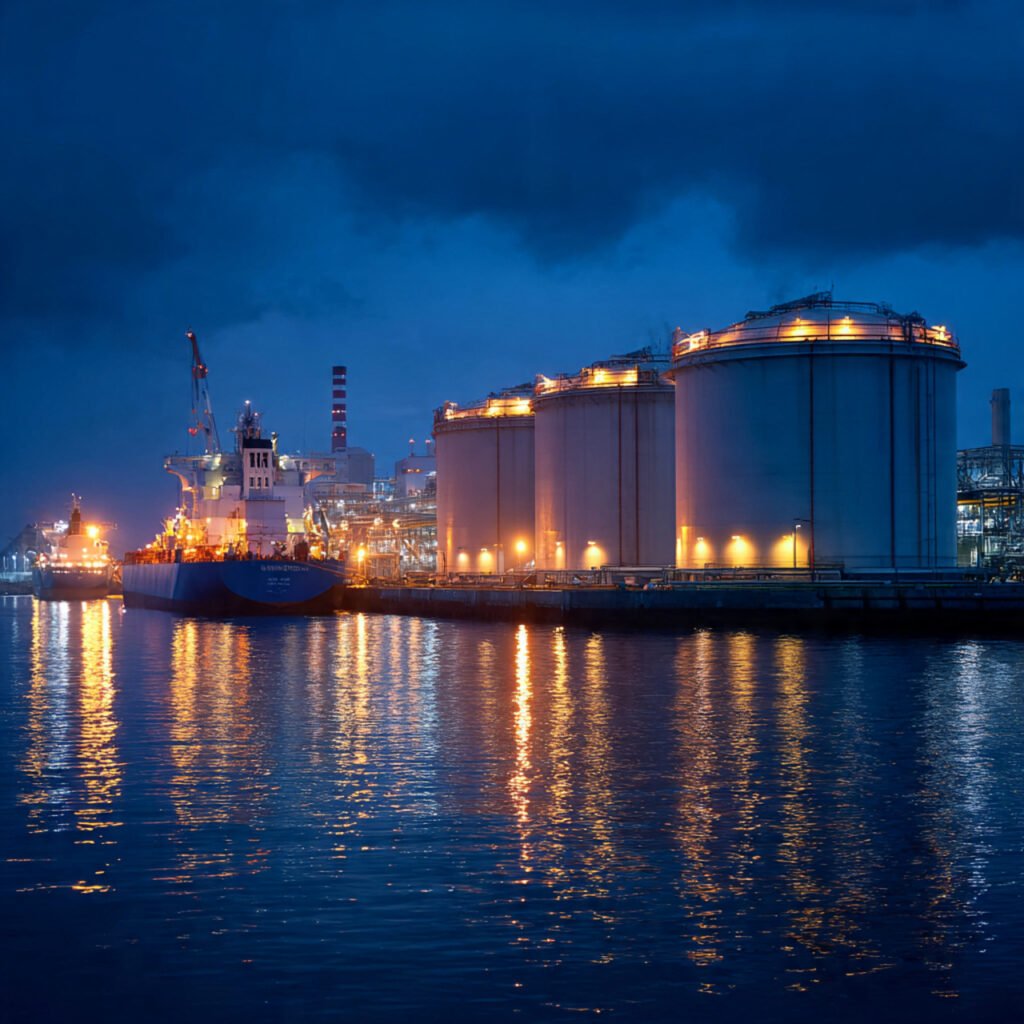
The Russia oil partnerships impact is a structural realignment of the global fiscal landscape. As supply agreements continue to deliver shocks to the Brent-WTI index, the global oil markets of the future will depend on “Alternative Settlement Systems.” Staying informed on Russia Energy Move 2026 developments and energy geopolitics Russia 2026 transitions is now essential for understanding the future of oil supply and the crude oil trade risks of the “Resource Realignment Decade.”
The Russia Energy Move 2026 report represents a fundamental reset of global resource security. The Russia new oil deals global markets prove that the “Old World Order” of energy distribution has officially been superseded by a more complex, multi-currency, and fragmented crude oil trade. As Russia expanding energy exports and production deals continue to redefine the market reaction, the world is witnessing the birth of a more competitive and unpredictable energy era. On this April 22, 2026, the “Energy Move” stands as a stark reminder that in the world of power, he who controls the flow, controls the future.