
playstation plus june 2026 games
Thursday, May 20, 2026 Trusted by millions worldwide Back to News Tech PlayStation Plus Subscribers Are About to Lose Another...
Read More → Tuesday ,Aprail 21, 2026
Trusted by millions worldwide
global economic slowdown 2026 This squeeze on consumer spending is itself a factor in slowing economic growth. When households cut back on discretionary spending restaurants, travel, electronics, and clothing businesses see revenues decline, which leads to hiring freezes and investment pullbacks, creating a self-reinforcing slowdown cycle.
global economic slowdown 2026 The global economic slowdown in 2026 has emerged as one of the most pressing financial stories of the year. As inflation remains stubbornly elevated across major economies, central banks find themselves caught between controlling price pressures and avoiding a full-blown recession. From Wall Street to emerging markets, investors are recalibrating their strategies and millions of ordinary households are feeling the squeeze in their day-to-day budgets
global economic slowdown 2026 The slowdown is not the result of a single shock. Instead, it reflects a combination of forces that have been building since late 2024. The most significant driver is a persistent cost-push inflation cycle where rising costs for energy, food, and raw materials are pushing prices up across entire supply chains, even as consumer demand weakens.
According to the International Monetary Fund’s April 2026 World Economic Outlook, global growth is projected at approximately 2.3% for 2026 down from 3.1% in 2024. This marks one of the weakest growth periods since the aftermath of the 2008 financial crisis, excluding the COVID-19 pandemic years.
Several structural factors are driving this trend:

Stock markets in the United States, Europe, and Asia have experienced significant volatility throughout the first quarter of 2026. The S&P 500 has seen multiple sharp corrections as investors react to each new inflation data release and central bank statement.
One of the most notable shifts is the breakdown of the traditional 60/40 investment portfolio a strategy where 60% stocks and 40% bonds were expected to balance risk. In a high-inflation environment, both asset classes can decline simultaneously, leaving investors with fewer hedging options. Demand for commodities, energy stocks, and inflation-protected securities has surged as a result.
Central banks remain in a difficult position. The U.S. Federal Reserve has held its benchmark interest rate at elevated levels in 2026, signaling that rate cuts will only come once inflation is on a clear and sustained downward path. The European Central Bank has taken a similar stance.
For bond investors, this means yields remain high which is both an opportunity for new buyers seeking income and a challenge for existing holders who bought bonds when rates were lower. Mortgage rates, corporate borrowing costs, and government debt servicing expenses have all risen in tandem.
Beyond financial markets, the most immediate impact of the global economic slowdown in 2026 is being felt in household budgets. In many countries, wages have not kept pace with inflation, meaning real purchasing power has declined.
Grocery bills, utility costs, and rent or mortgage payments have all increased sharply over the past 18 months. In the United Kingdom, the Office for National Statistics reported that food price inflation remained above 5% in early 2026. Similar trends have been documented across continental Europe, parts of Asia-Pacific, and Latin America.
This squeeze on consumer spending is itself a factor in slowing economic growth. When households cut back on discretionary spending restaurants, travel, electronics, and clothing businesses see revenues decline, which leads to hiring freezes and investment pullbacks, creating a self-reinforcing slowdown cycle.
While developed economies are managing a painful slowdown, many emerging market nations are facing more severe consequences. High interest rates in the United States and Europe have strengthened the U.S. dollar and attracted capital away from developing economies, making their debt more expensive to service and weakening their currencies.
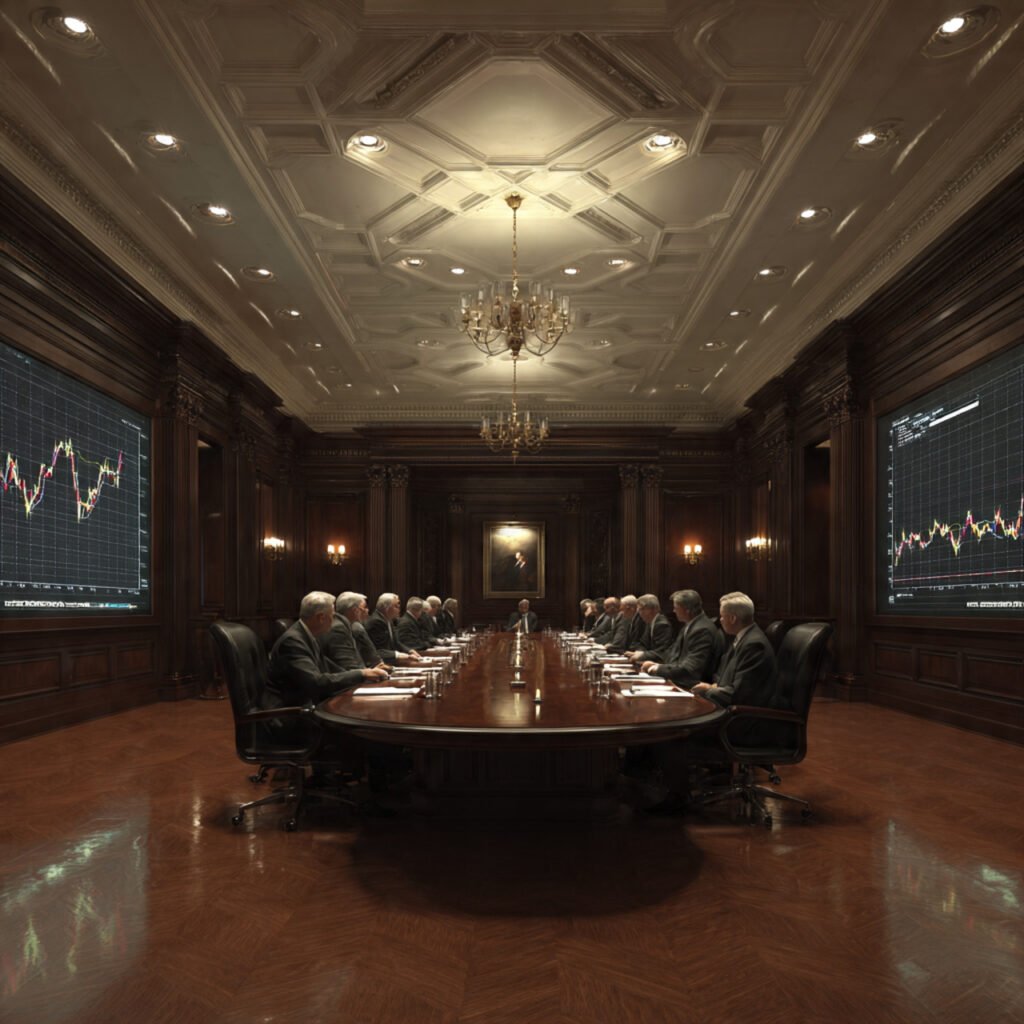
The prevailing consensus among major central banks is to maintain restrictive monetary policy until inflation convincingly returns to target levels, typically around 2%. While this approach risks deepening the slowdown, policymakers argue that allowing inflation to become entrenched would cause far greater long-term damage to economies and to public trust in financial institutions.
On the fiscal side, several governments have introduced targeted support measures including energy bill subsidies, food voucher programs, and tax credits for low- and middle-income households. However, with public debt already elevated in most advanced economies, the scope for large-scale fiscal stimulus is limited.
The European Union’s REPowerEU initiative and the United States’ ongoing investment in domestic manufacturing and clean energy infrastructure are being cited as long-term structural responses, though their benefits will take years to fully materialize.
For investors navigating this environment, financial analysts broadly recommend a focus on quality over growth, prioritizing companies with strong cash flows, pricing power, and low debt. Defensive sectors including healthcare, consumer staples, and utilities have outperformed cyclical sectors so far in 2026.
Inflation-linked government bonds, gold, and energy sector equities have also attracted significant interest as hedges against continued price pressures. Meanwhile, the technology sector which thrived during the low-rate era continues to face headwinds as borrowing costs for growth-stage companies remain elevated.
For businesses, investors, and policymakers alike, staying closely informed on inflation data, central bank decisions, and global trade developments will be essential in the months ahead. The global economic slowdown of 2026 is not merely a financial challenge it is a defining test of the resilience of modern economic institutions and the policies designed to protect them.

The key question for the remainder of 2026 is whether major economies will engineer a soft landing bringing inflation under control without triggering a deep recession or whether the combination of high rates, weak consumer spending, and global uncertainty will push growth into negative territory.
Most economists currently forecast a modest recovery beginning in late 2026 or early 2027, contingent on inflation continuing to decline, commodity markets stabilizing, and central banks beginning cautious interest rate cuts. However, geopolitical risks including ongoing conflicts and trade tensions between major powers remain the primary wildcard that could alter this trajectory.
For businesses, investors, and policymakers alike, staying closely informed on inflation data, central bank decisions, and global trade developments will be essential in the months ahead. The global economic slowdown of 2026 is not merely a financial challenge it is a defining test of the resilience of modern economic institutions and the policies designed to protect them.
The Global Growth Slowdown 2026 report represents a fundamental reset of the global financial architecture. The inflation fears investors 2026 prove that “Cheap Money” is no longer a viable engine for expansion. As rising inflation global markets and price surge events continue to delivery shocks, the world is witnessing the birth of a more disciplined, value-oriented economic order. On this April 21, 2026, the “Inflation Shock” stands as a stark reminder that in a finite world, growth must eventually answer to the laws of supply and demand.