Trump deportation contempt blocked 2026
Wednesday, April 15, 2026 Trusted by millions worldwide Back to News Politics Appeals Court Halts Trump Deportation Contempt Probe in...
Read More → 
Wednesday, April 15, 2026
Trusted by millions worldwide
D.C. Circuit Court of Appeals ruling issued April 14, 2026. 2-1 majority. Judge Neomi Rao wrote the majority opinion. Judge Michelle Childs dissented. The ruling blocks a criminal contempt investigation into Trump officials over March 2025 deportation flights. ACLU attorney Lee Gelernt condemned the decision. ACLU has not yet announced next legal steps.
A federal appeals court has blocked the contempt case targeting Trump administration officials over deportation flights conducted in early 2025. The D.C. Circuit Court of Appeals issued its ruling on April 14, 2026. The decision ends a criminal contempt investigation led by Chief Judge James Boasberg of the U.S. District Court for the District of Columbia. Legal analysts describe the ruling as a significant expansion of executive branch immunity in immigration enforcement cases.
The three-judge panel divided 2-1. Judge Neomi Rao wrote for the majority. Judge Michelle Childs wrote a forceful dissent. The third panel member, Judge Gregory Katsas, joined Rao in the majority. The case has drawn national attention. It raises fundamental questions about how far courts can go in enforcing their own orders against the executive branch.
The appeals court did not simply overturn the lower court. It went further. It issued a Writ of Mandamus one of the rarest tools in federal appellate law.
A Writ of Mandamus is used when a lower court has exceeded its authority so clearly that waiting for a standard appeal would cause irreparable harm. Courts reserve this instrument for exceptional situations. The D.C. Circuit’s decision to use it here signals a strong rebuke of Boasberg’s approach.
The majority found that the contempt investigation would cause irreparable harm to the executive branch’s ability to carry out immigration law. They argued the probe crossed a constitutional line. That line separates judicial oversight from judicial interference.
Judge Rao was direct in her language. She described the lower court’s pursuit of contempt charges as a ‘clear abuse of discretion.’
Her reasoning centred on a specific legal standard. For criminal contempt charges to stand, the underlying court order must be ‘clear and unequivocal.’ Boasberg’s 2025 order, she argued, did not meet that bar.

The order required officials to return a deportation flight. But it did not provide the specific operational instructions needed to hold individuals personally liable. The logistics of redirecting an international flight mid-air are complex. Multiple foreign governments, air traffic authorities, and security protocols are involved. Rao concluded that officials could not be held criminally responsible for failing to achieve something the order did not clearly specify how to accomplish.
To understand this ruling, it is necessary to revisit the events of March 2025.
The Trump administration sought to deport approximately 137 Venezuelan nationals. Rather than sending them to Venezuela, officials arranged for the migrants to be flown to El Salvador. They were processed into CECOT El Salvador’s high-security mega-prison, which houses thousands of gang members.
As the flight was crossing international waters, Judge Boasberg issued an emergency order. He instructed the government to turn the plane around. The flight continued to El Salvador. The migrants were transferred to CECOT.
Officials argued they could not comply with the order. Once the aircraft left U.S. airspace, they said, redirecting it required cooperation from foreign air traffic controllers and diplomatic clearance. They maintained the logistics were beyond their unilateral control.
Critics disputed that account. They said the government had time to act before the plane crossed into international airspace. They argued the defiance was intentional. Boasberg launched the contempt investigation on that basis.
The administration justified the deportations using the Alien Enemies Act. This is a statute dating to 1798. It grants the President broad power to detain or deport nationals of an enemy country during a declared national emergency. The administration argued the Venezuelan migrants posed a national security threat. Standard judicial review procedures, it said, did not apply.
Then-DHS Secretary Kristi Noem was closely involved in authorising the flights.
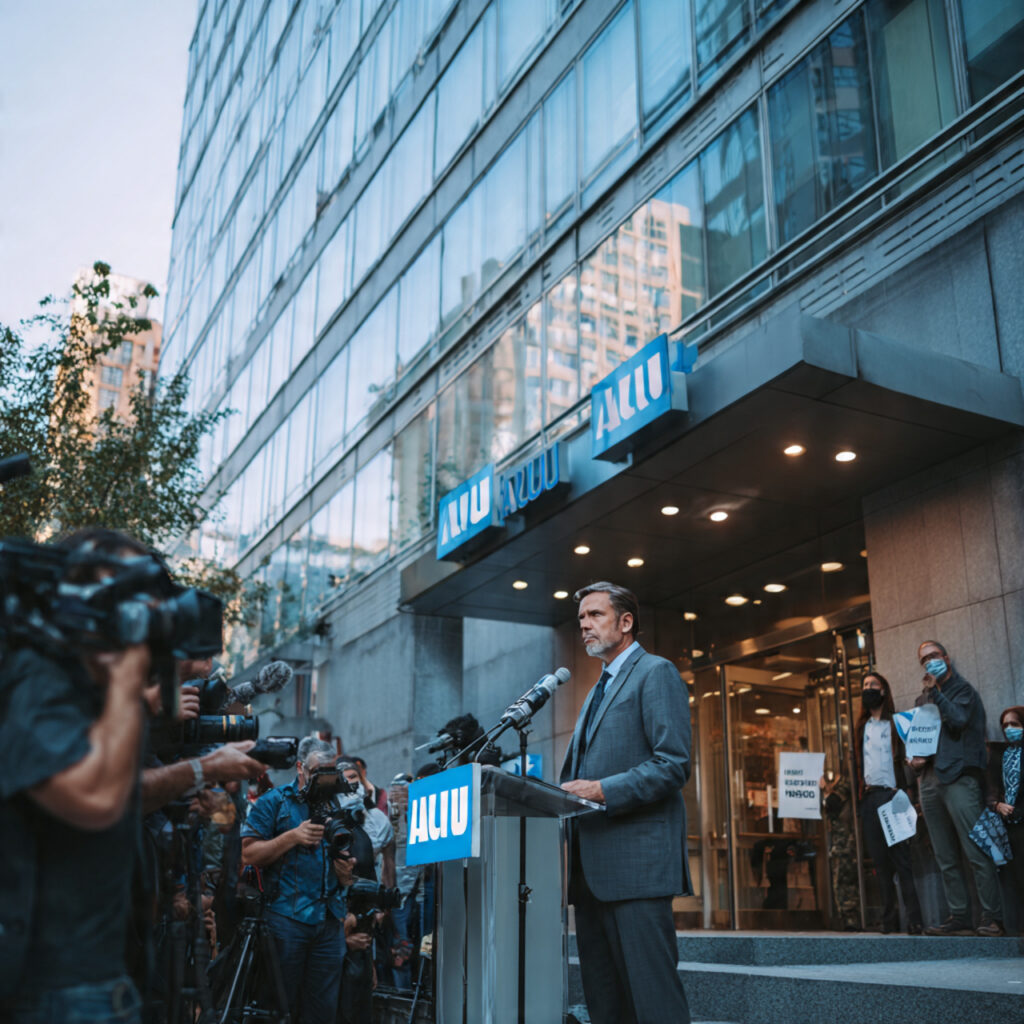
She has since left the administration following disagreements on separate policy matters. Her former department remains under scrutiny over the 2025 deportation programme.
As of April 2026, the 137 Venezuelan migrants remain in CECOT. The ACLU continues to challenge their detention in separate parallel proceedings.
At its heart, this case is a separation of powers dispute. It asks a fundamental question. How much authority does a federal court have to compel the executive branch to reverse a specific operational decision in real time?
The D.C. Circuit’s majority answered that question narrowly. Courts have broad authority to review executive action after the fact. They have limited authority to dictate the minute-by-minute mechanics of field operations. The contempt investigation, Rao concluded, crossed from review into operational micromanagement.
The majority used notably strong language about Boasberg’s approach. They described his attempt to depose senior officials as intrusive. They drew a clear line between holding officials accountable for policy decisions which courts can do and second-guessing real-time logistical calls made under pressure which the majority said courts cannot.
The ruling sets a high bar for future contempt proceedings involving immigration operations. Advocates will now need to demonstrate wilful, knowing defiance of an order that provided specific operational instructions. General directives that leave implementation to executive discretion will be harder to enforce through contempt.
The response to the ruling split sharply along predictable lines.
ACLU attorney Lee Gelernt, who represented the migrants in the original proceedings, condemned the decision immediately. ‘This ruling creates a zone of lawlessness at the border,’ he said in a statement released Monday evening. ‘If the government can ignore a direct court order to return a plane mid-flight, then judicial review of immigration enforcement becomes meaningless.’
Gelernt said the ACLU is reviewing its legal options. He did not rule out seeking review from the full D.C. Circuit sitting en banc or petitioning the Supreme Court. The ACLU described the ruling as ‘one of the most serious setbacks for court oversight of executive action in decades.’
Judge Childs was direct in her dissent. She argued the majority had stripped trial courts of their basic enforcement authority.
‘Every court must have the ability to enforce its own orders,’ she wrote. ‘Without the threat of contempt, a court order is merely a suggestion. The executive branch cannot be permitted to treat judicial directives as optional when compliance proves inconvenient.’
Childs said the majority’s analysis conflated the difficulty of compliance with the impossibility of compliance. Officials had time to act, she argued. They chose not to. That choice, she contended, satisfied the standard for wilful contempt.
The April 14 ruling has immediate practical implications for how immigration enforcement operates going forward.
Attorneys seeking emergency injunctions to halt deportation flights now face a significantly higher burden. They must demonstrate that any court order they seek is operationally specific not just a general instruction to return migrants, but a detailed directive that leaves no ambiguity about what officials must do and when.
The ruling also provides federal immigration agents with broader confidence that compliance disputes arising from complex international operations are unlikely to result in criminal contempt charges. That confidence is likely to affect the pace and scale of future removal operations carried out under the Alien Enemies Act and similar statutory frameworks.
Whether this ruling reaches the Supreme Court will depend on the ACLU’s next legal filing and whether any current justice expresses interest in the separation of powers question the case raises. For now, the D.C. Circuit has spoken and its message is that courts must stay out of the operational details of executive enforcement, even when the stakes are high.