
playstation plus june 2026 games
Thursday, May 20, 2026 Trusted by millions worldwide Back to News Tech PlayStation Plus Subscribers Are About to Lose Another...
Read More → Wednesday, April 8, 2026
Trusted by millions worldwide
US-Iran ceasefire deal 2026 |Two-week provisional ceasefire effective April 7–8, 2026. Islamabad summit scheduled for April 10. Brent Crude trading near $115/barrel. Pakistan, Turkey, and Egypt led the mediation effort.
US-Iran ceasefire deal 2026 The US-Iran ceasefire deal 2026 entered into force this week, bringing a fragile but significant pause to forty days of escalating conflict that brought the world closer to a regional war than at any point in the past decade. Effective from April 7 to 8, the two-week provisional truce suspends US offensive aerial operations and halts Iran’s ballistic missile activity against American regional assets — offering a narrow window for diplomacy to succeed where military pressure alone could not.
The agreement did not emerge from a single dramatic negotiation. It was the product of a quiet, multi-week mediation effort led by Pakistan, Turkey, and Egypt — three nations with unique channels of communication to both Washington and Tehran. As both governments prepare to send senior delegations to Islamabad for the April 10 peace summit, the fundamental questions remain unresolved: Who controls the Strait of Hormuz, and on what terms will global energy supplies flow again?
The current standoff traces its origins to late February 2026, when Iran’s Islamic Revolutionary Guard Corps began restricting commercial vessel passage through the Strait of Hormuz the narrow waterway through which approximately 21 percent of the world’s oil supply transits daily. The restrictions, which Tehran framed as ‘maritime sovereignty exercises,’ triggered an immediate response from Washington.
The White House issued a series of escalating ultimatums through March, culminating in a deadline that warned of strikes against Iranian energy and power infrastructure if the strait was not fully reopened. The threat sent oil markets into shock, push3ing Brent Crude to nearly $140 per barrel and prompting emergency sessions at the EU, the International Energy Agency, and the UN Security Council. Hours before that deadline expired, the Pakistani-led diplomatic effort produced the ceasefire framework now in effect.
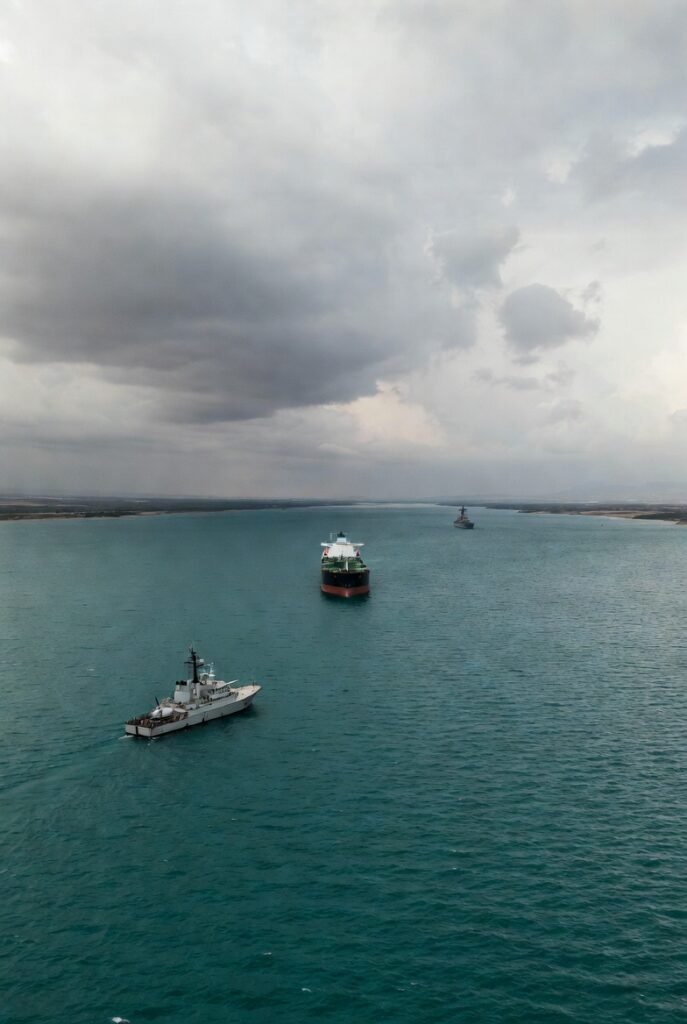
The agreement is described by both governments as a ‘tactical pause’ rather than a peace treaty — a deliberate framing that allows each side to claim it has not made permanent concessions. Understanding what each party has and has not conceded is essential to evaluating how durable this truce is likely to be.
Washington has agreed to suspend all offensive aerial operations against Iranian territory for the 14-day duration. The US has not, however, withdrawn its carrier strike groups from the Gulf of Oman, nor has it lifted any of the economic sanctions imposed over the past several years. Senior administration officials have described this as a ‘pause without preconditions,’ emphasizing that military options remain fully available if Iran violates the terms.
Tehran has committed to halting ballistic missile strikes on US regional installations and reducing naval harassment activities in the Persian Gulf. The most contentious issue the Strait of Hormuz reopening terms remains genuinely unresolved. The US demands full, unconditional access for all commercial tankers. Iran insists that vessel traffic must be ‘coordinated’ through its armed forces, a position Washington regards as a continuation of the blockade by administrative means.
This gap is not a minor procedural disagreement. It is the central fault line of the entire crisis, and whether the April 10 Islamabad summit can bridge it will determine whether this ceasefire leads to a durable agreement or simply postpones a larger confrontation.
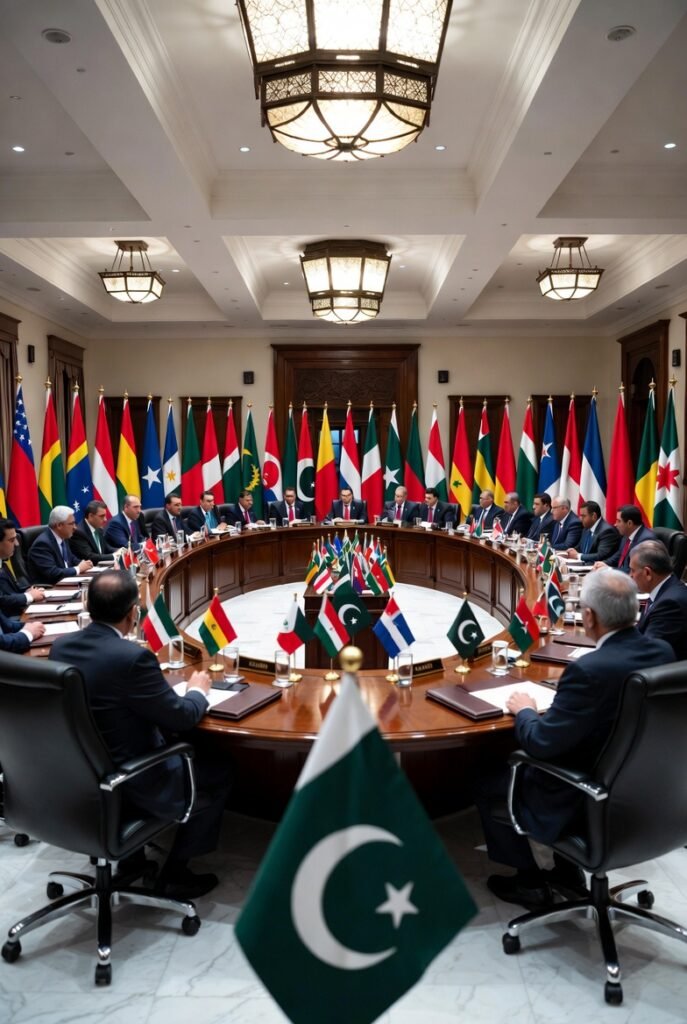
Alongside the ceasefire, Pakistani intermediaries have introduced a broader diplomatic framework intended to form the basis for permanent negotiations. The proposal described by officials familiar with the discussions as an Iranian-drafted document with American modifications outlines a series of high-stakes mutual commitments.
Key elements of the framework reportedly include a phased lifting of primary and secondary economic sanctions, a structured release of frozen Iranian financial assets held in international accounts, a timetable for gradual reduction of US military presence in Iraq and Syria, and provisions addressing Iran’s nuclear program that both sides have publicly characterized very differently. Tehran describes these as recognizing Iran’s right to peaceful enrichment; Washington says any enrichment limits must be verified and capped.
The fact that a 10-point framework exists at all represents a meaningful shift in the diplomatic landscape. Whether both governments can move from an exchanged draft to a signed agreement is an entirely different question and one that will not be answered before Friday.
For Pakistan, hosting the Islamabad peace talks in April 2026 represents the most significant diplomatic moment in the country’s recent history. Islamabad has long sought a larger role on the global stage, and its ability to maintain trusted relationships with both the United States and Iran historically difficult for any single nation to manage positioned it uniquely for this mediation role.
Pakistan’s Prime Minister has described the summit as ‘a test of whether dialogue can still solve what weapons cannot.’ Turkey and Egypt, co-sponsors of the ceasefire framework, will also send senior representatives to Friday’s talks. Diplomats from Oman which brokered the original backchannel communication are expected to attend in an observer capacity.
The choice of Islamabad also carries a practical logic: it is geographically accessible to Iranian delegations without requiring them to travel to a Western capital, and it signals to the region that Muslim-majority nations are capable of leading their own peace processes.

The US administration has announced additional tariffs targeting nations that supply military hardware to Iran during the ceasefire window. The measure is specifically aimed at discouraging arms transfers from Russia and China — two countries that have economic and strategic interests in Iranian resilience. How Beijing and Moscow respond to this economic pressure will influence Iran’s negotiating posture significantly.
While Washington and Tehran are formally paused, active conflicts persist in Lebanon and Gaza involving groups with ties to Iran. A single miscalculated strike by a proxy actor could provide either government’s hardliners with the justification to resume direct hostilities. The ceasefire has no established mechanism for handling such incidents.
In both countries, influential political factions view the ceasefire as a concession rather than an opportunity. Hardline voices in Washington are pushing for a comprehensive military conclusion to Iranian influence in the region. Within Iran’s government, critics of the ceasefire argue that engaging with American ultimatums signals weakness. The durability of the truce depends in large part
For the global economy, the US-Iran ceasefire deal 2026 has produced measured but cautious relief. Brent Crude prices, which peaked near $140 per barrel during the peak of the crisis, have eased to approximately $115 as markets process the news of the truce. Analysts at major financial institutions caution that prices will remain elevated until commercial tankers begin transiting the Strait of Hormuz without interference something that has not yet occurred.
A successful April 10 summit that produces an agreement on Hormuz access could see oil prices fall toward the $90–$95 range within weeks, according to energy market analysts. A summit collapse, however, carries the risk of pushing prices back toward and potentially beyond the highs seen during the crisis. For consumers across Europe, Asia, and North America already contending with elevated energy costs, the outcome of Friday’s talks in Islamabad will have direct and measurable consequences at the fuel pump and on household bills.
The April 10 Islamabad summit is not expected to produce a final peace treaty. The realistic ambition for the talks is a framework agreement that resolves the immediate Hormuz dispute, establishes a roadmap for further negotiations on the 10-point plan, and extends the ceasefire window beyond its initial 14 days.
Even a limited agreement on these terms would be a significant diplomatic achievement given where the situation stood just weeks ago. The alternative a summit that produces no joint statement and allows the ceasefire to expire on April 22 returns the crisis to its most dangerous point with even less diplomatic goodwill available to prevent escalation.
The world’s attention is fixed on Islamabad. For the millions of people whose livelihoods, energy costs, and regional security depend on what happens in that summit room, the next 48 hours may be among the most consequential of 2026.
Frontier Affairs will provide live coverage of the Islamabad summit beginning April 10. Follow our World section for continuous updates.