
playstation plus june 2026 games
Thursday, May 20, 2026 Trusted by millions worldwide Back to News Tech PlayStation Plus Subscribers Are About to Lose Another...
Read More → Sunday, April 5, 2026
Trusted by millions worldwide
KEY FACTS: Strait of Hormuz deadline April 2026 US deadline expires April 6 at midnight. Two carrier strike groups positioned in Gulf of Oman. Brent Crude above $120/barrel. Diplomatic back-channel talks ongoing in Muscat, Oman.
The Strait of Hormuz deadline set by the United States expires at midnight on April 6, 2026, and the world is watching one of the most dangerous geopolitical standoffs of the decade reach its final hours. With roughly 21 percent of the global oil supply transiting this 33-kilometer-wide chokepoint, Iran’s decision to restrict maritime passage through the strait has triggered a cascading crisis rattling energy markets, mobilizing international naval forces, and pushing Washington and Tehran toward a confrontation that neither side officially wants but neither appears willing to back down from.
President Donald Trump issued a final ultimatum from the White House on Friday, warning that the United States would ‘act decisively’ if commercial shipping lanes are not fully reopened by Saturday. The President’s statement, delivered through National Security Advisor communications, stopped short of naming specific targets but made clear that all options including direct military action remain on the table.
The current standoff did not emerge overnight. Tensions in the Persian Gulf have been building since late February 2026, when Iran’s Islamic Revolutionary Guard Corps (IRGC) began conducting what it described as ‘maritime sovereignty exercises’ in waters surrounding the Strait of Hormuz. By mid-March, commercial tanker traffic through the strait had been reduced by an estimated 60 percent, as shipping companies rerouted vessels to avoid potential confrontation.
Washington responded with a formal diplomatic notice on March 18, giving Tehran a three-week window to stand down and restore free navigation. Iran’s Supreme National Security Council rejected the ultimatum, calling it a violation of Iranian sovereignty. With that rejection, the clock began ticking toward the April 6 deadline and the US-Iran military escalation 2026 entered a new and dangerous phase.

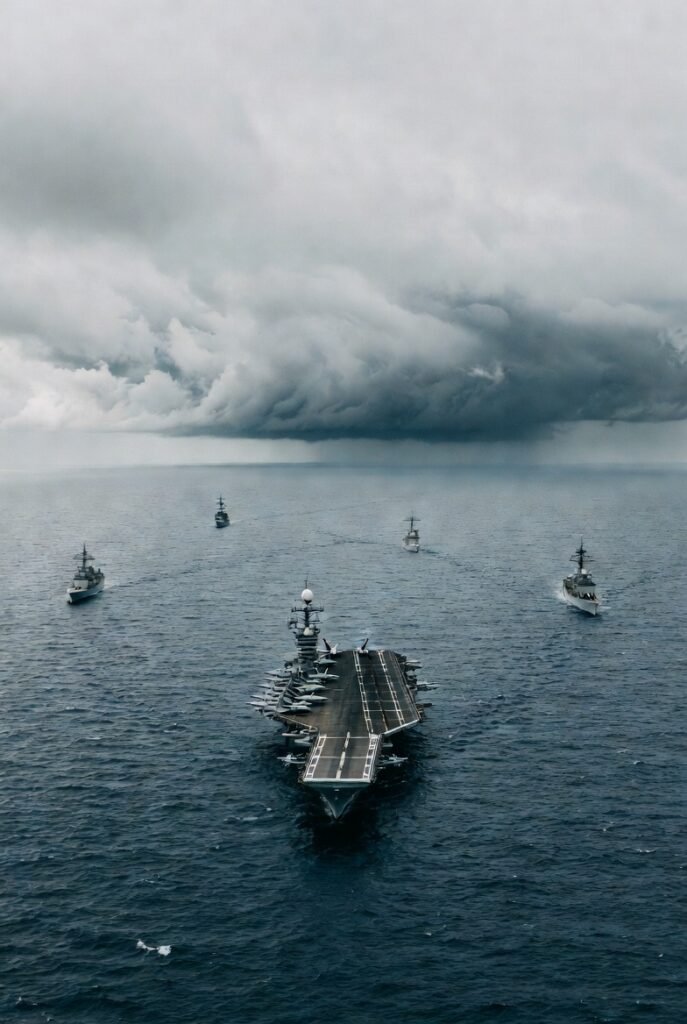
The Pentagon confirmed this week that Operation Sentinel II is fully operational. The mission, coordinated with naval forces from the United Kingdom, France, and Gulf Cooperation Council (GCC) member states, has positioned two US carrier strike groups in the Gulf of Oman, within rapid strike range of Iranian coastal facilities.
Defense analysts and officials briefed on the planning say any strike campaign would be designed for maximum economic disruption with minimum personnel risk. Reported target categories include oil refinery facilities along Iran’s southern coastline, coastal missile battery installations, and power grid infrastructure nodes. The objective, according to strategic communications from CENTCOM, is to impose ‘intolerable economic costs’ on Tehran rather than trigger a full-scale military exchange.
Iran’s IRGC has responded with its own warnings, vowing to retaliate against US military installations in Iraq and Qatar should any strike on Iranian territory occur. This threat of reciprocal escalation is precisely what has kept diplomatic channels thin as they are from fully collapsing.
The prospect of a global oil supply disruption has already inflicted severe damage on energy markets. Brent Crude futures crossed $120 per barrel for the first time since 2022 this week, and analysts at Goldman Sachs and JP Morgan have warned that a sustained Hormuz closure could push prices above $150 within weeks.
The consequences for everyday consumers would be swift and severe. Fuel prices across Europe and North America are already at multi-year highs. European Union energy ministers convened an emergency session in Brussels on Thursday to discuss contingency rationing plans and the release of strategic petroleum reserves. The International Energy Agency (IEA) has activated early-warning protocols for the first time since the 2022 energy crisis.
Meanwhile, global shipping has been dramatically disrupted. Dozens of commercial operators have rerouted tankers around Africa’s Cape of Good Hope adding up to three weeks to delivery schedules and dramatically increasing freight costs. Maritime insurance premiums for Gulf-bound vessels have increased by as much as 400 percent according to Lloyd’s of London risk assessors.
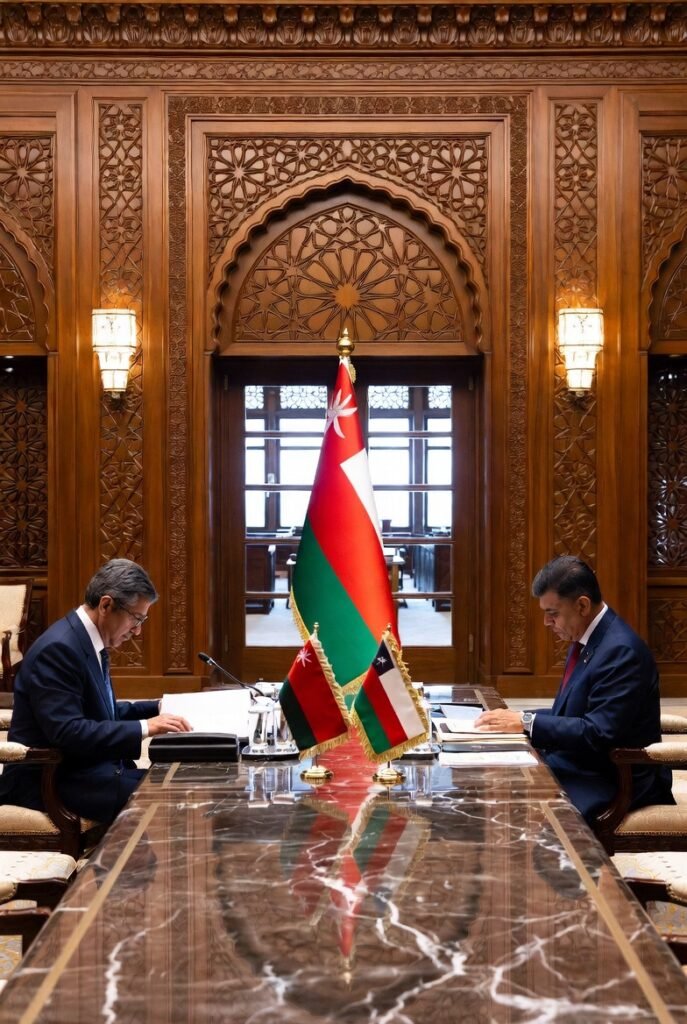
Not all activity is happening on the military front. Diplomatic sources confirm that a delegation of Omani officials has been shuttling between Washington and Tehran for the past ten days, attempting to broker a face-saving off-ramp for both sides. Oman has historically served as an informal intermediary between the US and Iran, most notably during the secret pre-negotiations that preceded the 2015 nuclear deal.
The current proposal reportedly involves a phased reopening of the strait in exchange for a suspension of certain US secondary sanctions a formula that neither government has publicly endorsed. Iranian Foreign Ministry spokesman Nasser Kanaani said Friday only that ‘all options for dialogue remain open,’ a statement interpreted by regional analysts as a signal that Tehran has not yet fully ruled out a last-minute compromise.
The international community has responded with urgency but limited consensus. China the single largest buyer of Iranian crude oil and a major Gulf energy importer has called for ‘restraint from all parties’ while quietly urging Tehran to consider the economic consequences of a prolonged closure. India, similarly dependent on Gulf oil flows, has dispatched naval assets to protect Indian-flagged tankers and issued formal diplomatic appeals to both Washington and Tehran.
The United Nations Security Council held a closed-door emergency session on Friday. No joint statement was issued a reflection of the familiar deadlock between Western nations backing the US position and Russia and China resisting what they characterize as coercive diplomacy. UN Secretary-General António Guterres made a public appeal for immediate de-escalation, warning that ‘the consequences of miscalculation in this region would be felt by billions of people.’
As Saturday’s deadline approaches, three scenarios are circulating among policy analysts. In the first, Iran allows limited tanker traffic to resume ahead of midnight, framing it as a sovereign decision rather than a concession providing both sides a diplomatic exit. In the second, the deadline passes without action on either side, extending the standoff into a prolonged crisis managed through sanctions and naval pressure. In the third and most consequential the US initiates the first strikes, triggering an unpredictable chain of regional responses.
What is certain is that the Strait of Hormuz crisis has already reshaped the energy security conversation for 2026 and beyond. Whether the next 24 hours bring de-escalation or confrontation, the world’s dependence on this narrow waterway has never been more starkly exposed.
Frontier Affairs will continue to update this story as developments emerge. Follow our live coverage feed for the latest.