
playstation plus june 2026 games
Thursday, May 20, 2026 Trusted by millions worldwide Back to News Tech PlayStation Plus Subscribers Are About to Lose Another...
Read More → Saturday, Aprail 4, 2026
Trusted by millions worldwide
Beyond defense, the economic relationship between the US and the EU is also facing headwinds in 2026. The EU’s Carbon Border Adjustment Mechanism (CBAM), which came into force in phases starting in 2023, continues to be a source of friction.
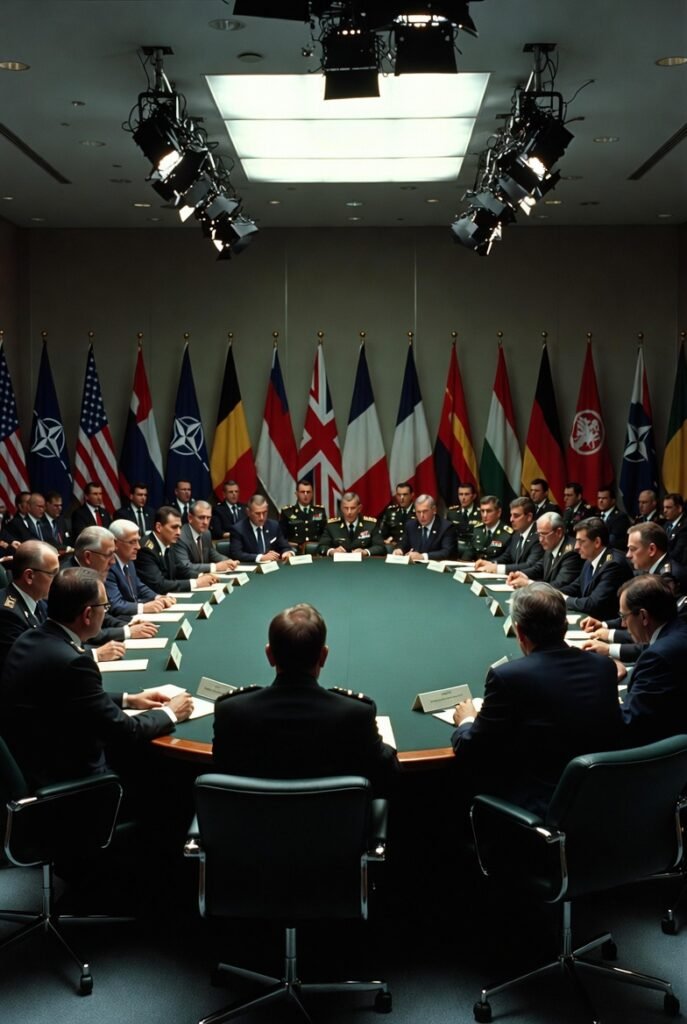
US-Europe relations 2026 The relationship between the United States and Europe has entered one of its most turbulent periods in decades. As 2026 progresses, US-Europe relations are under significant strain stretched by disagreements over NATO commitments, clashing approaches to trade, and fundamentally different views on how the West should engage with the rest of the world.
While alliances rarely break overnight, analysts and diplomats on both sides of the Atlantic are increasingly warning that the structural cracks in this partnership are becoming harder to paper over.
At the heart of today’s transatlantic tensions is a shift in how Washington perceives its global role. In 2025 and into 2026, the United States has moved toward a sharper focus on the Indo-Pacific region particularly in response to China’s growing military and economic footprint in the South China Sea.
This pivot has raised alarm bells in European capitals. For decades, American military presence in Eastern Europe was considered a cornerstone of the continent’s security architecture. Any perceived reduction in that commitment even a gradual one forces European governments to reconsider their own defense strategies.
‘The question of American reliability is no longer abstract,’ a senior European defense analyst told a Brussels policy forum in early 2026. ‘It is a practical planning issue.’
NATO remains intact, but the alliance is navigating serious internal disagreements. The core dispute: defense spending. The US has long pushed European members to meet the agreed 2% of GDP defense spending target. Progress has been uneven, and Washington’s patience appears to be wearing thin.
Beyond defense, the economic relationship between the US and the EU is also facing headwinds in 2026. The EU’s Carbon Border Adjustment Mechanism (CBAM), which came into force in phases starting in 2023, continues to be a source of friction. American manufacturers have raised concerns that the policy functions as a trade barrier that disproportionately affects US exports.
On the other side, several European industries remain concerned about US subsidy packages particularly in green technology that they argue give American firms an unfair competitive advantage in sectors the EU is also trying to develop.
The result is a trade environment marked by ongoing legal challenges, diplomatic negotiations, and a degree of mutual suspicion that would have seemed unusual between such close allies just five years ago.
One of the clearest illustrations of the US-Europe policy divide involves China. The Biden administration began the push for ‘de-risking’ reducing dependence on Chinese supply chains without fully severing economic ties. The current US posture has, in the view of many analysts, leaned further toward economic and technological decoupling.
Europe, on the other hand, has generally preferred a more cautious approach. China remains one of the EU’s largest trading partners, and many European governments are reluctant to adopt policies that could trigger economic retaliation or permanently close off trade lanes.
This divergence in approach has made it difficult to coordinate a unified Western position on China particularly in multilateral forums like the G20 and the UN.
The practical consequences of US-Europe friction extend well beyond the two parties. In the Middle East, differing approaches to regional conflicts have made coordinated Western diplomacy more difficult. European governments have generally advocated for de-escalation and dialogue, while US policy has at times involved more direct engagement with regional partners.

The Western alliance divisions 2026 represent a structural realignment of the global order. As the political divergence continues, the alliance stability will remain under extreme pressure. Staying informed on international cooperation shifts and US foreign policy vs Europe updates is now essential for understanding the future of Western civilization.
Despite the tensions, both the US and Europe have strong incentives to maintain their partnership. Trade between the two blocs runs into the trillions of dollars annually. Shared democratic values, intelligence-sharing arrangements, and decades of institutional cooperation remain powerful bonds.
The more optimistic reading of 2026 is not that the alliance is breaking apart, but that it is renegotiating its terms adjusting to a world in which both the US and Europe have become more assertive about their distinct interests and priorities.
Whether that renegotiation produces a stronger, more mature partnership or a permanent weakening of Western cohesion will likely depend on the diplomatic choices made over the next 12 to 18 months including in the context of the 2026 US midterm elections, which could shift American foreign policy priorities once again.

The US Europe Political Differences of 2026 are not a temporary hurdle; they are the result of structural foreign policy differences that have been brewing for a decade. As the transatlantic tensions 2026 continue to escalate, the “Old World” and the “New World” are discovering that their strategic interests are no longer synonymous. Whether this US Europe relations crisis results in a new, mature partnership or a total geopolitical divorce will depend on the “Key Decisions” made before the 2026 midterms.