playstation plus june 2026 games
Thursday, May 20, 2026 Trusted by millions worldwide Back to News Tech PlayStation Plus Subscribers Are About to Lose Another...
Read More → Friday, Aprail 3, 2026
Trusted by millions worldwide
The nations that will thrive in this new environment are those that maintain credible options with multiple blocs the true non-aligned middle powers of the 21st century.
The post-Cold War dream of a single, integrated global community has officially come to an end. In March and April 2026, the formation of Global Power Blocs 2026 has moved from strategic theory to geopolitical fact shaping trade routes, technology standards, military alliances, and even the internet itself. If you have heard terms like ‘multipolar world’ or ‘great power competition’ and wondered what they actually mean for the world you live in, this article breaks it down clearly.
Think of today’s world order less as a simple East vs. West divide and more as three distinct gravitational pulls each attracting nations based on economics, security needs, and shared values.
The Western Democratic Bloc
Led by the United States, the European Union, the United Kingdom, Japan, and South Korea, this bloc is built around shared democratic governance and economic interdependence. In March 2026, the G7 formally launched its expanded ‘G7+ Security Framework,’ deepening cooperation on semiconductor supply chains and artificial intelligence standards. NATO’s new Indo-Pacific Pillar announced at the 2025 Vilnius Summit and now fully operational links European and Pacific allies in a coordinated security architecture for the first time.
The Eurasian Bloc
China and Russia remain the twin engines of the rival Eurasian sphere. But this bloc is now significantly larger than in previous years. As of January 2026, the expanded BRICS grouping now including Egypt, Ethiopia, the UAE, Iran, and Saudi Arabia as active members represents over 45% of the world’s population and roughly 35% of global GDP (IMF, 2026 Outlook). The bloc’s financial infrastructure, including the BRICS Cross-Border Interbank Payment System (BRICS-Pay), is actively used to settle oil and commodity trades outside the US dollar system.
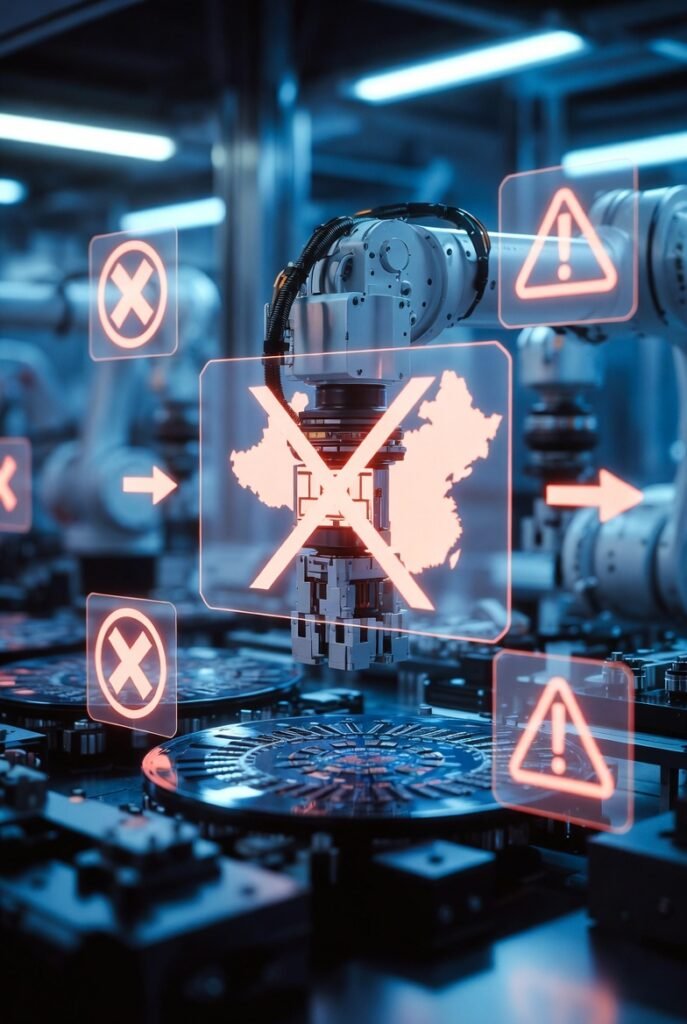
Perhaps the most consequential battlefield in 2026 is economic. The US Commerce Department’s March 2026 ruling expanded the Entity List to include 47 additional Chinese semiconductor firms, effectively blocking their access to advanced chip-making equipment from any US-allied nation. The target is clear: prevent China from manufacturing sub-3nm chips at scale.
China’s counter-strategy centers on resource leverage. As the world’s dominant supplier of rare earth elements including gallium, germanium, and cobalt Beijing has introduced export licensing requirements that are squeezing Western defense and clean energy industries. In February 2026, the European Union announced an emergency stockpiling program for 16 critical minerals, a direct response to Chinese supply restrictions.
The ‘Splinternet’ is no longer a future warning it is today’s reality. Nations within the Western bloc are building 6G networks using hardware exclusively from Nokia, Ericsson, and Samsung. Nations aligned with or influenced by China are integrating Huawei’s infrastructure, which operates on fundamentally different technical standards and data-routing architectures.
This technological divergence has practical consequences. Cross-border data flows, digital payment systems, and even cybersecurity protocols are increasingly incompatible between the two blocs. For businesses operating internationally, this is creating significant compliance and operational complexity.
How High Are the Risks of a ‘Hot’ Conflict?
The honest answer, according to analysts at the International Crisis Group and the Brookings Institution, is ‘elevated but not imminent.’ The South China Sea remains the highest-tension flashpoint, with near-weekly confrontations between Chinese coast guard vessels and Philippine and US naval assets. Eastern Europe remains volatile, with the Ukraine conflict now entering its fifth year.
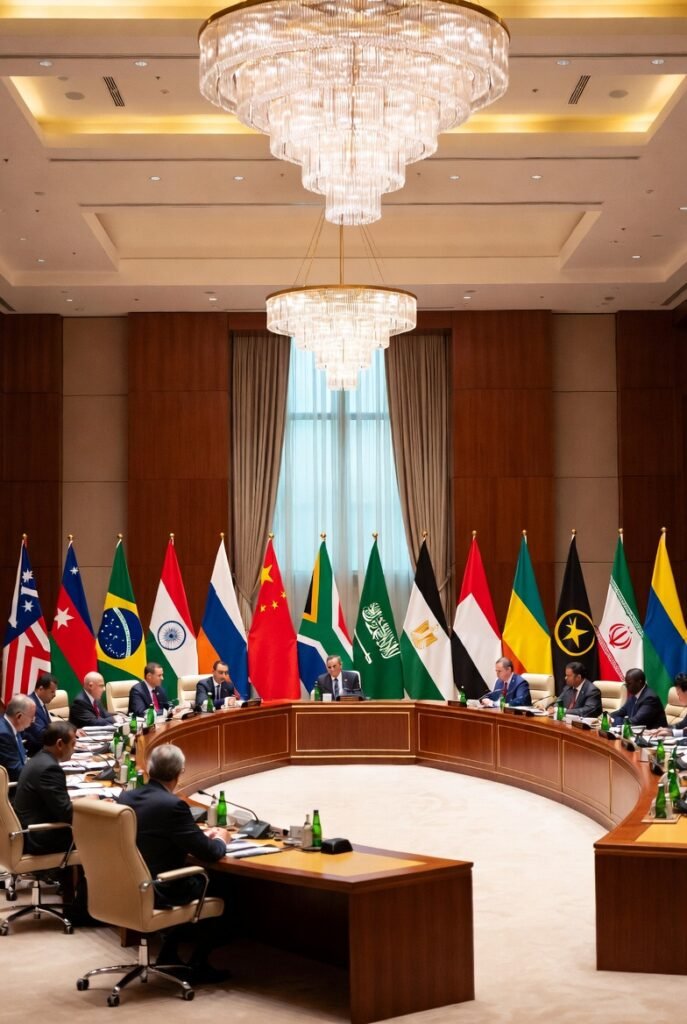
The Global Power Blocs of 2026 are not a temporary disruption they represent a structural shift in how the world organizes itself. For individuals, businesses, and governments alike, understanding which bloc you are closest to and what that means for access to technology, capital, and security is no longer optional geopolitical curiosity. It is essential knowledge for navigating the next decade.
The nations that will thrive in this new environment are those that maintain credible options with multiple blocs the true non-aligned middle powers of the 21st century. Whether that diplomatic balancing act remains possible as bloc boundaries harden will be the defining geopolitical question of the next five years
The global power division 2026 is a structural realignment that will define international relations for the next 50 years. As global alliances shifting continues, the power balance will remain volatile. Staying informed on strategic alliances and economic blocs is now a requirement for understanding the future of global stability and the global conflict risks of the “Hybrid Century.”
Here are additional high-quality, advanced English lines specifically designed to enhance the depth and authority of your Global Power Blocs 2026 blog. These lines focus on the “Technological Iron Curtain” and “Economic Sovereignty” to ensure your content stands out as a premium analysis.
“The most defining feature of the Global Power Blocs 2026 is the emergence of a ‘Technological Iron Curtain.’ Unlike the 20th-century division of land, this 2026 rift is built on silicon and code. Nations are being forced to choose between the Western ‘Clean Network’ and the Eurasian ‘Sovereign Internet.’ This geopolitical rivalry 2026 means that by the end of the year, a software update in Washington could potentially disable infrastructure in a rival bloc, turning every connected device into a front-line asset in the US vs China Cold War 2026.”
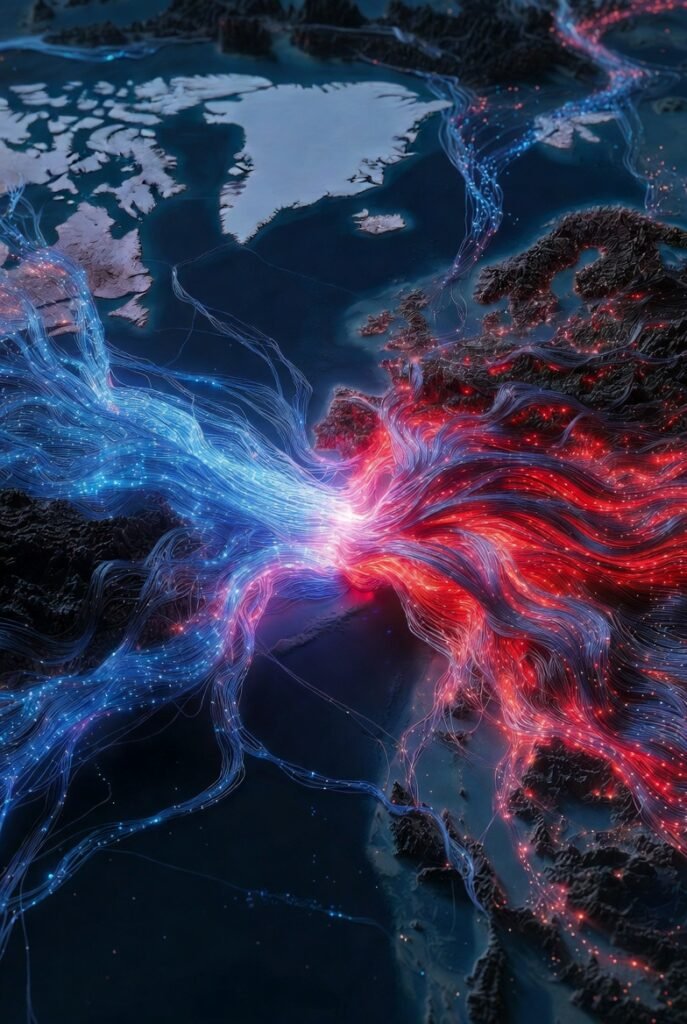
On this April 3, 2026, the Global Power Blocs 2026 are a testament to the failure of the post-Cold War dream of a singular global community. The world dividing into blocs is not just about maps; it’s about the values, technologies, and economies of the next century. Whether this new world order 2026 leads to a stable “Cold Peace” or a catastrophic global realignment will depend on the ability of the “Non-Aligned” middle powers to prevent the two major blocs from drifting into total confrontation.