playstation plus june 2026 games
Thursday, May 20, 2026 Trusted by millions worldwide Back to News Tech PlayStation Plus Subscribers Are About to Lose Another...
Read More → Monday, March 30, 2026
Trusted by millions worldwide
US protest wave 2026 In Washington D.C., several organized groups have submitted formal applications for march permits through April and May 2026, suggesting the movement shows no signs of fading in the near term.
A powerful US protest wave is sweeping across the country in 2026, with hundreds of thousands of citizens marching through the streets of New York, Los Angeles, Chicago, Houston, and dozens of smaller cities. Driven by a convergence of economic frustration, political polarization, and growing demands for government accountability, this movement is being described by political analysts as the most significant wave of civil demonstrations in the United States since the social unrest of 2020.
The roots of the current unrest run deep. According to a Gallup survey released in February 2026, only 28% of Americans said they were satisfied with the direction of the country the lowest figure recorded in over a decade. That widespread dissatisfaction has now moved off social media and into the streets
One of the most cited drivers of the protests is economic strain. Inflation, while lower than its 2022 peak, remains elevated across housing, food, and healthcare. Millions of working-class and middle-class Americans say they are struggling to keep up with the cost of living despite being employed. In cities like Phoenix, Atlanta, and Philadelphia, demonstrators are specifically calling for wage reforms, rent control measures, and expansion of healthcare access.
The unemployment rate, officially at 4.1% as of March 2026, masks deeper underemployment trends especially among young adults aged 18–34, who represent a significant portion of the protest population.
Beyond economics, many protesters are expressing a broader crisis of confidence in political institutions. Demonstrators across the country are demanding greater transparency from elected officials and calling out what they describe as broken campaign promises and legislative gridlock. Some rallies have included bipartisan participation, reflecting frustration that cuts across party lines.
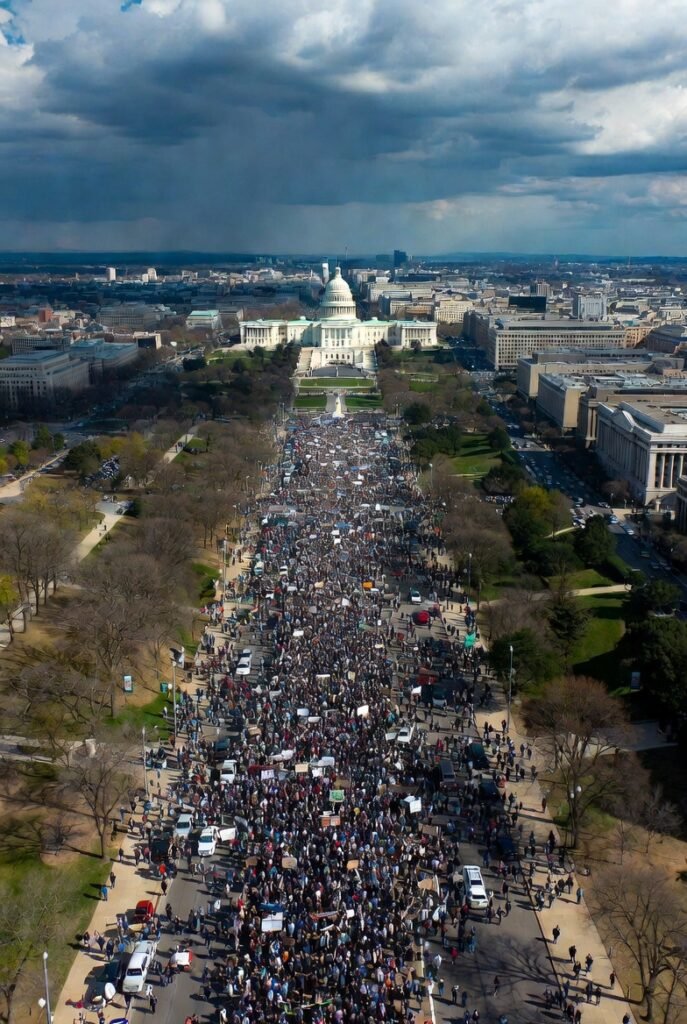
The 2026 American protest movement is notably decentralized. Unlike protest waves tied to single events, this one has erupted simultaneously across dozens of cities with overlapping but not identical demands. Here is a snapshot of key locations as of late March 2026:
Government responses have varied sharply by state and local leadership. In cities governed by Democratic mayors, most protests have been met with official cooperation designated march routes, police escorts, and public statements acknowledging protesters’ concerns. In contrast, several Republican-led states have enacted tighter crowd-control regulations and, in some cases, activated National Guard units in a precautionary capacity.
At the federal level, White House officials have acknowledged the protests but stopped short of committing to specific policy responses. Press Secretary statements have emphasized the administration’s respect for the constitutional right to peaceful assembly while calling for demonstrations to remain non-violent.
The varied government response has itself become a flashpoint. Civil liberties organizations, including the ACLU, have raised concerns about the consistency of law enforcement treatment of protesters across different states, calling for standardized federal guidelines on protest management.
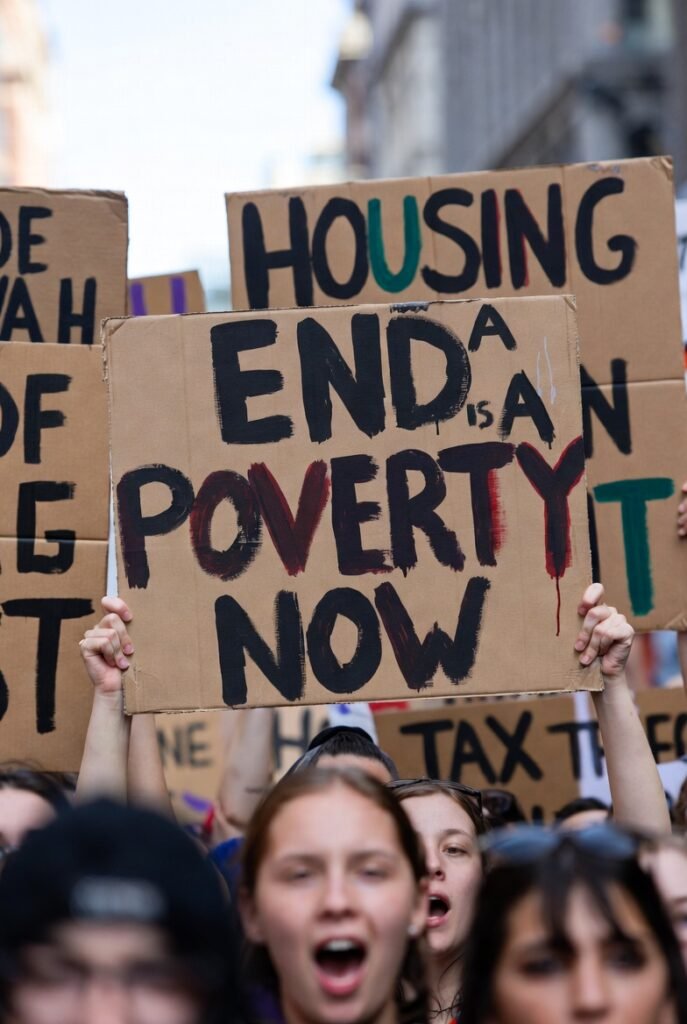
Political analysts are watching the 2026 protest wave closely as a potential indicator of voter sentiment ahead of upcoming midterm elections. Protest movements of this scale have historically influenced both primary and general election outcomes by energizing disengaged voters and pressuring incumbents to adopt more responsive policy positions.
Dr. Melissa Harrington, a political scientist at Georgetown University, told FrontierAffairs: ‘When you see sustained, geographically distributed protests with overlapping but distinct demands, that is usually a signal of systemic dissatisfaction rather than reaction to a single issue. That kind of frustration tends to have lasting electoral consequences.’
As of March 30, 2026, protest organizers have announced a national coordinated day of action planned for mid-April, which is expected to draw participants from all 50 states. Digital organizing through platforms like Signal and community-built apps has proven highly effective at scaling turnout without centralized leadership structures.
Whether this wave results in concrete policy reformsor becomes another chapter of unheeded civic expression will depend on the willingness of elected officials at all levels to engage substantively with the movement’s core demands.