
playstation plus june 2026 games
Thursday, May 20, 2026 Trusted by millions worldwide Back to News Tech PlayStation Plus Subscribers Are About to Lose Another...
Read More → monday, March 30, 2026
Trusted by millions worldwide
Global conflict 2026 This is the most comprehensive update available on where the crisis stands as of March 30, 2026 and what it means for global security and the world economy.
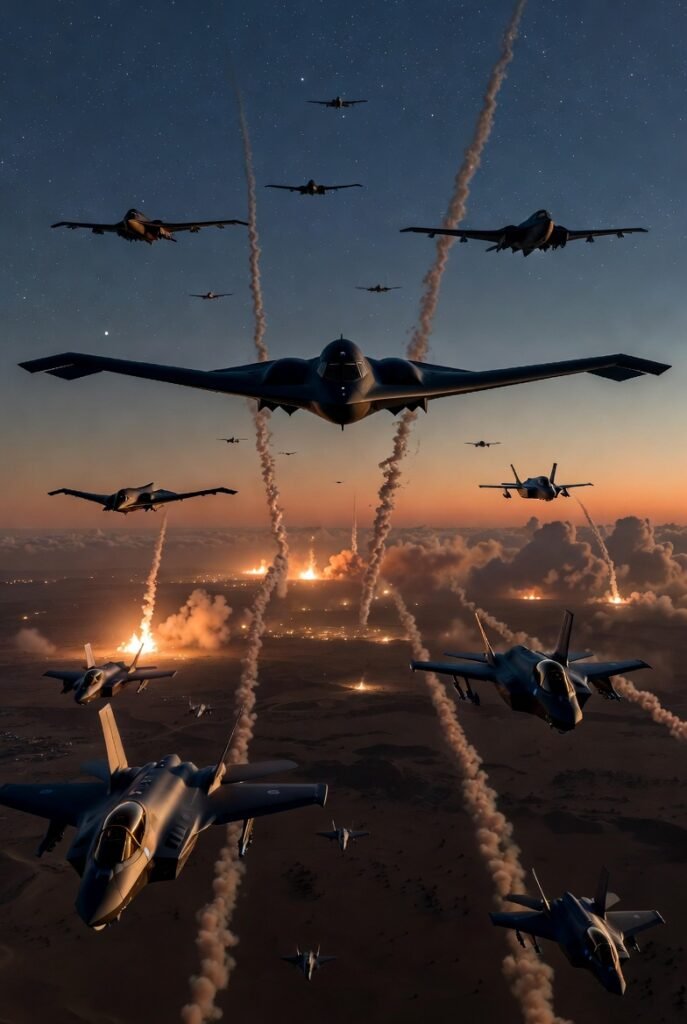
The global conflict landscape in 2026 changed permanently on February 28, when US and Israeli forces launched Operation Epic Fury a large-scale coordinated attack across Iran that killed Supreme Leader Ali Khamenei and dozens of senior military commanders. What was intended as a targeted operation to neutralize Iran’s nuclear programme and leadership has triggered a cascading crisis whose shockwaves are now reaching every continent: oil at $120 per barrel, the Strait of Hormuz effectively closed, European recession risk elevated, and genuine World War III scenarios being modelled by intelligence agencies worldwide.
| Metric | Figure | Metric | Figure |
|---|---|---|---|
| Brent crude price | $120/bbl (+67% since Feb 27) | Hormuz daily oil flow | 20M bbl/day — effectively blocked |
| Countries affected | 21+ (WHO-confirmed theatres) | US war cost to date | $200 billion+ (escalating) |
| European recession risk | 35% (Goldman Sachs, 12-month) | IEA assessment | Largest supply disruption in history |
The opening strikes of Operation Epic Fury targeted Iran’s nuclear infrastructure, command-and-control centres, and critically its senior political and military leadership. The killing of Khamenei and dozens of IRGC commanders in the first hours removed the decision-making structures through which Iran would ordinarily manage an escalation response.
What followed was not the orderly transition Washington anticipated. US military officials confirmed over 1,000 targets struck across Iran within the first 48 hours, with ACLED recording confirmed strikes in at least 26 of Iran’s 31 provinces. At least 2,400 people were killed in the first six days of fighting, including a confirmed 310 civilians.
Iran’s military response has been sustained and geographically wide. Iranian strikes have targeted Israeli population centres, US military bases in Erbil and across the Gulf region, and civilian shipping infrastructure across the Persian Gulf.
QatarEnergy’s LNG export facilities were struck by Iranian drones on March 2, temporarily suspending production.
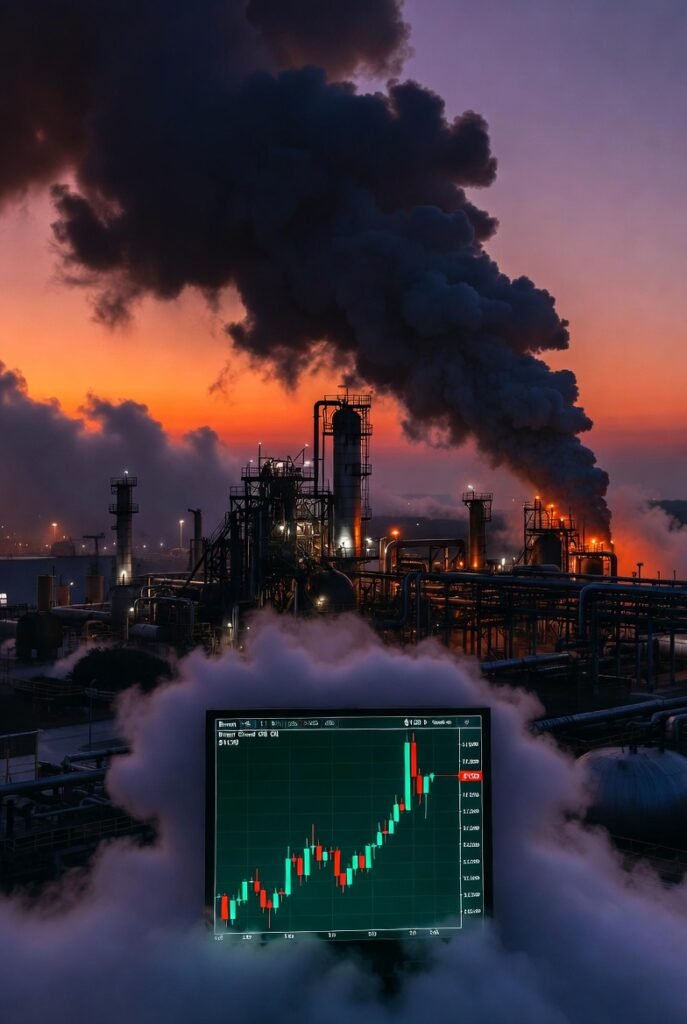
European natural gas prices have surged nearly 60 percent since February 28 tracking an even sharper trajectory than the Russia-Ukraine shock of 2022. The reason is structural: Europe diversified away from Russian gas by increasing reliance on Qatari LNG precisely the supply now disrupted by Iranian strikes on QatarEnergy infrastructure.
The European Central Bank now faces a stagflationary trap. Goldman Sachs has raised its 12-month eurozone recession probability to 35 percent. ECB economists are forecasting eurozone inflation peaking above 4 percent year-on-year in 2026, forcing rate rises at precisely the moment when growth is deteriorating across Poland, Italy, and Spain the economies with the thinnest fiscal buffers.
The military crisis is compounding Europe’s security architecture at the worst possible moment. In Lebanon, exchanges between Hezbollah and Israeli forces are eroding the fragile November 2024 ceasefire. The Council of Europe Secretary General has warned that Europe’s existing institutional framework is ‘inadequate to respond coherently’ to the crisis now unfolding at its eastern borders.
With US strategic assets heavily committed to the Gulf theater, Russia’s calculus for low-level provocations along NATO’s eastern flank has materially shifted a contingency the CFR’s 2026 Preventive Priorities Survey had flagged as a newly elevated Tier II risk.
Brent crude surged 67 percent from $72 per barrel on February 27 to approximately $120 per barrel by mid-March 2026 — approaching the all-time high of $147 recorded in July 2008. The Federal Reserve now faces its most acute policy dilemma in decades: raising rates to fight energy-driven inflation risks accelerating unemployment and triggering recession. Cutting rates to support growth risks entrenching a new inflationary cycle. Several major economies — the eurozone, UK, India, Chile, and Poland — face identical constraints simultaneously
The killing of Khamenei has introduced profound unpredictability into Iranian decision-making. No established successor commands the institutional loyalty required to exercise restraint under extreme military pressure. Hezbollah’s continued activation along the Lebanese border risks crossing Israeli red lines and rapidly expanding the conflict’s geographic scope.
Analysts at ACLED, the Soufan Center, the EUISS, and the CFR converge on a consistent conclusion: a formal World War III remains low probability but is no longer a negligible scenario. The margin for diplomatic error has contracted sharply. The window for de-escalation is open but it will not remain open indefinitely.https://www.reuters.com/world/middle-east
Operation Epic Fury was a large-scale US-Israeli coordinated military operation launched on February 28, 2026 against Iran. The operation targeted Iran’s nuclear infrastructure, command-and-control facilities, and senior leadership including Supreme Leader Ali Khamenei, who was killed in the initial strikes. It triggered the largest geopolitical crisis since the Cold War.
Geopolitical analysts including ACLED, CFR, and the EUISS assess World War III as a low-probability but no-longer-negligible scenario. Nuclear deterrence, China’s economic interests, and Russia’s Ukraine commitments are the primary constraints. The primary risks are miscalculation, escalation through proxy forces, and the physical consequences of a sustained Hormuz blockade on global food and energy systems.
Iran’s closure of the Strait of Hormuz has blocked approximately 20 million barrels of daily oil flow one-fifth of global consumption with no adequate bypass route. The IEA has described this as the largest supply disruption in global oil market history, surpassing the 1973 Arab oil embargo and the 2022 Russia-Ukraine energy crisis.
Europe is experiencing a dual shock: a 60% rise in natural gas prices since February 28 (caused by Iranian strikes on Qatari LNG infrastructure), and a security architecture under strain as US military attention shifts to the Gulf. Goldman Sachs has raised eurozone recession probability to 35% for the next 12 months.https://www.reuters.com/world/middle-east
The global conflict expansion of 2026 is the most consequential geopolitical event of the twenty-first century to date. What began as a targeted military operation against Iran’s nuclear programme has triggered the largest oil supply disruption in history, a cascading economic shock touching every continent, and a genuine escalation pathway toward broader conflict.
Diplomatic off-ramps exist. Chinese leverage over Tehran remains potentially decisive. European coherence, if achieved, could shape post-conflict stabilisation. But the window is narrow, the stakes are absolute, and the cost of miscalculation measured in lives, economic stability, and the architecture of global order has never been higher.