
playstation plus june 2026 games
Thursday, May 20, 2026 Trusted by millions worldwide Back to News Tech PlayStation Plus Subscribers Are About to Lose Another...
Read More → Friday, March 27, 2026
Trusted by millions worldwide
Gold prices 2026 war crisis |Gold price forecast March 2026 | Safe haven assets 2026 | Central bank gold buying 2026 | Gold investment strategy geopolitical risk | Inflation hedge precious metals 2026
Gold prices 2026 war crisis is once again proving why it has endured for thousands of years as the world’s most trusted store of value. As of late March 2026, gold prices are hovering near record territory, driven by an escalating global war crisis, persistent inflation, and a sharp uptick in central bank buying. For investors watching the gold prices 2026 war crisis unfold, the message is becoming increasingly clear: turbulence is here, and precious metals are responding.
The surge in gold prices this year is not happening in isolation. It reflects a convergence of powerful forces geopolitical instability, weakening confidence in fiat currencies, and a global flight toward assets that hold value when everything else becomes uncertain.
Historically, gold has rallied during periods of military conflict and geopolitical stress. We saw it during the Gulf War, after 9/11, during the Russia-Ukraine conflict in 2022, and now again in 2026 as multiple regional conflicts have raised global risk levels significantly. The pattern is consistent: when the world feels unsafe, money flows into gold.
Analysts at major financial institutions are projecting continued upward pressure through mid-2026, with some forecasts placing gold above $3,200 per troy ounce if current geopolitical conditions persist. While no forecast is guaranteed, the underlying fundamentals strongly support the bullish case.

One of the most powerful tailwinds behind gold’s rise in 2026 is inflation. War-driven economies typically increase government spending rapidly, expanding money supply and placing downward pressure on purchasing power. When currencies weaken, gold priced in those same currencies naturally rises in value.
Central banks around the world have been responding by aggressively increasing their gold reserves. Data from the World Gold Council shows central bank purchases remain elevated through early 2026, with emerging market central banks leading the charge. Countries seeking to reduce dollar dependency are turning to gold as a neutral, politically independent reserve asset.
This institutional buying provides a critical floor under gold prices. Unlike retail speculation, central bank accumulation reflects long-term strategic positioning a signal that sophisticated state-level actors see gold as essential for the years ahead.
The U.S. Federal Reserve’s monetary policy remains a key variable. In an environment where rate cuts are being discussed but not yet firmly committed to, gold faces mixed signals. However, the strength of geopolitical fear has so far overridden this dynamic in 2026, keeping gold well supported. If the Fed begins cutting rates later in 2026, gold could receive an additional significant boost on top of its existing war-driven momentum.
Investor behavior in 2026 closely mirrors what we have seen in previous geopolitical crises but with one notable difference: retail participation is higher than ever before. Digital platforms and fractional gold investment tools have made precious metals accessible to a far wider audience, amplifying demand beyond traditional institutional channels.
Short-term traders are capitalizing on gold’s price volatility, moving in and out of positions as news cycles shift. This strategy can be profitable but carries significant risk.
Long-term investors, on the other hand, are treating gold not as a trade, but as portfolio insurance a hedge against the possibility that the current global disorder becomes structural rather than temporary. Financial advisors broadly recommend maintaining between 5% and 15% of a portfolio in gold or gold-related assets during elevated geopolitical risk periods.
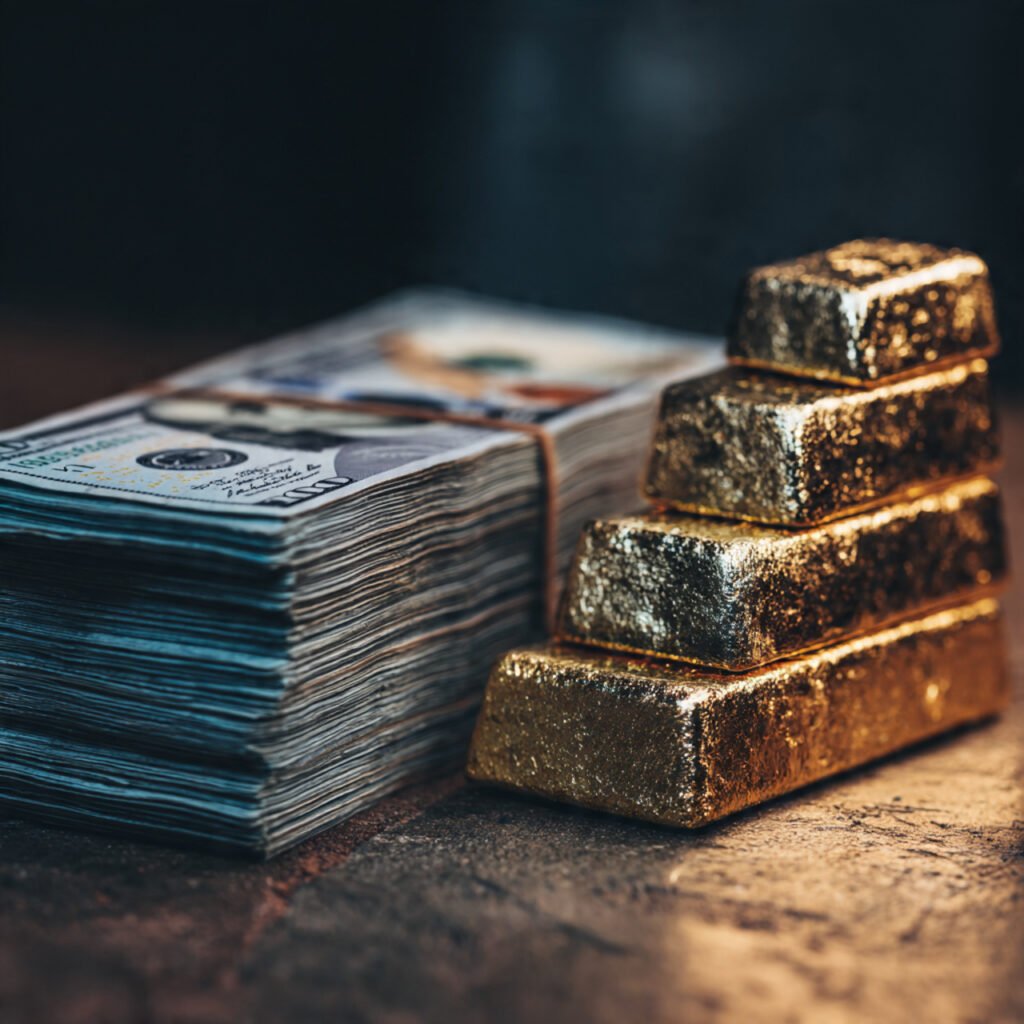
There is no single “right” way to gain gold exposure. Your choice depends on your investment timeline, liquidity needs, and risk tolerance:
Several key developments will shape gold’s trajectory through the rest of 2026:
Gold’s role as a crisis asset is not a marketing narrative it is a pattern confirmed across centuries of economic history. In March 2026, with geopolitical tensions running high, inflation remaining persistent, and central banks buying aggressively, the case for gold is as compelling as it has been in years.
Whether you are a seasoned investor or someone looking to protect savings for the first time, understanding the forces behind the gold prices 2026 war crisis is the essential first step.
Stay informed, diversify thoughtfully, and treat gold not as a speculation but as a long-term anchor in an uncertain world.