
playstation plus june 2026 games
Thursday, May 20, 2026 Trusted by millions worldwide Back to News Tech PlayStation Plus Subscribers Are About to Lose Another...
Read More → Friday, March 13, 2026
Trusted by millions worldwide
Trump Iran war approval rating 2026 | Iran war midterm elections 2026 | Americans oppose Iran war polls | gas prices Iran war economy 2026 | independent voters Iran war swing
The data on US Iran war public opinion 2026 is extensive, consistent, and politically alarming for the White House. Across seven major pollsters CNN, NPR/PBS/Marist, Quinnipiac, Reuters-Ipsos, Fox News, the Washington Post, and the Economist/YouGov five show Americans opposing the war by double digits. The Washington Post’s aggregator of ten polls conducted since the war began on February 28 records 50% opposition to 38% support. That is not a fringe reading. It is the weight of available survey evidence as of March 13.
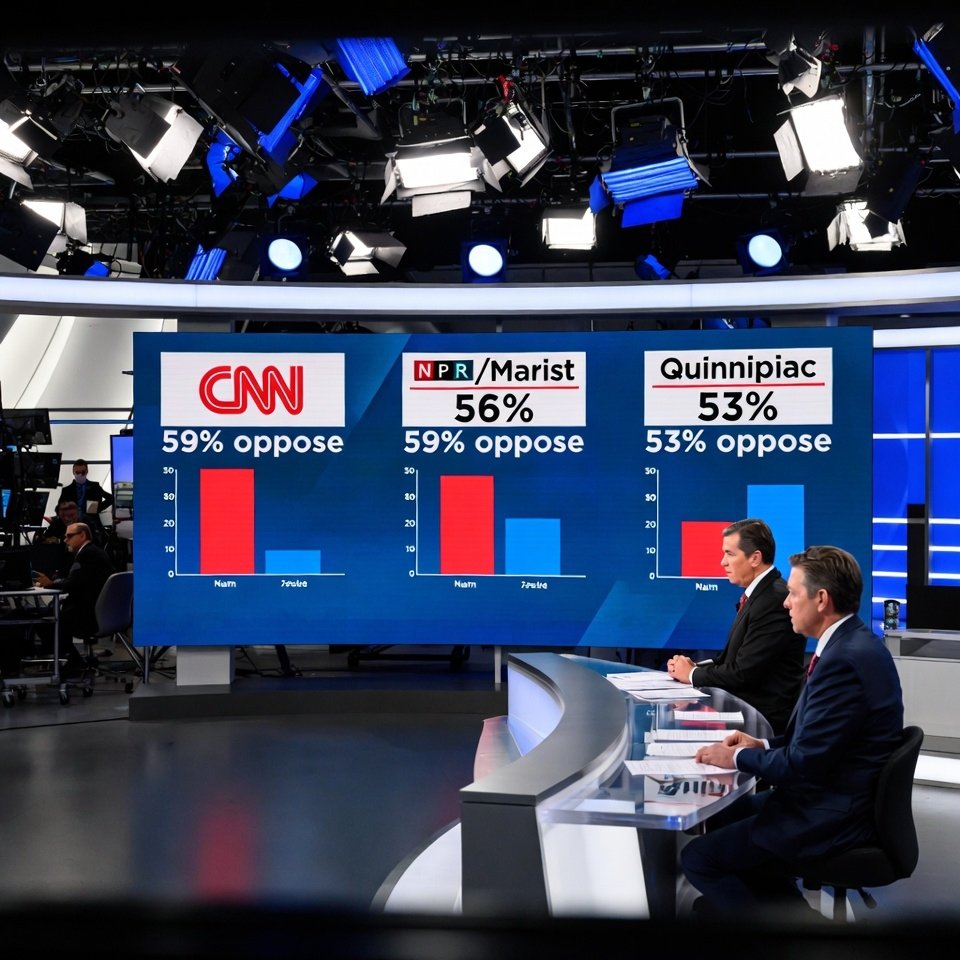
The most striking individual result came from CNN, which found 59% of Americans disapproved of the initial decision to strike Iran with strong disapproval (31%) roughly doubling strong approval (16%). The NPR/PBS/Marist poll, conducted March 2–4 among 1,591 adults with a ±2.8% margin of error, found 56% opposed to US military action, with only 36% approving of Trump’s handling of the conflict. A separate Quinnipiac survey released March 9 found 53% of registered voters opposed consistent across three independent methodologies, three separate polling firms, and three distinct sample frames.
There are, however, important nuances. A Washington Post poll released March 12 which asked about the ‘US military campaign against Iran‘ without mentioning Trump found a near-even split: 42% support, 40% oppose, 17% unsure. As CNN’s polling analyst noted, the absence of Trump’s name in the question framing may account for the shift, since views of an unpopular president tend to colour views of his actions. Furthermore, the Fox News poll recorded an even 50–50 split among registered voters suggesting the outer range of pro-war sentiment sits near parity, not majority support.
Beneath the headline opposition numbers lies an even more damaging finding. The Fox News poll the most pro-war of all major surveys asked separately whether Trump’s handling of Iran had made the US safer or less safe. By a 51% to 29% margin, registered voters said it had made the country less safe. The CNN poll recorded 56% saying a long-term military conflict between the US and Iran is ‘at least somewhat likely.’ Additionally, only 27% of Americans believe the Trump administration pursued sufficient diplomatic efforts before launching the strikes.
Consequently, the public is not simply anti-war in the abstract. Americans largely view Iran as a threat a separate CNN poll from January found 89% considered Iran unfriendly or an enemy. However, they doubt that this war, launched without congressional authorisation and without a publicly stated exit strategy, actually reduces that threat. Furthermore, 62% say the president should seek congressional authorisation before taking further military action a demand the White House has not yet addressed.
The Iran war has landed on an already fragile presidential approval landscape. As of March 11, RealClearPolitics’ aggregated average showed 43.2% approving and 54.3% disapproving of Trump’s job performance a net negative of approximately -11 points. Quinnipiac’s standalone March 9 poll recorded 37% approval against 57% disapproval.
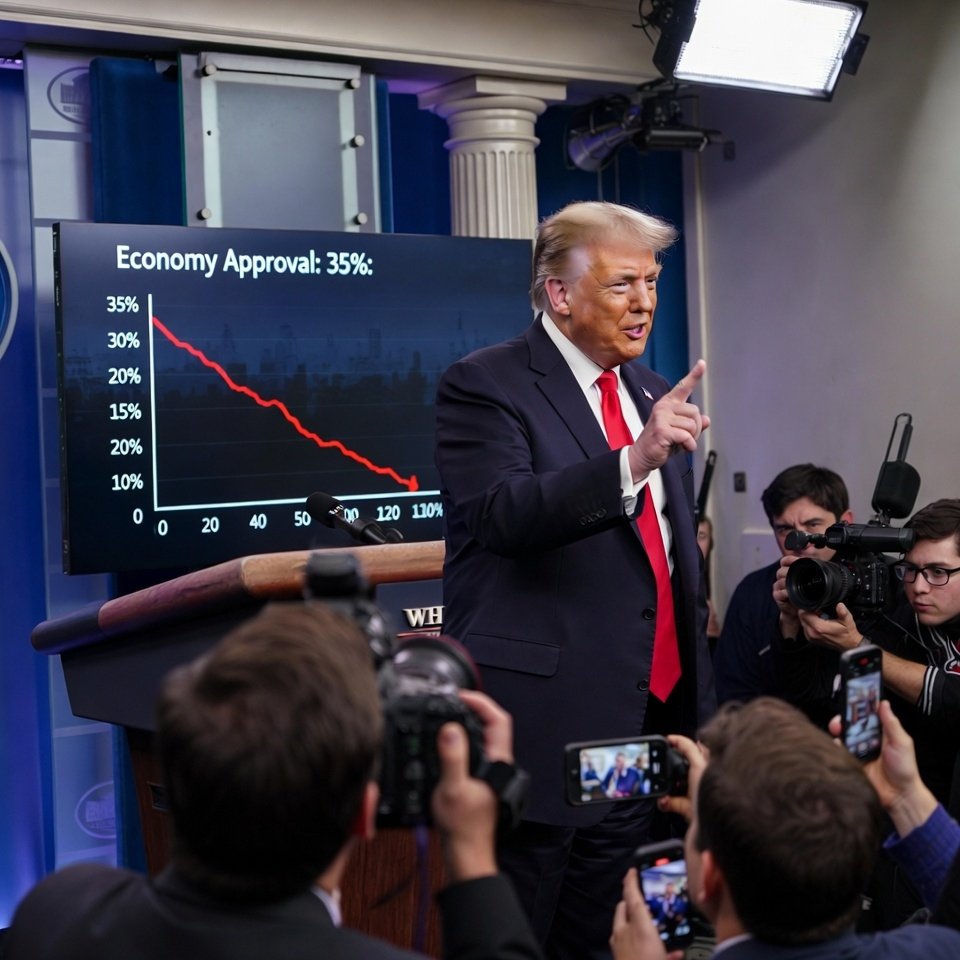
More damaging than the topline numbers are the issue-specific ratings. Trump’s economy approval from NPR/Marist now stands at 35% his worst-ever recorded score on that metric. His Iran handling approval sits at 36–38% across pollsters. His inflation rating in the Economist/YouGov survey was net negative by nearly 30 points, with 33% approving and 62% disapproving and notably, 1 in 4 respondents who said they had voted for Trump in 2024 disapproved of his performance on inflation.
Perhaps the most analytically striking finding of the entire polling landscape is what has not happened. Presidents historically receive approval bounces at the outset of military conflicts the so-called rally-around-the-flag effect. George H.W. Bush gained 29 points after the Gulf War began. Franklin Roosevelt gained nearly 20 points after Pearl Harbor. George W. Bush gained substantially after both Afghanistan and Iraq.
Trump has received none. According to G. Elliott Morris’s Silver Bulletin approval tracker, Trump’s net approval rating was -13.9 on Day 13 essentially unchanged from -13.5 at the start of the month. The war produced no measurable patriotic consolidation. Morris’s historical modelling suggests that a presidential approval deficit in the -17 to -19 range at the start of a midterm cycle predicts a loss of 36 to 37 House seats. The absence of a rally bump means the base arithmetic of the midterms has not improved for Republicans it has only become more volatile.
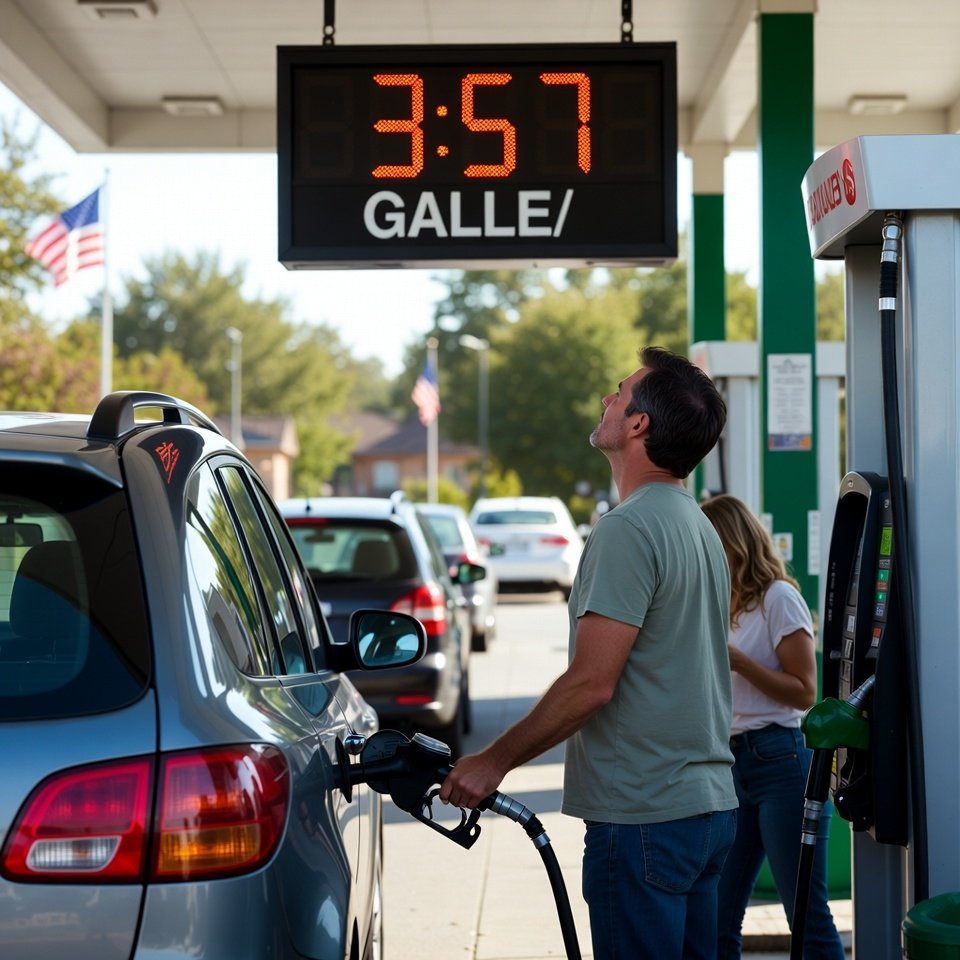
The Iran war’s sharpest domestic political edge is not strategic it is financial. Before February 28, the national average for a gallon of regular gasoline had remained below $3.00 for 13 consecutive weeks a stretch not seen since 2021. In his State of the Union address just weeks before the strikes, Trump explicitly claimed gas was ‘below $2.30 a gallon in most states,’ holding it up as a signature economic achievement.
By March 10, the AAA national average had reached $3.48 up nearly 50 cents in a single week and 58 cents from a month earlier. US crude oil, which stood at $67 per barrel the day before the Iran war began, briefly surged past $100, then settled near $90. When asked about the surge in a Sunday interview with ABC News, Trump called it ‘a little glitch.’
The political exposure is acute. A Pew Research survey conducted before the strikes found 68% of respondents were already very or somewhat concerned about gas prices a level of anxiety predating the current spike. A weekend poll from PBS and the Washington Post found 74% of registered voters are now ‘very or somewhat concerned’ the war will cause oil and gasoline prices to rise further. Stanford political science professor Jon Krosnick told Axios: ‘The price of milk is not on a sign outside of grocery stores.’ Gas prices are. They are visible, daily, and politically disproportionate.
Democrats have moved quickly to frame the war as a threat to kitchen-table economics. House Democratic Caucus Chair Pete Aguilar stated directly: ‘He’s sending billions of our tax dollars to the Middle East for another war while he’s kicking people off of healthcare and eliminating nutrition programs.’ Senator Martin Heinrich, the top Democrat on the Senate Energy Committee, warned of ‘lots of things that are unforeseen consequences’ of a war entered without a plan.
The electoral math supports the Democratic messaging. In the 2024 presidential election, Trump won independent voters by 14 points a margin that helped deliver his second term. The NPR/PBS/Marist poll now records 61% of independents opposing the Iran war, up from 49% in January. Furthermore, the same poll records a nine-point Democratic advantage on the midterm ballot test, with voters significantly more likely to vote for a Democratic congressional candidate in their district.
The war’s most dramatic single polling statistic belongs to Quinnipiac’s March 9 survey. It found 74% of registered voters oppose deploying US ground troops to Iran. Crucially, that majority includes 52% of Republicans meaning even within Trump’s own party, ground deployment fails to reach majority support. Only 12% of Americans in the CNN poll support sending ground troops. Only 20% in the Quinnipiac survey expressed any support.
Quinnipiac Polling Analyst Tim Malloy summarised the findings with precision: ‘Voters are unenthusiastic about the air attack on Iran and there is overwhelming opposition to putting American troops on Iranian soil to fight a ground war.’ The finding places a firm public ceiling on the war’s permissible scope and gives Democrats a clear benchmark against which to measure any future escalation.
The US Iran war public opinion 2026 data tells a coherent and politically consequential story. A majority of Americans oppose the war. They doubt it makes the country safer. They are paying more at the pump than Trump promised just weeks ago. They never received a clear explanation of the war’s goals. And they are demanding congressional oversight that has not arrived.
Furthermore, the president who launched this war has received no historical approval bounce a political anomaly that removes the one mechanism through which a wartime president might have offset domestic discontent. Instead, Trump’s approval on the economy has hit its worst-ever recorded level, his Iran handling ratings sit in the mid-30s across all major pollsters, and independent voters his 2024 margin of victory have moved 12 points in the wrong direction.
Consequently, as CFR president emeritus Richard Haass noted, the real political check on Trump is not Congress and barely the courts it is polls and markets. Both are giving the same signal. The question facing the White House is not whether these numbers are uncomfortable. It is whether the war ends and gas prices fall before November. If it does not, every poll conducted since February 28 suggests the 2026 midterms will produce a Democratic wave