
playstation plus june 2026 games
Thursday, May 20, 2026 Trusted by millions worldwide Back to News Tech PlayStation Plus Subscribers Are About to Lose Another...
Read More → Thursday, March 12, 2026
Trusted by millions worldwide
Iran war Day 12 update | Dubai Airport drone attack Iran | Strait of Hormuz shipping crisis | IRGC command and control Iran | Iran supreme leader missing public
News: The International, Frontier Affairs
Key Highlights
Iran’s new Supreme Leader, Mojtaba Khamenei, is injured. On March 12, 2026 the 12th day of the war triggered by US-Israeli Operation Epic Fury the Islamic Republic is fighting , its most intense military campaign in four decades, led by a man who has not appeared in public since his appointment and whose injuries have raised urgent questions about who is actually directing Iran’s war machine.
Confirmed by CNN, Reuters, The New York Times, the Jerusalem Post, and Iran’s own ambassador to Cyprus, the Mojtaba Khamenei injured 2026 story is now one of the defining uncertainties of the conflict. He suffered a fractured foot, a bruise around his left eye, and minor facial lacerations on February 28 the same airstrike that killed his father, Ayatollah Ali Khamenei, along with his mother, wife, and other family members.
Furthermore, on March 12, Khamenei issued his first communication since taking power but it was read by a state TV news anchor. He did not appear on camera. In it, he called for the Strait of Hormuz to be used as leverage and stated that attacks on Gulf neighbours would continue.
The confirmed injuries are described as ‘light’ by Iranian officials. One unnamed Iranian official told Reuters that Khamenei ‘continues to operate.’ The Jerusalem Post similarly reported that assessments indicate he remains ‘capable of carrying out his duties.’
However, the complete absence of photographs, video messages, or live statements for 12 consecutive days tells a more ambiguous story. Iran’s Ambassador to Cyprus, Alireza Salarian, .told The Guardian that Khamenei was hospitalised with injuries to his legs and arms. ‘I think he’s in the hospital because he was wounded,’ Salarian said. Consequently, even Iran’s own diplomatic representatives were relying on secondhand information.
Iranian state media, meanwhile, filled the silence with archival footage and, according to The National, AI-generated images of the new supreme leader a tactic that experts say signals an acute propaganda crisis rather than confident leadership.
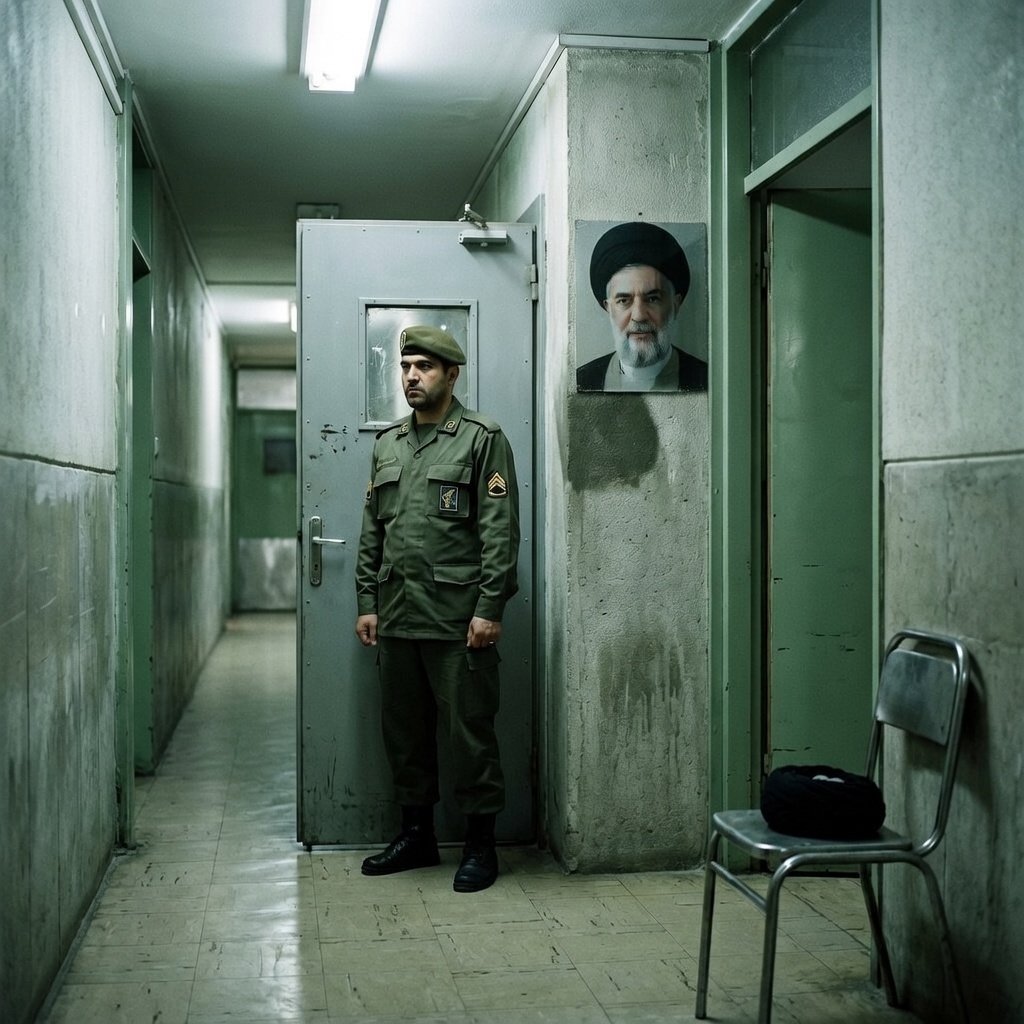
The most strategically significant question of the Iran war Day 12 update is not whether Khamenei is injured — it is whether the IRGC is operating under coherent strategic command at all.
Two events expose the fracture. First, President Masoud Pezeshkian publicly ordered a halt to Iranian attacks on Gulf neighbours. Second, the attacks continued every single day regardless. Specifically, on Day 12, Iran launched what the IRGC itself described as its ‘most intense and heaviest operation’ firing missiles at Camp Arifjan in Kuwait, targeting Doha, triggering air raid sirens in Bahrain, and striking near Dubai International Airport.
INSS analyst Sabti was direct in his assessment: ‘I don’t think he is actually running Iran. I believe the senior officials who remained from his father’s era are managing the country.’ Sabti added that Khamenei’s voice has not been heard which he considers confirmation that the new supreme leader is not functioning effectively as head of state.
In contrast, Iran’s Assembly of Experts insists Mojtaba received roughly 85% of votes from the 59-plus members present at the emergency session in Qom. Furthermore, the IRGC pledged full allegiance to him and launched its major missile barrage codenamed ‘Aliyyan waliyy Allah’ in his name. The missiles are real. Whether the orders are his remains unclear.
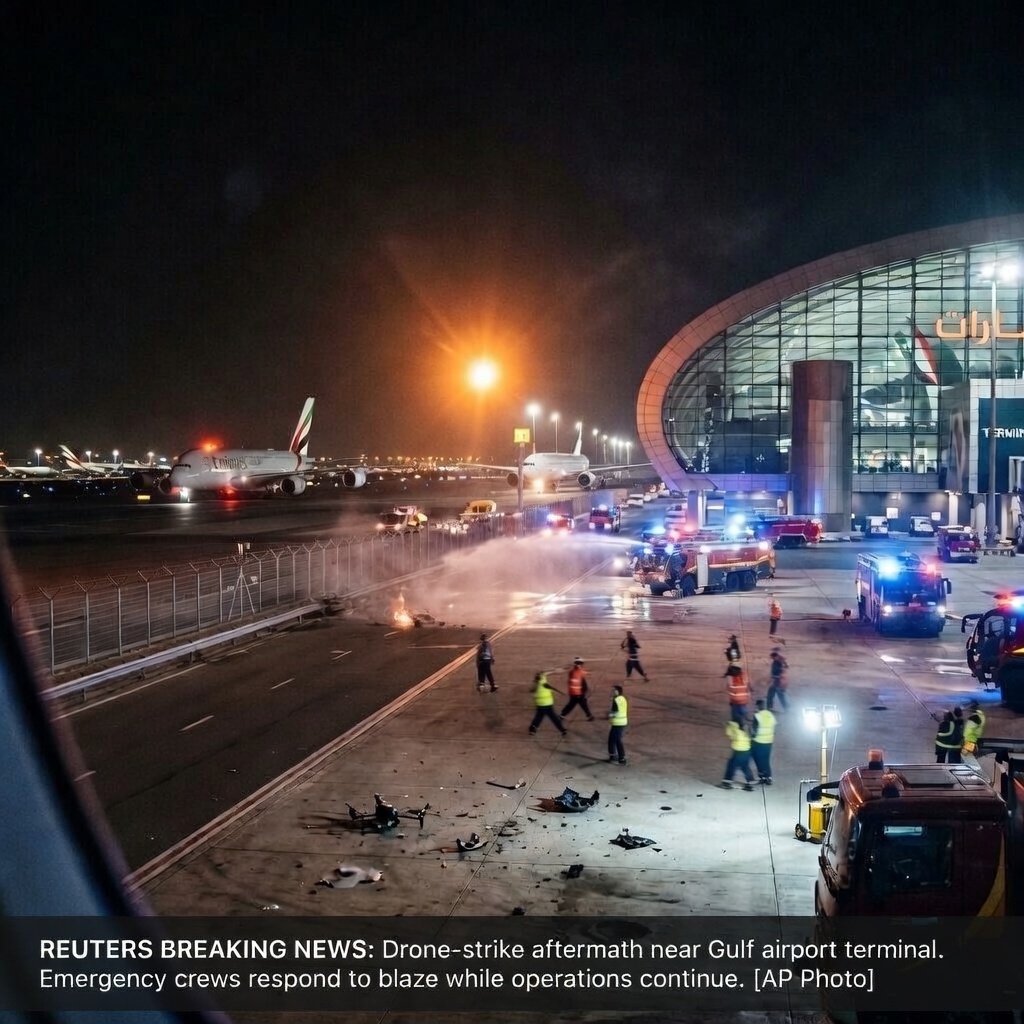
On Day 12, Iran struck near Dubai International Airport the world’s busiest hub for international travel and home to Emirates airline. Two Iranian drones fell in the airport’s vicinity, wounding four foreign nationals: two Ghanaians, one Bangladeshi, and one Indian national. The Dubai Media Office confirmed that air traffic continued normally.
This was not an isolated incident. It was the second drone strike on Dubai’s airport in the course of the conflict. Since the war began on February 28, UAE authorities confirmed 253 ballistic missiles detected, 1,440 drones tracked, six civilians killed, and 122 wounded across the country.
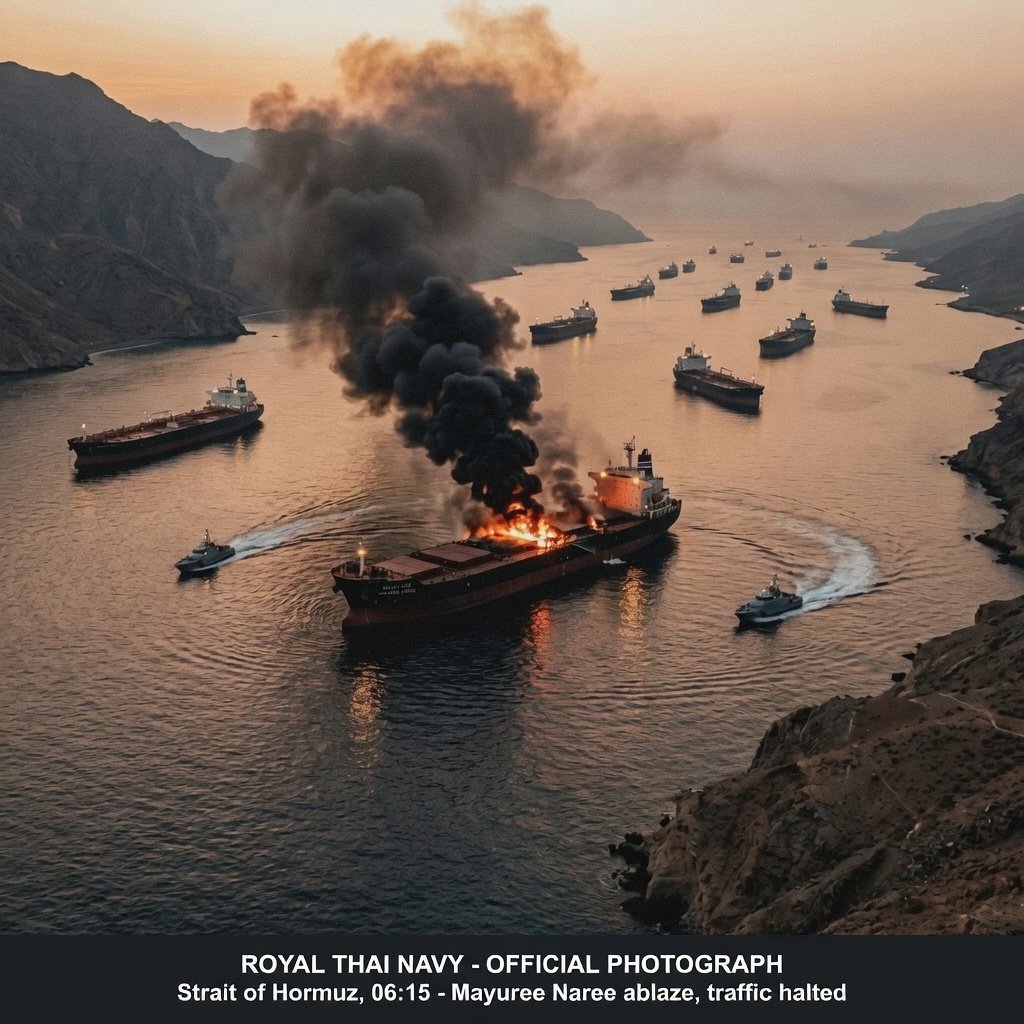
Additionally, three commercial vessels were struck on Day 12 in and around the Strait of Hormuz. The Thai-flagged bulk carrier Mayuree Naree was set ablaze north of Oman; the Omani navy rescued 20 crew members while three remained missing. A second bulk carrier, the Star Gwyneth, was hit 50 nautical miles northwest of Dubai. The Strait of Hormuz shipping crisis deepened further, with Iran’s IRGC naval commander stating that any vessel seeking to pass through the waterway must first obtain Iran’s approval or face attack.
The economic consequences of the Strait of Hormuz shipping crisis are now acute. Brent crude surpassed $100 per barrel on Day 12 up approximately 38% since the war began, having briefly touched $120 at peak disruption. Consequently, the International Energy Agency authorised the release of a record 400 million barrels of emergency crude reserves, with delivery taking approximately 120 days based on planned discharge rates.
Additionally, Trump authorised the release of 172 million barrels from the US Strategic Petroleum Reserve. The dual emergency releases represent the largest coordinated strategic petroleum intervention in history underscoring how severely the Hormuz blockade has rattled global energy markets.
Pentagon officials disclosed in a closed-door Senate briefing that the Iran war cost at least $11.3 billion in its first six days roughly $1.5 billion per day. At that rate, a 30-day campaign exceeds $45 billion; a 90-day campaign surpasses $135 billion.
Yet, as of March 12, the White House has submitted no supplemental funding request to Congress. Senator Coons acknowledged publicly that the per-day cost is not yet at a ‘steady state,’ but that assuming $1.5 billion per day ‘would be a fair guess.’ Senators on both sides of the aisle have publicly demanded answers not only about cost, but about strategy, exit conditions, and the absence of any clear war-termination plan.
Senator Murphy, after a classified briefing, stated that officials confirmed regime change and destruction of Iran’s nuclear programme were not among stated war goals. He warned of an ‘endless war’ scenario, noting that officials could not explain what would prevent Iran from rebuilding its missile and drone manufacturing capacity.
The Iran war has now killed more than 2,000 people in Iran, 634 in Lebanon, and at least 12 in Israel. Seven US soldiers have been killed and approximately 140 wounded in attacks on US bases across the region. At least seven mariners have been killed in Strait of Hormuz vessel incidents. The UN refugee agency reports 759,000 people internally displaced in Lebanon and more than 92,000 who have crossed into Syria.
Iranian state media separately reported 168 people killed in a strike on a girls’ school in Minab, southern Iran, on February 28. A preliminary US assessment suggests that US forces were ‘likely’ responsible due to dated intelligence though the strike did not intentionally target the school, according to a person briefed on the matter who spoke to CBS News.
The Mojtaba Khamenei injured 2026 story is ultimately about more than one man’s fractured foot. It is about whether Iran’s most consequential military campaign in a generation is being prosecuted under coherent political command or whether the IRGC, pledged to a wounded and largely absent supreme leader, is operating on strategic autopilot.
As of March 12, the evidence is unsettling. Dubai has been struck again. The Strait of Hormuz is effectively closed to commercial traffic. Oil prices are above $100 a barrel. The IRGC continues launching missiles at Gulf neighbours in defiance of the Iranian president’s own ceasefire directive. And Khamenei himself finally spoke but only through a newsreader, without appearing on camera, calling for the Hormuz leverage to be used.
Furthermore, the financial and human costs are accelerating simultaneously. The US has spent over $11 billion in six days with no supplemental funding request to Congress. More than 2,000 people are dead. And the war, in the words of Secretary Hegseth, is still ‘just getting started.’ The world is watching a conflict fought at full intensity, steered by a supreme leader whose grip on command remains, at best, uncertain.