
playstation plus june 2026 games
Thursday, May 20, 2026 Trusted by millions worldwide Back to News Tech PlayStation Plus Subscribers Are About to Lose Another...
Read More → Friday, March 6, 2026
Trusted by millions worldwide
No American president has ever said it so plainly. Not during the Cold War. Not after the Iraq invasion. Not even in the chaotic aftermath of Libya. In a phone interview with Axios on Thursday, President Donald Trump declared that he must be directly involved in choosing Iran’s next supreme leader making clear he finds Mojtaba Khamenei, the frontrunner and son of the assassinated Ayatollah Ali Khamenei, entirely unacceptable. Sanfranciscofrontiers “They are wasting their time. Khamenei’s son is a lightweight. I have to be involved in the appointment, like with Delcy in Venezuela,” Trump said. “Khamenei’s son is unacceptable to me. We want someone that will bring harmony and peace to Iran.” Sanfranciscofrontiers
Consequently, with those two sentences, Trump did something no sitting US president has done openly he claimed the right to determine who rules a sovereign nation of 92 million people, a nation his own military is actively bombing. Furthermore, he did so not through diplomatic back channels or carefully worded policy statements, but in a direct media interview making it American policy, on the record, for the entire world to hear.
Donald Trump has repeatedly pointed to Venezuela as a model for how regime change can occur under U.S. pressure. In early 2026, U.S. military operations led to the capture of Venezuelan president Nicolás Maduro, after which his vice-president Delcy Rodríguez emerged as the country’s acting leader and began reopening diplomatic channels with Washington.
For the Trump administration, the Venezuelan transition demonstrated what officials describe as a “controlled leadership replacement” — a scenario in which a regime figure remains in power but agrees to cooperate with U.S. strategic and economic interests.
However, applying the same playbook to Iran is far more complicated.
Unlike Venezuela, Iran possesses a 2,500-year civilisational legacy, a deeply entrenched political-religious system, and a powerful ideological foundation rooted in the Iranian Revolution. That revolution itself was partly fueled by resentment toward earlier U.S. involvement in Iranian politics, including the 1953 Iranian coup d’état that removed Prime Minister Mohammad Mosaddegh and restored the rule of Mohammad Reza Pahlavi, the Shah of Iran.
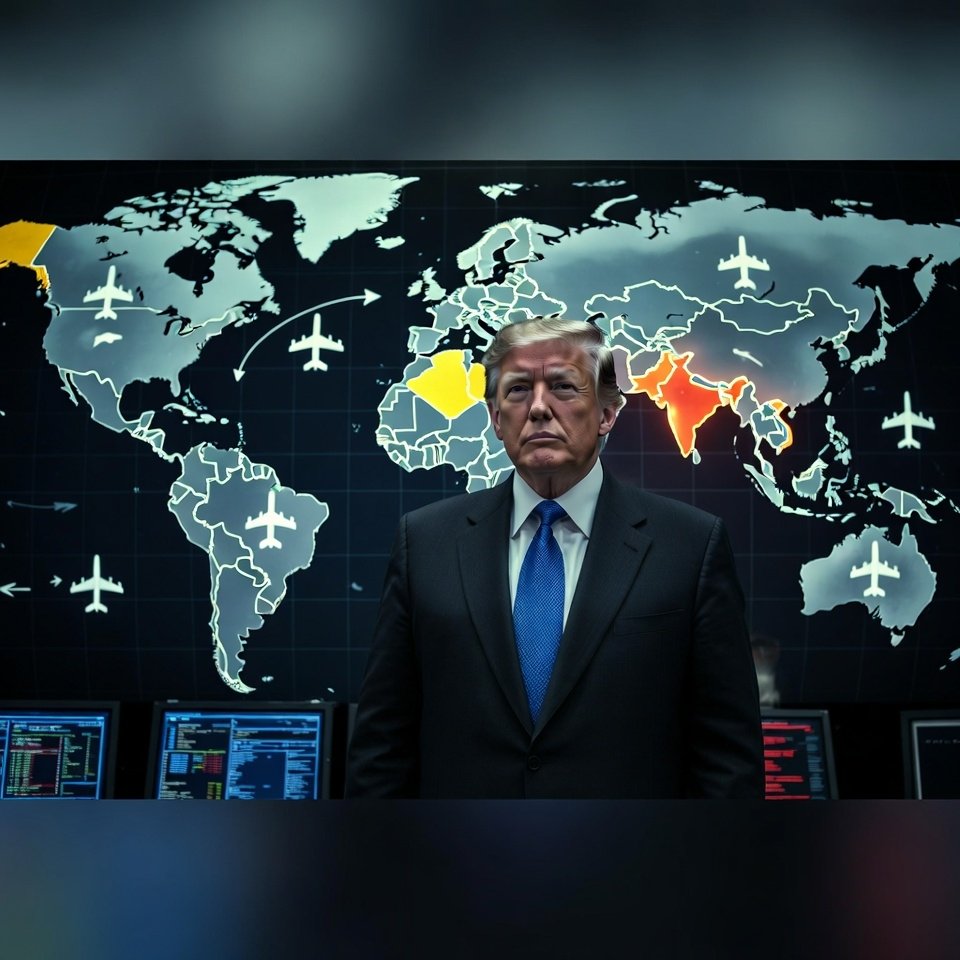
This history makes foreign influence over Iran’s leadership politically explosive. Even many Iranians who oppose the Islamic Republic often remain deeply sensitive to outside interference in national sovereignty.
Trump’s suggestion that Washington should help determine Iran’s next supreme leader following the death of Ali Khamenei has therefore triggered strong debate among analysts and policymakers. Some argue it could prolong the conflict and reinforce nationalist resistance inside Iran.
In short, while Venezuela presented a limited regional power with negotiable elites, Iran represents a historically resilient state with a revolutionary identity and nuclear ambitions — making any externally influenced leadership transition far more uncertain.
Iran’s leadership transition has quickly become one of the most closely watched political developments in the Middle East. Among the names circulating as a potential successor to Ali Khamenei, one figure stands out both inside Iran and internationally: Mojtaba Khamenei.
For many analysts, Mojtaba represents the continuation of the current system rather than a reform of it. Reports suggest that former U.S. President Donald Trump has privately expressed strong opposition to Mojtaba emerging as Iran’s next supreme leader, viewing him as a hardliner who would likely maintain Tehran’s confrontational posture toward Washington and its allies.
The debate over his possible rise to power has therefore become a central issue in the unfolding Iran succession crisis of 2026.
Born in 1969 in the city of Mashhad, Mojtaba Khamenei is the second son of Ali Khamenei. Unlike many prominent Iranian political figures, he has largely operated behind the scenes rather than holding highly visible public office.
During the Iran–Iraq War, Mojtaba reportedly served on the front lines, an experience that shaped his reputation among conservative circles in Iran. Over the years he also built connections with powerful factions within the security establishment, particularly elements of the Islamic Revolutionary Guard Corps.
His influence became widely discussed during the political turmoil following the 2009 Iranian presidential election. Critics accused him of supporting then-president Mahmoud Ahmadinejad and playing a role behind the scenes during the contested vote and the crackdown that followed mass protests across the country.
Supporters portray Mojtaba as a disciplined ideological loyalist who understands the security structure of the Islamic Republic. Critics, however, argue that his rise would effectively turn the leadership of Iran into a quasi-hereditary system, something the Islamic Republic was originally created to avoid.
Recent reports also suggest that members of the Assembly of Experts — the institution responsible for selecting the supreme leader — have faced significant pressure from factions aligned with the Revolutionary Guard to move quickly toward Mojtaba’s appointment. According to these accounts, discussions within the assembly were tightly controlled and opposition voices were given limited time to present their arguments.
Meanwhile, Israel’s defence minister Israel Katz issued a stark warning that any Iranian leader who continues policies aimed at threatening Israel or destabilising the region could become a potential military target.
Although Mojtaba Khamenei has attracted the most attention, he is not the only possible candidate to succeed Iran’s supreme leader.
One widely discussed alternative is Hassan Khomeini, the grandson of the founder of the Islamic Republic, Ruhollah Khomeini. Hassan Khomeini is often perceived as more pragmatic and somewhat closer to reform-minded political factions within Iran.
Another potential candidate is Alireza Arafi, a senior cleric who currently serves in the Guardian Council and holds an influential role within the Assembly of Experts.
While these discussions continue, Iran is currently being guided by a temporary leadership arrangement involving President Masoud Pezeshkian, judiciary chief Gholam-Hossein Mohseni-Ejei, and cleric Alireza Arafi.
However, many analysts believe that the real balance of power during this transitional period lies with the Revolutionary Guard, which continues to shape both Iran’s security strategy and its internal political direction.
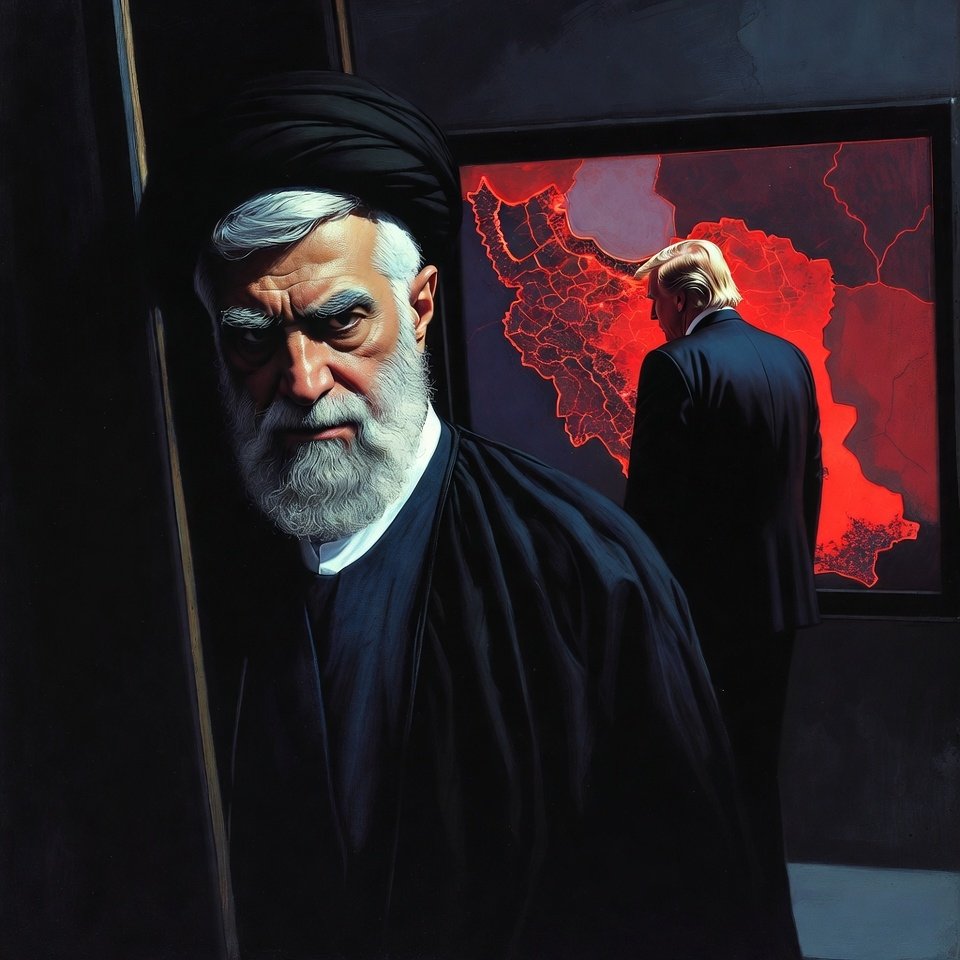
One of the most controversial moments in the unfolding Iran crisis occurred not through a statement from Washington, but through a military strike inside Iran itself.
According to several reports, Israeli airstrikes targeted a building in the religious city of Qom where members of the Assembly of Experts had gathered. The assembly — composed of 88 clerics — is the constitutional body responsible for selecting Iran’s supreme leader.
The strike reportedly took place after voting had begun but before the final count was completed. Iranian sources claimed the attack hit the assembly’s offices during the sensitive leadership selection process. Although the vote eventually continued, officials later announced that a second electoral session would be required to address procedural objections.
The timing of the strike has sparked intense debate internationally. Regardless of one’s political views about the Islamic Republic, the image of a religious governing body being targeted during a leadership vote has raised serious questions about escalation and perception.
For many observers across the Middle East and the broader Global South, the event reinforced a narrative that the United States and Israel are willing to project military power even during sensitive political transitions inside rival states.
Some analysts warn that the long-term reputational consequences of such actions could outlast the immediate military confrontation.
A central contradiction has emerged in the messaging coming from Washington during the conflict.
Officials in the U.S. administration have repeatedly insisted that the war with Iran is focused on limiting nuclear and missile capabilities rather than removing the country’s leadership. Yet statements from former U.S. President Donald Trump have complicated that narrative.
In remarks directed at the Iranian public, Trump encouraged citizens to “take over your government,” a statement widely interpreted as support for internal political change. At the same time, he rejected the idea that exiled royal figure Reza Pahlavi could realistically lead the country.
Trump also told reporters that “most of the people we had in mind are dead” when asked about potential successors to Ali Khamenei.
These comments have fuelled criticism from both supporters and opponents of the war, with analysts arguing that the administration’s goals remain unclear.
Meanwhile, the conflict itself has expanded across the region. Iranian retaliatory strikes have targeted Israel and several Gulf states hosting American military facilities, including Kuwait, Qatar, United Arab Emirates, and Bahrain.
The crisis has also spread beyond the immediate battlefield. Azerbaijan accused Iran of launching drone attacks, while U.S. naval forces reportedly sank an Iranian warship near Sri Lanka — an event described by analysts as one of the most serious naval escalations in decades.
Perhaps the most revealing insight into Washington’s strategy came from Trump himself.
While discussing Iran’s leadership future, he warned that selecting the wrong successor could lead to renewed conflict “in five years.” The comment highlighted a deeper issue: the lack of a clearly defined endgame for the war.
Critics across the political spectrum in the United States argue that Washington entered the conflict without a detailed post-war plan. Questions remain about reconstruction, diplomacy, and the political structure that might follow any collapse or transformation of the current Iranian system.
Efforts in the U.S. Congress to halt the conflict have so far failed. Both the Senate and the House debated measures aimed at limiting the president’s authority to continue military operations, but none succeeded in stopping the war.
As a result, the unusual situation now exists in which the United States is simultaneously conducting military strikes while publicly discussing who might replace Iran’s supreme leader.
The Trump Iran supreme leader 2026 saga is more than a diplomatic controversy. It offers a glimpse into a broader transformation of global politics.For decades, international conflicts were often framed within institutions such as the United Nations or multilateral diplomatic frameworks. In this crisis, however, decisions appear increasingly driven by military capability and unilateral political statements.Whether Washington can actually influence the leadership of a country with more than 90 million people remains deeply uncertain.
Inside Iran, the powerful Islamic Revolutionary Guard Corps continues to play a decisive role. The Assembly of Experts, despite the disruption caused by the bombing in Qom, is still meeting to determine the country’s next supreme leader.
What is clear is that the geopolitical consequences of this moment will extend far beyond Iran itself.Governments in capitals such as Beijing, Moscow, and Ankara are closely watching how the United States exercises power during this crisis and what it may mean for the future of international order.As the situation continues to evolve, analysts warn that the Iran succession crisis of 2026 could reshape the strategic balance of the Middle East for years to come.