Global War Crisis 2026: Middle East Conflict Spreads to Europe & America
monday, March 30, 2026 Trusted by millions worldwide Back to News Politics Global War Crisis 2026: Middle East Conflict Spreads...
Read More → 

Friday, March 27, 2026
Trusted by millions worldwide
Pakistan Iran peace talks 2026 | Ishaq Dar Iran indirect talks | Asim Munir Trump diplomacy 2026 | US Iran 15-point ceasefire proposal | Iran five conditions peace deal 2026 https://www.aljazeera.com/
Pakistan is mediating the Iran war because it is, at this precise moment in history, the only country on earth that both Washington and Tehran trust enough to carry each other’s most sensitive messages. On March 26, 2026, Pakistan’s Deputy Prime Minister and Foreign Minister Ishaq Dar made it official, posting on social media: ‘US-Iran indirect talks are taking place through messages being relayed by Pakistan.’ He confirmed Washington had shared a 15-point proposal and that Iran was ‘deliberating upon’ it.
The announcement confirmed what Bloomberg, NPR, NBC News, and Al Jazeera had been reporting for days: Pakistan had quietly emerged as the world’s most consequential back-channel in the most dangerous geopolitical crisis since the Cold War. Consequently, the question every foreign policy analyst from Washington to Beijing is now asking is not whether Pakistan is mediating it is why Pakistan, specifically, and what that means for whether this war ends or escalates.
The answer involves geography, personal relationships, nuclear credibility, and a rare alignment of incentives that no other country in the world currently shares.
The US-Iran war created an immediate and urgent need for a trusted third party. Washington refused direct talks with Tehran. Tehran publicly rejected any American framework and insisted it was ‘only exchanging messages, not negotiating.’ Yet both sides understood that uncontrolled escalation particularly around the Strait of Hormuz, which carries 20% of global oil risked a global economic collapse neither could fully control.
Someone had to carry the message. The candidates were limited. Saudi Arabia, though willing, is militarily dependent on Washington and viewed with deep suspicion by Tehran. Turkey which alongside Egypt also extended support for Pakistan’s initiative is perceived by Washington as too unpredictable for the most sensitive communications. China is too strategic a US rival to be trusted with the message content. Russia is actively hostile to American interests. Oman, which hosted earlier nuclear negotiation tracks, carried messages at a preliminary stage but lacks Pakistan’s combination of military clout and personal access.
Pakistan fit the gap uniquely. Mehran Kamrava, a Gulf studies expert quoted by Al Jazeera, was direct: ‘Pakistan’s importance also stems from its standing as a major Islamic country with considerable credibility. It has ties with the Gulf, with Saudi Arabia, and with Iran; everybody is open to Pakistan playing a mediating role. Iran has publicly praised us, and in that sense, Pakistan is well-placed to make a positive contribution.’
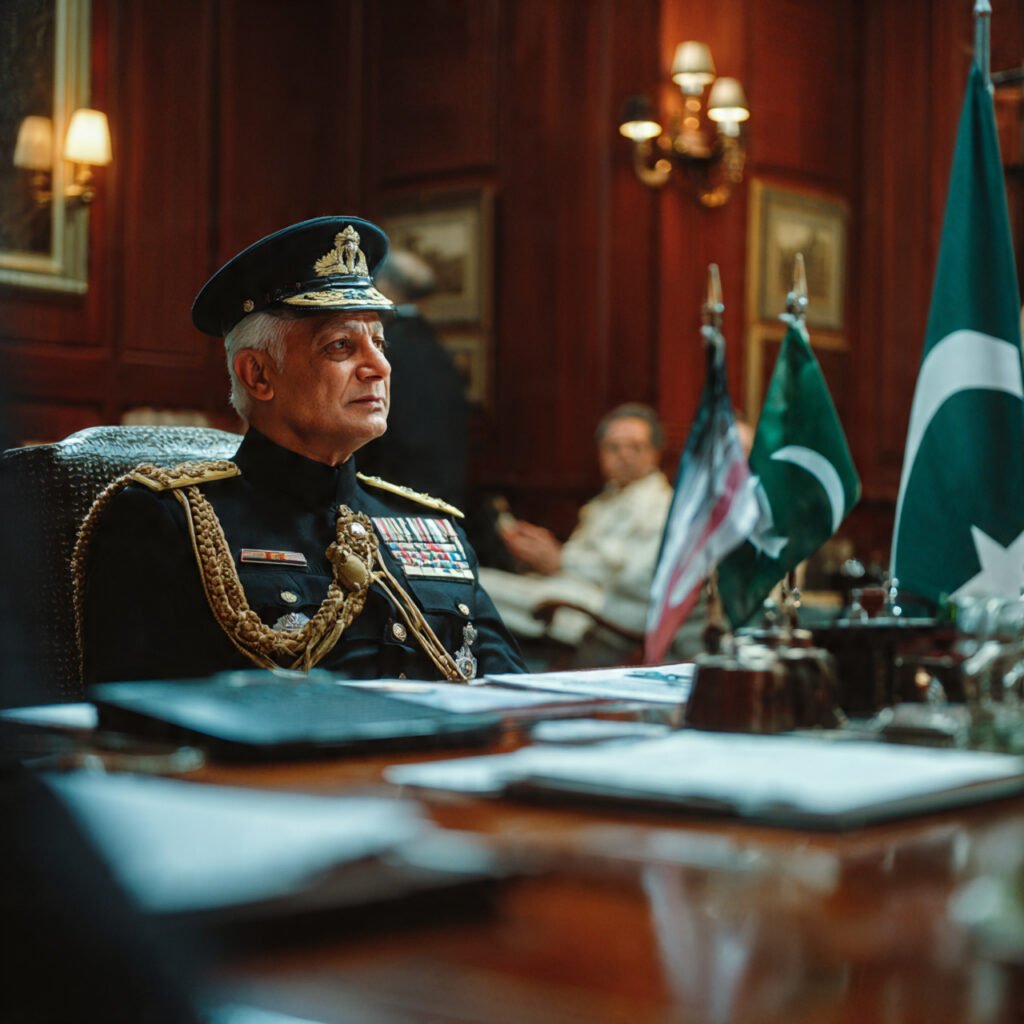
At the centre of why Pakistan is mediating the Iran war is a personal relationship that most Western coverage has underweighted. Field Marshal General Asim Munir Pakistan’s Army Chief, promoted to the first field marshal in the country’s history in 2025 spoke directly with President Trump on Monday, March 23, 2026, Bloomberg confirmed from people familiar with the discussions.
Qamar Cheema, executive director of the Islamabad-based Sanober Institute and a figure considered close to Pakistan’s government and military, told NPR that Witkoff ‘has a direct connection’ to Munir. ‘They have a good working relation,’ he said. Trump himself had spoken warmly about Munir in February, calling him ‘a great general’ and ‘a great guy’ and had hosted the field marshal at the White House in 2025, to the visible irritation of India.
This direct access is not accidental. It is the product of sustained engagement between Pakistani and American military leadership built over years. In the crisis moment of late March 2026, that pre-existing trust gave Islamabad an entry point that no other country could manufacture overnight.
Pakistan is the only Muslim-majority nuclear power in the world. It does not host US military bases on its soil. And critically it has historically refused to join any anti-Iran military coalition, even under sustained US pressure. These three facts, taken together, give Pakistani diplomats a level of credibility in Tehran that American allies simply cannot claim.
Iran, a country that has pursued its own nuclear ambitions for decades, views Pakistan not as a client state of the West but as a sovereign Islamic nuclear power that has maintained strategic autonomy. When Pakistan speaks, Tehran listens not as a supplicant carrying Washington’s demands, but as an equal power with its own interests in regional stability. Additionally, Pakistan shares a 900km border with Iran and hosts the world’s second-largest Shia Muslim population making the two countries neighbours in every meaningful sense of the word.
The concrete substance of the Pakistan-mediated exchange is, as of March 27, the most important diplomatic document in the world that nobody has officially published. The full text of the US 15-point proposal has not been released, and NPR has confirmed it has not seen the document. However, Israel’s Channel 12 published what it described as the proposal’s contents, which Al Jazeera cross-referenced against earlier US statements.
According to those reports, the US 15-point proposal includes: a 30-day ceasefire while the two sides negotiate longer-term terms; the complete dismantling of Iran’s nuclear facilities at Natanz, Isfahan, and Fordow; a permanent commitment from Iran to never develop nuclear weapons; the full reopening of the Strait of Hormuz; and a comprehensive end to Iran’s support for proxy groups across the region.
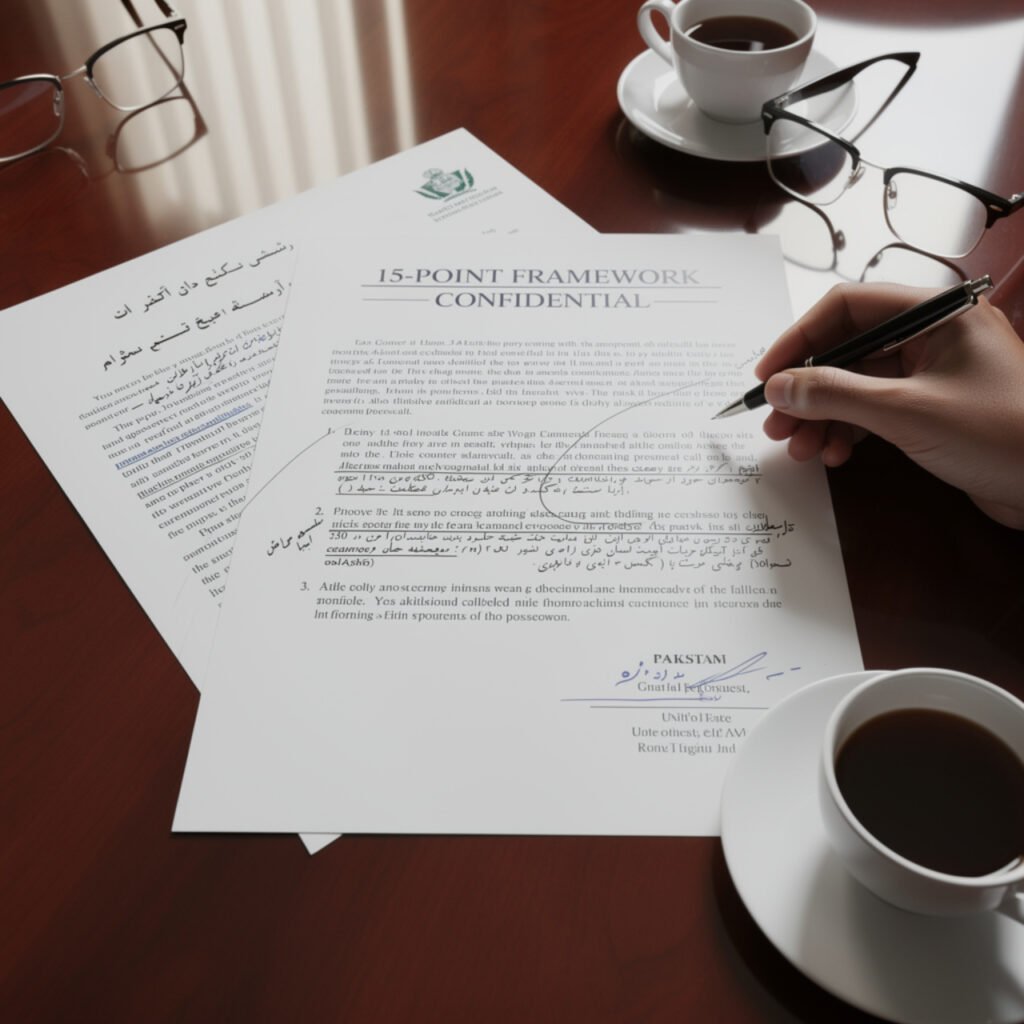
End to aggression by the enemy, concrete guarantees preventing the recurrence of war, clear determination, guaranteed payment of war damages and compensation, comprehensive end to the war across all fronts including against all resistance groups, recognition of Iran’s sovereignty over the Strait of Hormuz.
Iranian FM Abbas Araghchi — Iran’s five counter-conditions, as reported by OPB/NPR — March 26, 2026
Iran’s formal counter-conditions amount to a near-total rejection of the US framework on every structural point. Tehran demands sovereignty over Hormuz the US insists Hormuz is an international waterway. Tehran demands war reparations the US has made no indication it is willing to pay them. Tehran demands a comprehensive ceasefire across all resistance fronts the US and Israel have no agreement on this. The gap between the two positions, as of March 27, is wide. Whether Pakistan can narrow it is the central question of the next 72 hours.
Pakistan’s mediation role is real, confirmed, and consequential but three structural obstacles threaten to undermine it.
The most significant obstacle to any Pakistan-brokered deal is not in Islamabad, Washington, or Tehran. It is in Tel Aviv. NPR’s sources in Israel confirmed on March 26 that Israel does not want the war to end and is hoping for ‘several more weeks’ of military operations. An Israeli official told NPR that the military is ‘speeding up its targeting in Iran over the next 48 hours, focusing on trying to hit Iran’s arms factories as much as possible in case a ceasefire is declared.’ Furthermore, Israel’s defense minister Israel Katz confirmed that IRGC Navy Commander Alireza Tangsiri was killed in an overnight strike a development that Islamabad sources also privately confirmed to NPR. Kamrava was blunt: ‘Israel does not want an end to the war and does not want the US to negotiate with Iran, directly or through intermediaries like Pakistan.’
Tehran has maintained consistently that it is not negotiating with Washington. Iranian officials described the exchange as ‘only passing messages.’ Iran’s foreign minister said the country wanted to end the war only ‘on our own terms.’ Iran’s Tasnim News Agency called the process ‘an effort to sow discord within Iran.’ This semantic line between message relay and negotiation is diplomatically critical: it allows Tehran to engage without publicly conceding that it is talking to the US, preserving domestic political standing while the channel remains open. For Pakistan, it means the mediation must work by creating facts rather than optics.
Pakistan itself is operating under acute domestic pressure. The country is managing an IMF structural adjustment programme, elevated inflation, and a power sector in crisis. Opposition politicians have publicly questioned whether a government managing these challenges has the institutional bandwidth to sustain high-stakes shuttle diplomacy. Former diplomat Salman Bashir, however, offered the counterpoint to NPR: ‘Pakistan’s relations with the Trump administration have been very good, and we have been talking to Iran as well. It would very much be in our interest, because we could be affected by this conflict.’ That interest economic relief, potential US backing for debt negotiations, and access to post-war reconstruction contracts gives Islamabad a strong incentive to sustain the role.
No country enters a geopolitical minefield without calculating its own interests, and Pakistan is no different. Successfully brokering even a partial ceasefire or a narrowed negotiating framework would deliver multiple strategic benefits: potential US backing for IMF debt relief; Saudi investment guarantees (Pakistan signed a mutual defence pact with Riyadh in September 2025); access to Iran reconstruction contracts; and a permanent reset of Pakistan’s international image.
That last benefit may be the most significant. For years, Pakistan has been portrayed internationally as a source of regional instability a characterisation reinforced by its domestic political turbulence. Even India’s senior politician Shashi Tharoor publicly called it ’embarrassing’ that Pakistan not India was chosen as the mediator, acknowledging Islamabad’s surprising new diplomatic standing. That reaction, from a rival that rarely offers Pakistan compliments, tells its own story about how dramatically this moment reshapes Islamabad’s global positioning.
Trump’s willingness to extend the Hormuz deadline specifically citing the Pakistan channel is the most powerful institutional endorsement Islamabad has received. It signals that Washington trusts Pakistan enough to let it carry its most sensitive diplomatic messages in an active war and to delay military action on the basis of that trus
Why is Pakistan mediating the Iran war? Because it is the only country on earth that Washington will give its 15-point proposal to, that Tehran will accept messages from, that Saudi Arabia’s September 2025 defence pact makes diplomatically credible in the Gulf, and that Field Marshal Asim Munir’s direct line to Donald Trump makes operationally effective. Geography, nuclear credibility, personal relationships, and historical precedent all converged at exactly the right moment.
Furthermore, Pakistan is not mediating from a position of strength it is mediating from a position of uniqueness. It does not have China’s economic weight, Turkey’s NATO membership, or Oman’s decades of quiet mediation experience. What it has is a combination of access, credibility, and incentives that no other single country can currently replicate.
Whether the Pakistan channel produces a ceasefire before Trump’s extended April 6 deadline, or collapses under the weight of Iran’s sovereignty demands, Israel’s military timetable, and the fundamental gap between the two sides’ positions, remains the defining diplomatic question of the Iran war. What is already settled is this: Pakistan’s role in March 2026 has permanently changed how the world understands Islamabad’s place in global affairs. That is not a small achievement for a country the world had largely written off.


 Optimized by Seraphinite Accelerator