US Protest Wave 2026: Why America Is Suddenly Erupting
tuesday, March 31, 2026 Trusted by millions worldwide Back to News Politics US Protest Wave 2026: Why America Is Suddenly...
Read More → 

tuesday, March 31, 2026
Trusted by millions worldwide
This is the full breakdown of what happened, who turned out, and why political analysts are calling it a potential turning point in American politics.
The US protest wave of 2026 reached a historic scale on Saturday, March 28, when an estimated eight million Americans joined more than 3,300 rallies across all 50 states from Manhattan skyscrapers to the main streets of Driggs, Idaho, and Yuma, Arizona. Under the banner of the ‘No Kings’ movement, demonstrators gathered to voice opposition to a range of policies and actions by the Trump administration. If the organizers’ figures are confirmed independently, it would make March 28 the single largest day of domestic political protest in American history.
| Stat | Figure | Stat | Figure |
|---|---|---|---|
| Estimated attendees | 8 million+ (organizer est.) | Rallies and events | 3,300+ across all 50 states |
| Flagship — Minneapolis | 200,000+ (Springsteen performed) | New York City | 350,000+ (org. est.) — 0 arrests |
| Los Angeles arrests | 74 (after dispersal order) | Denver arrests | 9 (after road blockade) |
| Outside major cities | ~2/3 of all events | Previous record (Oct 2025) | 7 million / 2,600 events |
The No Kings movement is a progressive coalition of activists and grassroots organisers led principally by Indivisible, co-founded by Leah Greenberg. The movement bills itself as nonviolent opposition to what organisers describe as the consolidation of executive power. Its name is drawn deliberately from American revolutionary history the foundational rejection of monarchy that underpinned the Declaration of Independence in 1776.
March 28 marked the third nationwide No Kings day of action since Trump returned to office. The first mobilisation, in early 2025, drew millions. The second, in October 2025, drew an estimated seven million people across approximately 2,600 events. The March 2026 mobilisation exceeded both more than one million additional attendees and 700 more events, with organisers reporting that nearly two-thirds of participants attended events outside major metropolitan areas.
If the organizers’ figures are confirmed independently, it would make March 28 the single largest day of domestic political protest in American history.
This is the full breakdown of what happened, who turned out, and why political analysts are calling it a potential turning point in American politics.
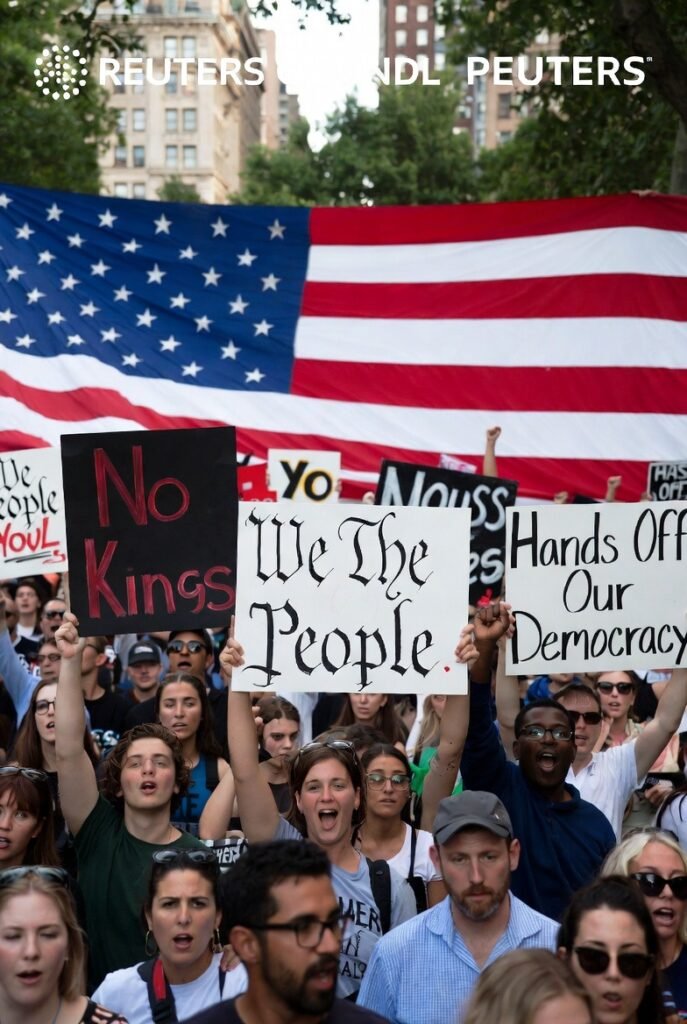
President Trump launched Operation Epic Fury against Iran on February 28, 2026, without a Congressional authorisation vote, UN mandate, or publicly stated legal justification. At least 13 US service members have been killed. Protesters across dozens of cities described the operation using language ranging from ‘illegal war’ to ‘a war Congress never approved.’ Carina Kagan, a mother whose daughter serves in the US Army, drove two hours to attend a rally: ‘He says some lives will be lost but none of his kids are out there.’
In January 2026, federal immigration agents killed two US citizens Renee Good and Alex Pretti during an ICE operation in Minneapolis. Dozens of civil lawsuits followed. The March 28 flagship protest was held in Minneapolis specifically to commemorate these deaths. Protesters described federal immigration tactics as involving military-style raids and detention without due process claims that ICE and the Trump administration have disputed.
With Brent crude above $120 per barrel and US gas prices above $5 per gallon in California driven in large part by the Strait of Hormuz disruption following the Iran operation working-class Americans are feeling the economic consequences of foreign policy decisions at the pump. Goldman Sachs has pegged US recession probability at 30 percent over 12 months. Protesters in Vermont, Arizona, and Idaho cited rising costs as a central personal grievance.
The Department of Homeland Security has been operating under significant strain since February 2026, with TSA staffing shortages creating multi-hour airport security lines affecting millions of ordinary Americans. For many protest attendees who described themselves as politically unaffiliated, the disruption to daily government services was cited as a personal trigger for participation.
| City | Est. Crowd | Key Events |
|---|---|---|
| Minneapolis | 200,000+ | Flagship event; Bernie Sanders speech; Bruce Springsteen and Joan Baez performed; Robert De Niro address |
| New York City | 350,000+ (org.) | March from Columbus Circle; Robert De Niro, Rev. Al Sharpton, NY AG Letitia James; NYPD: zero arrests |
| Los Angeles | Hundreds of thousands | 74 arrested after dispersal order; ~1,000 near Roybal Federal Building; Grand Park rally |
| Washington D.C. | 200,000+ (Oct. baseline) | Lincoln Memorial and Washington Monument rallies; National Mall event; Memorial Bridge march |
| Boston | Large crowd (drone footage) | Boston Common rally; Sen. Warren: 'Fight back' speech against current policies |
| Denver | Thousands | 9 arrested after road blockade; police deployed smoke and pepper balls; unlawful assembly declared |
Law enforcement responses varied significantly by city. The NYPD reported zero protest-related arrests across all five boroughs of New York. In Los Angeles, the Department of Homeland Security stated that approximately 1,000 people surrounded the Roybal Federal Building, with some individuals throwing rocks, bottles, and concrete blocks at officers leading to 74 arrests by LAPD for failure to disperse and two federal arrests for assaulting law enforcement. Denver police declared an unlawful assembly and deployed smoke and pepper balls, resulting in nine arrests.
The White House made no formal public acknowledgement of the March 28 rallies. Trump previously called the October 2025 No Kings protests ‘a joke,’ saying the demonstrators were ‘not representative of this country.’ He subsequently posted AI-generated images of himself wearing a royal crown which protest organisers described as directly reinforcing their messaging. Trump and his allies have argued that the protests are orchestrated by political opponents and do not reflect mainstream American opinion.
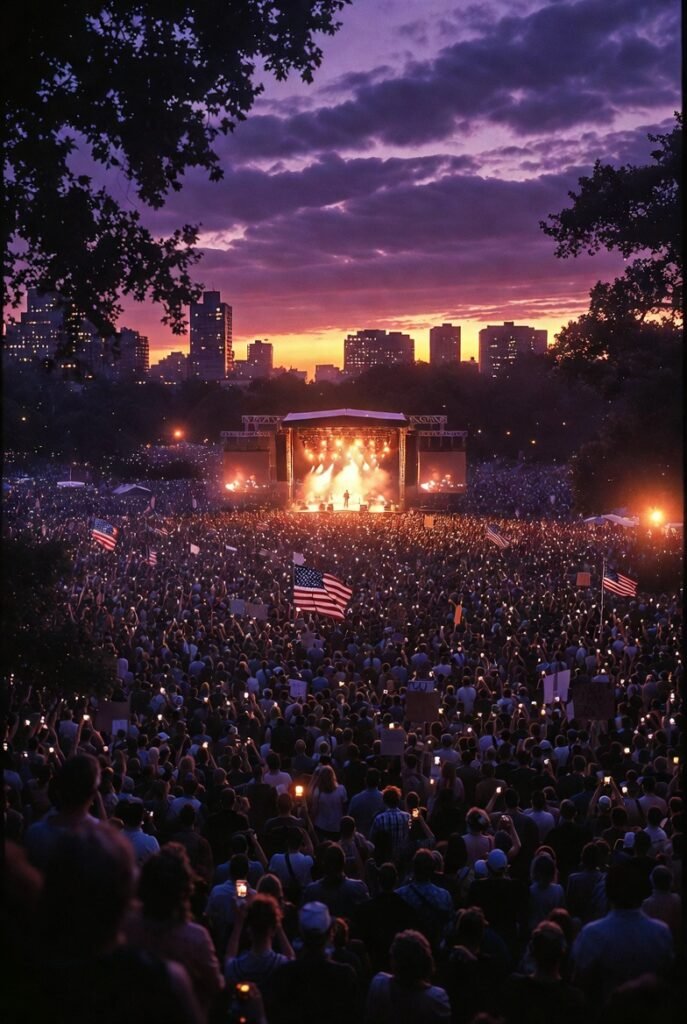
The most consequential feature of the March 28 protest wave beyond its raw size is its geography. Political scientists note that previous major US protest movements were heavily concentrated in urban, Democratic-leaning centres. The 2026 wave brought significant turnout to Shelbyville, Kentucky; Florence, Oregon; Yuma, Arizona; and Driggs, Idaho communities that voted for Trump in 2024.
Dana Glazer of Visibility Brigade, based in New Jersey suburbs, summarised the significance: ‘Coming together in protest helps combat social seclusion.’ When protest movements penetrate communities that supported the incumbent, political analysts typically note it as an early indicator of electoral realignment pressure ahead of midterm elections.
Whether March 28 translates into sustained pressure, policy change, or electoral consequences remains to be seen. But the data points eight million participants, two-thirds outside major cities, all 50 states, third consecutive record-breaking mobilisation — make one conclusion difficult to avoid: the US protest wave of 2026 is not a routine political demonstration. It is something structurally different. No Kings Protests Across US – PressTV
The No Kings movement is a progressive coalition led by Indivisible, co-founded by Leah Greenberg. It was formed to organise nonviolent mass opposition to what its organisers describe as the consolidation of executive power under President Trump. The name references the American founding principle of rejecting monarchy. It has organised three nationwide protest days since 2025, with March 28, 2026 being the largest.
Organisers estimated approximately eight million people attended more than 3,300 rallies across all 50 US states on March 28, 2026. If confirmed independently, this would make it the largest single day of domestic political protest in American history surpassing the October 2025 No Kings mobilisation of seven million people across 2,600 events.
The 2026 US protest wave is driven by multiple simultaneous grievances: President Trump’s launch of Operation Epic Fury against Iran without Congressional authorisation; the deaths of two US citizens during an ICE operation in Minneapolis; rising gas prices and Goldman Sachs’s 30% US recession forecast; TSA staffing shortages causing airport disruption; and concerns about the use of executive power that protest organisers characterise as democratic backsliding.
The overwhelming majority of March 28 events were peaceful. The NYPD reported zero arrests across New York City’s five boroughs. Significant incidents occurred in Los Angeles, where 74 people were arrested after some demonstrators threw objects at federal officers near the Roybal Federal Building, and in Denver, where nine arrests followed a road blockade. Nationally, law enforcement and organisers both characterised the protests as largely non-violent.
The US protest wave of 2026 has crossed a threshold that makes it historically significant regardless of political perspective. Eight million people, 3,300-plus events, all 50 states including deep-red communities in states Trump carried in 2024 represent a scale and geographic reach without clear precedent in American political history.
The convergence of grievances an unauthorised war, immigration enforcement deaths, economic pain at the pump, and concerns about democratic norms has created a protest movement that draws participants from beyond the traditional activist base. Whether it reshapes American politics depends on what comes next: sustained organisation, electoral mobilisation, and whether the issues driving March 28 intensify or de-escalate in the months ahead.


 Optimized by Seraphinite Accelerator