

Friday, February 28, 2026
Trusted by millions worldwide
Politics
US Israel Iran Conflict 2026: Major Strikes and Retaliation Unfold
Key Highlights
- US and Israel launch coordinated strikes on Iran, marking a significant escalation in the Middle East conflict.
- President Donald Trump confirms “major combat operations” in Iran during a public address.
- Explosions reported in Tehran and several Iranian cities following joint US-Israel attacks.
- Iran responds with missile and drone retaliation across the region, increasing tensions.
- Airspace closures and flight suspensions disrupt global aviation routes.
- International reactions vary, with urgent calls for de-escalation amid fears of wider war.
Breaking US Israel Iran Conflict 2026
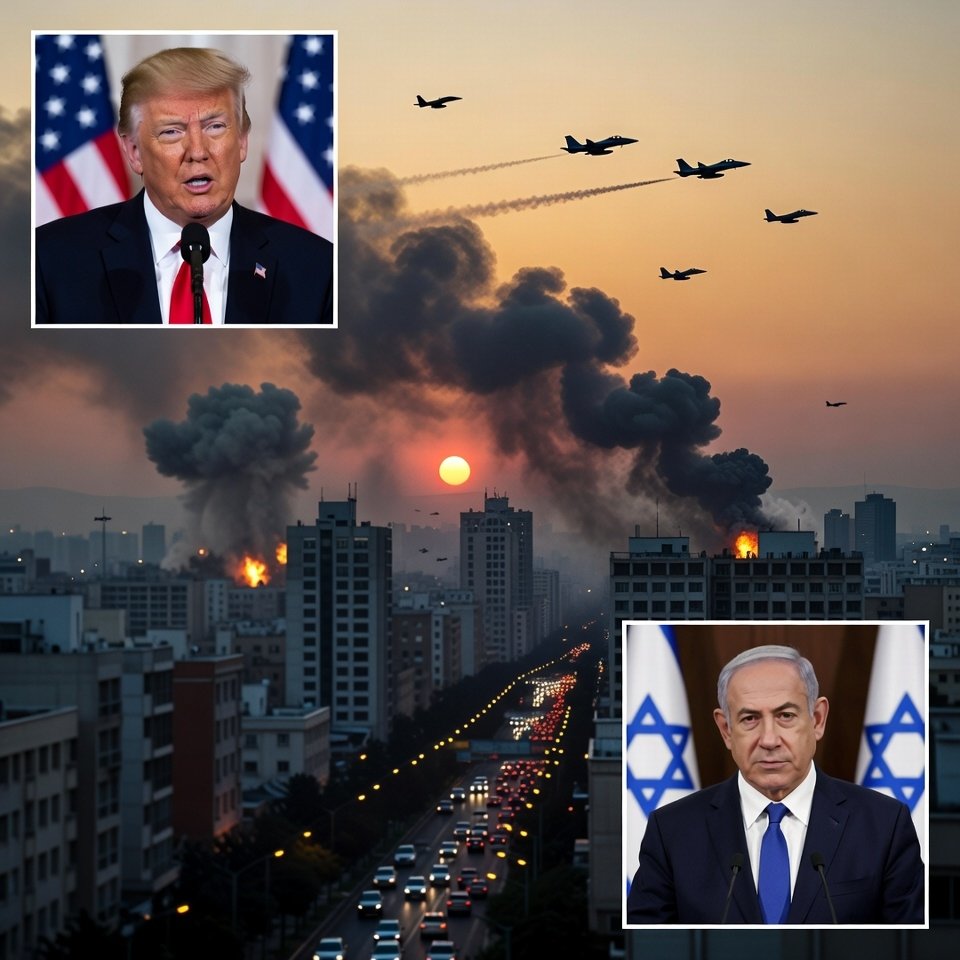
In a dramatic escalation of the Breaking US Israel Iran Conflict 2026 forces from the United States and Israel launched coordinated military strikes on Iran on 28 February 2026. The operation triggered immediate retaliation and raised regional security concerns.
President Donald Trump confirmed “major combat operations” in Iran. He argued that Washington took these steps to defend American interests and counter what he described as threats from Tehran. Shortly after the strikes, explosions and thick smoke appeared across several Iranian cities, including the capital, Tehran. Authorities activated air defence systems and emergency alerts early Saturday. Meanwhile, Iranian and international media reported widespread damage from the initial barrage. Furthermore, governments across Iran, Israel, Iraq, and neighbouring states closed their airspace. Airlines quickly suspended regional flights, disrupting civilian travel and straining global logistics networks.
Coordinated Military Strikes and Regional Escalation
US and Israeli planners prepared the targeted operation in advance. They coordinated airstrikes on key military and strategic sites across Iran. Israeli Defence Forces, backed by US air and naval assets, hit locations in Tehran and other major urban centres.
These strikes followed months of rising tension over Iran’s nuclear programme and ballistic missile development. Western governments have long described those programmes as destabilising to regional security.
Moreover, officials gave the operation different names, reflecting its political and military framing. The move marked a clear shift from diplomatic pressure to direct military action.
Authorities have not yet confirmed the exact targets or casualty figures. However, the strikes caused significant damage. Explosions rocked Tehran after the US–Israel attack, and aerial imagery showed thick columns of smoke rising above key districts.
Trump’s Statement and Military Justification
President Trump’s public statement, shared via social media video. confirmed that major combat operations were underway, framing the conflict as essential to neutralise “imminent threats” from the Iranian regime. His remarks highlighted US military resolve and reinforced a broader strategic goal of countering Iran’s tensions and potential nuclear and missile expansion. While Trump described the strikes as decisive and defensive, critics warn of a rapid shift from geopolitical pressure to active conflict. Diplomatic channels that saw brief dialogue earlier in February 2026 have faltered, reducing the chance of negotiated relief.
Iran Retaliation and Middle East Conflict Latest Update
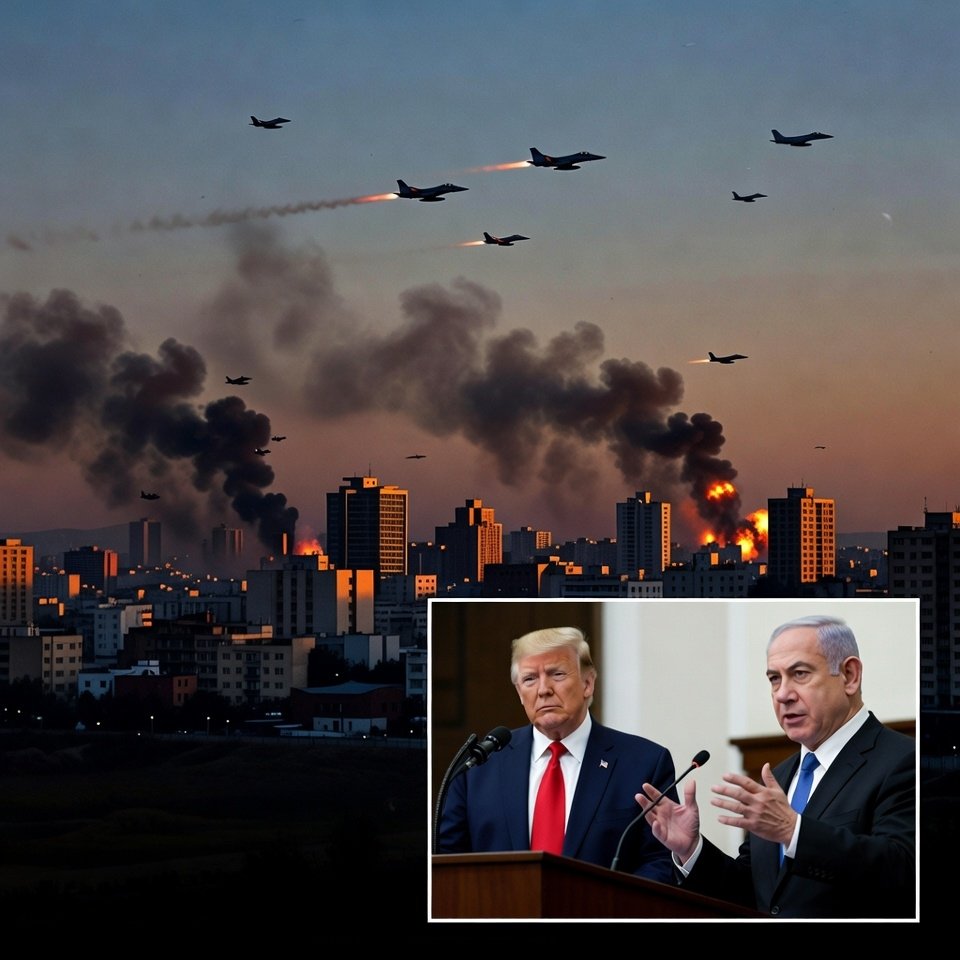
Within hours of the initial strikes, Iran launched missile and drone retaliation, targeting locations in northern Israel and US bases throughout the Middle East, including sites in Bahrain and the UAE. Sirens blared in northern Israeli towns as air defence systems engaged incoming projectiles — a clear sign of Iran war escalation February 2026.
This missile and drone retaliation represents a marked intensification in the confrontation, with Iranian officials vowing a “crushing response” to the joint assaults. The reciprocal strikes have heightened fears of a broader regional conflict, drawing in multiple Middle Eastern states and potentially entangling allied interests further.
International Impact and Security Concerns
The Middle East conflict latest update shows immediate global repercussions far beyond the battlefield. International airspace closures have forced major airlines to divert flights, affecting travel between Europe, the Middle East, North America and South Asia. The volatility has also prompted security advisories from foreign ministries, urging citizens to avoid non‑essential travel to conflict zones.
Global reactions have varied, with several Western nations expressing deep concern and calling for restraint, while others emphasise diplomatic engagement to prevent further escalation. As the situation develops, investors and defence analysts are closely monitoring developments, aware that prolonged conflict could trigger energy supply shocks and broader geopolitical instability.
Looking Ahead — Regional and Global Implications
As the US Israel Iran Conflict 2026 enters a critical phase, the near‑term outlook remains uncertain. Although early strikes and counter‑strikes have dominated headlines, the sustainability of military operations and their political aftermath will depend on both diplomatic channels and battlefield developments. Consequently, analysts are cautioning against assumptions of swift resolution, noting that regional security crisis dynamics could reverberate globally
Moreover, the broader implications for US foreign policy Middle East are significant; the decision to engage militarily reflects a strategic shift that could redefine alliances andprovoke recalibrations throughout the region. Ultimately, as global leaders react and populations in affected areas brace for continued unrest, the world watches closely for what may unfold next in this rapidly changing conflict.
