Global War Crisis 2026: Middle East Conflict Spreads to Europe & America
monday, March 30, 2026 Trusted by millions worldwide Back to News Politics Global War Crisis 2026: Middle East Conflict Spreads...
Read More → 

Wednesday, March 4, 2026
Trusted by millions worldwide
Spain refuses US military bases Iran use joint military bases on Spanish soil for strikes against Iran, placing Madrid in direct opposition to most of its NATO allies and deepening a transatlantic rift at one of the most volatile moments in modern Middle Eastern history. The decision, announced on 2 March 2026, centres on the strategic facilities at Rota and Morón de la Frontera — two airbases in southern Spain that US forces have operated under bilateral defence agreements since the 1950s.
Foreign Minister José Manuel Albares was unambiguous. ‘Based on all the information I have, the bases are not being used for this military operation,’ he told Spanish public television. Furthermore, he added, Spain would not authorise any use of its sovereign facilities ‘for anything not included within the agreement with the United States or inconsistent with the United Nations Charter.’
The conflict ignited on 28 February 2026 when the United States and Israel launched a coordinated offensive — codenamed Operation Epic Fury — targeting Iran’s nuclear programme and ballistic missile infrastructure. American officials cited an ‘imminent threat’ linked to Iran’s accelerating nuclear activities as justification for the strikes. Consequently, within hours, the operation resulted in the reported death of Iran’s Supreme Leader, Ayatollah Ali Khamenei — a development Iran’s Foreign Minister Abbas Araghchi called ‘a grave and unprecedented breach of the fundamental norms governing relations among States.’
Iran’s military responded with sweeping retaliatory missile and drone attacks against US, Israeli, and allied positions across at least nine countries in the Middle East. Furthermore, Iran-backed Hezbollah launched additional missile barrages into Israel. The UAE, for its part, reported intercepting nine ballistic missiles, six cruise missiles, and 148 drones on Monday alone. At least four American service members have been killed in action.
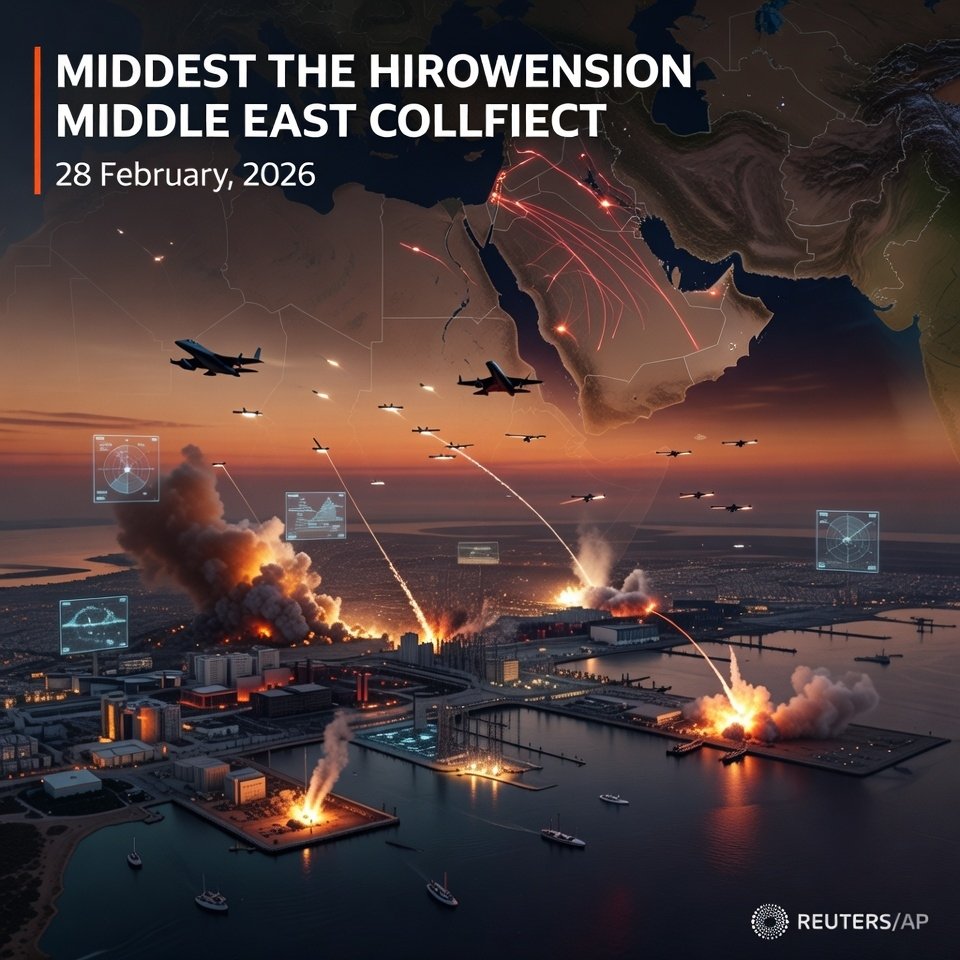
In his first public remarks on Monday, US President Donald Trump stated that forces were ‘ahead of schedule in meeting operational goals,’ adding that military planners had initially projected the campaign would last four to five weeks. Specifically, the US military confirmed strikes on energy facilities, ports, and military installations across the region, including a British base in Cyprus.
Spain’s stance rests on a firm legal foundation. The Rota and Morón facilities operate under a bilateral defence agreement that explicitly requires activities to remain consistent with international law and UN Charter obligations. Madrid argues — and the text of the agreement supports — that any operations beyond those parameters require Spain’s express authorisation, which it flatly declined to grant.
Defence Minister Margarita Robles was equally direct. Speaking at the Armilla Air Base, she stated that ‘no assistance of any kind, absolutely none,’ had been provided from the two southern Spain installations. ‘There is a deal with the US over these bases,’ she said, ‘but our understanding of the deal is that operations have to comply with international legal frameworks and that there has to be international support for them.’
Albares further revealed that Washington gave Madrid no advance notice of the strikes — a disclosure that amplified Spain’s sense of institutional grievance. He described the action as ‘a unilateral action outside of any collective decision-making framework.’ In contrast, most NATO allies were at least notified, if not consulted.
Flight-tracking data from FlightRadar24 told the operational story starkly. Following Spain’s announcement, 15 US aircraft departed Rota and Morón. At least seven tankers and combat support planes rerouted to Ramstein Air Base in Germany. Nine tankers departed Morón heading north, while two flights from Rota redirected toward southern France. The departures effectively confirmed that Madrid’s position had immediate, tangible military consequences — and that Washington had no choice but to comply.
Spain refuses US military bases Iran
Spain’s refusal sets it apart sharply from its principal European partners in what analysts are already describing as a significant Spain–NATO divergence. The United Kingdom had initially declined to permit the use of its bases for offensive strikes on Iran. However, on Sunday, Prime Minister Keir Starmer reversed course and authorised their use for what Downing Street termed ‘collective self-defence,’ following Iran’s indiscriminate retaliatory attacks against Gulf states and US military assets.
France and Germany, meanwhile, indicated preparedness to support allied operations under the same collective self-defence rationale. The leaders of Britain, France, and Germany issued a joint statement condemning Iranian missile attacks against countries ‘not involved in initial US-Israeli strikes’ as ‘appalling’ and ‘indiscriminate.’ In contrast, Spain condemned both sides — denouncing the US-Israeli offensive as illegal while simultaneously rejecting Iran’s retaliatory strikes against Gulf nations.
Pedro Sánchez articulated Spain’s moral calculus with notable precision at the Mobile World Congress in Barcelona. ‘Remember that one can be against a hateful regime, as is the case with the Iranian regime,’ he said, ‘and at the same time be against a military intervention that is unjustified, dangerous, and outside international law.’
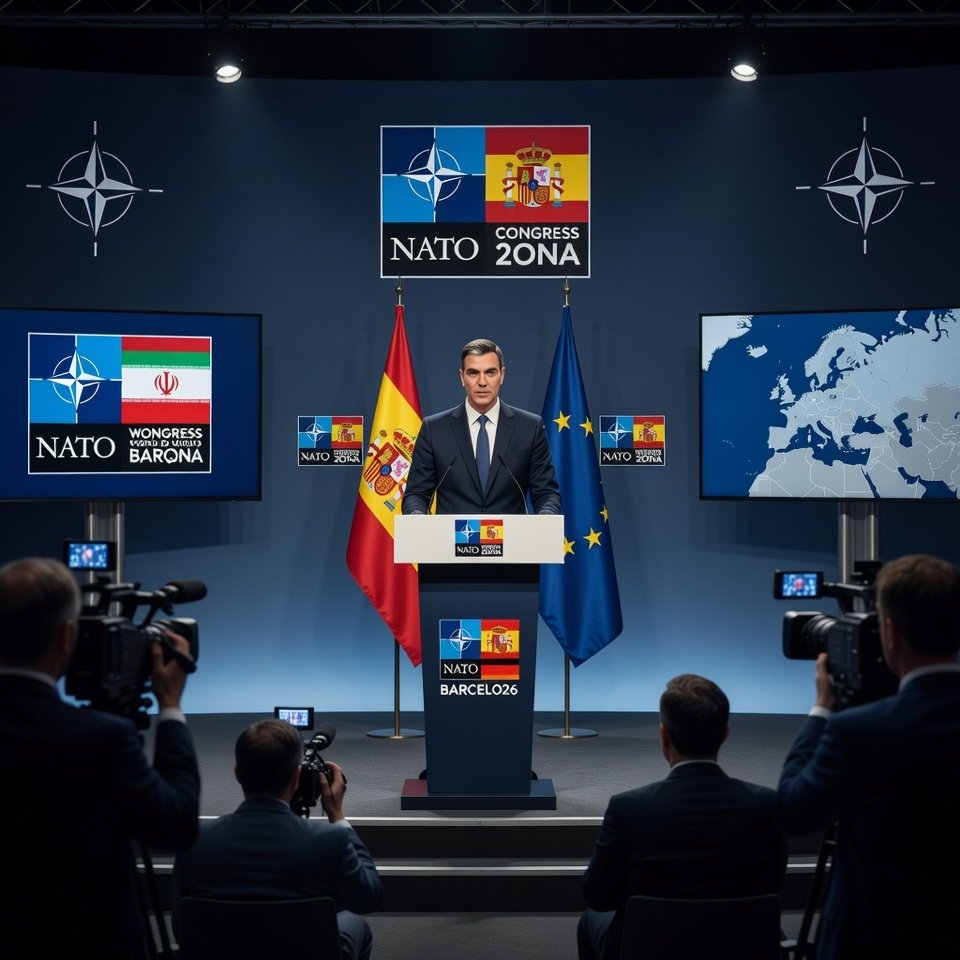
This dual condemnation positions Spain as neither pro-Iran nor pro-intervention — a stance that echoes the country’s foreign policy tradition of multilateralism and UN primacy.
Beyond the battlefield, Albares warned of severe economic fallout. ‘The escalation carries unpredictable consequences,’ he said, specifically citing potential disruption to the Strait of Hormuz and rising oil prices as immediate risks. Iran subsequently threatened to block the waterway entirely — through which approximately 20% of global oil supply passes daily — escalating concerns across energy markets in Europe and Asia.
Qatar, home to a key US military base, reported its air force shooting down two Iranian Sukhoi Su-24 bombers during the conflict’s early stages. Additionally, Iran-linked attacks targeted energy infrastructure in the Gulf, creating supply chain anxieties that sent markets into volatility. Consequently, European governments have begun contingency planning for potential energy shortfalls if the Strait of Hormuz is disrupted for any sustained period.
At the heart of Spain’s position lies a principled — and legally substantive — argument about the UN Charter. The UN Charter permits the use of force against another nation only if authorised by the Security Council or exercised in self-defence under Article 51. Iran’s Foreign Minister wrote a formal letter to the UN Secretary-General on Sunday, alleging that strikes on civilian infrastructure, including schools and residential buildings, constitute war crimes.
Spain and several non-aligned nations have backed this framing. Sánchez stressed that the attacks were initiated ‘without authorisation from the US Congress or the UN Security Council’ — a point that resonates strongly with European public opinion. A Reuters/Ipsos poll conducted in the United States immediately after the strikes found only 27% of Americans supported the action, while a CNN poll recorded 59% disapproval.
Importantly, Spain’s legal stance has also inspired calls for broader European solidarity. Anti-war campaigners across the EU demanded that other nations adopt similar positions. ‘Europe should close all US bases on its soil,’ argued Progressive International co-coordinator David Adler — a call that reflects a growing, if minority, sentiment across the continent.
Spain’s refusal to let the United States use its military bases for Iran strikes is not merely a bilateral diplomatic dispute — it is a seismic signal about the future of transatlantic military cooperation. By asserting sovereign control over Rota and Morón, Madrid has demonstrated that even close NATO partners retain — and will exercise — the right to withhold support for military action they deem unlawful. Spain refuses US military bases Iran
Furthermore, the episode exposes deep fault lines within the Western alliance at a moment of maximum geopolitical stress. While the UK, France, and Germany converge around a ‘collective self-defence’ framework, Spain stands apart, insisting that multilateral legitimacy — not alliance solidarity — is the non-negotiable precondition for military engagement. As Operation Epic Fury continues and its consequences ripple across the Middle East, Spain’s stance may prove either principled foresight or costly isolation. Either way, it has permanently altered the terms of the debate.


 Optimized by Seraphinite Accelerator