Russia Cuba oil shipment 2026
Tuesday, March 31, 2026 Trusted by millions worldwide Back to News Politics Russia Cuba Oil Shipment 2026: Sanctioned Tanker Docks...
Read More → 

Tuesday, March 31, 2026
Trusted by millions worldwide
Russia Cuba oil shipment 2026 |Anatoly Kolodkin tanker Cuba 2026 | Cuba energy crisis blackouts 2026 | Trump Cuba oil blockade waived | Russia geopolitical signal Caribbean 2026 | US Cuba oil embargo Russia defiance
The Russia Cuba oil shipment 2026 is now a confirmed historical event. On Tuesday March 31, the Russian-flagged Aframax tanker Anatoly Kolodkin docked at the port of Matanzas, Cuba, carrying 730,000 barrels of crude oil the first oil delivery to reach the island in three months. Russia’s Transport Ministry confirmed the docking, as did AP journalists on the ground and CNN’s live tracking of the vessel. Cubans lined the Matanzas waterfront to watch the arrival.
Matanzas resident Camilo Galves was among those watching. ‘This is undoubtedly a great relief for the Cuban people and a moment of great joy for us amid so many hardships,’ he told reporters. Cuba’s Energy and Mines Minister Vicente de la O Levy cheered the ship’s arrival. Cuban Deputy Foreign Minister Carlos Fernández de Cossío wrote on X: ‘The arrival of an oil tanker to a country has likely never generated so much news as the Russian one to Cuba. It’s a sign of the brutal siege Cubans endure.’
The geopolitical dimensions of the arrival, however, extend far beyond the relief it provides to 10 million Cubans living through cascading blackouts. The Anatoly Kolodkin’s journey from the Russian Baltic port of Primorsk to the Caribbean Sea under the watch of US Coast Guard vessels that chose not to intervene is a story about the limits of American sanctions, the flexibility of US-Russia back-channels during an active war, and Moscow’s quiet assertion of influence in Washington’s own hemisphere.
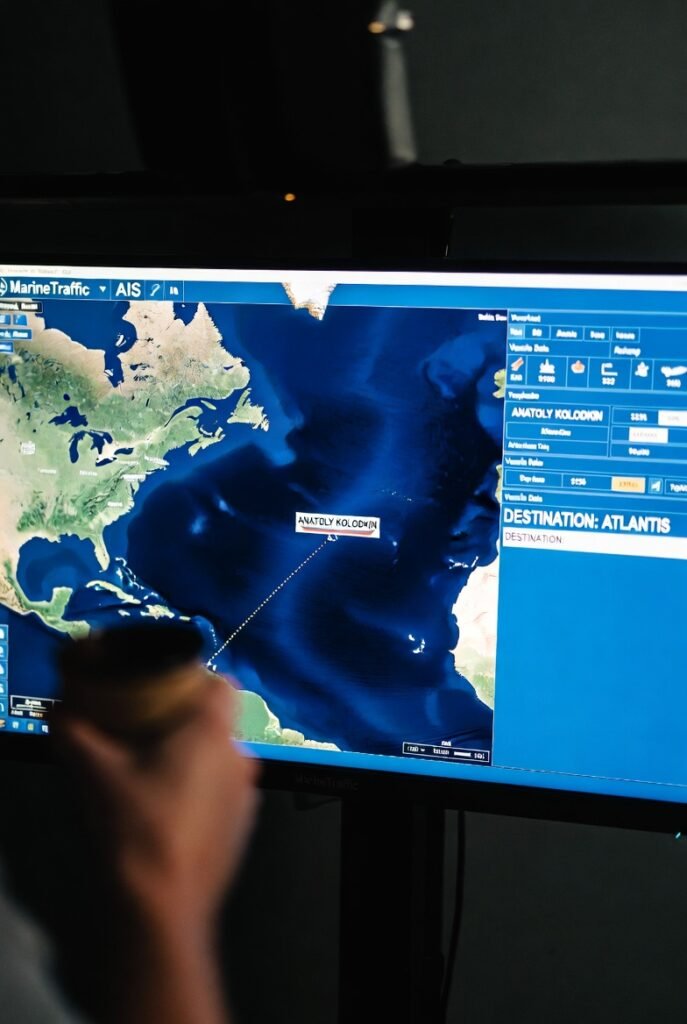
The Anatoly Kolodkin departed Primorsk, Russia on March 8, 2026, loaded with approximately 730,000 barrels of crude oil. For most of its Atlantic crossing, someone aboard the vessel had set its AIS (Automatic Identification System) transponder the maritime equivalent of a flight tracker to list the destination as ‘Atlantis.’ The fiction was presumably designed to obscure the tanker’s Cuba-bound trajectory from US and allied tracking systems for as long as possible.
The ship paused in the mid-Atlantic Ocean for several days as uncertainty swirled over whether the United States would allow it to dock. By Sunday March 29, Trump answered the question in public: ‘We don’t mind somebody getting a boatload because they have to survive.’ The tanker immediately switched its AIS to read ‘Matanzas, Cuba‘ and resumed course. By Sunday night it had passed Cuba’s eastern tip and was sailing along the north shore at 12–13 knots. At least two US Coast Guard cutters and an unnamed warship were positioned in the vicinity and did not interfere.

The United States has spent months constructing one of its most aggressive economic campaigns against Cuba in modern history. The Trump administration’s ‘Maximum Pressure’ policy effectively cut Cuba off from its primary oil supply chain. After the US captured Venezuelan President Nicolás Maduro in January 2026, Venezuela’s oil shipments to Cuba ceased entirely. Trump then threatened tariffs on any country supplying crude to the island prompting Mexico to halt its deliveries in late January.
The US Treasury Department’s response was a waiver amendment issued in early March 2026 that specifically barred transactions involving Russian oil deliveries to Cuba. The Anatoly Kolodkin a sanctioned tanker delivering sanctioned Russian oil to a blockaded nation was precisely the scenario that amendment targeted.
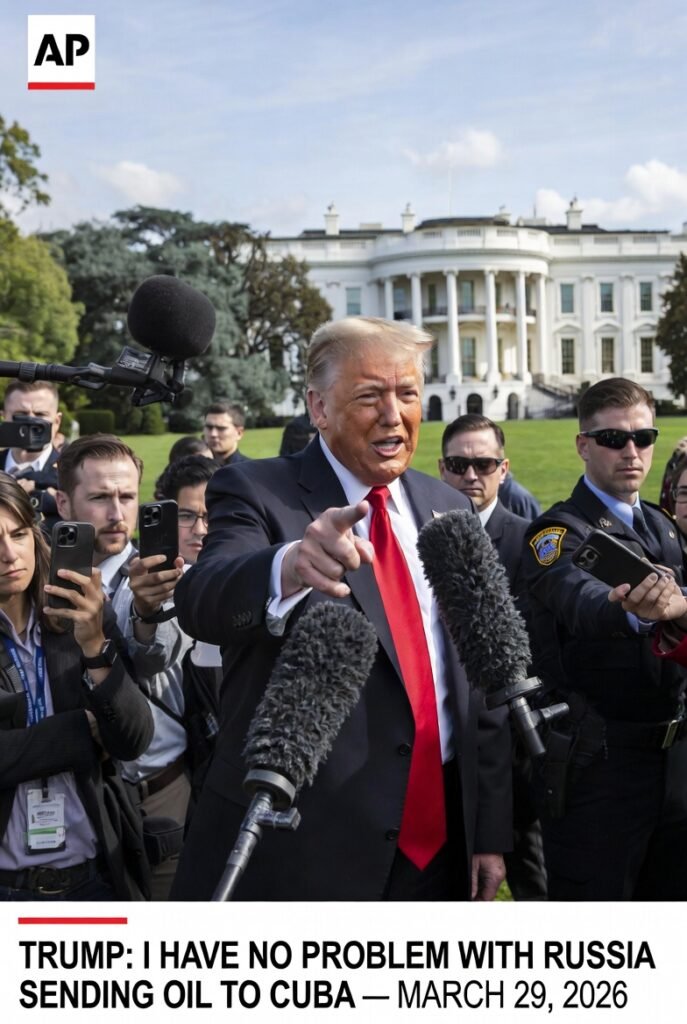
Then Trump held a press conference on March 29 and said the words that unlocked the Matanzas docking. ‘If a country wants to send some oil into Cuba right now, I have no problem, whether it’s Russia,’ he told reporters. He called the Cuban people’s need for ‘heat and cooling’ the deciding factor. The Moscow Times confirmed this statement directly contradicts the Treasury amendment a sitting US president publicly reversing a Treasury Department policy in real-time. The White House offered no formal reconciliation of the two positions.
If a country wants to send some oil into Cuba right now, I have no problem with that, whether it’s Russia or anybody else, because the people need heat and cooling and all of the other things that you need.
President Donald Trump March 29, 2026 (Washington Post / NPR)
Perhaps the most diplomatically significant detail in the entire Anatoly Kolodkin story emerged from the Kremlin itself. Spokesman Dmitry Peskov, asked Monday whether the US had agreed to let the tanker through, confirmed: ‘As for the American side, I can only confirm that this issue was indeed raised in advance during contacts with our American counterparts.’
Peskov’s statement confirms that Washington and Moscow privately coordinated the safe passage of a sanctioned Russian tanker to a US-embargoed nation at the same time the United States is fighting an active war against Iran and publicly accusing Russia of supplying Tehran with military intelligence. Consequently, the Anatoly Kolodkin’s arrival is not simply a humanitarian story. It is evidence of a functioning US-Russia back-channel that operates underneath the surface of public rhetoric in both directions.
To understand why the Anatoly Kolodkin’s arrival produced scenes of celebration on the Matanzas waterfront, one must understand what Cubans have endured since January 2026. The island imports approximately 60% of its energy supply, needs roughly 100,000 barrels of oil per day, and covers only about 40% of that through domestic production.
When Venezuela’s Maduro fell and Mexican shipments stopped, Cuba entered an energy freefall. Throughout March 2026, at least two total island-wide power grid collapses occurred. The most devastating, on March 16, left approximately 10 million people without electricity, running water, or basic services for days. Soviet-era plants such as the Antonio Guiteras facility are operating at a fraction of their designed capacity. Food and medicine shortages accelerated alongside the blackouts. A 76-year-old Havana resident named Gladys Valdes became a symbol of the crisis when CNN photographed her preparing coffee during a total blackout, the morning light her only illumination.
The raw mathematics of the Anatoly Kolodkin’s 730,000-barrel cargo sound significant against Cuba’s 100,000-barrel-per-day need. In practice, however, the timeline to relief is longer than the numbers suggest.
Energy expert Piñón told CNN that the crude oil arriving at Matanzas must be transferred to smaller tankers and transported to an old Exxon refinery in Havana a facility built in the 1950s and operating inefficiently. ‘That will take 20 days,’ he estimated. The crude must also undergo laboratory analysis to verify its quality and water content before processing begins. Energy analyst Boris Martsinkevich told Sputnik the full cargo provides roughly three to four weeks of relief once refined and distributed. Cuba’s Government will distribute the resulting fuel according to its own priority order likely prioritising power generation, hospitals, and essential services first.
The Russia Cuba oil shipment 2026 delivers three distinct geopolitical signals simultaneously one from Moscow, one from Washington, and one about the limits of the global sanctions architecture.
By successfully delivering a sanctioned tanker carrying sanctioned oil to a US-blockaded nation, Russia demonstrated that its ‘parallel economy’ the network of shadow tankers, flag-of-convenience vessels, and bilateral back-channels that has sustained Russian oil exports since 2022 extends into Washington’s own hemisphere. Moscow reaffirmed that it considers Cuba a strategic partner it will not abandon. Russia’s Energy Minister Tsivilev made this explicit: Moscow ‘would continue supplying fuel to the island.’
The Cuba operation also serves a secondary purpose: it proves that American secondary sanctions threatened tariffs designed to deter third-party countries from supplying Cuba have a ceiling. Mexico and others pulled back. Russia, protected by its own nuclear deterrent and its own set of levers over Washington (particularly regarding Ukraine and Iran), did not.
Trump’s decision to let the Anatoly Kolodkin dock carries its own message and critics are uncomfortable with it. The Trump administration has publicly justified its Maximum Pressure campaign against Cuba as being in the interest of the Cuban people, arguing that economic pressure will force regime change. Allowing a sanctioned Russian tanker to deliver oil to the Cuban Communist Party’s government undercuts that narrative directly.
Radio Free Europe noted that critics argue Washington is ‘rewarding Moscow’ precisely at the moment Russia is reportedly providing intelligence to Iran, which is actively at war with the United States in the Strait of Hormuz. The back-channel that allowed the Anatoly Kolodkin through is the same back-channel Washington needs if it wants Russian diplomatic cooperation on Ukraine, Iran, or future energy stability. Geopolitics, as always, involves trade-offs that do not appear on the surface of any single news story.
The Russia Cuba oil shipment 2026 has delivered three weeks of energy relief to 10 million Cubans living in darkness. It has also delivered a more lasting lesson in the mechanics of great-power competition: formal sanctions systems have hard edges, but informal back-channels allow those edges to be quietly negotiated when both sides have sufficient interest in the outcome.
Trump needed a way to prevent Cuba’s total collapse without appearing to surrender his blockade. Moscow needed to demonstrate Caribbean solidarity without triggering a US military response. The Anatoly Kolodkin, sailing under an AIS code that read ‘Atlantis’ while US Coast Guard vessels stood aside, is the physical embodiment of that accommodation.
The lights in Havana may flicker on again in the coming weeks. But the geopolitical friction generated by one sanctioned tanker’s 23-day Atlantic crossing touching simultaneously on US-Russia back-channels, the Iran war, the fate of Cuba’s Communist government, and the real limits of American sanctions power will not be resolved before the next tanker is already loading at Primorsk.


 Optimized by Seraphinite Accelerator