US Political Revolution 2026: Is America Facing System Change?
Thursday, Aprail 2, 2026 Trusted by millions worldwide Back to News Politics US Political Revolution 2026: Is America Facing System...
Read More → 

Thursday, Aprail 2, 2026
Trusted by millions worldwide
The No Kings protests 2026 have grown dramatically with each iteration. The first rally in June 2026 drew roughly 5 million people
No Kings protests 2026
On Saturday, March 28, 2026, the United States witnessed what organizers and historians are calling the largest single-day protest in the country’s history. An estimated 8 million Americans joined the third round of No Kings protests across more than 3,300 events in all 50 states from major cities like Chicago and New York to small towns in Wyoming, Idaho, and Montana. As the country reaches the 250th anniversary of its founding, the movement is forcing a serious national conversation about the future of American democracy.
October 2025 brought approximately 7 million. March 28 shattered both records and the movement shows no signs of slowing down.
The ‘No Kings’ movement was coined by the progressive group 50501, and has since been coordinated by organizations including Indivisible, MoveOn, and the American Federation of Labor and Congress of Industrial Organizations (AFL-CIO). The name draws a direct line to America’s founding rejection of monarchy.
The March 28 demonstrations were notable for their geographic diversity. Organizers reported that two-thirds of participants came from outside major urban centers including rural and suburban areas in traditionally conservative-leaning states like Texas, Florida, and Ohio, which each saw more than 100 events.
Protesters demonstrated against several key issues:
What is clear is this: as the United States marks 250 years since its founding, millions of Americans are invoking that founding not as nostalgia, but as a living standard against which they are measuring the present government and finding it wanting. The next six months, leading into the November midterms, may be the most consequential period in a generation.
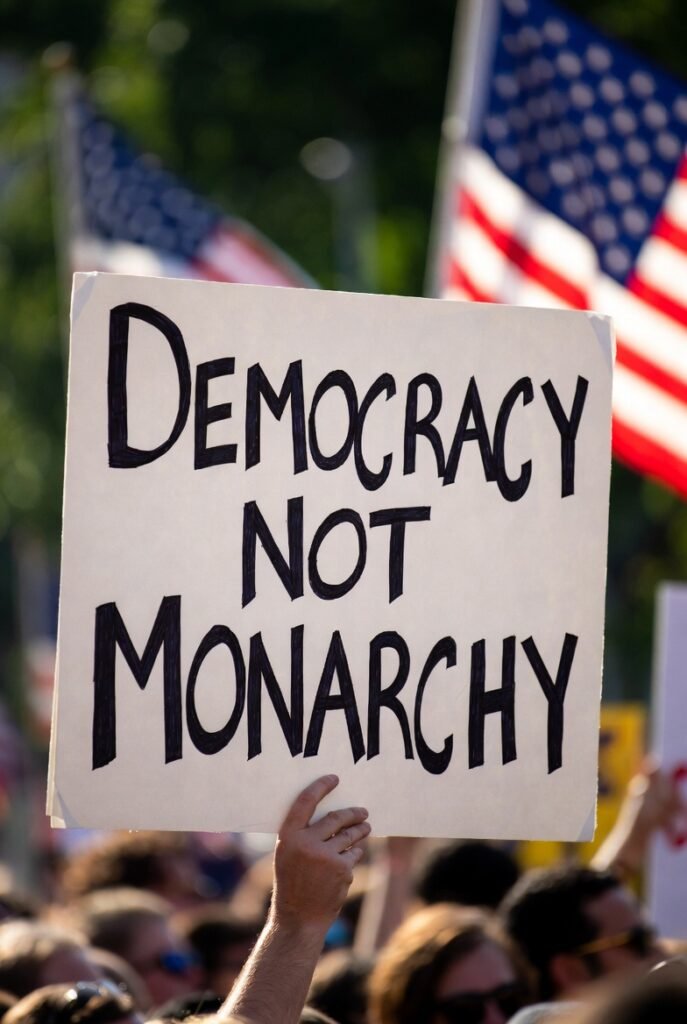
One of the most striking aspects of the No Kings protests 2026 is their ideological reach. While organized primarily by progressive groups, the October 2025 rallies saw a growing number of former Republicans who had grown frustrated with the Trump administration’s direction. Observers from Harvard University’s Crowd Counting Consortium noted that the first three months of Trump’s second term saw roughly three times as many protests as his entire first presidency.
Minnesota offers a concrete example of what sustained protest can accomplish. Following a general strike on January 23, 2026, and continued mobilizations, the Trump administration reduced the number of ICE and federal agents deployed in the state a tangible policy shift that organizers cited as proof that mass nonviolent action can produce real results.
The political stakes could not be higher. With November’s midterm elections approaching, President Trump’s approval rating has dropped below 40%, according to multiple polls. Republicans risk losing control of both chambers of Congress if current trends hold.
Voter sentiment among younger Americans is shifting significantly. Polling data shows rising support for structural reforms including Supreme Court term limits. The anti-incumbency wave appearing in focus groups and surveys suggests the 2026 midterms could produce a major electoral realignment regardless of which party benefits.
Indivisible co-founder Leah Greenberg, speaking ahead of the March 28 rallies, framed the stakes plainly: people are coming out in every state and every county, collectively demanding an end to what they describe as illegal foreign wars and unchecked domestic policing.
The White House dismissed the rallies as the product of ‘leftist funding networks,’ but organizers countered that two-thirds of participants came from non-urban areas a rebuttal that analysts say is difficult to ignore.
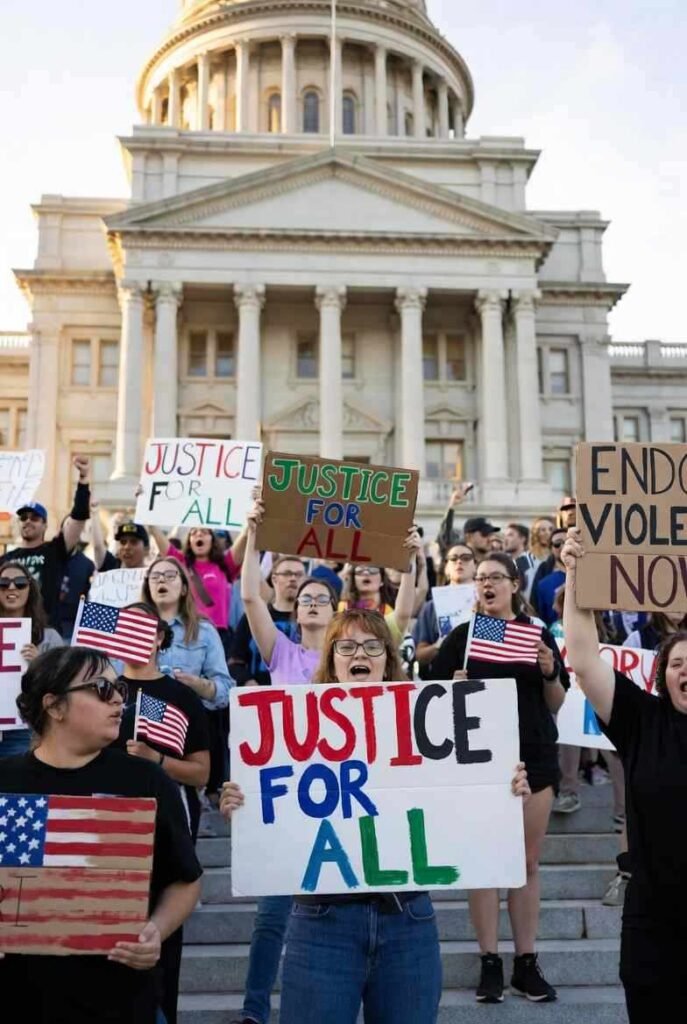
The No Kings movement is no longer confined to American borders. On March 28, demonstrations took place in Europe, Australia, Canada, Japan, and Costa Rica, organized largely by American expatriate groups like Democrats Abroad. In Paris, French labor unions joined American expats at the Bastille. In Rome, thousands protested both the Iran war and domestic political concerns.
The White House dismissed the rallies as the product of ‘leftist funding networks,’ but organizers countered that two-thirds of participants came from non-urban areas a rebuttal that analysts say is difficult to ignore.
The No Kings movement has already scheduled further events throughout April 2026, with more than 80 events planned. A key organizer has also called for a nationwide economic protest on May 1 traditionally International Workers’ Day. Whether that escalation broadens or fractures the coalition remains an open question.
What is clear is this: as the United States marks 250 years since its founding, millions of Americans are invoking that founding not as nostalgia, but as a living standard against which they are measuring the present government and finding it wanting. The next six months, leading into the November midterms, may be the most consequential period in a generation.
What is clear is this: as the United States marks 250 years since its founding, millions of Americans are invoking that founding not as nostalgia, but as a living standard against which they are measuring the present government and finding it wanting. The next six months, leading into the November midterms, may be the most consequential period in a generation.
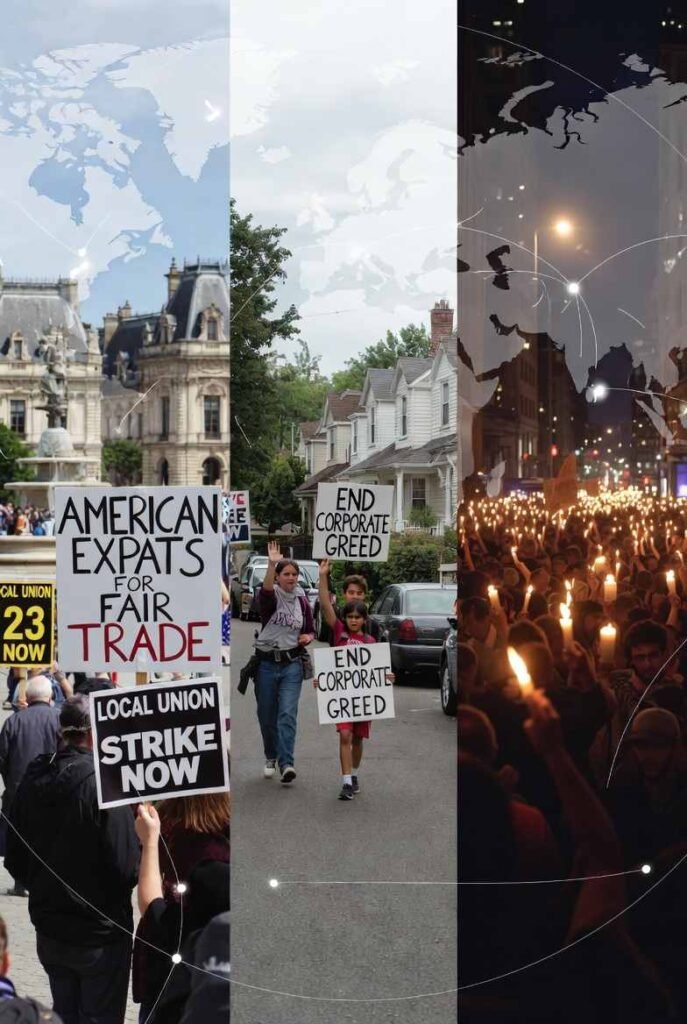
The US political revolution 2026 has placed the nation at a crossroads. On this April 2, 2026, America is not just facing an election year; it is facing a “System Year.” Whether the current governance crisis leads to a more robust, reformed democracy or a total institutional fracture will depend on the actions of the next six months. As the 250th anniversary approaches, the “spirit of 1776” is being invoked not for nostalgia, but as a blueprint for a total political transformation.


 Optimized by Seraphinite Accelerator