US military deployment Middle East
Wednesday,Aprail,1, 2026 Trusted by millions worldwide Back to News politics US Military Escalation 2026: Aircraft Carrier Deployment Explained Frontier Affairs...
Read More → 

Wednesday,Aprail,1, 2026
Trusted by millions worldwide
US military deployment Middle East Iran’s foreign ministry issued a formal statement in the third week of March 2026 condemning what it called ‘provocative and destabilizing’ American naval movements.
The United States has significantly expanded its military presence in the Middle East as of March 2026, deploying a nuclear-powered carrier strike group to the North Arabian Sea in what Pentagon officials describe as a posture of ‘enhanced deterrence.’ The move the largest US naval deployment to the region in over a decade comes amid renewed diplomatic tensions between Washington and Tehran, drawing intense scrutiny from defense analysts, energy markets, and allied governments across the globe.
The current US military deployment to the Middle East is not a routine rotation. According to statements from US Central Command (CENTCOM) in late March 2026, the decision to move a full carrier strike group into forward position follows a breakdown in back-channel diplomatic communications with Iran over uranium enrichment thresholds.
Tensions had been quietly escalating since early 2026, when satellite imagery analyzed by independent defense researchers showed expanded activity at several Iranian naval installations in the Strait of Hormuz a chokepoint through which approximately 20 percent of the world’s oil supply flows each day.
The deployment signals that Washington has moved from a diplomatic posture to what strategists call ‘deterrence by presence’ a strategy designed to discourage adversarial action through visible military capability rather than direct threats.
This combination gives the United States the ability to project military power hundreds of miles inland from any coastline without setting foot on foreign soil. A single CSG can enforce no-fly zones, strike hardened targets, escort commercial shipping, and conduct humanitarian operations simultaneously
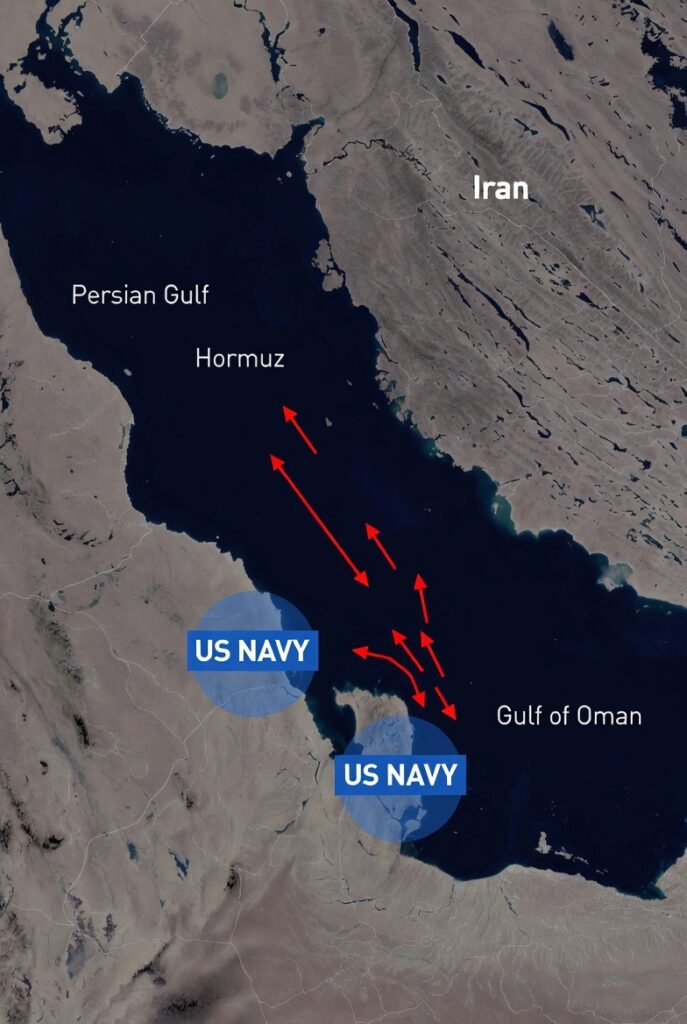
Iran’s foreign ministry issued a formal statement in the third week of March 2026 condemning what it called ‘provocative and destabilizing’ American naval movements. Iranian state media simultaneously reported increased readiness drills by the Islamic Revolutionary Guard Corps Navy (IRGCN) in the Persian Gulf though independent verification of the scale of those exercises remained limited at press time.
Meanwhile, key US regional partners including the UAE, Bahrain (home of US Naval Forces Central Command), and Saudi Arabia have quietly expressed support for the American posture while stopping short of public endorsements that could complicate their own diplomatic relationships with Tehran.
Israel, watching developments closely, has not publicly commented on the deployment but is understood to be in close coordination with US military planners, according to regional security sources cited by multiple international newswires.
Energy markets reacted swiftly to the news. Brent crude oil briefly surpassed $97 per barrel in the days following the deployment announcement its highest level since 2023 before settling slightly lower as traders weighed the likelihood of actual conflict against historical patterns of US naval posturing in the region.
Economists note that any sustained disruption to Strait of Hormuz shipping traffic would have immediate and severe consequences for global energy supply chains. Countries most exposed include Japan, South Korea, India, and several European nations that rely heavily on Gulf crude imports.
However, analysts at major financial institutions have largely assessed the current situation as an elevated risk scenario rather than an imminent conflict pointing to the continued functioning of diplomatic back-channels and the absence of any direct military incidents as of late March 2026.
In strategic terms, placing one in the North Arabian Sea puts it within operational range of the Persian Gulf while keeping it outside the range of Iran’s most advanced anti-ship missile systems a deliberate positioning choice that defense analysts have noted publicly
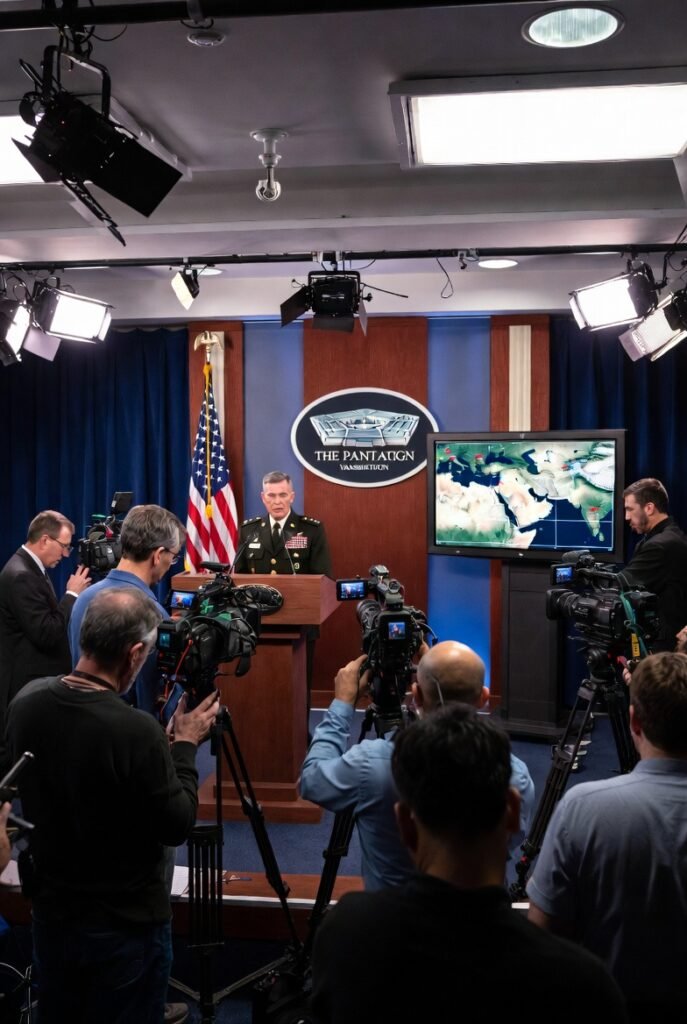
This is the central question being debated in Washington, London, and capitals across the Middle East. The official US position, reiterated by the Secretary of Defense in a March 26 press briefing, is that the deployment is ‘purely defensive in nature’ and intended to reassure regional allies and protect freedom of navigation.
Independent defense analysts present a more nuanced picture. Some argue that the scale and speed of the deployment combined with increased intelligence-sharing with Gulf partners suggests the US is preparing a response option if diplomacy fails entirely. Others contend that the deployment is a negotiating tool, designed to bring Iran back to talks from a position of military strength.
What is clear is that the US military buildup in the Middle East in March 2026 represents a significant escalation of visible military posture in a region that has experienced decades of volatile conflict. Whether it prevents confrontation or contributes to one will depend largely on diplomatic decisions made in the coming weeks.
Diplomatic sources quoted by Reuters and the Associated Press indicate that European mediators particularly France and Germany are actively working to establish a new framework for US-Iran dialogue. A UN Security Council session focused on the Persian Gulf situation has been requested by at least three non-permanent member states.
For now, the aircraft carrier strike group remains on station in the North Arabian Sea. Its presence is a reminder that in 2026, the Middle East remains one of the world’s most consequential and most volatile strategic arenas and that the distance between deterrence and conflict can narrow faster than diplomacy can respond.At its core is the supercarrier itself a nuclear-powered vessel roughly 1,000 feet long, capable of launching dozens of strike aircraft including F/A-18 Super Hornets and, increasingly, F-35C stealth jets.
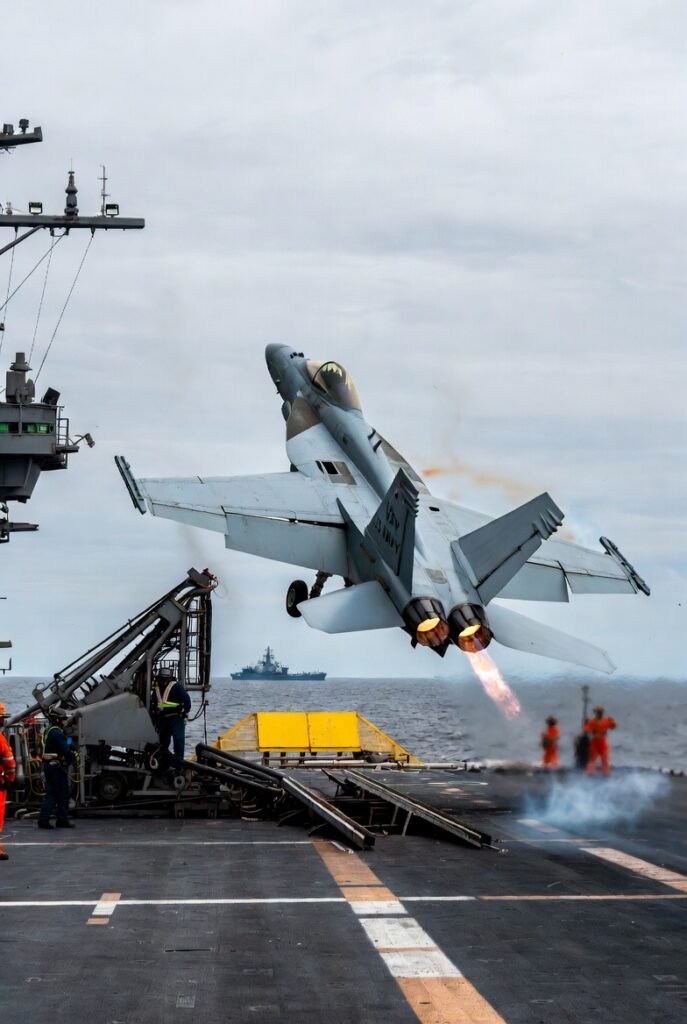
The US military escalation 2026 marks a turning point in modern geopolitics. While the aircraft carrier deployment explained here highlights the technical and strategic might of the US Navy, the underlying goal remains a fragile peace. Whether this deployment prevents a conflict or precipitates one remains the defining question of 2026.


 Optimized by Seraphinite Accelerator