Global War Crisis 2026: Middle East Conflict Spreads to Europe & America
monday, March 30, 2026 Trusted by millions worldwide Back to News Politics Global War Crisis 2026: Middle East Conflict Spreads...
Read More → 

Tuesday, March 10, 2026
Trusted by millions worldwide
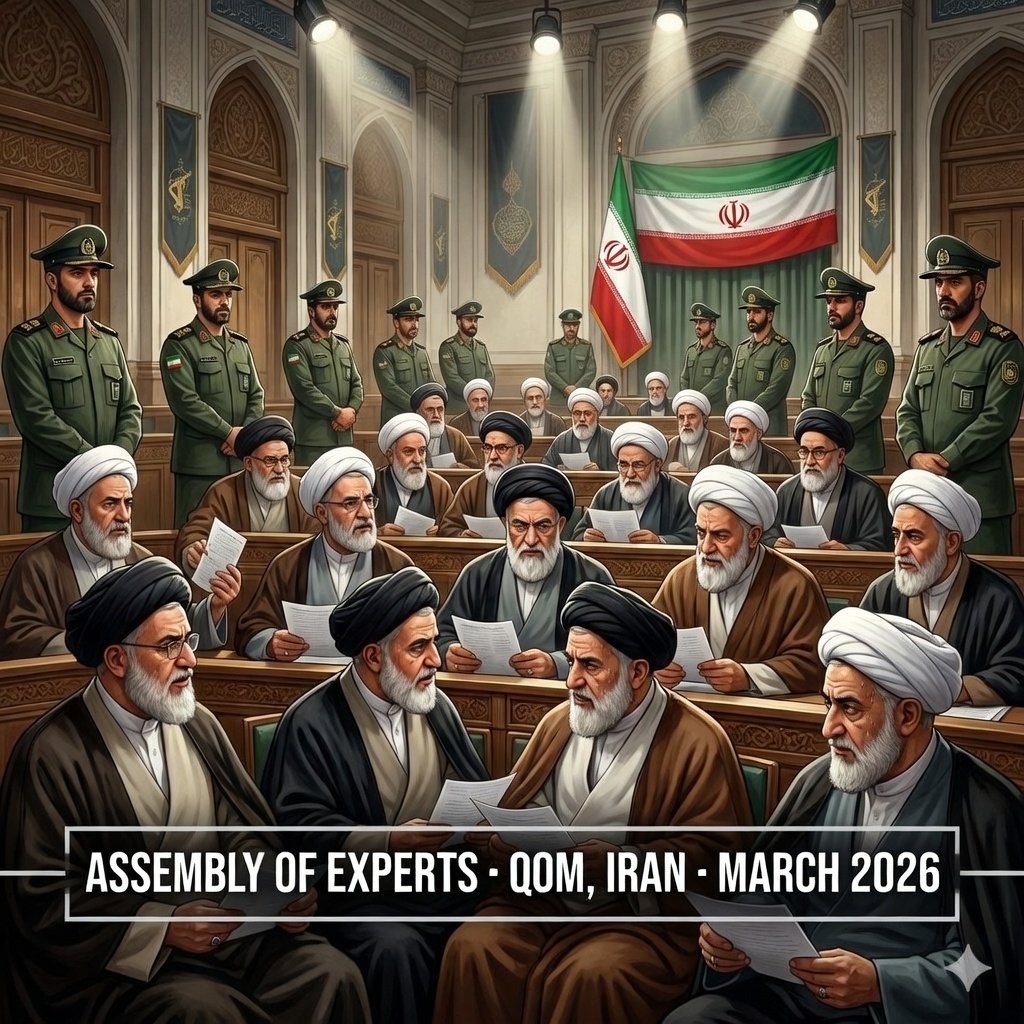
The Mojtaba Khamenei Supreme Leader 2026 appointment, confirmed by the Assembly of Experts just after midnight Tehran time on March 8, sends an unmistakable signal to Washington and Jerusalem: Iran will not bend, the hardline faction remains in charge, and the Islamic Republic intends to fight not negotiate under its new leader.
The path to Mojtaba Khamenei’s appointment was not smooth. According to reports from Iran International, IRGC commanders began applying pressure to members of the Assembly of Experts as early as March 3 — through repeated contacts, psychological pressure, and political persuasion. Those who presented arguments against Mojtaba’s appointment were given limited time to speak, discussion was cut off, and a vote was forced.
US and Israeli bombs struck the Assembly of Experts office in the city of Qom after the votes had been cast — but before the count could be completed. The announcement of the result was then deliberately delayed over security fears: once Mojtaba Khamenei’s name became public, the assumption was that Israel and the United States would immediately target him.
That fear proved well-founded. The IDF confirmed that any successor to Ayatollah Ali Khamenei would be considered a legitimate military target. The announcement was eventually made just after midnight Tehran time on March 8, by the Assembly of Experts, in a formal statement: Mojtaba Khamenei had been appointed the third Supreme Leader of the Islamic Republic of Iran.
Days After Father's Assassination
Age of New Supreme Leader
Supreme Leader in Iranian History
Iranian Civilian Deaths
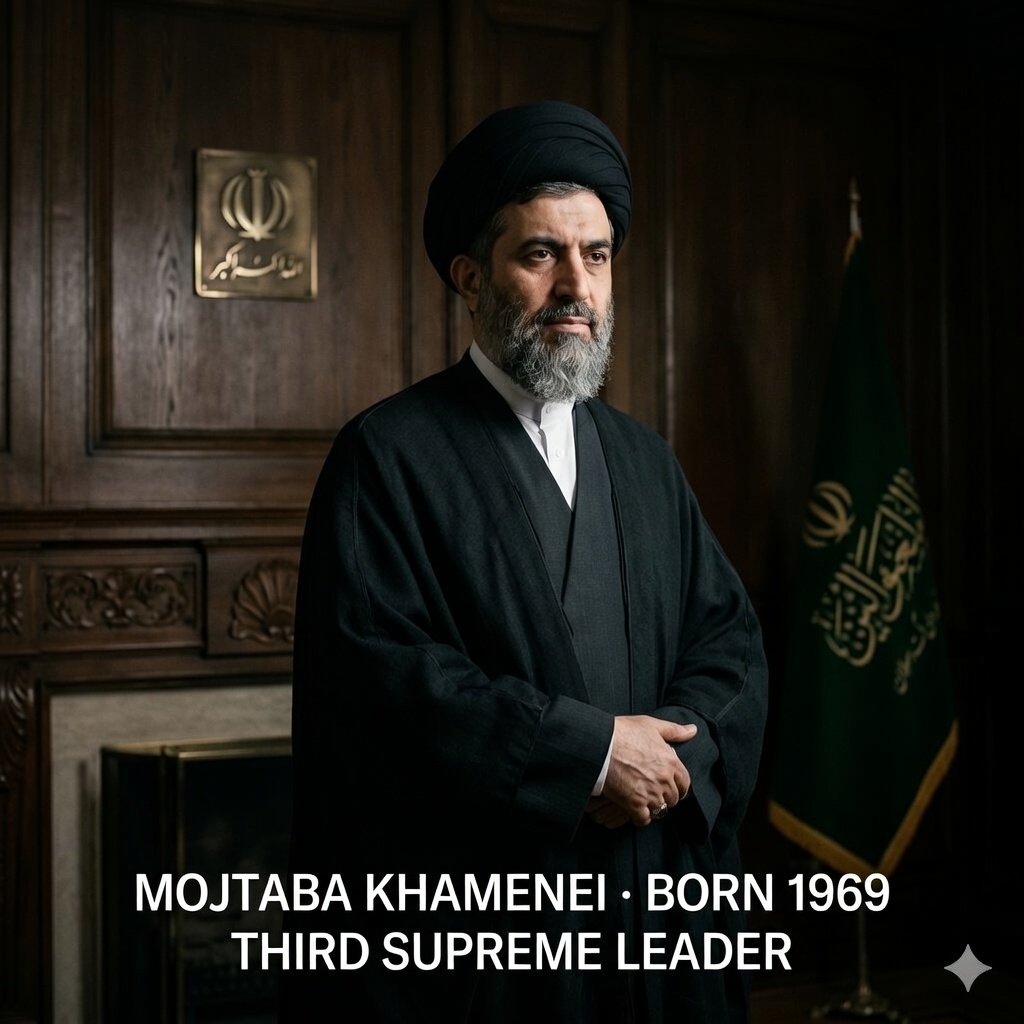
Mojtaba Khamenei is the second son of Ayatollah Ali Khamenei. Born in 1969 in Mashhad, he is 56 years old. His mother, wife, and one of his sisters were killed in the same US-Israeli strike that assassinated his father — Mojtaba was not present at the time and survived. He studied under the late Ayatollah Mohammad Taghi Mesbah Yazdi, a theologian who advocated for the killing of Iranians who promoted what he called “Western immorality.”
Mojtaba joined the Revolutionary Guard at 17, serving in the Habib Battalion during the Iran-Iraq War. He has never held elected office, has never stood for a public vote, and holds the rank of hojatoleslam — a mid-level cleric rank, below the ayatollah title his father held. However, his father was not an ayatollah either when he assumed leadership in 1989, and the law was amended at that time to accommodate him. A similar legal accommodation is widely expected for Mojtaba.
Analysts and Iran watchers are unified on one point: Mojtaba Khamenei is expected to be more hardline than his father. He has cultivated deep ties with the IRGC for decades, and his close associations are with the most ideologically extreme clerics at the forefront of Iran’s most violent domestic crackdowns including the brutal suppression of the 2009 election protests.
His appointment is a clear signal that the hardline faction of Iran’s establishment retains full control and that the government has little desire, at least in the short term, to agree to any deal or enter negotiations with the United States or Israel. He now assumes responsibility for Iran’s nuclear programme, its war posture, and its relationships with Russia, China, and the broader Axis of Resistance with no prior experience negotiating with world powers, but with the total loyalty of the IRGC and a personal reason to resist Washington that is now written in his family’s blood.
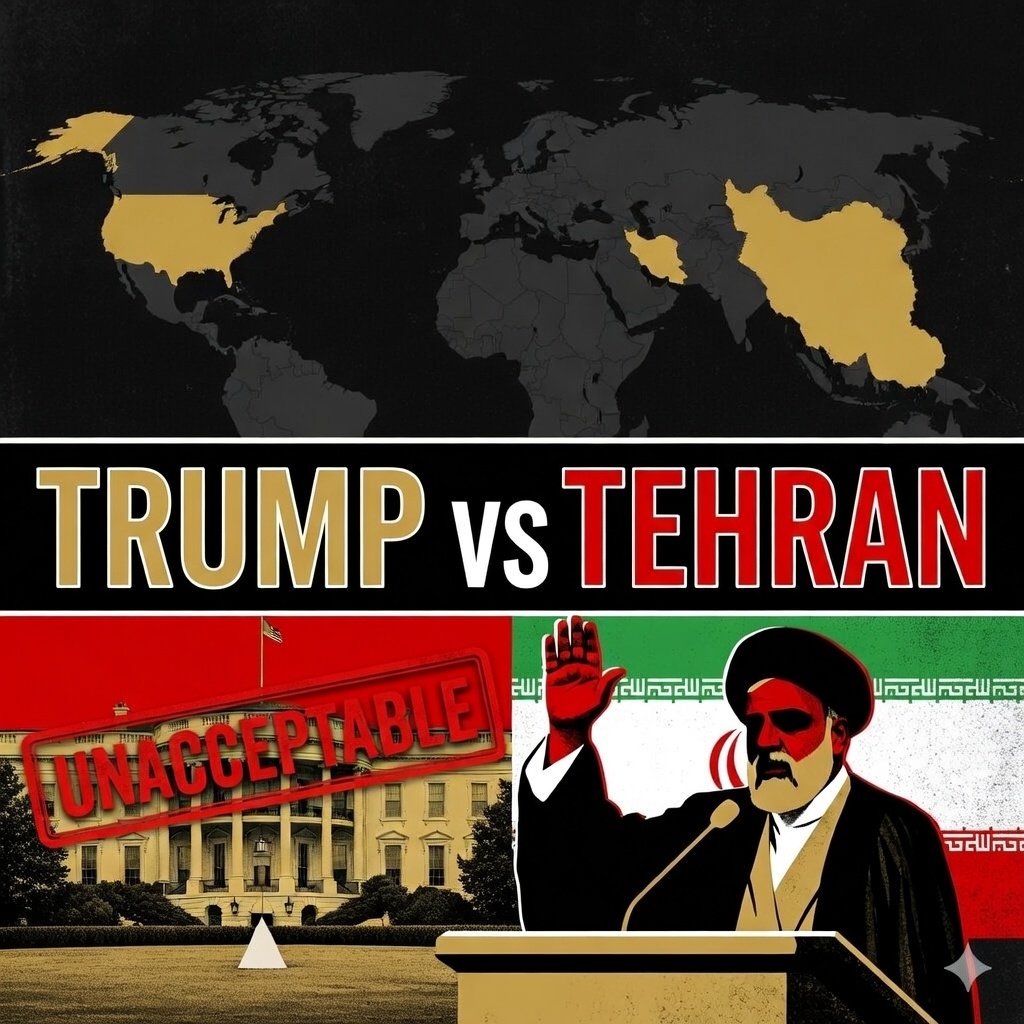
Before the appointment was formalised, Trump had made his position clear. In an interview with Axios, he stated: “They are wasting their time. Khamenei’s son is a lightweight. I have to be involved in the appointment.” In a subsequent ABC News interview after the announcement, he warned that the new leader “is not going to last long” if he did not have American approval.
“The fate of dear Iran will be determined solely by the proud Iranian nation, not by Epstein’s gang.”— Parliament Speaker Ghalibaf, posting on X in response to Trump’s demands
Iranian officials rejected Trump’s push to be involved in the succession entirely, insisting that only Iranians could determine the future of their country. Parliament Speaker Mohammad Bagher Ghalibaf appeared to ridicule the US president’s demands on X, in a post that drew wide attention across the region. Iran’s response to Trump’s pressure was, in short, to ignore it completely.
Despite the public defiance, back-channel communication may already be underway. Fox News reported that Iran’s new leadership reached out to the United States to initiate negotiations following the death of Ayatollah Ali Khamenei a sign that the defiant appointment and the diplomatic signals are not necessarily contradictory.
Iran’s military and political leadership moved swiftly to formalise loyalty to the new supreme leader. The IRGC pledged allegiance to Mojtaba Khamenei and stated it was “ready to fully obey” his commands. Iran’s President Masoud Pezeshkian said the appointment heralded “a new era of dignity and strength” for the nation.
The war, however, continues at full intensity. US and Israeli forces continue to bombard Iran, with explosions reported in both Qom and Tehran in the hours immediately following the appointment announcement. Israeli attacks on oil facilities caused toxic smoke to spread across the Iranian capital. The human cost is mounting: Iran’s ambassador to the United Nations reported that at least 1,332 Iranian civilians have been killed and thousands more wounded in the US-Israeli campaign. On the American side, a seventh US service member died from injuries sustained during Iran’s initial counter-attack. Iran’s parliament speaker stated explicitly that Tehran was not seeking a ceasefire and would “punish aggressors.”
Iran’s nuclear ambitions now fall under the authority of a man with no experience on the diplomatic stage — but with the IRGC’s full backing and a deeply personal motivation to resist American and Israeli pressure. Under his father’s long tenure, Iran developed significant nuclear capabilities while navigating international sanctions and intermittent negotiations. Under Mojtaba, analysts expect the nuclear posture to become more assertive, not less.
His religious rank — hojatoleslam rather than ayatollah — has been raised as a point of contention regarding the constitutional legitimacy of his appointment. But as with his father in 1989, the expectation is that Iran’s law will be amended to accommodate the political reality. The IRGC has already decided. The Assembly of Experts has already voted. The appointment is fait accompli.
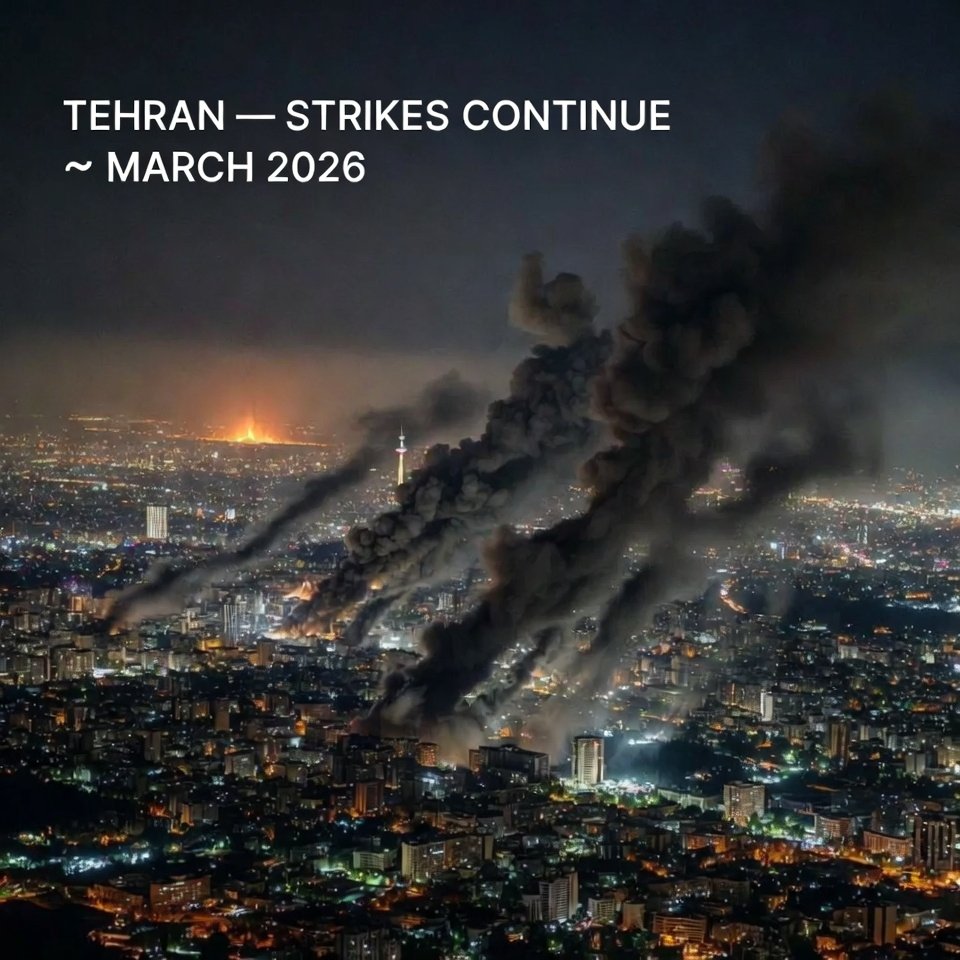
The war, however, continues at full intensity. US and Israeli forces continue to bombard Iran, with explosions reported in both Qom and Tehran in the hours immediately following the appointment announcement. Israeli attacks on oil facilities caused toxic smoke to spread across the Iranian capital. The human cost is mounting: Iran’s ambassador to the United Nations reported that at least 1,332 Iranian civilians have been killed and thousands more wounded in the US-Israeli campaign. On the American side, a seventh US service member died from injuries sustained during Iran’s initial counter-attack. Iran’s parliament speaker stated explicitly that Tehran was not seeking a ceasefire and would “punish aggressors.”
Mojtaba Khamenei is the second son of the late Ayatollah Ali Khamenei, born in 1969 in Mashhad, Iran. He is a mid-ranking Shia cleric (hojatoleslam), an IRGC veteran who served in the Iran-Iraq War, and has never held elected office. He was appointed Iran’s third Supreme Leader on March 8, 2026, eight days after his father’s assassination in US-Israeli airstrikes.
Trump called Mojtaba “a lightweight” and claimed he needed to be personally involved in approving the appointment — a position Iran rejected entirely as an infringement on Iranian sovereignty. Trump warned after the appointment that the new leader “is not going to last long” without US approval.
Analysts widely expect Mojtaba to be more hardline than Ayatollah Ali Khamenei. He has deep ties to the IRGC and to the most ideologically extreme clerical factions in Iran. His appointment signals that hardline forces retain full control of the Iranian state, reducing the likelihood of near-term negotiations with the West.
US and Israeli forces continue to conduct airstrikes across Iran, with Qom and Tehran hit in the hours following Mojtaba’s appointment. At least 1,332 Iranian civilians have been killed and thousands wounded, according to Iran’s UN ambassador. Seven US service members have died. Iran has pledged to “punish aggressors” and rejected any ceasefire.


 Optimized by Seraphinite Accelerator