
Friday, February 27, 2026
Trusted by millions worldwide
Finance
Bahrain Warns Iran Over US Bases: What It Really Means When a Small Kingdom Warns Iran
Bahrain Warns Iran Over US Bases
Bahrain Warns Iran Over US Bases Small states rarely issue military warnings to regional powers. When they do, it is worth paying close attention. The Kingdom of Bahrain has formally warned Iran that any attack on United States military facilities on Bahraini territory will trigger a direct military response from the Bahrain Defence Force (BDF). The official defence statement arrived amid heightened tensions across the Persian Gulf.
The declaration is measured in diplomatic terms but unambiguous in intent. Tehran and its regional proxies meanwhile continue to escalate threats against the United States and Israel. As a result, Washington has moved additional naval forces into the Middle East in response.
Furthermore, Bahrain’s warning did not emerge in a vacuum. It is a calculated sovereign statement. Therefore, understanding its full weight requires looking beyond the headline. Iranian regime-affiliated outlets have also outlined retaliation scenarios ranging from missile and drone strikes on US facilities to maritime disruptions in the Persian Gulf.
The Strategic Architecture Behind Bahrain's Warning
A Kingdom, a Fleet, and a Fault Line
Bahrain is not a large country. With a population under two million and a land area smaller than Greater London, it appears modest on any map. Geopolitically, however, it punches far above its weight — and has done so deliberately for decades.
Bahrain hosts the headquarters of the US Fifth Fleet, reactivated in 1995. The Fifth Fleet oversees naval operations across the Gulf, the Red Sea, and the Arabian Sea. Naval Support Activity Bahrain in Manama is not merely a forward operating base. It is the command and control heart of American naval power across one of the world’s most consequential maritime corridors. Any Iranian strike on that installation would constitute, in effect, a strike on the operational centre of US regional deterrence.
Bahrain’s government statement reiterates that foreign military facilities operate within Bahrain under sovereign authorisation.
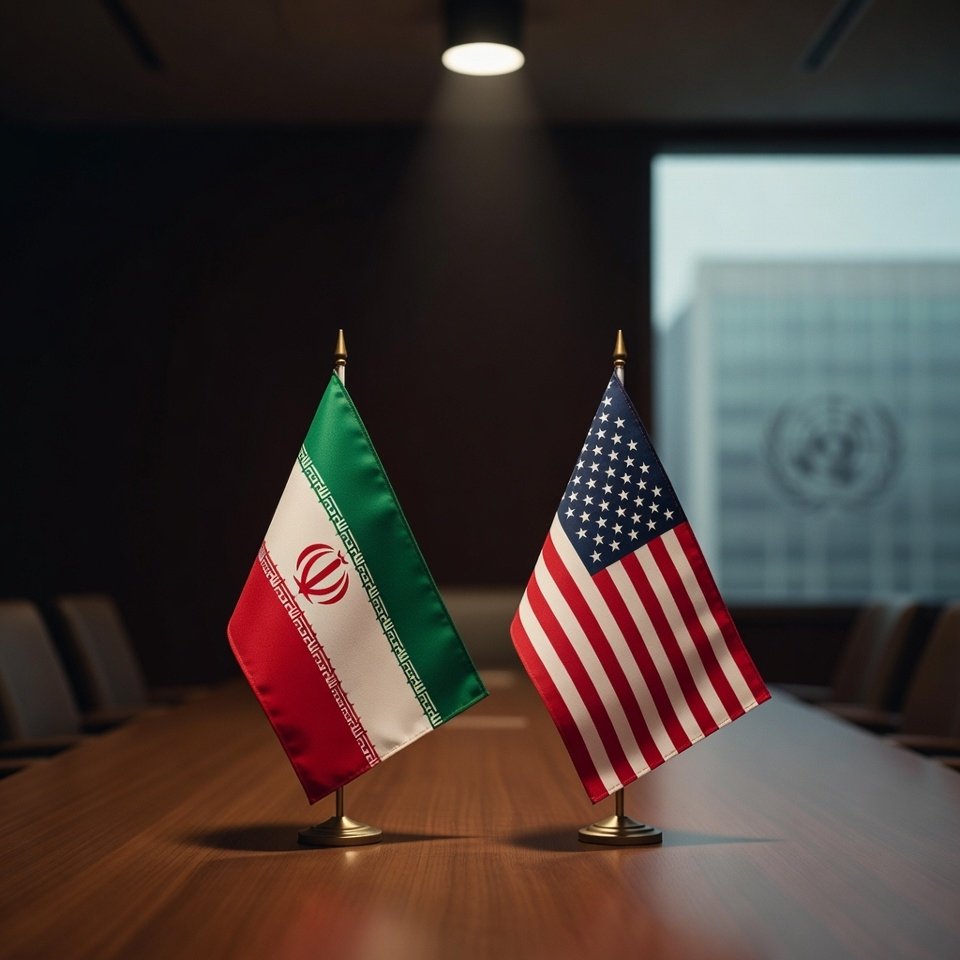
Any attack on such installations would constitute a violation of Bahraini territory. That framing matters enormously. Bahrain is not merely defending a tenant. It asserts that its sovereign territory and its security commitments are inseparable. The message to Tehran is direct: there is no version of attacking American forces in Bahrain that does not simultaneously mean attacking Bahrain itself.
The BDF: Smaller Than It Looks, More Capable Than Critics Assume
Sceptics might question the credibility of Bahrain’s military deterrent against a regional power of Iran’s scale. That scepticism, while understandable, is analytically incomplete. The Bahrain Defence Force has prioritised modernisation, professional training, and interoperability with allied forces — particularly the United States.
The Royal Bahraini Air Force operates more than 130 aircraft. These include over 20 F-16 C/D Block 40 aircraft, configured for air superiority, precision strike, and interception missions. Bahrain was also the first international customer for the F-16 Block 70 ‘Viper’ — an advanced 4.5-generation platform incorporating an Active Electronically Scanned Array radar and enhanced electronic warfare architecture.
More critically, Bahrain’s deterrence value lies less in its independent military capacity and more in what it signals about alliance cohesion. A Bahraini military response to an Iranian strike would almost certainly trigger an immediate, overwhelming American counter-response. That is precisely the point — and Tehran understands it.
Iran's Threat Calculus: How Serious Is the Risk?
Four Options, One Dangerous Architecture
Iran has not been subtle about its intentions. Defa Press, an outlet controlled by the regime’s General Staff of the Armed Forces, published an article outlining Tehran’s ‘four options’ for retaliation. It argued that the IRGC Aerospace Force and Iranian Army drone units can strike US military installations across the region. These include Al Udeid Air Base in Qatar, Incirlik Air Base in Turkey, and facilities in Bahrain, the UAE, and Kuwait.
Regime-affiliated social media channels circulated a video titled ‘US Bases That Are Within Iran’s Firing Range,’ showing pins placed on American military sites across Iraq, Syria, Turkey, Qatar, the UAE, Kuwait, Bahrain, Oman, and Saudi Arabia. The message was not subtle. Neither was the mural unveiled in central Tehran — depicting an aircraft carrier from above with burning fighter jets. These are not the communications of a government seeking de-escalation. They are, however, the communications of a government that may be deterrable — provided the costs of escalation are made unambiguously clear.
Troops Out, Air Defences In
The clearest indicator of how seriously Washington views the threat is what the US military has done quietly, without formal announcement. Reports confirm that hundreds of US troops left Qatar’s Al Udeid Air Base and facilities in Bahrain as a precautionary measure ahead of possible US military action against Iran.
Meanwhile, the military footprint has grown, not shrunk. The USS Gerald R. Ford aircraft carrier and its battle group have arrived in the region. Together with the USS Abraham Lincoln and its accompanying group, all the components for US military operations are now in place. They provide air defence and critical capabilities to supplement Israel’s own multi-layered defensive systems and to protect US partners in the Gulf.
The combination of selective troop withdrawal and simultaneous carrier buildup reflects a doctrine of ‘surge and shield’
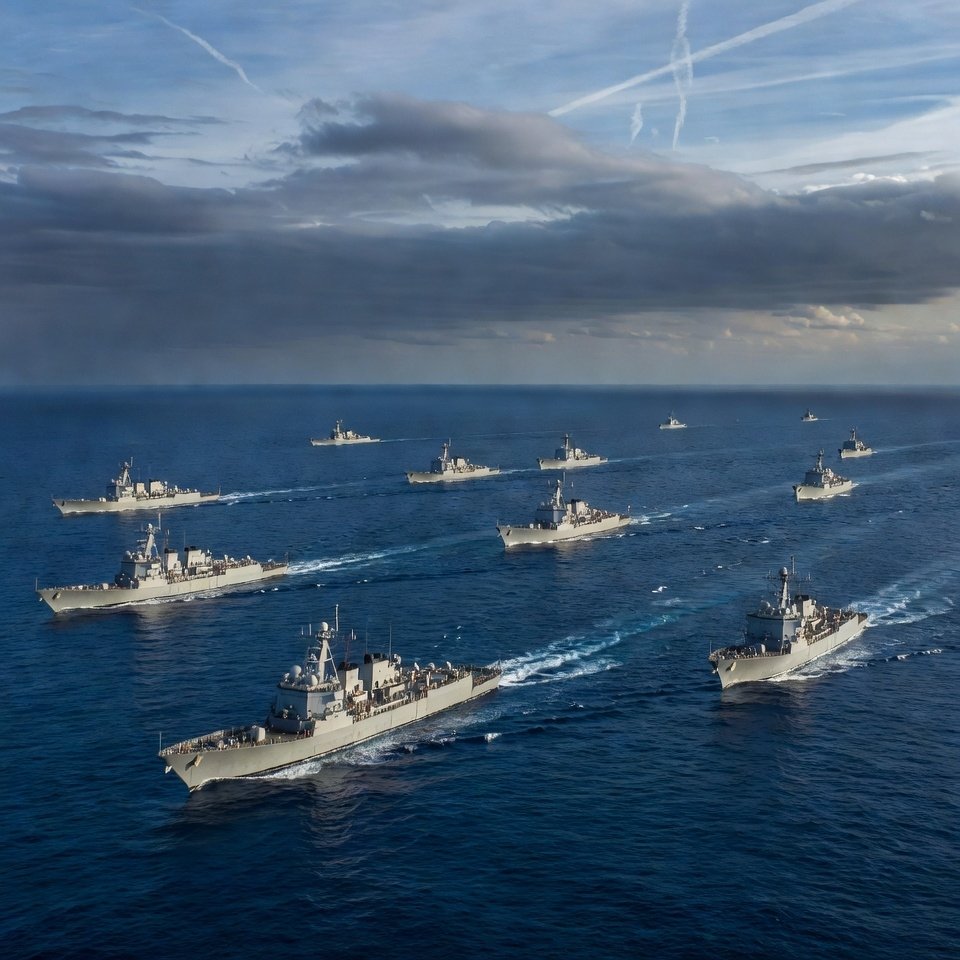
reducing the human vulnerability of non-combatant personnel while maximising offensive and defensive strike capacity. This is a preparation posture, not a peace posture.
Economic Stakes: What the Gulf Crisis Means Beyond the Region
The Strait of Hormuz and the Global Energy Equation
For policymakers in London, Brussels, Washington, and Riyadh, the military drama in the Gulf is inseparable from its economic consequences. One-fifth of the world’s oil passes through the Strait of Hormuz. Iran has explicitly warned that all options remain on the table in the event of war — including blocking or mining the strait. IRGC Navy units reportedly prepare a ‘smart’ closure strategy. This would involve selective interdiction targeting Western-linked tankers while allowing Chinese oil purchases to pass.
The implications are severe. Even the threat of a Strait closure sends insurance premiums skyrocketing and raises global oil prices. This directly attacks Trump’s economic promise to Americans in the year of the midterms. For European governments already managing energy transition pressures and residual inflationary anxieties, a Gulf oil shock in 2026 would be politically and economically destabilising.
UK energy security analysts have long flagged the Strait of Hormuz as the single most consequential chokepoint in global energy infrastructure. Britain imports liquefied natural gas from Gulf producers. Its financial sector carries deep exposure to Gulf sovereign wealth. A conflict would hit energy costs, shipping insurance premiums, and gilt market volatility quickly.
Gulf State Sovereignty and the Alliance Calculus
For Gulf states beyond Bahrain, Tuesday’s warning crystallises a dilemma that regional capitals have navigated uncomfortably for months. The bilateral agreements between Washington and Gulf states do not rise to the level of an automatic commitment comparable to Article Five of NATO. They emphasise cooperation, consultation, and defensive support, but they do not mandate direct military intervention.
Kuwaiti and Saudi analysts note privately that this ambiguity creates genuine strategic uncertainty. Hosting American bases confers deterrence value, but it also paints a target. Iranian forces crippled Saudi oil facilities in a 2019 strike. The lesson was clear: Iran has the capability to strike Gulf infrastructure. With nothing to lose in a war it perceives as existential, its motivation to strike countries hosting US bases would increase sharply in any escalation scenario. Bahrain’s public warning attempts to preempt that escalation by making the sovereign cost of any Iranian strike as visible and as credible as possible.

The Diplomatic Track: Geneva, Muscat, and the Narrowing Window
Neither Washington nor Tehran has formally abandoned diplomacy. The full scope of what the United States and Iran agreed in Geneva remains unclear. US Secretary of State Marco Rubio initially indicated that negotiations would cover Iran’s nuclear programme, its ballistic missile inventory, and Tehran’s sponsorship of regional proxies. Iran seeks a narrower agreement that would limit but not eliminate uranium enrichment.
Trump weighs military options while negotiations continue in Geneva and Muscat. Iran insists that enriched nuclear material will remain inside Iran and rejects any demand for zero enrichment. That gap — between what Washington demands and what Tehran will concede — has not closed. The longer it stays open, the more the military option consolidates itself as the default.
Policy experts argue that the window for a negotiated resolution, while not yet closed, narrows with every carrier group that enters the Persian Gulf and every Iranian mural that goes up in Tehran. The diplomatic track and the military buildup currently run in parallel — a situation that, historically, rarely sustains itself indefinitely. Bahrain Warns Iran Over US Bases
Risks, Uncertainties, and the Road Ahead
Escalation Scenarios That Nobody Wants — But Cannot Rule Out
The gravest risk in the current environment is not a deliberate decision for war. It is miscalculation. Pentagon officials note that any conflict would differ from the Iranian strike on Al Udeid in June 2025, where Iranian officials notified the US in advance. This time, analysts say, no such warning would come — which is precisely why the US moves air defence systems into the Middle East to defend its troops and interests against a potential Iranian attack.
A scenario in which an Iranian proxy force — Kataib Hezbollah, the Badr Organisation, or a Yemeni-based unit — strikes a US facility without explicit Tehran authorisation remains entirely plausible. Iran-backed militias including Kataib Hezbollah have repeatedly and publicly threatened to strike US bases in the region if the United States attacks Iran. These are not fringe actors. They are embedded within official Iraqi security structures. Their command-and-control relationship with Tehran is, at best, opaque.
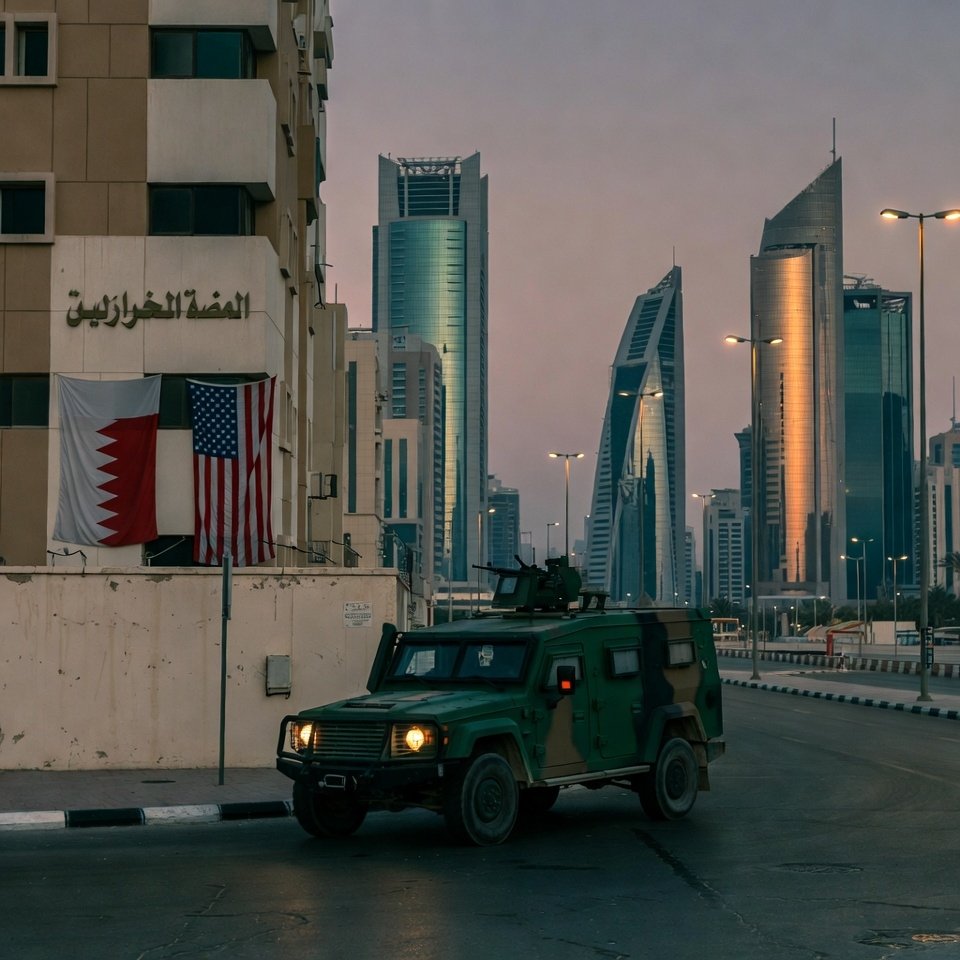
Congressional concern in Washington grows. Congress reportedly considers measures to limit the president’s authority to initiate military action without legislative approval. Whether those measures can keep pace with operational developments on the ground remains an open — and troubling — question.Bahrain Warns Iran Over US Bases
Conclusion: The Weight of a Small Kingdom's Words
Bahrain’s warning to Iran is not bluster. It is strategy — carefully worded, deliberately timed, and deeply embedded in the logic of deterrence that has governed Gulf security arrangements for three decades. When a kingdom of under two million people formally invokes its sovereign right to respond militarily to attacks on foreign installations within its borders, it communicates something beyond its own capabilities. It communicates the indivisibility of the US–Gulf alliance at a moment when that indivisibility faces a real test.
The deeper truth is this: the Gulf’s current crisis is not primarily about Bahrain, or even about the US military bases it hosts. It is about whether the architecture of deterrence — built painstakingly over decades of bilateral agreements, forward deployments, and interoperability investments — can hold against a nuclear-threshold state under maximum diplomatic and military pressure.
If it holds, the warning from Manama will become a historical footnote. If it fails — if miscalculation happens, if a proxy fires before diplomacy lands — then what Bahrain said this week will look less like a warning and more like a last clear chance that neither side took seriously enough. The Persian Gulf has been this tense before. It has also, before, found its way back from the edge. Whether 2026 produces the same outcome depends less on declarations and more on the quality of decision-making in Washington, Tehran, and the capitals in between — under pressure, at speed, with everything on the line. Bahrain Warns Iran Over US Bases