Friday, February 20, 2026

Trusted by millions worldwide

Agentic AI 2026: The Rise of Autonomous Agents

The AI Revolution Has a New Name and It Acts Alone

Agentic AI 2026 It is no longer enough for artificial intelligence to answer a question. In 2026, the technology that is reshaping economies, boardrooms, and living rooms is AI that sets its own agenda — then goes and does it. Welcome to the age of agentic AI.

Agentic AI refers to systems capable of autonomous decision-making: software that receives a high-level objective and then independently plans, executes, monitors, and adjusts its own actions to achieve that goal. Unlike the chatbots and image generators that captured the public imagination between 2022 and 2024, agentic AI doesn’t wait to be prompted. It acts.

From London hedge funds deploying AI agents that autonomously rebalance portfolios, to hospitals in Houston using multi-agent frameworks to coordinate patient care pathways, the implications of this shift are profound — and deeply personal. Understanding what agentic AI is, how it works, and what it means for your money and daily life is no longer optional. It is essential.

What Is Agentic AI? A Plain-English Explanation

From Reactive to Proactive Intelligence

Traditional AI systems are reactive: you input data, they produce an output. Agentic AI inverts this dynamic. These systems operate with what researchers call a ‘sense-plan-act’ loop. They perceive their environment, formulate a strategy to achieve an objective, and carry out a sequence of actions — often across multiple software tools and data sources — without step-by-step human instruction.

Think of the difference between a basic GPS that gives you directions and a self-driving car that navigates traffic, books parking, and adjusts your schedule if you’re running late. The latter is agentic. It has goals, tools, and the autonomy to use them.

The Role of Multi-Agent Systems

Even more powerful are multi-agent systems — networks of specialised AI agents that collaborate, delegate, and check each other’s work. One agent might browse the web for market intelligence. Another might analyse the data. A third drafts a report. A fourth sends it to the relevant stakeholders. No human coordinates this pipeline; the agents themselves negotiate roles and responsibilities.

Major technology companies including Microsoft, Google DeepMind, and a cohort of well-funded start-ups are now racing to build and standardise these multi-agent frameworks. The results are beginning to appear in consumer-facing products, often without users fully realising it.

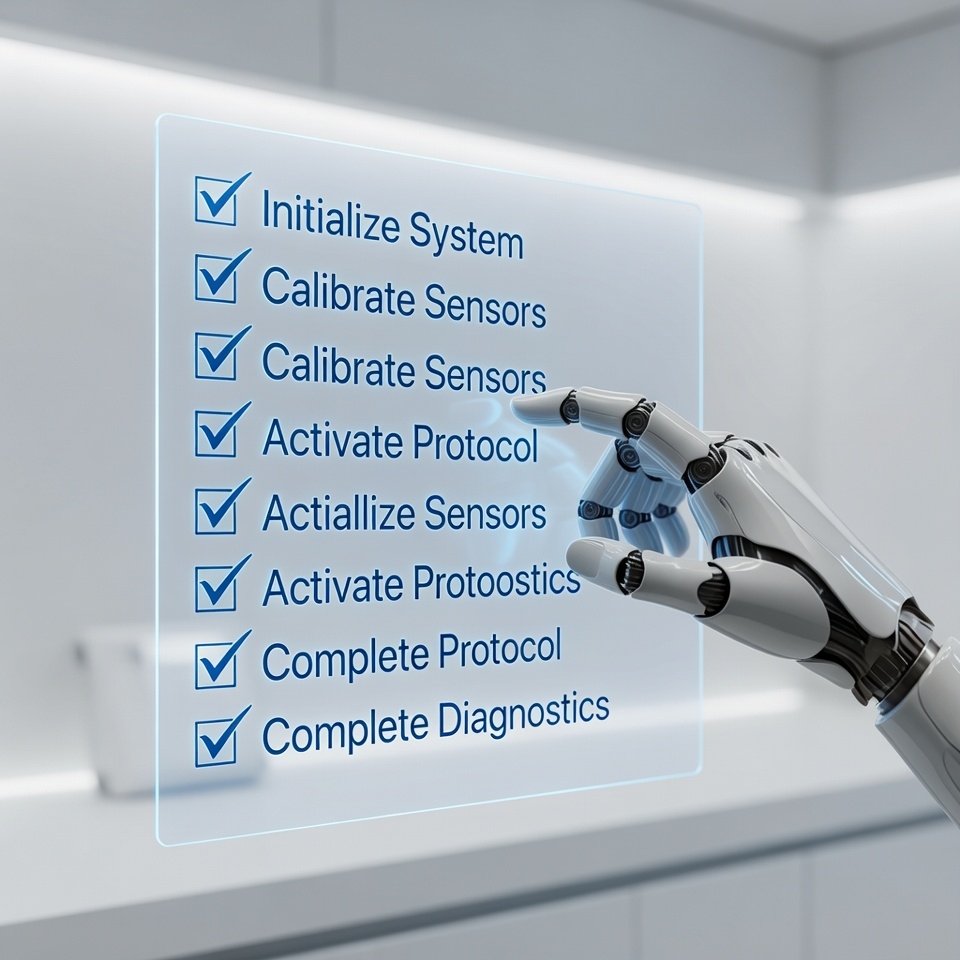
Agentic AI 2026 multi-agent systems collaboration concept

Why 2026 Is the Tipping Point

The Convergence of Three Forces

Analysts point to three converging developments that have made 2026 the year agentic AI moves from research labs to real-world deployment. First, large language model performance has crossed a threshold where AI reasoning is reliable enough to be trusted with consequential tasks. Second, tool-use capabilities — the ability for AI to operate software, query APIs, and browse the internet — have matured significantly. Third, the cost of running these systems has dropped sharply, putting agentic capabilities within reach of mid-sized businesses and, increasingly, individual consumers.

The result is a step-change in what automation looks like. Previously, automating a complex business process required armies of software developers building rigid, rule-based systems. Today, a well-prompted agentic AI can adapt to unexpected inputs, handle exceptions, and improve over time — all without being explicitly reprogrammed.

 Investment Capital Is Flooding In

Venture capital data tells a vivid story. Funding for agentic AI companies surged by over 340 per cent between 2024 and 2025, with major rounds announced across Silicon Valley, London’s Tech City, and the Gulf Cooperation Council’s burgeoning AI ecosystem. Saudi Arabia’s Public Investment Fund has earmarked significant capital for agentic AI infrastructure as part of its Vision 2030 digital transformation agenda. In the UK, the government’s AI Opportunities Action Plan explicitly names autonomous agents as a priority technology area.

For investors, the question is no longer whether to allocate to AI — it is which layer of the agentic stack to back: foundation models, orchestration platforms, vertical-specific applications, or the data infrastructure that makes it all work.

How Agentic AI Affects Everyday Life

Your Bank Account, Your Health, Your Home

You may already be interacting with early-stage agentic AI without knowing it. The fraud detection system that blocked a suspicious transaction on your credit card this morning? Increasingly, that is an agent — one that autonomously investigated the transaction, cross-referenced it against thousands of data points, and made a decision in milliseconds. The appointment scheduling tool your GP’s surgery rolled out last autumn? An agent coordinates that too.

Looking ahead, agentic AI is poised to transform personal finance management. Imagine an AI agent with secure access to your bank account, investment portfolio, and utility bills. It proactively spots that your energy tariff expired, compares alternatives, and switches you — having first checked that the new provider’s direct debit won’t clash with a mortgage payment. This is not science fiction. Pilot programmes are running in the UK and the UAE right now.

 The Job Market: Augmentation or Elimination?

The labour market implications are the subject of fierce debate. The World Economic Forum’s 2026 Future of Jobs report acknowledges that agentic AI will automate a meaningful proportion of current white-collar tasks — particularly in legal, accounting, and administrative roles. However, it also projects significant growth in roles that involve overseeing, training, and collaborating with AI agents: a category sometimes called ‘AI management’.

For workers, the message from most economists is nuanced: the greatest risk is not AI taking your entire job, but a colleague who uses agentic AI doing your job better and faster. Upskilling — particularly in understanding how to direct and evaluate AI agents — is becoming as fundamental as digital literacy was in the 2000s.

Future of Agentic AI in 2026 advanced automation technology

What Investors Need to Know

The Agentic AI Investment Landscape

For retail and institutional investors alike, agentic AI presents both opportunity and complexity. The most direct exposure comes through publicly listed companies that are building or heavily deploying agentic systems: large cloud platform providers, enterprise software companies, and a small but growing cohort of pure-play AI firms. Several agentic AI start-ups are expected to pursue IPOs in London and New York during 2026.

Indirect exposure is also significant. Any sector that involves high volumes of knowledge work — insurance underwriting, legal services, financial advisory, medical diagnostics — stands to be materially disrupted. Investors holding concentrated positions in fir

Risk Factors Specific to Agentic AI

Agentic AI carries risks that differ from earlier AI investments. Because these systems take autonomous actions in the real world — executing transactions, sending communications, making decisions — the liability implications of errors are considerably larger. Regulatory uncertainty is also a significant risk factor. The EU AI Act’s provisions on ‘high-risk AI systems’ have direct relevance to agentic deployments, and enforcement is expected to tighten throughout 2026. In the UK, the AI Safety Institute is actively developing audit frameworks for autonomous agents. Investors should treat regulatory risk as a core underwriting consideration, not an afterthought.

Agentic AI 2026 trend in artificial intelligence innovation

Future Outlook: Agentic AI in 2026 and Beyond

The trajectory of agentic AI points toward a world in which software agents become persistent, always-on collaborators — each individual and organisation effectively operating with an AI team available around the clock. Near-term milestones to watch include the standardisation of agent-to-agent communication protocols (the ‘language’ agents use to coordinate), the emergence of agent marketplaces where specialised agents can be hired for specific tasks, and the first major legal cases establishing liability principles for autonomous AI actions.

Longer-term, the societal implications are vast. Governments that deploy agentic AI effectively in public services — tax collection, benefits administration, infrastructure planning — could achieve efficiency gains that fundamentally alter the economics of the public sector. Those that do not risk falling behind in both competitiveness and service quality.

For individuals, the practical advice is consistent across analysts: engage with agentic AI tools now, while the learning curve is manageable. Those who understand how to direct, evaluate, and work alongside autonomous agents will have a structural advantage in almost every professional domain within three to five years.

Self-operating AI agents 2026 emerging tech breakthrough

Key Highlights

Agentic AI 2026
  • 01

    Agentic AI systems can now plan, reason, and execute multi-step tasks with minimal human oversight.

  • 02

    Multi-agent frameworks — networks of specialised AI — are replacing entire job functions in finance, law, and logistics.

  • 03

    Investors are pouring billions into agentic AI platforms; market projections exceed $47 billion by 2028.

  • 04

    Everyday consumers are beginning to encounter agentic AI in banking apps, healthcare portals, and smart home devices.

  • 05

    Regulatory bodies in the US, UK, and UAE are scrambling to draft governance frameworks before deployment outpaces oversight.

Conclusion: The Autonomy Threshold

Agentic AI is not a distant prospect or a Silicon Valley abstraction. It is a technology that is being deployed today, shaping decisions that affect jobs, investments, healthcare, and household finances across the US, UK, and the wider world. The shift from AI as a tool to AI as an autonomous actor represents one of the most consequential technological transitions of the decade.

For everyday people, the imperative is awareness and adaptation: understanding where agentic AI is entering your life, advocating for transparency from the organisations that deploy it, and investing in the skills that keep you indispensable in an increasingly automated world. For investors, it demands clear-eyed analysis of both the extraordinary opportunity and the novel risks that autonomous systems introduce.One thing is certain: in 2026, the question is no longer whether AI will act autonomously. It already is. The question now is whether we are ready.

    Comments (234)

    Related News

    EU Parliament Passes New Digital Privacy Legislation

    Comprehensive data protection reforms set to reshape how tech giants operaten

    EU Parliament Passes New Digital Privacy Legislation

    Comprehensive data protection reforms set to reshape how tech giants operaten

    EU Parliament Passes New Digital Privacy Legislation

    Comprehensive data protection reforms set to reshape how tech giants operaten

    EU Parliament Passes New Digital Privacy Legislation

    Comprehensive data protection reforms set to reshape how tech giants operaten